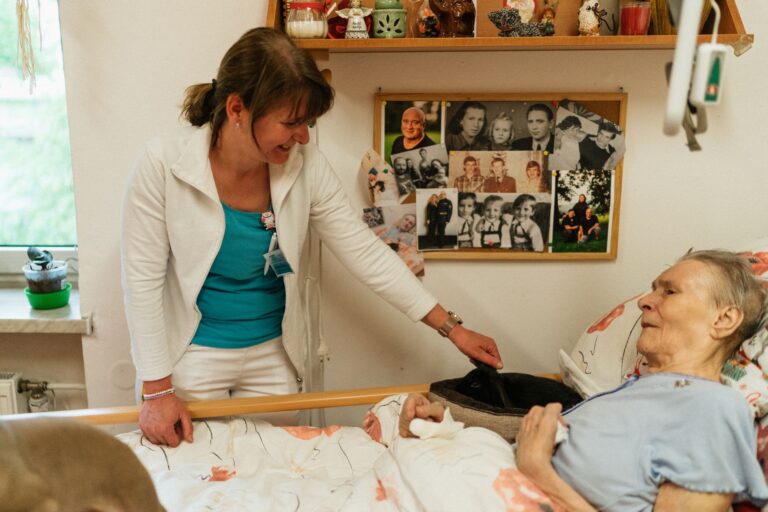
24-hour dementia home care is round-the-clock help at home, combining supervision, personal care, homemaking, and sometimes skilled nursing. At the 2025 national median rate, continuous non-medical care would cost about $306,600 annually; public coverage is limited, and families should carefully screen providers. "24-hour care" is not a standardized package. The right service mix depends on safety risks, medication needs, and how much help the person requires with bathing, toileting, dressing, and eating.
Medical information disclaimer: This article is for general educational purposes only and does not provide medical advice, diagnosis, or treatment. Always consult a physician or other qualified health professional about symptoms, medications, tests, or treatment decisions.
Table of Contents
- What services can 24-hour home care include?
- How much does continuous care cost?
- Will Medicare or Medicaid pay?
- When is round-the-clock care appropriate?
- Questions to ask a home-care provider
What services can 24-hour home care include?
"24-hour" describes the schedule, not the caregiver's qualifications or exact duties. The Alzheimer's Association describes in-home care as a combination of companion supervision, personal care, homemaking, and licensed skilled care, depending on assessed needs. Companion supervision may be the largest part of a care plan when someone cannot safely remain alone.
Personal care becomes more important when the person needs help bathing, dressing, toileting, or eating. Skilled care is a separate clinical service. A person may need someone present around the clock without needing a private-duty nurse during every hour. Separating supervision from clinical needs can substantially change the care plan and its cost.
How much does continuous care cost?
CareScout's 2025 Cost of Care Survey reported a national median of $35 per hour for non-medical in-home caregivers. Multiplying that rate by 24 hours and 365 days produces an annual benchmark of about $306,600. The same survey reported a $90 median hourly rate for in-home private-duty nursing.
Continuous nursing at that rate would approach $788,400 annually. These calculations are benchmarks, not price quotes. Actual costs vary by location and service mix. When comparing proposals, ask each provider to separate non-medical caregiver hours from skilled-nursing hours and explain the full billing responsibility.
Will Medicare or Medicaid pay?
Original Medicare does not pay for 24-hour-a-day home care or custodial personal care when personal care is the only need. Medicare.gov explains that eligible part-time or intermittent skilled home-health services generally cost the beneficiary $0. Medicare home-health eligibility requires: Covered nursing and home-health-aide services are typically limited to eight combined hours per day and 28 hours per week.
Short-term exceptions may allow up to 35 hours weekly, so Medicare is not a funding route for continuous coverage. Medicaid home- and community-based services waivers may cover personal care, homemaker services, home-health aides, adult day services, respite, and case management. However, CMS notes that states control waiver eligibility, including financial rules, target populations, capacity, and institutional-level-of-care requirements. Approval for some services does not guarantee 24-hour coverage.
- A need for part-time or intermittent skilled services
- Homebound status
- A face-to-face provider assessment and order
- Care from a Medicare-certified agency
When is round-the-clock care appropriate?
The Alzheimer's Association says some people need 24-hour supervision during the middle stage of dementia. Late-stage care generally becomes more intensive.
Assess the person's actual needs rather than relying on the dementia stage alone: Use the answers to distinguish hours that require a supervising caregiver from hours that require licensed skilled care. That distinction affects both staffing and cost.
- Can the person remain safe without someone present?
- Do medication needs require closer oversight?
- How much help is needed with bathing, toileting, dressing, and eating?
- Does the person need constant supervision, clinical care, or both?
- Has the required level of assistance become more intensive?
Questions to ask a home-care provider
The Alzheimer's Association advises families to examine dementia training, credentials, background checks, references, written care-plan reviews, and backup procedures. Its 2024 guidance also recommends asking about licensing or accreditation, insurance and bonding, emergency support, caregiver consistency, and billing. Ask each agency: Request written answers, an itemized cost estimate, and the no-show backup procedure before agreeing to continuous care.
- What dementia-specific training and credentials do caregivers have?
- Are employees subject to background checks?
- Can the agency provide references?
- Who creates the written care plan, and how often is it reviewed?
- What happens if the assigned caregiver is ill or does not arrive?