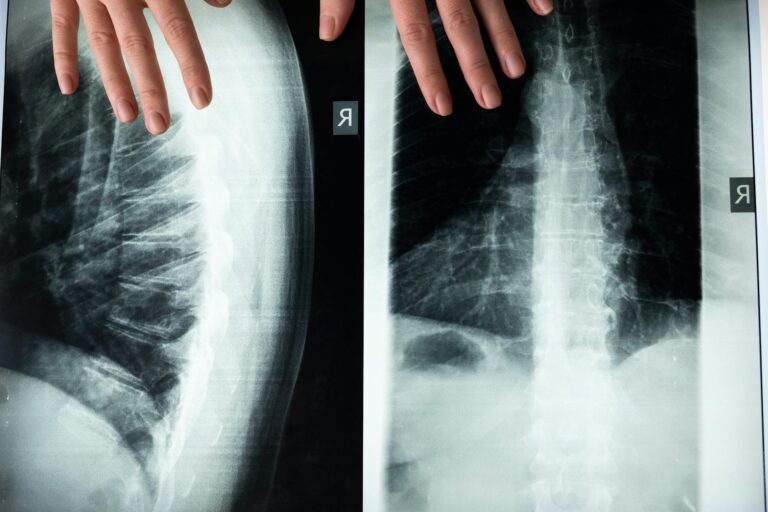
If you have been living with persistent lower back pain that no amount of stretching or ibuprofen seems to resolve, the problem may not be your spine at all. Sacroiliac joint inflammation, known clinically as sacroiliitis, is responsible for an estimated 15 to 30 percent of all chronic, nonradicular low back pain in adults, according to research published in Expert Review of Neurotherapeutics. The warning signs doctors watch for include deep lower back pain, pain radiating into the buttocks and thighs, pronounced morning stiffness, pain triggered by specific movements like climbing stairs or standing from a chair, reduced range of motion, low-grade fever, disrupted sleep, pain worsened by both prolonged sitting and standing, a sensation of the leg “giving way,” and pain following a specific inciting event such as a fall, pregnancy, or surgery. For older adults, particularly those already managing cognitive decline or dementia, this matters more than most people realize. Chronic pain is one of the most common and underrecognized drivers of behavioral changes in dementia patients, including agitation, withdrawal, and sleep disturbance.
A person who cannot articulate that their sacroiliac joint hurts may instead stop walking, refuse to get out of bed, or become combative during transfers. Recognizing SI joint inflammation early is not just an orthopedic concern. It is a quality-of-life issue that intersects directly with brain health and caregiving. This article walks through each of the ten warning signs that clinicians use to identify sacroiliac joint dysfunction, explains why certain symptoms overlap with other conditions, and offers practical guidance on when to seek evaluation. We will also cover the diagnostic challenges involved, what the research says about who is most at risk, and why this condition is so frequently misdiagnosed.
Table of Contents
- What Are the Most Common Warning Signs of Sacroiliac Joint Inflammation?
- Why SI Joint Pain Gets Worse with Everyday Movements and Prolonged Positions
- Systemic Symptoms That Suggest Inflammatory or Autoimmune Causes
- How Doctors Diagnose Sacroiliac Joint Inflammation and What Patients Should Expect
- Who Is Most at Risk and Why SI Joint Pain Is So Often Misdiagnosed
- Leg Instability and Reduced Mobility as Late-Stage Warnings
- Living with Sacroiliac Joint Inflammation and What Emerging Research Suggests
- Conclusion
- Frequently Asked Questions
What Are the Most Common Warning Signs of Sacroiliac Joint Inflammation?
The single most reported symptom of sacroiliitis is lower back pain, typically described as a deep, aching sensation felt on one or both sides of the lower back. According to the Mayo Clinic and Cleveland Clinic, this pain can range from a constant dull throb to sudden, sharp stabs that stop you mid-step. What distinguishes SI joint pain from a generic muscle strain is its location. It tends to sit just below the beltline, off to one side, right where the sacrum meets the iliac bone of the pelvis. A 72-year-old patient, for instance, might describe it not as “back pain” but as pain deep in the hip that seems to shift depending on how they are sitting. The second hallmark is radiating pain. SI joint inflammation frequently sends pain into the buttocks, hips, groin, and down the back of the thigh.
Research compiled in StatPearls notes that the posterior thigh is the most common referral site, occurring in approximately 50 percent of patients. This is where misdiagnosis becomes a real problem. Pain traveling down the leg sounds like sciatica, and many patients are treated for lumbar disc herniation when the SI joint is actually the culprit. The key difference is that SI joint referral pain rarely travels below the knee, whereas true sciatica often radiates all the way to the foot. Morning stiffness rounds out the top three warning signs. If getting out of bed feels like your pelvis has rusted shut overnight and loosens up after 20 or 30 minutes of moving around, that pattern points strongly toward inflammatory rather than mechanical pain. The Cleveland Clinic specifically flags this stiffness-that-improves-with-activity pattern as characteristic of sacroiliitis. In contrast, a pulled muscle or mechanical back injury tends to feel worse with movement, not better.

Why SI Joint Pain Gets Worse with Everyday Movements and Prolonged Positions
One of the more frustrating aspects of sacroiliac joint inflammation is that it does not follow the rules patients expect. Most people assume that if rest makes something hurt more and activity makes it better, the pain cannot be serious. But sacroiliitis behaves exactly this way. Pain that spikes when standing from a seated position, climbing stairs, taking long strides, or turning over in bed is a clinical red flag for SI joint dysfunction, as noted by Spine-Health and the Southeast Texas Spine Institute. These are all movements that load the sacroiliac joint asymmetrically, which is why a person might tolerate walking on flat ground but struggle with a single flight of stairs. Equally telling is the pattern described by Weill Cornell Neurosurgery and Mass General Brigham: SI joint pain is aggravated by both prolonged sitting and prolonged standing. This is unusual. Most back conditions are worsened primarily by one or the other. A person with a herniated disc, for example, often finds relief by standing and walking.
Someone with spinal stenosis typically feels better sitting down. SI joint dysfunction punishes both positions and is only relieved by changing positions frequently. For a dementia caregiver, this is critical information. If your loved one becomes agitated after sitting in a wheelchair for an extended period and equally distressed after standing at a walker, the issue may not be behavioral. It may be positional pain from an inflamed SI joint. However, it is important to recognize that not every movement-related pain points to the sacroiliac joint. Hip osteoarthritis, trochanteric bursitis, and lumbar facet joint syndrome can all produce similar movement-triggered discomfort. The distinguishing factor often comes down to clinical provocation tests. According to the American Academy of Family Physicians, at least three positive physical provocation tests are needed to suggest SI joint dysfunction with reasonable confidence. No single test or symptom is definitive on its own.
Systemic Symptoms That Suggest Inflammatory or Autoimmune Causes
Not all sacroiliac joint inflammation is caused by wear and tear. When sacroiliitis is driven by an autoimmune condition like ankylosing spondylitis or by infection, the body often sends systemic signals that go beyond localized pain. A low-grade fever, for instance, is a warning sign that the Mayo Clinic specifically associates with sacroiliitis. This is not the kind of fever most people would notice without a thermometer. It might hover around 99 to 100 degrees Fahrenheit and come and go. But its presence alongside lower back stiffness and pain should prompt further investigation, particularly in younger adults or in anyone with a family history of autoimmune disease. Ankylosing spondylitis deserves specific attention here because it is one of the leading causes of sacroiliitis, and its genetic component is striking. Over 90 percent of ankylosing spondylitis patients test positive for the HLA-B27 gene marker, according to StatPearls.
This does not mean that everyone with that gene will develop the condition, but it does mean that a simple blood test can significantly raise or lower clinical suspicion. For families dealing with both dementia and chronic pain, this matters because autoimmune sacroiliitis is a treatable condition. Disease-modifying drugs and biologic therapies can substantially reduce inflammation and pain if the underlying cause is identified. Sleep disruption is another systemic consequence that physicians flag. Chronic sacroiliitis can significantly impair sleep quality, according to both PainTEQ and the Cleveland Clinic. Pain often worsens when lying on the affected side or flat on the back, making it genuinely difficult to find a comfortable resting position. For older adults, particularly those with cognitive impairment, poor sleep compounds existing problems with memory, mood, and orientation. A person with Alzheimer’s disease who develops sacroiliitis may appear to be declining cognitively when in reality they are sleep-deprived and in pain.

How Doctors Diagnose Sacroiliac Joint Inflammation and What Patients Should Expect
Diagnosing SI joint dysfunction is genuinely difficult, and patients should know this going in. The diagnostic gold standard is not an X-ray or MRI. It is an image-guided anesthetic injection directly into the sacroiliac joint. If the injection eliminates the pain, the SI joint is confirmed as the source. If it does not, physicians look elsewhere. The AAFP’s 2022 review makes this point clearly: imaging alone has poor sensitivity for SI joint dysfunction. An MRI may look completely normal in a patient whose sacroiliac joint is the primary pain generator, and conversely, imaging abnormalities at the SI joint are common in people with no symptoms at all. Before resorting to injections, clinicians rely on a battery of physical provocation tests. These are hands-on maneuvers that stress the SI joint in specific ways.
The FABER test, the compression test, the distraction test, the thigh thrust, and Gaenslen’s test are among the most commonly used. As noted earlier, the AAFP recommends that at least three of these tests must be positive before SI joint dysfunction is suspected. This is a higher bar than many patients expect, and for good reason. Each individual test has limited specificity, but the combination of multiple positive results significantly improves diagnostic accuracy. The tradeoff patients face is between speed and precision. A primary care physician can perform provocation tests in the office in about ten minutes, which provides a reasonable screening. But confirming the diagnosis requires referral to a pain specialist or interventional radiologist for the guided injection, which involves scheduling, imaging equipment, and sometimes insurance authorization. For older adults with dementia, the injection procedure itself presents additional considerations around sedation, consent, and the ability to provide reliable pain feedback. Caregivers should discuss these practicalities with both the referring physician and the proceduralist before the appointment.
Who Is Most at Risk and Why SI Joint Pain Is So Often Misdiagnosed
Sacroiliac joint dysfunction follows a bimodal age distribution, meaning it peaks in two distinct age groups. In younger adults, it is most commonly associated with sporting injuries and pregnancy. In older adults, it is driven by joint degeneration. Roughly 25 percent of adult patients presenting with chronic low back pain have the sacroiliac joint as their primary pain source, according to the AAFP. Despite how common it is, SI joint dysfunction remains one of the most frequently missed diagnoses in lower back pain. The reasons for misdiagnosis are structural and systemic. SI joint pain overlaps almost perfectly with lumbar radiculopathy, hip pathology, and even piriformis syndrome. Most primary care workflows default to lumbar spine imaging when a patient reports lower back pain, and if the MRI shows any disc abnormality, which it will in the majority of adults over 50, the investigation often stops there.
The SI joint is not routinely examined unless the clinician specifically suspects it. This is compounded by the fact that SI joint dysfunction does not show up reliably on standard imaging. Patients can undergo surgery for a lumbar condition that was never actually causing their pain while the real culprit, the SI joint, goes untreated. There is a specific warning sign that should raise suspicion of SI joint involvement but is frequently overlooked: pain following an inciting event. StatPearls and the AAFP note that SI joint pain usually follows a specific trigger, whether that is a fall, a motor vehicle accident, pregnancy and delivery, or prior lumbar spine surgery. Prior lumbar surgery is a particularly well-documented risk factor. If a patient had a spinal fusion and still has pain afterward, the SI joint should be high on the list of suspects. Pain that appears gradually without any identifiable trigger is less likely, though not impossible, to be SI joint in origin.

Leg Instability and Reduced Mobility as Late-Stage Warnings
Two warning signs that tend to appear later in the course of sacroiliac joint inflammation deserve particular attention from caregivers. The first is reduced range of motion, including difficulty bending forward, twisting the torso, or crossing the legs. PainTEQ identifies this as a progressive warning sign, meaning it worsens over time if the underlying inflammation is not addressed. A person who once crossed their legs comfortably while reading and now cannot do so without pain is showing a functional decline that should not be dismissed as normal aging. The second is a subjective sensation of leg instability or “giving way.” Spine-Health notes that some patients describe a feeling of leg weakness, as though the leg might buckle underneath them.
This is not true muscular weakness in most cases. It is a pain-driven inhibition, where the nervous system reduces motor output to protect the injured joint. But the practical consequence is the same: increased fall risk. For an older adult with dementia, a fall can be catastrophic, leading to hip fracture, hospitalization, delirium, and accelerated cognitive decline. Any new sensation of leg instability in this population warrants prompt evaluation.
Living with Sacroiliac Joint Inflammation and What Emerging Research Suggests
Management of sacroiliac joint dysfunction has expanded considerably in recent years. Conservative treatment, including physical therapy focused on pelvic stabilization, SI joint belts, and anti-inflammatory medications, remains the first line. For patients who do not respond, radiofrequency ablation of the nerves supplying the SI joint and minimally invasive SI joint fusion procedures have both shown durable results in clinical trials. These options are relevant even for older adults, as the procedures are less invasive than traditional spinal surgery.
Looking ahead, researchers are paying closer attention to the relationship between chronic pain syndromes like sacroiliitis and cognitive decline. Persistent pain increases cortisol, disrupts sleep architecture, reduces physical activity, and promotes social isolation, all of which are independent risk factors for dementia progression. Treating the pain is not just about comfort. Emerging evidence suggests that effective pain management may slow functional decline in people with existing cognitive impairment, making early identification of conditions like SI joint dysfunction all the more important for brain health.
Conclusion
Sacroiliac joint inflammation is one of the most common and most commonly missed causes of chronic lower back pain, accounting for up to 30 percent of cases. The ten warning signs outlined here, from deep lower back pain and morning stiffness to leg instability and pain following a triggering event, form a clinical picture that is distinct from lumbar disc disease, hip arthritis, and other conditions that produce similar complaints. Recognizing these signs early, particularly the pattern of stiffness that improves with movement and pain that worsens with both sitting and standing, can prevent years of ineffective treatment aimed at the wrong structure.
For caregivers and families navigating dementia alongside other health challenges, understanding sacroiliitis is especially important. A person who cannot clearly communicate their pain may express it through behavior changes, reduced mobility, or worsening sleep. If your loved one shows signs consistent with SI joint dysfunction, advocate for a targeted evaluation that includes physical provocation testing and, if indicated, a diagnostic injection. Effective treatment options exist, and addressing the pain can meaningfully improve quality of life, sleep, and even cognitive function.
Frequently Asked Questions
Can sacroiliac joint inflammation be seen on an X-ray or MRI?
Not reliably. The AAFP’s 2022 review notes that imaging has poor sensitivity for SI joint dysfunction. The diagnostic gold standard is an image-guided anesthetic injection into the joint. If the injection eliminates the pain, the SI joint is confirmed as the source.
How is sacroiliac joint pain different from sciatica?
SI joint pain commonly radiates into the buttocks and down the posterior thigh but rarely extends below the knee. True sciatica from a herniated lumbar disc typically travels all the way down the leg into the foot and may be accompanied by numbness or tingling.
What triggers sacroiliac joint inflammation?
SI joint pain usually follows a specific inciting event such as a fall, motor vehicle accident, pregnancy, or surgery. Prior lumbar spine surgery is a well-documented risk factor. Autoimmune conditions like ankylosing spondylitis, where over 90 percent of patients carry the HLA-B27 gene marker, are another major cause.
Is sacroiliac joint dysfunction more common at certain ages?
Yes. It follows a bimodal distribution, peaking in younger adults due to sporting injuries and pregnancy, and in older adults due to joint degeneration. Approximately 25 percent of adults with chronic low back pain have the SI joint as their primary pain source.
Can SI joint inflammation affect sleep?
Significantly. Pain often worsens when lying on the affected side or flat on the back. For older adults, especially those with cognitive impairment, the resulting sleep deprivation can worsen memory, mood, and orientation, sometimes mimicking cognitive decline.
What physical tests do doctors use to check the SI joint?
Clinicians use provocation tests such as the FABER test, compression test, distraction test, thigh thrust, and Gaenslen’s test. The AAFP recommends that at least three of these tests must be positive before SI joint dysfunction is clinically suspected.