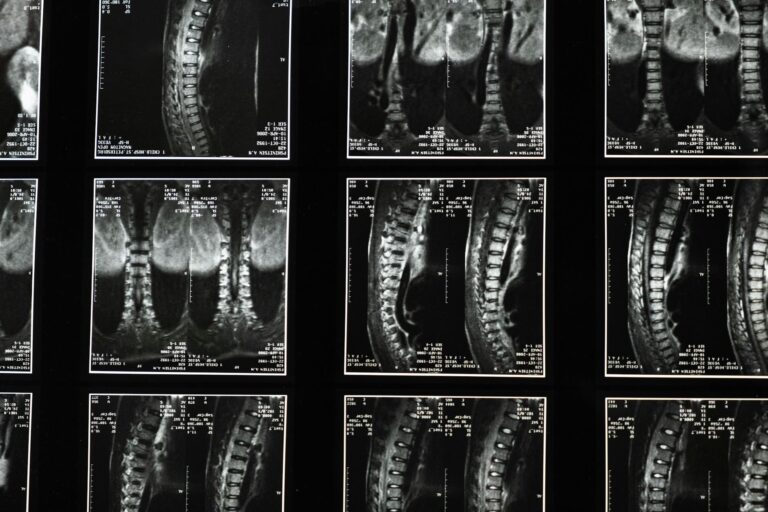
Doctors most often diagnose ten specific causes of lumbar spine degeneration: age and natural wear-and-tear, genetic predisposition, smoking, obesity, occupational physical loading, previous spine injuries, herniated discs, chronic inflammation, diabetes, and poor posture combined with prolonged sitting. These causes don’t operate in isolation—they interact with each other to accelerate the breakdown of the water-rich discs that cushion the vertebrae in your lower back. A 50-year-old smoker who works in construction and has a family history of disc disease will experience degeneration much faster than someone without those stacking risk factors. Lumbar spine degeneration is remarkably common.
Approximately 266 million people worldwide experience degenerative spine disease and low back pain each year, while 403 million have symptomatic disc degeneration. Nearly everyone over 40 shows some degree of disc degeneration on imaging, even if they feel no pain. Understanding which causes apply to your situation helps explain why your symptoms developed and what lifestyle changes might slow progression. This article covers each of the ten causes doctors diagnose most often, explains how they damage the spine, and examines why some people develop severe symptoms while others don’t.
Table of Contents
- How Age, Genetics, and Family History Accelerate Spine Breakdown
- Smoking, Obesity, and Posture—Modifiable Risk Factors That Doctors See Repeatedly
- Occupational Physical Demands and Heavy Lifting—The Work Injury Factor
- Previous Injuries and Herniated Discs—How Trauma Initiates Degeneration
- Inflammation and Metabolic Disorders—The Systemic Contributors
- Understanding the Progression from Cause to Symptoms
- What Global Prevalence Data Tells Us About Individual Risk
- Conclusion
How Age, Genetics, and Family History Accelerate Spine Breakdown
The foundation of lumbar degeneration begins with age itself. As you grow older, the intervertebral discs lose water content naturally—a process that starts in your 20s and 30s but doesn’t cause symptoms until much later. This dehydration makes the discs thinner and less effective at absorbing the shock from everyday activities. Cleveland Clinic reports that almost everyone has some disc degeneration after age 40, with symptoms often appearing by age 60. This timeline isn’t universal, though.
Some 60-year-olds experience severe pain while others in their 80s remain relatively pain-free, which is where genetics enters the picture. Your genes play a surprisingly large role: twin studies show that genetic factors account for 74% of lumbar spine disc degeneration variation. If your parents or siblings have had disc disease, your risk rises significantly. Genetic variations in collagen-producing genes—the material that gives your discs their structural integrity—influence how quickly your discs deteriorate. Someone with a family history of early degeneration might experience noticeable symptoms in their 40s, while someone without that genetic predisposition might not develop them until their 70s, even if both live identical lifestyles. This is why two people exposed to the same occupational stresses can have very different outcomes.

Smoking, Obesity, and Posture—Modifiable Risk Factors That Doctors See Repeatedly
Tobacco smoking accelerates lumbar degeneration independent of all other factors. Smoking constricts blood vessels, reducing nutrient diffusion into the discs and limiting their ability to repair themselves. Research shows that even passive smoke exposure is associated with severe lumbar disc degeneration, meaning secondhand smoke is not harmless to spinal health. For someone predisposed to early degeneration, smoking in their 40s can compress the timeline so that what might have happened at 65 occurs at 55. This makes smoking one of the few causes doctors can directly link to accelerated degeneration that patients can control. Obesity compounds the problem through both mechanical and inflammatory pathways. A body mass index of 25 kg/m² or higher significantly increases degeneration risk, with young people who are overweight being particularly vulnerable.
The extra weight increases spinal loading—your lower back discs must support more force with every movement—and excess body fat also triggers inflammatory signaling throughout the body, both of which accelerate disc breakdown. Being overweight in your 30s and 40s creates damage that manifests as pain a decade or more later. Poor posture and prolonged sitting interact in ways that doctors sometimes misunderstand. Sitting alone has limited direct association with degeneration, but sitting combined with whole-body vibration (like truck driving or operating heavy machinery) or awkward positions increases low back pain risk fourfold. The critical factor is spinal alignment during repetitive activities. Someone hunched over a desk for eight hours with poor chair support doesn’t necessarily develop degeneration from sitting itself, but if they’re already genetically predisposed, the sustained poor alignment accelerates the process. Alternately, a construction worker lifting with poor form combines postural stress with occupational loading, creating a synergistic effect.
Occupational Physical Demands and Heavy Lifting—The Work Injury Factor
Occupations requiring repetitive heavy lifting, forceful bending, and twisting place enormous cumulative stress on the lumbar spine. Studies show that mechanical exposure at the L4–L5 region—the most common location for lumbar degeneration—significantly increases risk. Construction workers, nurses, warehouse staff, and anyone regularly lifting objects above 50 pounds experience accelerated disc degeneration compared to sedentary workers. The damage compounds over years: a warehouse worker in their 30s may show imaging signs of degeneration by their 40s, not from a single injury but from thousands of small loading cycles.
However, occupational loading doesn’t affect everyone identically. Someone with strong core stability and good lifting technique tolerates occupational stress better than someone with weak abdominal muscles or poor body mechanics. This is why some construction workers retire at 65 with minimal spine problems while others struggle by 50. Moreover, the risk depends partly on what you’re lifting and how often. Lifting heavy objects three times weekly is not equivalent to lifting moderate loads ten times daily; the frequency and total loading volume matter more than any single lift.

Previous Injuries and Herniated Discs—How Trauma Initiates Degeneration
A previous spine injury—even a minor one that seemed to resolve—can initiate a cascade of inflammatory responses leading to degeneration. Small cracks in the disc’s outer wall that developed from an injury allow inflammatory chemicals to penetrate, triggering degradation of the interior material. Johns Hopkins Medicine notes that low-energy injuries, not necessarily major trauma, are the typical culprits. Someone who herniated a disc at 35 from twisting awkwardly might not develop severe pain until 55, but imaging will show that the initial injury began the degeneration process decades earlier.
Herniated discs represent both a consequence and an accelerant of degeneration. When the outer disc wall cracks, the inner nucleus material bulges out and compresses adjacent nerve roots, causing pain, numbness, and weakness. The chemical irritants released from the herniated material further stimulate inflammatory pathways. If the herniation doesn’t fully resolve, or if the weakened disc continues to bulge, the site becomes a focal point of ongoing degeneration. A person with a resolved herniation at L4–L5 has higher odds of developing severe degeneration at that level later than someone without prior herniation.
Inflammation and Metabolic Disorders—The Systemic Contributors
Chronic inflammation plays a central role in both initiating and accelerating lumbar disc degeneration. Inflammatory signaling pathways activate enzymes that break down the proteoglycans and collagen holding the disc together. This inflammatory state also sensitizes nerve fibers, so the pain you experience isn’t just from mechanical compression but from chemical irritation of those nerves. Degenerative disc disease often includes arthritis of the facet joints alongside disc degeneration—a condition doctors call spondylosis—where inflammatory changes develop throughout the spinal segment.
Diabetes mellitus significantly increases degeneration risk, particularly when blood glucose control is poor. Elevated blood sugar affects the nutrition and structural integrity of the discs, making them more susceptible to breakdown. Someone with uncontrolled diabetes in their 40s experiences disc degeneration at rates similar to a non-diabetic person 10-15 years older. Other metabolic disorders compound this effect, which is why weight management and glucose control become important prevention strategies even if you don’t yet have spinal symptoms. The metabolic damage is often silent—occurring on a cellular level long before pain develops—making prevention more valuable than waiting for symptoms to appear.

Understanding the Progression from Cause to Symptoms
The presence of a cause doesn’t guarantee you’ll develop symptoms. Imaging studies consistently show that nearly 90% of lumbar degeneration occurs in the L4–L5 region, the lowest levels of the lumbar spine where loading forces are greatest. However, many people with significant degeneration on MRI experience no pain because the degenerative changes aren’t compressing nerves or causing instability. Your symptoms depend on the location and extent of degeneration, whether bone spurs are forming, if inflammation is pressing on nerve roots, and how well your supporting muscles stabilize the spine. Progressive degeneration creates a feedback loop.
Initial disc dehydration and loss of height reduce the space available for nerves, making them more likely to be compressed by even minor bulging. Weakened discs move slightly more than healthy ones, triggering the body to form protective bone spurs. These spurs narrow the spinal canal further. People with multiple causes—age plus obesity plus previous injury—often enter this progressive cycle earlier and move through it faster. Understanding this helps explain why some 65-year-olds have minimal functional limitations despite significant degeneration, while others are severely impaired: the rate of progression and the accumulation of causative factors determine outcomes.
What Global Prevalence Data Tells Us About Individual Risk
Lumbar degenerative disc disease affects over 400 million people annually worldwide—approximately 5.5% of the global population experiences symptomatic disc degeneration each year. These aren’t rare conditions affecting only the elderly; they occur across all ages once you consider subclinical degeneration visible on imaging. Understanding that you’re not alone in this experience, and that degeneration is a normal aging process for most people, reframes how to approach it: not as a catastrophic personal failure but as a common condition requiring active management.
The prevalence data also highlights the importance of modifiable risk factors. When 266 million people experience spine disease annually and millions could have delayed or prevented symptoms through smoking cessation, weight management, exercise, and occupational modification, the practical value of understanding causes becomes clear. Your individual risk depends not on whether you have one cause—most adults over 40 do—but on how many causes apply simultaneously and how aggressively you address the modifiable ones.
Conclusion
Lumbar spine degeneration develops through a combination of fixed factors (age, genetics, past injuries) and modifiable ones (smoking, obesity, occupation, posture, inflammation control). Doctors diagnose these ten causes repeatedly because they account for the vast majority of lumbar degeneration cases. The age at which symptoms appear and their severity depend on which combination of causes applies to your situation. Someone with strong genetics, stable weight, no occupational stress, and no smoking history might develop degeneration by 70. Someone with genetic predisposition, smoking history, obesity, and demanding physical work might become symptomatic at 45.
Understanding your specific causes guides prevention strategies and helps explain why your pain developed on its particular timeline. If you have symptoms of lumbar degeneration, or if you have family history suggesting risk, the actionable insight is this: address the causes within your control immediately. Smoking cessation, weight loss if overweight, ergonomic modifications at work, strengthening exercises, and management of metabolic conditions like diabetes all slow progression. For those without symptoms but with multiple risk factors, these same interventions serve as prevention. Talk with your healthcare provider about which causes apply to you and which modifications would have the most impact on your individual case.