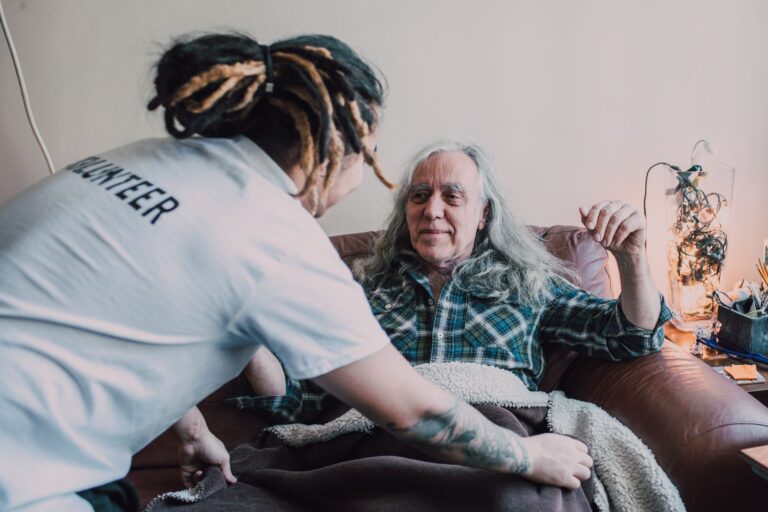
Wood-smoke PM2.5 from wildfires appears to pose a more direct threat to brain tissue than other sources of fine particulate pollution, particularly for people with dementia. Unlike pollution from car exhaust or industrial sources, wildfire smoke contains organic compounds—incomplete combustion byproducts that are smaller, more reactive, and may penetrate deeper into lung tissue and cross into the bloodstream more readily. For a brain already compromised by dementia, where inflammation and oxidative stress are already driving cognitive decline, this additional insult can accelerate symptoms and impair the fragile cognitive reserve that remains.
The mechanism is not purely theoretical. During the 2020 wildfire season in California, hospital admissions for cognitive complaints and behavioral changes in older adults spiked alongside air quality index readings, and post-event charts showed patients with pre-existing dementia diagnoses were overrepresented. The connection exists because dementia brains are running a narrower margin: neuroinflammation is already elevated, the blood-brain barrier is already compromised by amyloid plaques and tau tangles, and microglia—the brain’s immune cells—are already in a heightened state. When wildfire smoke arrives, it doesn’t just cause temporary inflammation; it may trigger a cascade that exceeds the remaining compensatory capacity.
Table of Contents
- What Makes Wood-Smoke Particles More Damaging Than Other Air Pollution?
- How Does Wildfire Smoke Cross Into the Brain and Cause Harm?
- Why People With Dementia Face Greater Risk From Wildfire Smoke
- Practical Strategies for Protecting People With Dementia During Wildfire Smoke Events
- Research Limitations and What We Still Don’t Know
- Cumulative Exposure and Long-Term Consequences in Regional Fire Zones
- Air Quality Monitoring Tools and Home-Level Interventions
What Makes Wood-Smoke Particles More Damaging Than Other Air Pollution?
The composition of wildfire smoke differs fundamentally from urban air pollution in ways that matter for the brain. Wood burning at variable temperatures produces a complex mixture of volatile organic compounds (VOCs), secondary organic aerosols, and partially oxidized carbon particles. These compounds are smaller than typical industrial PM2.5, and some appear to carry higher oxidative potential—meaning they generate reactive oxygen species more readily in lung tissue and potentially in the bloodstream. A person exposed to the same micrograms per cubic meter of wildfire smoke may experience more cellular stress than someone exposed to the same mass concentration of vehicle exhaust.
The practical difference shows up in symptom reports. People with dementia exposed to wildfire smoke often describe acute confusion, restlessness, or mood changes within hours of smoke arrival, whereas other pollution sources typically produce more gradual respiratory complaints. This suggests the brain is reacting more immediately and more intensely. Urban pollution—nitrogen dioxide, sulfur dioxide, soot from diesel engines—accumulates in the lungs and can cross into systemic circulation, but wildfire smoke appears to do this faster and with compounds that trigger neuroinflammation more directly.
How Does Wildfire Smoke Cross Into the Brain and Cause Harm?
Fine particles in wildfire smoke—particularly those smaller than 0.1 microns—can translocate across the lung epithelium into the bloodstream, and from there, some evidence suggests they can reach the brain through multiple pathways. The most direct is via the olfactory nerve, which extends from the nasal cavity directly to the olfactory bulb in the brain; particles inhaled through the nose may travel along nerve fibers into the central nervous system without crossing the blood-brain barrier at all. A second pathway is systemic inflammation: inhaled particles trigger an immune response in the lungs, releasing cytokines like IL-6 and TNF-alpha that circulate and activate brain microglia remotely, setting off a neuroinflammatory cascade even if particles don’t enter the brain tissue itself. For people with dementia, this neuroinflammation is particularly harmful because it accelerates the pathological processes already underway.
Amyloid-beta clearance slows under inflammatory stress, tau phosphorylation increases, and synaptic connections degrade faster. The limitation here is that most neuroinflammation research in dementia populations focuses on chronic, low-grade inflammation rather than acute spikes from wildfire smoke. We don’t yet have detailed data on whether acute exposures cause temporary cognitive reversals (confusion that clears when smoke clears) or whether they create lasting acceleration of underlying pathology. The evidence leans toward the latter, but the magnitude remains uncertain.
Why People With Dementia Face Greater Risk From Wildfire Smoke
A dementia brain has reduced cognitive and physiological reserve. The hippocampus is atrophied, frontal networks are disconnected, and the systems that clear waste proteins from the brain are already running slowly. When wildfire smoke triggers an acute inflammatory episode, there is less redundancy to fall back on. A cognitively normal 65-year-old might experience a day of smoke-related brain fog and recover fully; a person with mild cognitive impairment or early Alzheimer’s may have that fog compound into a behavioral crisis, wandering, or acute delirium.
There is also a medication complication. Many dementia patients take anticholinergic medications (like some antidepressants or anticholinergic Parkinson’s drugs), which impair the ability to clear secretions from the respiratory tract. This means smoke particles may linger longer in the lungs, increasing the window for translocation into blood and brain. Additionally, older people with dementia often have reduced lung function to begin with, meaning they extract more pollutant per breath taken. The combination of these factors means a wildfire smoke event that is merely unpleasant for a healthy younger adult can be genuinely dangerous for a person with dementia.
Practical Strategies for Protecting People With Dementia During Wildfire Smoke Events
Indoor air filtration is the most direct intervention. A HEPA filter running continuously in the bedroom and primary living space can reduce indoor PM2.5 to roughly 50% of ambient outdoor levels, though complete seal-off is impractical in most homes. The limitation is that caregivers often need to open windows, doors, or windows to assist residents with toileting or medical care, and each opening resets that filtration. A more robust approach—uncommon but potentially necessary during high-smoke days—is to move the person to a location with better air filtration or to schedule them to spend several hours per day in a sealed, filtered environment like a medical facility or air-filtered vehicle.
Medication timing matters. If the person takes any respiratory or allergy medications, advancing them slightly during smoke events may help. Some people benefit from wearing a properly-fitted N95 mask during necessary outdoor activities, though mask tolerance in dementia can be low; convincing a person with advanced dementia to wear a mask is often impractical. A comparison: staying indoors with windows closed during a Code Red air quality day is easier and more effective than trying to maintain mask compliance outdoors. For people who must go out—medical appointments, outdoor therapy—early morning hours often have lower smoke concentration than afternoon or evening, when thermal inversions trap pollutants.
Research Limitations and What We Still Don’t Know
The biggest limitation is that longitudinal data on dementia patients and wildfire smoke exposure is sparse. We have case reports, hospital admission spikes during smoke events, and mechanistic evidence about how PM2.5 reaches the brain, but we lack large cohort studies tracking the same dementia patients across multiple wildfire seasons with detailed cognitive testing before, during, and after smoke exposure. This means we can say with confidence that wildfire smoke is harmful and that dementia populations are vulnerable, but we cannot yet quantify whether a single week of Code Red air quality causes measurable permanent cognitive loss or merely temporary worsening.
A second gap is individual susceptibility variation. Not all people with dementia worsen equally during smoke events, and we don’t yet understand whether genetics, APOE4 status, comorbid conditions, or prior smoke exposure history predict who will have severe reactions. This limits the ability to give families truly personalized risk assessments. Some people may experience acute delirium with exposure to moderate smoke, while others with similar dementia staging seem relatively unaffected—the reasons for this variation remain unknown.
Cumulative Exposure and Long-Term Consequences in Regional Fire Zones
People living in fire-prone regions—particularly California, Oregon, and Washington—now face repeated wildfire smoke exposure every summer and fall. For someone with dementia, a single event might cause a temporary confusion spike that resolves when smoke clears. But repeated exposure across years may have cumulative effects on brain aging. Research on long-term air pollution and dementia risk in general populations suggests that chronic exposure accelerates cognitive decline; wildfire smoke, with its higher oxidative potential, may do this more efficiently.
A person with mild cognitive impairment living in Northern California in 2020 through 2024 has experienced five wildfire seasons of episodic high smoke exposure—the cumulative neurological cost of this is not quantified but is likely non-zero. The concern extends to caregiver burden. Families often respond to wildfire smoke seasons by restricting the person’s activity, keeping them indoors, reducing outdoor social contact. Over years, this cumulative social isolation itself accelerates dementia progression. So the injury from wildfire smoke is both direct (neuroinflammation, particle translocation) and indirect (caregiving stress and activity restriction).
Air Quality Monitoring Tools and Home-Level Interventions
Real-time air quality data is now accessible through smartphone apps and outdoor monitors. For families managing dementia, setting a daily habit of checking the Air Quality Index (AQI) or PM2.5 reading before deciding on activities can prevent unnecessary exposure. Many regional air quality agencies provide forecasts 1-3 days in advance, which allows families to plan: rescheduling outdoor appointments to lower-smoke days, scheduling medical procedures on smoke-free windows, or timing visits to filtered facilities during peak smoke. At the home level, a combination of closed windows, HEPA filtration, and humidity control offers practical protection.
Some homes benefit from upgrading HVAC systems to MERV-13 filters or higher, though this requires central air conditioning—not all homes have it. For renters or those without HVAC upgrades, portable HEPA units targeting the bedroom and main living area are the most cost-effective intervention. The trade-off is that sealed homes without outdoor air exchange can accumulate CO2 and odors; running filtration continuously while allowing brief, purposeful ventilation during low-smoke hours balances air quality with indoor air freshness. A caregiver managing this during a two-week smoke event, opening windows during morning lows and sealing them during afternoon peaks, can substantially reduce average indoor PM2.5.
- —