Your lower back pain might not be coming from your lower back at all—it could be your sacroiliac joint, or SI joint, a small but critical connection between your spine and pelvis. When this joint becomes inflamed, unstable, or misaligned, it can produce pain patterns that feel exactly like typical lower back pain, which is why so many people suffer for months or years without getting the right diagnosis. According to medical research, SI joint pain accounts for 15-30% of chronic, nonradicular back pain cases, and when doctors specifically look for SI joint dysfunction in patients with long-term lower back complaints, they find it in about 25% of cases. This article explores how the SI joint becomes a pain generator, why it’s frequently overlooked, what the pain actually feels like, and what evidence shows really works to fix it.
Table of Contents
- How Does the SI Joint Actually Cause Lower Back Pain?
- Why Is SI Joint Pain So Often Missed by Doctors?
- What Does SI Joint Pain Actually Feel Like?
- How Is SI Joint Pain Actually Diagnosed?
- What Actually Works to Treat SI Joint Pain?
- What Causes SI Joint Problems in the First Place?
- When Does SI Joint Pain Require More Aggressive Treatment?
- Conclusion
How Does the SI Joint Actually Cause Lower Back Pain?
The sacroiliac joint sits right where your pelvis meets the base of your spine—essentially at the junction between your lower back and your hip. This joint doesn’t move much in the way your knee or shoulder does; instead, it’s designed for stability, transferring weight and force from your upper body down through your legs when you walk, sit, or stand. When this joint loses its normal stability (becoming either too loose or too tight), or when its cartilage becomes inflamed, the surrounding muscles and nerves respond by signaling pain. What makes SI joint pain tricky is that the pain often radiates upward into your lower back or downward into your hip and leg, mimicking the symptoms of a herniated disc or other common back problems.
The pain pattern depends partly on how the joint is misfunctioning. In some people, the joint becomes hypermobile—too loose and unstable—which forces surrounding muscles to work overtime trying to stabilize it, leading to fatigue and deep muscle soreness. In others, the joint becomes hypomobile—too stiff—which creates a jamming sensation and sharp pain with certain movements. One patient might wake up with a dull, nagging ache that worsens as the day progresses and she walks more, while another might feel a sudden sharp stabbing sensation when shifting from sitting to standing.

Why Is SI Joint Pain So Often Missed by Doctors?
SI joint dysfunction is frequently misdiagnosed or overlooked entirely, and there are concrete reasons why. First, the pain pattern looks so similar to lower back pain that doctors naturally order imaging like X-rays or MRI scans looking for disc problems—but the SI joint is notoriously difficult to visualize clearly on standard imaging, and many imaging studies don’t even focus on it. A patient gets results saying “nothing significant” on their MRI, which convinces both doctor and patient that the spine itself is fine, when the real problem is the SI joint. Second, SI joint pain commonly appears alongside actual lumbar spine problems; research shows that 40-63% of patients with failed back surgery syndrome—people who had surgery for a herniated disc and still hurt—actually have SI joint pain as a contributing factor. This means some people undergo surgery for the “wrong” problem, and their pain persists because the SI joint was never addressed.
Another challenge is that SI joint pain doesn’t always announce itself clearly. The statistics show that about 72% of patients with SI joint pain report lower lumbar region pain (which feels like typical lower back pain), but 28% experience referred pain shooting down into the lower limb, 14% feel groin pain, and 12% report foot pain. When a patient comes in complaining of foot pain, the doctor might focus on the foot or even the sciatic nerve, completely missing that the source is the SI joint. There’s also a significant overlap: about 20% of people without any symptoms will show signs of SI joint dysfunction if tested, which means some findings are incidental and may not be the actual pain source. This requires careful clinical reasoning to determine whether the joint is the culprit or just an innocent bystander.
What Does SI Joint Pain Actually Feel Like?
Understanding what you’re experiencing is the first step toward getting help. SI joint pain often presents as a deep, localized ache in the lower back, typically on one side of the spine, right where your hip meets your back. Some people describe it as a stabbing sensation that comes and goes, while others report a constant dull throb that gets worse with activity. Unlike nerve pain that often shoots down the leg in a specific line, SI joint pain tends to be more diffuse and localized to the buttock and lower back region, though it can radiate. The pain frequently worsens with prolonged sitting, driving, climbing stairs, or standing on one leg—movements that require the SI joint to stabilize or move through its full range.
A distinguishing characteristic is that SI joint pain is often worse on one side. You might notice pain when you put weight on one leg, or when you lie on the side where the joint is irritated. Some patients report that their pain is worse in the morning when they first get out of bed, especially if they slept in a position that stiffened the joint, and improves as they move around and warm up. Others find that pain escalates as the day goes on and fatigue sets in. The key difference from a herniated disc is that SI joint pain rarely travels past the knee, and it doesn’t usually follow a specific nerve distribution pattern that you’d see with sciatica.

How Is SI Joint Pain Actually Diagnosed?
Diagnosing SI joint pain requires a combination of physical examination and sometimes imaging. On the clinical side, doctors use specific physical tests that stress the SI joint in different ways—tests like the straight leg raise, the FABER test, or palpation over the joint itself—to see if they can reproduce your pain. These physical tests aren’t perfect, but when multiple tests point to the same conclusion and match your reported pain pattern, they’re quite helpful. A skilled clinician will also ask detailed questions about what movements trigger pain and where exactly you feel it, using this history to build a working diagnosis.
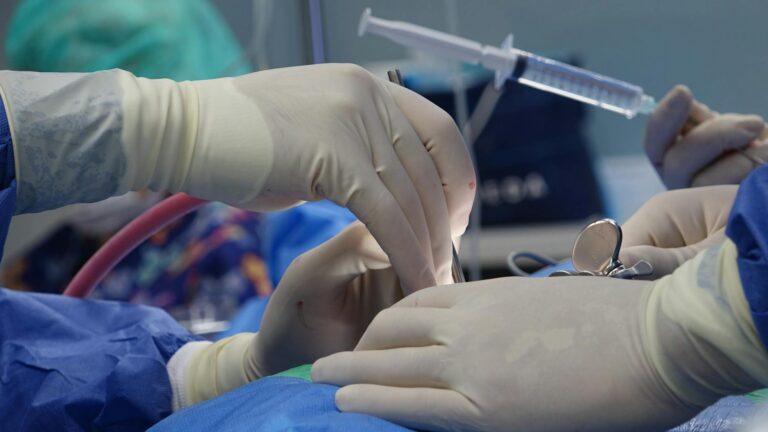
The gold standard for definitive diagnosis, however, is an image-guided injection directly into the SI joint. Using CT (computed tomography) or fluoroscopy (real-time X-ray guidance), a radiologist can direct a needle precisely into the joint and inject a small amount of anesthetic. If your pain goes away for a period of time after this injection, it confirms that the SI joint is indeed the source of your pain. This diagnostic approach is far more accurate than guessing based on imaging alone, because it actually tests whether the joint is the culprit. Standard MRI and X-ray scans may show degenerative changes in the joint, but these changes don’t always cause pain—some people have significant degenerative changes and zero symptoms, while others have minimal findings on imaging but severe pain.
What Actually Works to Treat SI Joint Pain?
The most effective treatment for SI joint pain combines patient education, targeted stabilization exercises, and sometimes injections—rarely does it require surgery. Medical research consistently shows that lumbopelvic stabilization training is one of the most effective interventions. These aren’t random stretches; they’re specific exercises designed to strengthen the muscles that support the SI joint, particularly the deep core muscles and hip stabilizers that do the work the joint itself can’t do when it’s either too loose or too tight. Your physical therapist teaches you to activate your deep abdominal muscles, glute muscles, and hip muscles in a coordinated way so that during daily activities, these muscles do the stabilizing job rather than letting the joint move excessively or jam.
Alongside stabilization exercise, conservative treatment typically includes patient education (learning what movements and positions aggravate your joint so you can modify your behavior), manual therapy or manipulative therapy (a physical therapist or chiropractor can help restore normal motion), and specific stretching for tight muscles that pull on the joint. For many people, this conservative approach works remarkably well—the body is remarkably good at adapting and compensating once the joint has proper muscular support. When conservative treatment doesn’t fully resolve pain, intra-articular corticosteroid injections directly into the joint can provide relief, especially when combined with continued exercise. These injections reduce inflammation inside the joint, often providing enough pain relief that you can engage more effectively in rehabilitation. It’s important to understand that the injection is a tool to make exercise possible; it’s not a permanent fix on its own.

What Causes SI Joint Problems in the First Place?
SI joint pain develops for several overlapping reasons. Pregnancy is a common cause, as hormones loosen ligaments throughout the pelvis to prepare for childbirth, and the extra weight and shift in posture further stress the joint. Repetitive stress—like running long distances, heavy lifting, or jobs requiring prolonged standing on one leg—can gradually destabilize the joint. Trauma, including car accidents or falls, can injure the joint directly or disrupt its normal alignment.
Prior lumbar fusion surgery is a known risk factor; when you surgically fuse segments of the spine, the joints below that fusion have to absorb more stress than they normally would, and the SI joint often bears the brunt of this increased demand. Certain factors also increase overall risk: women are affected more often than men (likely related to hormonal influences on ligament laxity), obesity increases load through the joint, and athletic overuse in sports emphasizing explosive movements can precipitate problems. Interestingly, abnormal movement patterns developed earlier in life can predispose the joint to problems. Someone who has a habit of standing with weight shifted to one leg, or who has imbalances in hip and core strength, gradually creates asymmetrical stress on the joint. The body’s compensation patterns—ways of moving that feel normal to you but create uneven load—are often the root cause of why the SI joint starts to malfunction.
When Does SI Joint Pain Require More Aggressive Treatment?
For most people, SI joint pain responds well to stabilization exercise and time, but in some cases, more invasive approaches become necessary. If you’ve consistently done physical therapy for several months and your pain hasn’t improved, or if your pain is severe enough that it prevents you from working or engaging in normal daily activities, you may be a candidate for additional interventions. Repeated intra-articular injections can provide temporary relief while you work on stabilization, and some patients need a series of these injections spaced out over time to break the pain cycle and allow healing to progress.
In rare cases where conservative and injection-based approaches have failed, surgical stabilization of the SI joint using fusion or allograft techniques can be considered—but this is truly a last resort, reserved for people with documented SI joint pathology and failure of many months of conservative care. Research into SI joint pain and the quality of life impact of this condition is sobering: patients with SI joint pain report some of the lowest quality of life scores of any chronic disease. This underscores why getting an accurate diagnosis and starting appropriate treatment matters so much. The longer you attribute your pain to the wrong cause and pursue treatments that don’t address the SI joint, the longer you’re stuck suffering unnecessarily.
Conclusion
If you’ve had lower back pain that hasn’t responded to standard treatments, that gets worse with specific movements, or that’s concentrated on one side of your lower back, SI joint dysfunction deserves consideration. The pain accounts for a significant portion of chronic back complaints, often goes undiagnosed because doctors aren’t specifically looking for it, and responds remarkably well to targeted treatment once identified.
Start with a careful assessment from a clinician who understands SI joint dysfunction, ask about the possibility of diagnostic injection if physical therapy doesn’t improve things, and commit to the stabilization exercises that actually fix the underlying problem. The good news is that most people recover well with conservative care—you don’t need surgery, and in many cases you don’t even need injections. What you need is the right diagnosis and a focused approach to rebuilding stability in the joint.