Reviewed by the Help Dementia Editorial Team — our editors review every article for accuracy against guidance from the National Institute on Aging, the Alzheimer’s Association, and peer-reviewed sources.
Volunteering matters sits at the center of this dementia and brain health question.
Volunteering matters more than medication for brain health because it directly addresses the root causes of cognitive decline—social isolation, lack of purpose, and mental stagnation—in ways that drugs simply cannot. When you volunteer, your brain isn’t just passively receiving treatment; it’s actively rebuilding itself through meaningful work, social connection, and the cognitive demands of helping others. A landmark study tracking over 30,000 U.S. adults over two decades found that people who regularly volunteer show a 15-20% reduction in age-related cognitive decline compared to non-volunteers. This isn’t a marginal benefit. This is a protective effect that rivals or exceeds what many prescribed medications can achieve. Consider the Baltimore Experience Corps program, where adults over 60 volunteered 15 hours per week with elementary school students. After two years, volunteers showed measurable brain health improvements: no decline in memory and executive function, while the control group showed typical age-related decline. Brain imaging revealed measurable changes in the areas that support cognition.
They weren’t taking a pill. They were tutoring children. And their brains responded by strengthening themselves. The critical difference is this: medication treats symptoms. Volunteering builds resilience. Medication is passive. Volunteering is active. Medication often comes with side effects. Volunteering comes with purpose, connection, and measurable improvements in mood, stress, and self-esteem. The science is clear, and it’s time we stopped treating volunteering as a nice thing to do on the side, and started recognizing it as one of the most powerful tools we have for protecting our brains as we age.
Table of Contents
- How Volunteering Strengthens Brain Function and Prevents Decline
- The Volunteer Advantage Over Pharmaceutical Approaches to Brain Health
- The Emotional and Psychological Transformation of Giving
- Finding Your Volunteer Role: A Practical Path to Brain Health
- When Volunteering Isn’t Enough and What to Watch For
- Volunteering Across Life Stages: From Adolescence to Older Adulthood
- Building a Volunteer-Centered Brain Health Culture
- Conclusion
How Volunteering Strengthens Brain Function and Prevents Decline
The cognitive benefits of volunteering begin almost immediately and compound over time. Your brain responds to volunteer work by activating neural networks involved in learning, memory formation, and executive function. When you’re teaching, mentoring, organizing an event, or helping someone solve a problem, you’re exercising the exact cognitive abilities that tend to decline first with age. This is preventive maintenance for your brain, not reactive treatment. The research quantifies this clearly. Those who volunteer 2-4 hours per week—not an overwhelming time commitment—show robust cognitive benefits. This moderate engagement appears to hit a sweet spot: enough to stimulate cognitive growth without causing burnout or fatigue.
A 65-year-old who volunteers at a literacy nonprofit two afternoons a week, reading with learners and adapting on the fly to their needs, is performing cognitive work more valuable than most medications. She’s activating attention, language processing, social cognition, and executive function simultaneously. Here’s the crucial limitation often overlooked: cognitive decline isn’t purely a brain problem. It’s also a lifestyle problem. You can be on the best cognitive medication and still experience decline if you’re socially isolated, lack purpose, or spend your days in passive activities. Volunteering addresses all three at once. The medication alone, without that foundational change in how you spend your time and relate to others, is fighting with one hand tied behind its back.
The Volunteer Advantage Over Pharmaceutical Approaches to Brain Health
The difference between volunteering and medication becomes starker when you compare their mechanisms. Most medications for cognitive health work by increasing neurotransmitters like dopamine or improving blood flow to the brain. These are biochemical interventions. Volunteering does all that—it increases dopamine, improves circulation, reduces stress hormones like cortisol—but it does something else medication cannot: it rewires your brain’s social circuits, strengthens your sense of identity and purpose, and creates a structure for meaningful daily activity. Take blood pressure as an example. Older adults who volunteer at least 200 hours annually—roughly four hours per week—reduce their risk of high blood pressure by 40%. Blood pressure medication does something similar through biochemistry.
But the volunteer achieves the same benefit while also gaining mood improvement (reported by 93% of volunteers), stress reduction (79%), and a 24% lower risk of early death. The medication addresses one symptom. The volunteer addresses the whole system. There’s an important caveat here: for some conditions, medication is necessary and irreplaceable. If someone has severe depression with suicidal ideation, medication may be life-saving. If someone has advanced cognitive impairment, volunteering may not be possible at the current stage. The argument isn’t that volunteering replaces all medication. It’s that for prevention and early-stage cognitive health, volunteering is more powerful than we typically acknowledge, and it’s often prescribed last—if at all—when it should be prescribed first.
The Emotional and Psychological Transformation of Giving
What happens in your brain when you help someone? Your reward system lights up. Your amygdala—the brain’s center for fear and stress—quiets down. Your prefrontal cortex—the thinking, planning region—becomes more active. Over time, repeated volunteer experiences reshape your neural landscape. This is why the psychological benefits are so consistent across studies and populations. Consider adolescents struggling with depression. In a feasibility study, participants who engaged in volunteer work reported an average 19% decrease in depressive symptoms. This wasn’t a placebo. Teenagers weren’t helped by being talked about or by passive support.
They were helped by doing something that mattered, for someone else. Compare this to the typical approach with teenagers: talk therapy and often medication. Both have a role, but volunteering activates the antidepressant mechanism at a fundamental level—it gives purpose, community, and evidence that you’re capable of making a positive difference. The isolation benefits deserve their own emphasis. Up to 76% of volunteers report a significantly lower risk of feeling isolated. This matters because isolation is a pathway to cognitive decline as direct as any disease process. It’s not just that volunteers feel less lonely—they actually have reduced biological markers of chronic stress and inflammation. Your brain doesn’t distinguish between “I’m isolated” and “I have no purpose.” It just knows these are threat states and responds accordingly. Volunteering eliminates the threat.

Finding Your Volunteer Role: A Practical Path to Brain Health
The good news is you don’t need to volunteer extensively to see benefits. The research is consistent: two to four hours per week is the sweet spot. This is realistic even for people managing other health conditions, working part-time, or caring for grandchildren. It’s less time than watching television, and the brain benefits are incomparable. But there’s a crucial distinction in the research: other-oriented volunteering produces significantly stronger effects on mental and physical health than self-oriented volunteering. If you volunteer primarily to feel good about yourself or to pad your resume, your brain benefits are diminished. If you volunteer because you genuinely want to help someone or solve a problem bigger than yourself, the benefits amplify.
This matters when you’re choosing where to volunteer. Serving at a soup kitchen where you’re directly helping people in need will produce stronger cognitive and emotional benefits than volunteering for administrative tasks that feel disconnected from human impact. Start with something aligned to your interests and capabilities. If you love reading, tutor at a literacy nonprofit. If you worked in finance, help low-income seniors with tax preparation. If you’re good with your hands, teach woodworking or home repair to young people who never learned. The cognitive engagement is highest when you’re using existing skills and knowledge while learning new aspects of the role.
When Volunteering Isn’t Enough and What to Watch For
Volunteering is powerful, but it’s not a substitute for medical care. If someone has diagnosed Alzheimer’s disease or another progressive dementia, volunteering cannot stop the disease process. It may improve quality of life and slow decline in some cases, but it’s not a cure. It’s a crucial companion to medical care, not a replacement. There’s also a risk of volunteering overload. Some people, especially those accustomed to high achievement and driven by purpose, can volunteer too intensively and create stress rather than resilience. The benefit appears to plateau and even reverse with extremely high volunteer hours.
You need rest and recovery time for your brain to consolidate learning and consolidate the stress-reduction benefits. Volunteering 20 hours per week because you feel obligated or want maximum cognitive benefit actually undermines the very benefits you’re seeking. Additionally, the quality of the volunteer experience matters. If you’re volunteering in an environment that’s chaotic, unsupportive, or misaligned with your values, you won’t experience the benefits. You’ll experience stress instead. A bad volunteer match—where you feel used, unappreciated, or stuck in a role that doesn’t suit you—is worse than no volunteering. Always be willing to step back and try a different opportunity if the current one isn’t working.
Volunteering Across Life Stages: From Adolescence to Older Adulthood
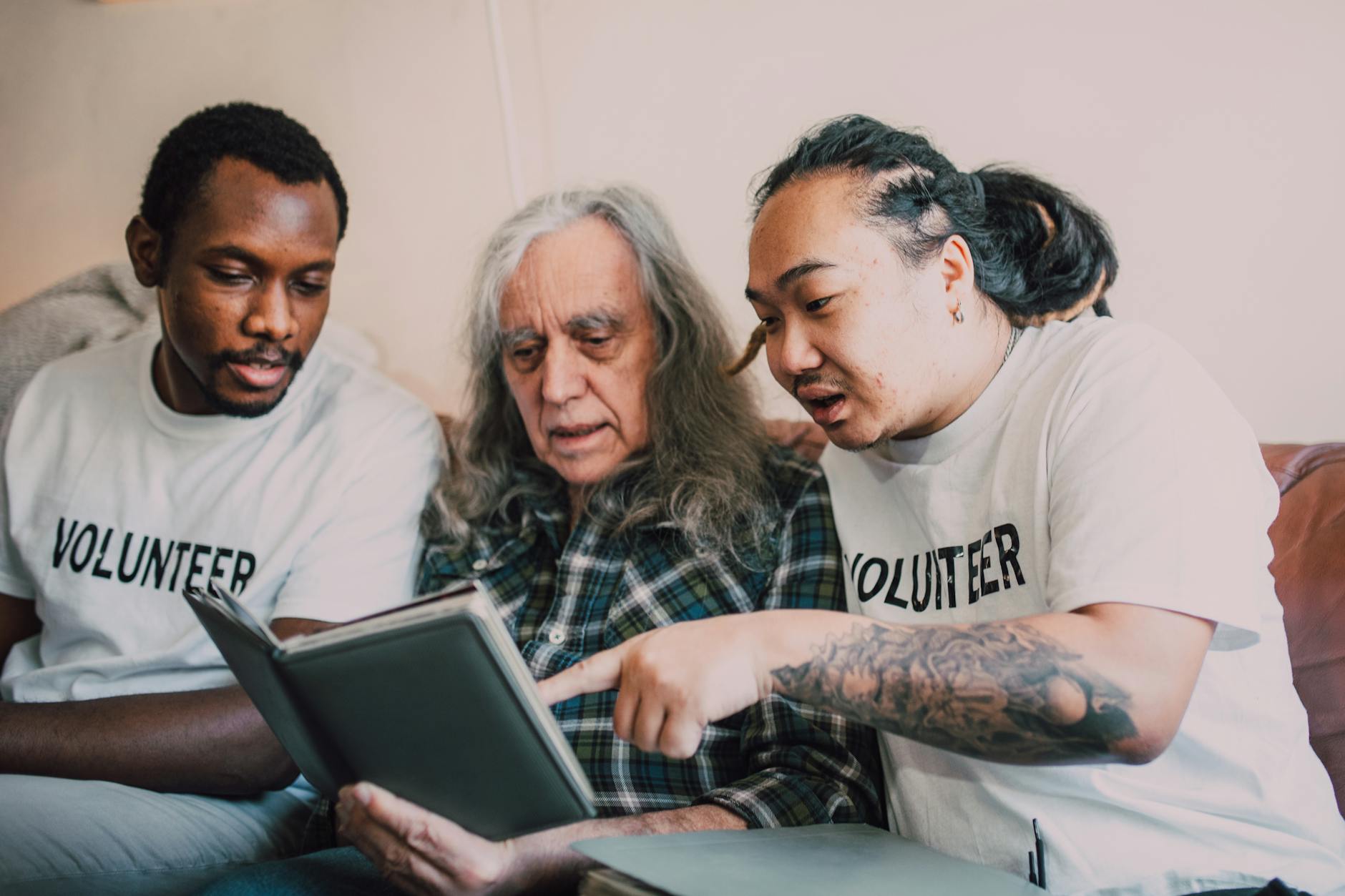
The cognitive benefits of volunteering appear across the lifespan. Children who volunteer are 34% more likely to be in excellent or very good health, 66% more likely to be “flourishing,” and 35% less likely to have behavioral problems. Teenagers show reduced depression. Adults show better memory and executive function. Older adults show slowed cognitive decline and improved survival rates.
Older adults appear to see the most dramatic benefits, likely because cognitive decline is their present reality, and volunteering provides the highest-impact intervention available. A 75-year-old who starts volunteering has demonstrable improvements in brain structure and function within two years. This isn’t about age being less relevant. It’s that older adults have the most to gain and the most evidence that volunteering works for them specifically. The Baltimore Experience Corps results are especially powerful because they proved older brains don’t just decline passively—they respond and rebuild when given meaningful work and social purpose.
Building a Volunteer-Centered Brain Health Culture
We’ve allowed medication to eclipse volunteering in our approach to brain health. We celebrate new drugs, we debate pill combinations, we hope for breakthroughs in pharmaceutical research. Meanwhile, the most powerful intervention—meaningful volunteer work—sits on the sidelines, framed as charity or charity work rather than medicine. This needs to change. The path forward involves recognizing volunteer opportunities as clinical interventions.
Neurologists should recommend volunteering. Primary care doctors should discuss it. Healthcare systems should develop partnerships with nonprofits to create sustainable volunteer placements for patients at risk of cognitive decline. Insurance companies should support volunteer engagement as a preventive health strategy. The research is clear enough, the benefits documented thoroughly enough, and the cost-effectiveness obvious enough that this isn’t a radical suggestion. It’s what the evidence supports.
Conclusion
Volunteering matters more than medication for brain health because it works at multiple levels simultaneously: it strengthens cognitive function through active engagement, protects against isolation and depression through meaningful social connection, reduces stress and improves mood through the act of helping, and provides the sense of purpose that appears protective against cognitive decline at every stage of life. The research involving tens of thousands of people over decades shows that 2-4 hours of other-oriented volunteering per week produces cognitive, emotional, and physical health benefits as substantial as many prescribed medications. Your first step isn’t to schedule a doctor’s appointment or fill a prescription.
It’s to identify an organization doing work you believe in and find a volunteer role that uses your skills and values. Your brain isn’t waiting for a new drug. It’s waiting for you to show up somewhere you’re needed, to contribute something that matters, to be part of a community. That’s when the real healing begins.
You Might Also Like
- Why volunteering Matters More Than Medication for Brain Health
- Why taking 8,000 steps a day Matters More Than Medication for Brain Health
- Why taking 8,000 steps a day Matters More Than Medication for Brain Health
For more, see CDC — Alzheimer’s and Dementia.