Some medications must be taken with food because food physically shields the stomach lining from irritation, slows drug release to prevent dangerous blood sugar drops, or triggers bile production that helps the body absorb the active ingredient. Others must be taken on an empty stomach because food chemically binds to the drug and blocks absorption, sometimes reducing effectiveness by as much as 50 to 75 percent. The difference comes down to a concept pharmacologists call bioavailability, which is the fraction of a drug that actually reaches your bloodstream in active form. For anyone managing multiple prescriptions, and particularly for older adults or people living with dementia who may rely on caregivers to organize a medication schedule, getting this timing wrong can mean a drug either fails to work or causes avoidable side effects. Consider a common scenario in dementia care: a person takes levothyroxine for thyroid function, ibuprofen for arthritis pain, and captopril for blood pressure.
The levothyroxine needs to be taken 30 to 60 minutes before any food. The ibuprofen should be taken with a meal. The captopril works best an hour before eating. That is three different timing rules for three pills, and mixing them up is not a minor inconvenience. Calcium supplements taken at the same time as levothyroxine reduce absorption by 31 percent, and food reduces captopril absorption by 30 to 40 percent. This article walks through which medications need food and which do not, the science that explains why, what the FDA requires drug makers to test, and practical steps caregivers can take to get the timing right every day.
Table of Contents
- What Determines Whether a Medication Should Be Taken With Food or Without?
- Medications That Must Be Taken With Food and Why Skipping a Meal Matters
- Empty Stomach Medications and the Risks of Taking Them Wrong
- How to Build a Medication Schedule That Accounts for Food Timing
- Dangerous Interactions Between Food and Medication That Caregivers Should Know
- What the FDA Requires Drug Companies to Test About Food Interactions
- Emerging Research and the Future of Food-Drug Interaction Prediction
- Conclusion
- Frequently Asked Questions
What Determines Whether a Medication Should Be Taken With Food or Without?
The answer lies in how a drug interacts with the physical and chemical environment of your digestive system. When you eat, your stomach pH rises from roughly 1.5 to about 4 or 5, bile salts flood the small intestine to break down fats, and blood flow to the gut increases. Some drugs need those conditions. HIV protease inhibitors like ritonavir and saquinavir have significantly increased bioavailability when taken with high-fat meals because the bile salts help dissolve and transport the drug across the intestinal wall. Sulfonylureas such as glipizide and glyburide, which are diabetes medications that stimulate insulin release, must be taken with food because triggering insulin on an empty stomach can cause dangerously low blood sugar. Other drugs are harmed by those same conditions. Tetracycline and doxycycline antibiotics bind tightly to calcium, magnesium, and iron, minerals found in dairy products and common antacids. A single glass of milk can reduce absorption of these antibiotics by 50 to 75 percent, effectively turning a therapeutic dose into a subtherapeutic one.
The antifungal ketoconazole needs the highly acidic environment of a fasting stomach to dissolve properly, so the higher pH that comes with eating impairs its absorption. In each case, the instruction is not arbitrary. It reflects how the drug’s chemical structure interacts with the digestive process. A useful comparison: amoxicillin and doxycycline are both antibiotics, but they require opposite instructions. Amoxicillin is better absorbed with food, particularly fatty meals, because fat stimulates bile production that helps dissolve and transport the drug. Doxycycline binds to the calcium in that same meal and loses effectiveness. The drug class alone does not tell you the rule. The specific molecule does.

Medications That Must Be Taken With Food and Why Skipping a Meal Matters
NSAIDs, which include ibuprofen, naproxen, and aspirin, are among the most commonly used drugs that require food. These medications work by inhibiting prostaglandin production, but prostaglandins also protect the stomach’s mucosal lining. Without that protection, the drug sits in direct contact with vulnerable tissue. Food acts as a physical buffer between the pill and the stomach wall, reducing the risk of ulcers and gastrointestinal bleeding. Corticosteroids like prednisone and dexamethasone carry a similar warning. They should be taken with food to neutralize stomach acid and prevent gastric irritation, a concern that compounds over time for people on long-term steroid therapy. However, there is a tradeoff worth understanding. A 2015 systematic review published in the British Journal of Clinical Pharmacology found that for NSAIDs, food delays absorption.
The peak blood concentration when taken with food was only 44 to 85 percent of the fasted peak for aspirin, diclofenac, ibuprofen, and paracetamol. The total absorption over time remained the same, meaning the drug still worked, but it kicked in more slowly. For someone taking ibuprofen for chronic arthritis managed alongside dementia, this delay is usually irrelevant. But for someone in acute pain hoping for fast relief, taking ibuprofen with just a few crackers rather than a full meal can balance stomach protection with faster onset. The stakes are higher with sulfonylureas. If a person with diabetes takes glipizide on an empty stomach, the drug still triggers insulin release, but there is no incoming glucose from food to absorb. The result can be hypoglycemia, which in older adults and especially those with cognitive impairment can mimic or worsen confusion, cause falls, or lead to hospitalization. Caregivers managing a medication schedule for someone with dementia should treat the food pairing for these drugs as non-negotiable.
Empty Stomach Medications and the Risks of Taking Them Wrong
Levothyroxine is the textbook example of a drug that demands an empty stomach, and it is also one of the most commonly prescribed medications among older adults. Thyroid hormone must be taken 30 to 60 minutes before eating. Dairy products, fiber, iron supplements, soy, and proton pump inhibitors like omeprazole and lansoprazole all significantly interfere with absorption. The numbers are concrete: calcium supplements taken simultaneously reduce levothyroxine absorption by 31 percent. A 2023 study published in The Lancet Digital Health found that patients who timed their levothyroxine to their unique digestion patterns saw 22 percent better thyroid hormone levels, suggesting that even within the “empty stomach” rule, individual biology matters. Acetaminophen, sold as Tylenol, is another drug absorbed faster and more effectively on an empty stomach. this does not mean taking it with food is dangerous, but it does mean the pain relief takes longer to arrive.
For a person with dementia who cannot easily communicate that a headache has not yet resolved, a caregiver might mistakenly assume the dose was inadequate and give another too soon. Understanding that food simply delayed the effect, rather than blocked it, can prevent accidental overdosing. Captopril, an ACE inhibitor used for blood pressure, loses 30 to 40 percent of its absorption when taken with food. It should be taken one hour before meals. The warning here is that not all ACE inhibitors share this restriction. Lisinopril and enalapril, for example, can generally be taken without regard to food. If a prescriber switches a patient from one ACE inhibitor to another, the food-timing rules may change even though the drug class stays the same. This is a detail that frequently gets lost during care transitions, exactly the kind of moment when errors happen.

How to Build a Medication Schedule That Accounts for Food Timing
The practical challenge is sequencing. A person who takes levothyroxine, a sulfonylurea, and an NSAID faces three different rules: one drug 30 to 60 minutes before food, one drug with food, and one drug also with food but with the understanding that it will work more slowly. The simplest approach is to anchor the schedule to meals. Levothyroxine goes on the nightstand with a glass of water for first thing in the morning, well before breakfast. The sulfonylurea and NSAID go with breakfast or lunch. Captopril, if prescribed, slots in an hour before dinner. The tradeoff is between ideal pharmacology and realistic adherence.
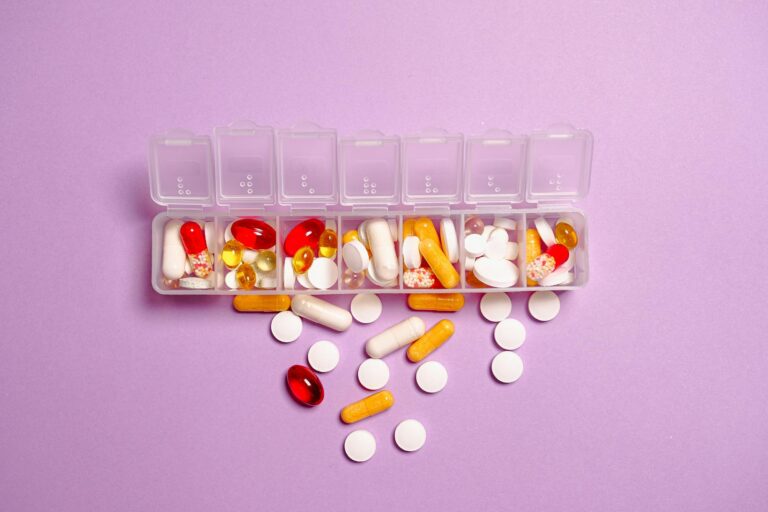
A theoretically perfect schedule might space medications throughout the day at precise intervals, but for a person with dementia, complexity is the enemy of consistency. Research consistently shows that simpler regimens lead to better adherence. If consolidating two “take with food” medications into the same mealtime sacrifices a small amount of one drug’s peak absorption speed but means the person actually takes both pills, that is usually the better outcome. Discuss consolidation options with the prescribing physician or pharmacist, who can identify which timing rules are strict requirements and which are softer preferences. Pill organizers help, but they do not solve the food-timing problem on their own. A weekly pill box sorted by day tells you which pills to take but not whether to eat first. For caregivers, labeling compartments with “before breakfast,” “with breakfast,” and “before dinner” rather than just “morning” and “evening” turns an abstract pharmacological rule into a concrete action.
Dangerous Interactions Between Food and Medication That Caregivers Should Know
Grapefruit juice is the most widely cited food-drug interaction, and for good reason. It inhibits the CYP3A4 enzyme in the gut, which normally breaks down certain drugs before they reach the bloodstream. When that enzyme is blocked, blood levels of the drug spike dramatically. This affects statins, calcium channel blockers, and certain immunosuppressants. The danger is not limited to a glass of juice at pill time. Grapefruit’s enzyme-blocking effect can last 24 to 72 hours, meaning a glass of grapefruit juice at breakfast can affect a statin taken at bedtime. For older adults already on multiple medications, this interaction can push drug levels into toxic ranges.
The limitation to keep in mind is that not all drugs within a class are equally affected. Atorvastatin and simvastatin are strongly affected by grapefruit, while rosuvastatin and pravastatin are not metabolized by CYP3A4 and are generally safe. If a person with dementia enjoys grapefruit and takes a statin, switching to a grapefruit-safe statin may be preferable to eliminating a food they find comforting. This is a conversation worth having with the prescriber. A broader caution applies to proton pump inhibitors, which many older adults take for acid reflux. These drugs raise stomach pH, and that change does not just affect comfort. It affects the absorption of every other oral medication that depends on an acidic stomach environment. If a person starts omeprazole and their other medications seem to stop working as well, the PPI-driven pH change may be the explanation.

What the FDA Requires Drug Companies to Test About Food Interactions
The FDA mandates food-effect bioavailability studies for all new orally administered drug products. The standard test meal is a high-fat, high-calorie meal of roughly 800 to 1,000 calories with about 50 percent of those calories from fat. This is not a typical breakfast for most people, but it represents a worst-case scenario designed to reveal the maximum possible food effect.
The results of these studies determine the food-timing instructions that appear in the DOSAGE AND ADMINISTRATION section of the drug label. In August 2024, the FDA adopted the ICH M13A guideline, which streamlined requirements. For drugs with a low risk of food-related bioavailability changes, manufacturers now need to run only one bioequivalence study, either fasting or fed, instead of two. This change reduces development costs without compromising safety for drugs where food effects are minimal.
Emerging Research and the Future of Food-Drug Interaction Prediction
A 2025 study introduced a new dataset of over 500,000 food-drug interaction records designed for AI-driven prediction of interactions using CYP450 enzyme modeling. The goal is to move beyond static label instructions and toward personalized, real-time alerts that account for what a patient actually ate, not just whether they ate.
For dementia care, where meals may be irregular, incomplete, or substituted, this kind of precision could eventually help caregivers make better in-the-moment decisions. Separately, 2025 research published in Frontiers in Nutrition flagged that the widely used GLP-1 receptor agonist drugs, including semaglutide, marketed as Ozempic, reduce micronutrient absorption through decreased food intake and gastrointestinal effects. This raises concerns about long-term micronutrient deficiency in the growing number of older adults prescribed these medications, a population already at elevated risk for nutritional gaps that can worsen cognitive decline.
Conclusion
The reason some medications must be taken with food and others without is rooted in measurable chemistry: how the drug dissolves, what it binds to, whether it irritates tissue, and how much of it reaches the bloodstream under different digestive conditions. These are not suggestions. For levothyroxine, the difference between taking it with and without calcium is a 31 percent change in absorption. For tetracycline taken with milk, it is a 50 to 75 percent reduction. For sulfonylureas taken without food, it is a risk of hypoglycemia severe enough to cause hospitalization.
For caregivers managing medications for a person with dementia, the practical takeaway is to build food timing into the medication schedule from the start, not as an afterthought. Ask the pharmacist to flag which drugs have strict food requirements versus soft preferences. Label pill organizers by meal context, not just time of day. And when any medication changes, whether a new prescription, a dosage adjustment, or a switch within the same drug class, ask specifically whether the food-timing rules have changed. Small details in medication timing can have outsized effects on whether a drug actually does what it was prescribed to do.
Frequently Asked Questions
Does “take with food” mean I need a full meal, or is a snack enough?
For most medications, a small snack with some fat content, such as a few crackers with peanut butter or a piece of cheese, is sufficient. The exception is HIV protease inhibitors, which specifically benefit from high-fat meals. When in doubt, ask your pharmacist whether a light snack meets the requirement.
What happens if someone with dementia accidentally takes levothyroxine with breakfast?
A single instance is unlikely to cause harm, but repeated incorrect timing will lead to consistently lower thyroid hormone levels. If the person’s thyroid numbers are not responding to treatment, check whether food timing has drifted before assuming the dose needs to increase.
Can I crush medications and mix them with food for someone who has trouble swallowing?
Some medications can be crushed, but others, particularly extended-release formulations, must not be because crushing destroys the controlled-release mechanism and can deliver a dangerously high dose all at once. Always check with the pharmacist before crushing any pill.
Is it safe to take all “with food” medications together at the same meal?
Generally yes, but certain combinations can interact with each other regardless of food. For example, calcium-rich foods or supplements taken with certain antibiotics will impair the antibiotic’s absorption even if both are “take with food” drugs. A pharmacist can review the full medication list for conflicts.
How long does “empty stomach” actually mean? How long before or after eating?
The standard guidance is at least one hour before eating or two hours after eating. For levothyroxine specifically, 30 to 60 minutes before food is the minimum. These windows allow the stomach to return to its fasting pH and clear food residues that could bind to the drug.