Whether a herniated disc causes debilitating pain or remains completely silent has almost nothing to do with how large the herniation is. Instead, pain severity depends primarily on two factors: whether the herniated material actually contacts and compresses nerve structures, and whether inflammatory chemicals released from the disc irritate surrounding tissues.
A small herniation that directly compresses a nerve root can cause severe, radiating pain down the leg or arm, while a much larger herniation in a different location might never produce any symptoms at all and be discovered only by accident during imaging for an unrelated reason. Understanding these mechanisms helps explain why two people with similar-looking MRI images can have vastly different experiences—and why imaging results alone cannot predict who will suffer from disc herniation pain. This article explores the scientific reasons behind this paradox, examining what determines whether a herniation becomes painful, how inflammation compounds mechanical compression, and why some people experience life-altering symptoms while others live normally with herniated discs they never knew they had.
Table of Contents
- Why Nerve Compression Is Not Always Painful—And When It Is
- Chemical Inflammation—The Hidden Pain Generator
- Microvascular Damage and Nerve Root Ischemia
- How Individual Spinal Anatomy Shapes Pain Risk
- Why MRI Images Can Be Misleading
- The Role of Inflammation and Individual Sensitivity
- Understanding Symptom Variability and Future Treatment Directions
- Conclusion
Why Nerve Compression Is Not Always Painful—And When It Is
The most counterintuitive fact about disc herniations is that most of them cause no pain whatsoever. Studies show that herniated discs are frequently discovered incidentally on imaging studies performed for other reasons—patients had no symptoms and no reason to suspect anything was wrong. The difference between a painful herniation and an asymptomatic one comes down to a simple anatomical fact: if the herniated material does not contact nerve structures, there is nothing to irritate, and no pain signal gets generated. A herniation can bulge into the spinal canal without ever touching a nerve root, and the patient will feel nothing.
However, when herniated disc material does compress a nerve, the relationship between compression severity and pain is not straightforward. Pain severity is not always correlated with the degree of nerve compression—a small herniation can cause severe pain if a nerve root is severely compressed or inflamed, while a larger herniation compressing the nerve less directly might produce only mild discomfort. This nonlinear relationship surprises many patients who see their MRI images and expect the size of the herniation to match the intensity of their symptoms. An herniation one millimeter larger on the image does not necessarily cause one millimeter more pain. The location of the compression matters far more than the size; compression at a critical point on the nerve can trigger severe pain, while compression along the nerve’s side might be tolerated better.
Chemical Inflammation—The Hidden Pain Generator
Pain from a herniated disc is not solely caused by mechanical compression of the nerve root. When the outer layer of the disc tears and the inner disc material ruptures outward, the exposure triggers something equally important: the release of inflammatory chemicals. Herniated disc material stimulates the production of inflammatory molecules called cytokines, including interleukins 1 and 6, tumor necrosis factor-alpha (TNF-α), and other inflammatory mediators like substance P, bradykinin, and prostaglandins. These chemicals diffuse through the surrounding tissues and irritate nerve fibers even when direct mechanical compression is minimal.
This chemical inflammation can cause severe pain independently of compression. A patient might experience intense radiating pain, burning, or numbness from this inflammatory response even when the herniated material is not directly squeezing the nerve root. This explains why some patients with visibly large herniations but minimal direct nerve compression still suffer significantly, while others with smaller herniations compressing the nerve more directly experience less pain. It also explains why anti-inflammatory treatments—including steroids, NSAIDs, or targeted epidural steroid injections—sometimes reduce pain dramatically without changing the physical herniation at all. The inflammation can be treated; the mechanical herniation might remain unchanged on the MRI, yet the patient feels dramatically better.
Microvascular Damage and Nerve Root Ischemia
Beyond chemical inflammation, mechanical compression causes direct physical damage to the tiny blood vessels that supply the nerve root. The range of vascular injury varies depending on compression severity. Mild compression may obstruct only venous drainage, causing swelling and edema around the nerve. Moderate compression restricts blood flow more significantly. Severe compression can cut off arterial blood supply entirely, leading to arterial ischemia—literally starving the nerve tissue of oxygen.
This progressive vascular damage creates a cascade of injury that extends far beyond the simple mechanical crushing of the nerve. most herniated discs occur posterolaterally, meaning they bulge toward the back and slightly to one side of the spine. This location is particularly problematic because the posterior part of the annulus fibrosus—the tough outer layer of the disc—lacks the structural support found in the front of the disc. The posterior ligaments that reinforce the spinal canal in other directions provide less support here, making posterolateral herniations more likely to contact and compress nerve roots. An anterior herniation (bulging toward the front of the body) is anatomically blocked by stronger ligaments and is therefore less likely to cause nerve compression, even if the herniation is large.

How Individual Spinal Anatomy Shapes Pain Risk
Not everyone’s spine is built the same way. Some people have naturally narrower spinal canals—a condition called spinal stenosis—which means they have less room for nerves to move away from an approaching herniation. For these individuals, even a small herniation can trigger severe compression because there is nowhere for the nerve to shift. Someone else with a naturally spacious spinal canal might accommodate a much larger herniation with minimal compression.
This anatomical lottery explains why identical herniation sizes cause vastly different symptoms in different people. Age also plays a role in how the spine tolerates herniation. In younger people, the disc material is more hydrated and cohesive, so when it herniates, it tends to stay somewhat contained. In older individuals, the disc material is drier and more fragmented, potentially spreading more widely and irritating a larger area of tissue. Additionally, older spines often have other degenerative changes—bone spurs, disc space narrowing, ligament thickening—that reduce the spine’s tolerance for further compression from a new herniation.
Why MRI Images Can Be Misleading
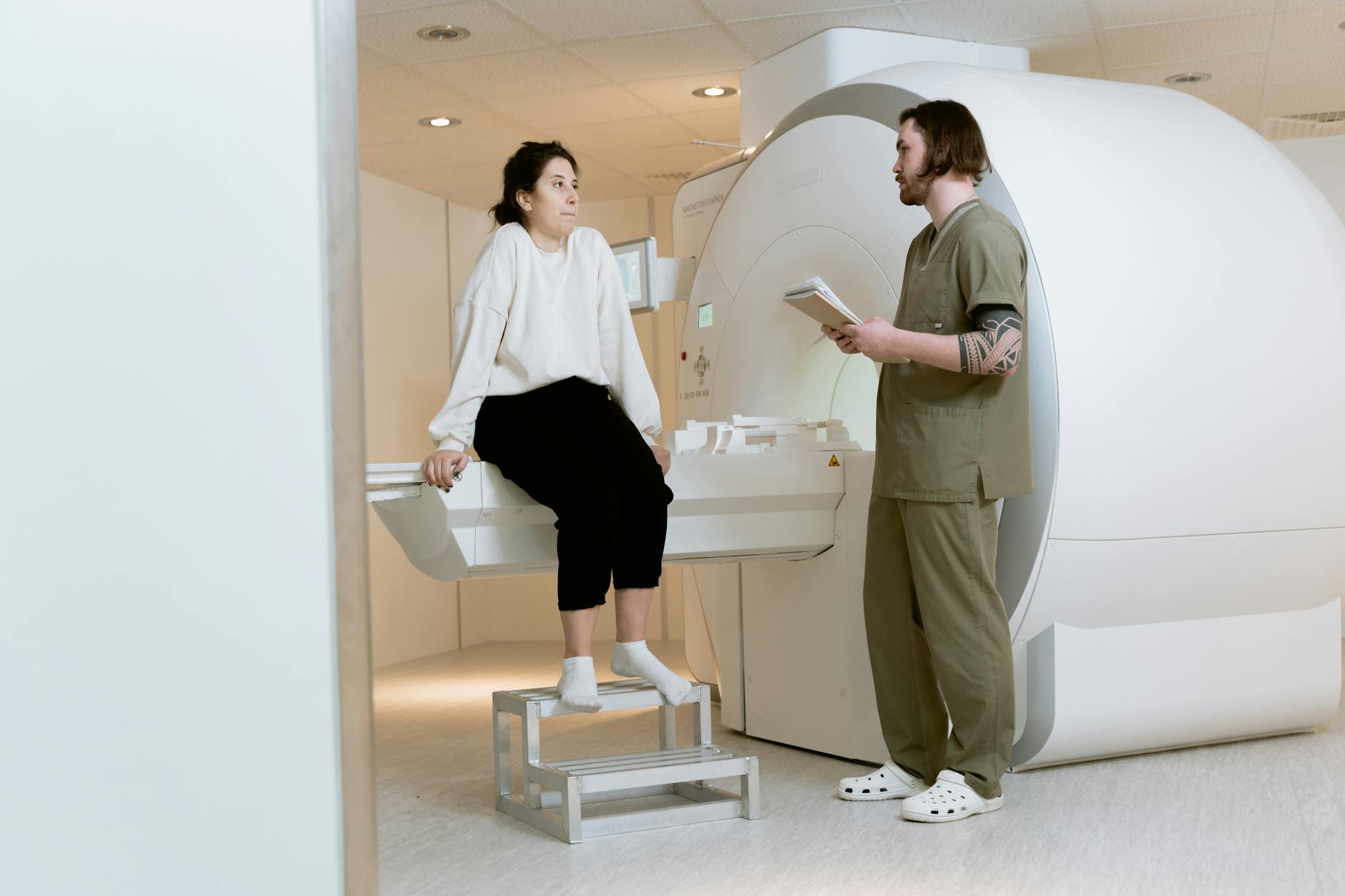
One of the most confusing aspects of disc herniation is that MRI images often look “worse” than symptoms would suggest, or paradoxically, look innocuous while the patient suffers severely. This mismatch occurs because an MRI shows anatomy—the shape and position of the disc—but not function or inflammation. A large-appearing herniation might not be compressing the nerve in a functionally important way, or the nerve might have gradually adapted to the compression over weeks or months. Conversely, a herniation that looks small on the image might be compressing the nerve at a critical juncture, or severe inflammatory swelling around it might not be visible on standard MRI sequences.
This is why clinicians are cautious about making treatment decisions based on MRI appearance alone. A surgeon cannot predict who will improve with conservative treatment and who will need surgery simply by measuring the herniation size on the image. Clinical examination—testing for nerve root tension, assessing which movements cause pain, evaluating sensory and motor function—provides crucial information that imaging cannot. Two patients with identical MRI findings may warrant completely different treatment approaches based on their functional abilities and actual pain patterns.
The Role of Inflammation and Individual Sensitivity
Beyond structural factors, individual differences in inflammatory response also affect pain severity. Some people’s immune systems mount a more aggressive inflammatory reaction to disc herniation, while others have a more muted response. This is partly genetic—inflammatory marker levels and immune system reactivity vary from person to person—and partly environmental.
Prior injuries, chronic stress, sleep deprivation, and other factors can amplify inflammatory responses throughout the body, making someone more sensitive to disc-related inflammation. Neurosensitivity also plays a role. After an initial disc herniation, some people develop a state of heightened nerve sensitivity in which the nervous system becomes hypervigilant, sending pain signals at lower thresholds of irritation. This central sensitization can persist even after the physical herniation and inflammation improve, and it explains why some patients continue to experience pain despite objective improvements in their condition.
Understanding Symptom Variability and Future Treatment Directions
The remarkable variability in how herniated discs present symptoms—from completely silent to severely disabling—reflects the complexity of the spine and nervous system. No single factor determines pain; instead, multiple factors interact: the location and size of the herniation, whether it contacts nerves, the degree of inflammatory response, individual anatomy, and each person’s nervous system sensitivity all play roles.
Future treatments are increasingly targeting the chemical and inflammatory aspects of disc herniation rather than focusing solely on mechanical decompression. Regenerative medicine approaches, advanced anti-inflammatory therapies, and nerve desensitization techniques represent an evolving understanding that treating pain requires addressing multiple mechanisms simultaneously, not just moving the herniated disc material away.
Conclusion
A herniated disc causes severe pain only when specific conditions align: the herniation must be positioned to contact a nerve, the resulting mechanical compression or inflammatory response must be significant enough to irritate that nerve, and the individual’s anatomy and immune response must amplify rather than buffer the irritation. Many herniated discs meet none of these criteria and never cause any symptoms. This explains the disconnect between imaging findings and patient experiences—a large herniation in a fortunate location with minimal inflammation might cause no pain, while a small herniation in a critical location with robust inflammation might be disabling.
If you have been diagnosed with a herniated disc, understanding these mechanisms can help you interpret your imaging results and treatment options more clearly. Pain severity and imaging appearance do not always align, and this is not a sign of misdiagnosis or malingering—it reflects the true biological complexity of how disc herniation causes pain. Working with clinicians who understand these distinctions will lead to better assessment and more targeted, effective treatment approaches.