Phantom limb pain treatment has finally advanced in 2025 because researchers discovered that the fundamental theory driving decades of therapy was wrong. A landmark study published in Nature Neuroscience in August 2025 revealed that the brain’s sensory map does not reorganize after amputation, as scientists had believed for over thirty years. That single finding explains why treatments designed to “reverse” cortical reorganization have consistently performed no better than placebos, and it has opened the door to approaches that actually work — from botulinum toxin injections that delivered a four-point pain reduction in Ukrainian war amputees, to a psilocybin trial at UC San Diego where patients reported 50 to 75 percent less pain severity. This matters far beyond orthopedic medicine.
Phantom limb pain affects 60 to 80 percent of all amputees, with a 2024 cross-sectional survey placing prevalence at 71.73 percent. The United States alone has an estimated two million people living with major limb amputations, a number projected to reach 3.6 million by 2050. For readers of this site who follow brain health and neurological research, phantom limb pain sits at the intersection of neuroscience, chronic pain management, and cognitive function — and 2025 is the year the field stopped guessing and started producing real clinical evidence. This article covers the brain mapping discovery that changed everything, the most promising new treatments emerging from clinical trials, what surgical and technological options now look like, and the honest limitations that remain. Not every advance described here is ready for your doctor’s office tomorrow, but taken together, they represent the most significant shift in phantom limb pain treatment in a generation.
Table of Contents
- Why Did Phantom Limb Pain Treatments Fail for So Long?
- What the Brain Map Discovery Means for Future Pain Treatment and Prosthetics
- Botulinum Toxin Injections Show Rapid Pain Relief in War Amputees
- Psilocybin, Targeted Surgery, and the Expanding Treatment Menu
- Virtual Reality and Extended Reality Therapies — What Works and What Doesn’t
- Home-Based Programs and the Shift Toward Accessible Care
- Where Phantom Limb Pain Treatment Goes From Here
- Conclusion
- Frequently Asked Questions
Why Did Phantom Limb Pain Treatments Fail for So Long?
For roughly three decades, the dominant explanation for phantom limb pain went like this: after amputation, the brain region that once controlled the missing limb gets “invaded” by neighboring cortical areas, and that reorganization produces pain. Therapies were designed accordingly. Mirror therapy, motor imagery exercises, and various neurostimulation protocols all aimed to reverse that supposed cortical takeover. The problem, which clinicians noticed but could not fully explain, was that these interventions rarely outperformed placebos in rigorous trials. The Nature Neuroscience study led by Hunter Schone and colleagues at the National Institutes of Health and University College London finally provided the explanation.
The research team followed three adults with longitudinal neuroimaging before and up to five years after arm amputation — an unusually rigorous design that tracked the same brains over time rather than comparing different patients at a single point. they found the brain’s body map remained stable. There was no large-scale cortical reorganization. The phantom limb’s territory in the brain stayed essentially intact, which means the entire theoretical foundation beneath decades of treatment was built on sand. This does not mean those older therapies were useless for every patient. Some people did experience relief from mirror therapy and similar approaches, likely for reasons unrelated to cortical reorganization — perhaps distraction, placebo response, or other mechanisms not yet understood. But it does mean that the field was optimizing treatments for a problem that did not exist, and the 2025 discovery has redirected research toward what actually happens in the brain after amputation.

What the Brain Map Discovery Means for Future Pain Treatment and Prosthetics
The persistence of intact phantom limb brain maps carries implications that extend well beyond pain management. If the brain maintains a stable representation of the missing limb for years after amputation, that representation can serve as a reliable foundation for brain-computer interfaces. Prosthetic limbs controlled by neural signals depend on consistent cortical maps — if those maps were constantly shifting, as the old theory predicted, long-term prosthetic control would be far more difficult. The 2025 finding suggests it should be far more achievable than previously thought. However, the study has an important limitation: it followed only three patients, all adults who lost arms.
Whether the same cortical stability holds for lower-limb amputations, for children whose brains are still developing, or for people who lost limbs to conditions like diabetes rather than trauma remains an open question. Researchers have noted that larger studies are needed before the finding can be generalized with full confidence. The result is compelling precisely because of its longitudinal design, but the small sample size means it should be treated as a paradigm-shifting hypothesis that now needs broader confirmation, not yet a settled universal law. What clinicians can take from this right now is a healthy skepticism toward any treatment that claims to work by “remapping” or “reorganizing” the brain’s response to amputation. If someone is selling a therapy on that premise, the evidence no longer supports the mechanism, even if the therapy itself might help through other pathways.
Botulinum Toxin Injections Show Rapid Pain Relief in War Amputees
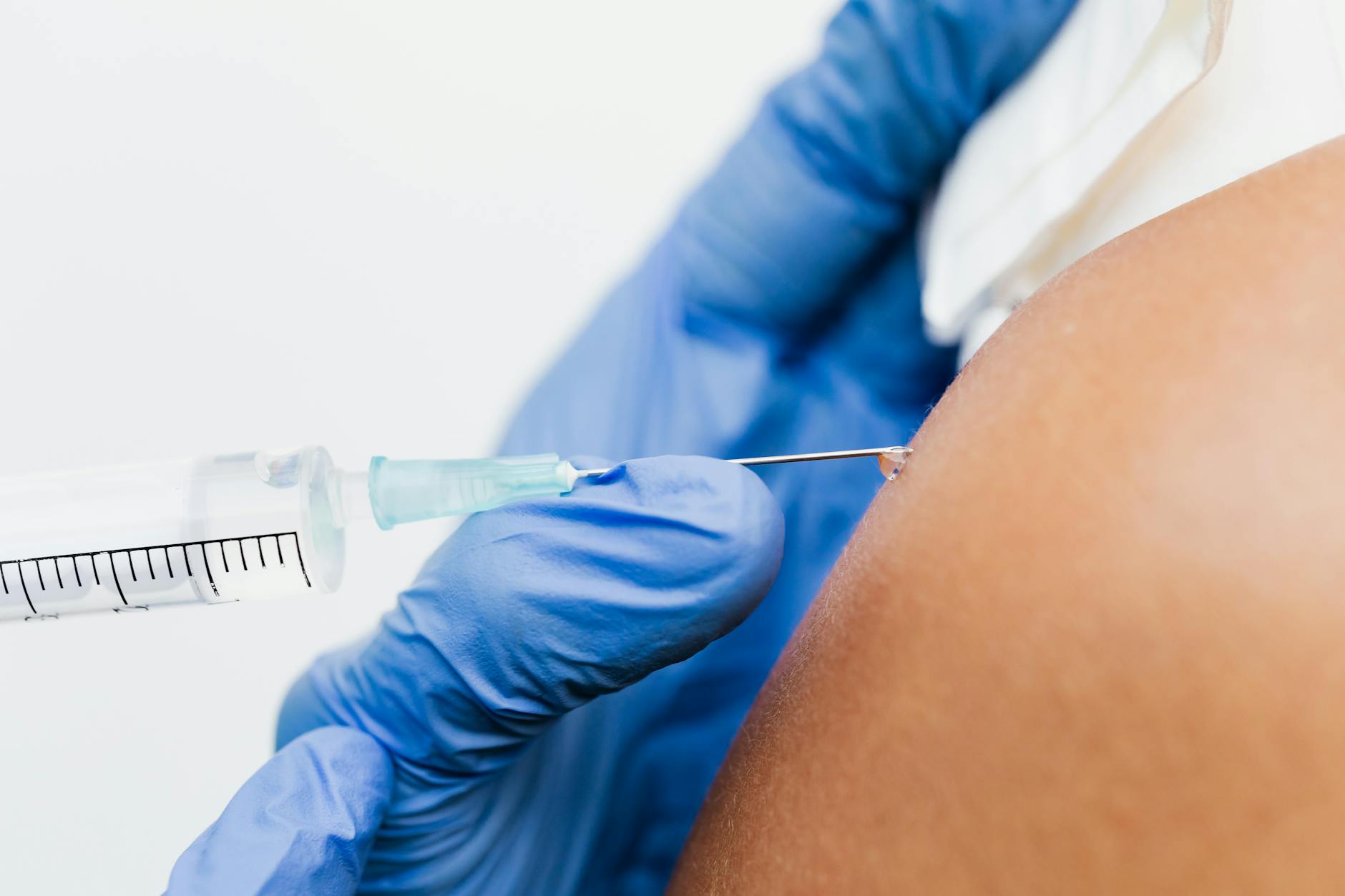
One of the most practically significant studies of 2025 came from an unlikely collaboration between Northwestern Medicine and Ukrainian physicians working with soldiers who lost limbs in combat. Published in October 2025 in Archives of Physical Medicine and Rehabilitation, the trial treated 160 Ukrainian war amputees with botulinum toxin injections between 2022 and 2024. The approach was notably different from cosmetic or muscle-spasticity uses of the toxin: injections were delivered under ultrasound guidance directly around painful neuromas — the tangled nerve endings that form at amputation sites — rather than into muscle tissue. The results were striking. At one month, patients receiving botulinum toxin saw an average four-point reduction on a ten-point pain scale, compared to just one point for those receiving standard care.
Sixty-nine percent of the treatment group achieved what researchers define as meaningful improvement — at least a 30 percent drop in pain — compared to 43 percent in the control group. At three months, the comprehensive care group showed more durable relief, consistent with the known duration of botulinum toxin’s effects. The practical takeaway for patients and providers is that this is a relatively low-risk, repeatable intervention. Botulinum toxin injections are already widely available in clinical settings, the ultrasound-guided technique is well within the skill set of pain specialists, and the treatment can be administered every three months as needed. The main limitation is that it addresses peripheral nerve pain at the stump rather than centrally generated phantom sensations, so it may work best for patients whose pain has a strong neuroma component rather than a purely central origin.
Psilocybin, Targeted Surgery, and the Expanding Treatment Menu
The range of serious treatment options for phantom limb pain has broadened dramatically, and two developments in particular deserve attention for how different they are from each other — and from anything previously available. At UC San Diego, neuroscience director Fadel Zeidan conducted the first randomized controlled trial of psilocybin for phantom limb pain. In the Phase 1 study, five patients received psilocybin at a dose equivalent to four to five grams of dried mushrooms, while four received a niacin placebo. Both groups went through three days of preparation with psychedelic-trained psychologists. The psilocybin patients reported 50 to 75 percent reductions in pain severity, and — unusually for a pain intervention — the benefits grew stronger over time rather than fading. The placebo group returned to baseline. A Phase 2 trial is now actively recruiting 25 to 30 patients per group, with Phase 1 results currently under peer review.
This is promising but preliminary. Five patients is a very small number, the treatment requires significant clinical infrastructure for safe administration, and regulatory approval remains distant even in best-case scenarios. On the surgical side, targeted muscle reinnervation — a procedure that redirects severed nerves into nearby muscle targets — has been confirmed by a 2025 comprehensive review as a first-line surgical treatment for chronic amputation-related pain. The numbers are persuasive: 71 percent of TMR patients were pain-free compared to 36 percent of controls, and only 19 percent experienced phantom limb pain versus 47 percent of controls. Pain scores dropped from 6.0 to 3.6 on the numeric rating scale at one year. Among oncologic amputees specifically, postoperative opioid use fell from 85.7 percent to 37.7 percent. TMR is a real surgical procedure with real risks, but for patients with severe, treatment-resistant pain, it represents the strongest evidence-based surgical option now available.
Virtual Reality and Extended Reality Therapies — What Works and What Doesn’t
Extended reality therapies — encompassing virtual reality, augmented reality, and mixed reality — have generated considerable excitement for phantom limb pain, and the 2025 data suggests they genuinely help, though with caveats that matter. A study published in the journal PAIN in March 2025 tested both phantom motor execution and phantom motor imagery delivered through extended reality systems. Pain decreased by 64.5 percent with motor execution and 68.2 percent with motor imagery. Separately, VR mirror visual feedback therapy achieved a 52.1 percent pain relief rate from a single session, according to research published in the World Journal of Orthopedics. These are meaningful effect sizes. However, meta-analyses comparing traditional mirror therapy to VR-delivered versions found no significant difference between the two — both work about equally well.
This is important because traditional mirror therapy requires nothing more than a mirror and costs essentially nothing, while VR systems involve hardware, software, and often clinical supervision. If the outcomes are equivalent, the added expense and complexity of VR need to be justified by other benefits, such as improved patient engagement or the ability to deliver therapy remotely. The honest limitation is durability. The GHOST system — a portable EEG-based brain-computer interface coupled with immersive VR — showed this clearly in a pilot trial with seven chronic upper-limb phantom pain patients. Over ten sessions across two weeks, patients experienced short-term analgesic effects, particularly on sudden, sharp paroxysmal pain. But by three to six months after training ended, pain levels had largely returned to pre-intervention values. This pattern of initial improvement followed by regression is common across VR pain interventions and suggests they may need to be used continuously rather than as a one-time treatment course.
Home-Based Programs and the Shift Toward Accessible Care
One of the most practical developments in 2025 is the movement toward making these therapies available outside clinical settings. A protocol published in JMIR Research Protocols describes a four-phase VR graded motor imagery program designed specifically for postoperative acute care, with Phase 4 results anticipated by January 2026. Separately, a Springer study found that home-based mirror therapy augmented with extended reality technologies shows promising results for patient adherence, pain relief, and improved function.
For patients in rural areas, those with mobility limitations, or anyone who cannot easily travel to a specialty pain clinic, home-based options could be the difference between receiving treatment and going without. The challenge, as with most home-based medical programs, is ensuring patients use the technology correctly and consistently without direct clinical oversight. Early data on adherence is encouraging, but long-term compliance in real-world conditions — outside the motivated environment of a research study — remains unproven.
Where Phantom Limb Pain Treatment Goes From Here
The convergence of corrected neuroscience, novel pharmacology, refined surgery, and accessible technology puts phantom limb pain treatment in a stronger position than at any point in modern medicine. The corrected understanding of cortical stability after amputation does not just explain past failures — it provides a more accurate foundation for designing future interventions. Brain-computer interfaces can be developed with confidence that the neural signals they rely on will remain stable over years. Pharmaceutical approaches like psilocybin can be evaluated on their actual mechanisms rather than being forced into a flawed cortical reorganization framework. What remains is the hard work of scaling these treatments.
Psilocybin-assisted therapy needs Phase 2 and Phase 3 trials, regulatory approval, and trained clinical teams. TMR surgery needs to be available at more centers and covered by more insurance plans. VR therapies need to solve the durability problem. And the projected growth of the amputee population to 3.6 million by 2050 means the need will only increase. But for the first time, the field is building on a corrected understanding of the brain, and the treatments emerging from that correction are producing results that decades of well-intentioned but misdirected effort could not.
Conclusion
The year 2025 marks a genuine turning point for phantom limb pain treatment, driven by a fundamental correction in how neuroscience understands the brain after amputation. The discovery that cortical body maps remain stable — rather than reorganizing — explains decades of treatment failures and has redirected research toward approaches with real clinical impact. Botulinum toxin injections are delivering rapid, meaningful pain reduction. Targeted muscle reinnervation surgery is producing durable relief with dramatically reduced opioid dependence. Psilocybin-assisted therapy is showing unexpectedly strong early results.
And extended reality therapies, while still working through durability challenges, are providing accessible options that can meet patients where they are. For patients, caregivers, and clinicians navigating phantom limb pain today, the practical message is that the menu of evidence-based options has expanded significantly, and the scientific foundation beneath those options is more solid than it has ever been. Not every treatment described here is fully mature, and no single approach works for every patient. But the days of relying on a single theoretical framework that turned out to be wrong — and the limited, often ineffective therapies built on it — are over. Anyone dealing with phantom limb pain in 2025 has more reason for grounded optimism than at any previous point, and the research pipeline suggests that will only improve.
Frequently Asked Questions
What percentage of amputees experience phantom limb pain?
Research consistently shows that 60 to 80 percent of amputees experience phantom limb pain. A 2024 cross-sectional survey placed the prevalence at 71.73 percent, with a 95 percent confidence interval of 65.45 to 77.46 percent.
Does mirror therapy actually work for phantom limb pain?
Mirror therapy does provide pain relief for many patients, with VR-delivered versions achieving roughly 52 percent pain relief from a single session. However, meta-analyses show no significant difference between traditional mirror therapy using a simple mirror and high-tech VR versions, so the basic approach appears equally effective at a fraction of the cost.
Is psilocybin an approved treatment for phantom limb pain?
No. Psilocybin for phantom limb pain is currently in clinical trials at UC San Diego. Phase 1 results showed 50 to 75 percent pain reduction in five patients, and a Phase 2 trial is now recruiting. The treatment is not yet approved by the FDA and is only available through research participation at this time.
What is targeted muscle reinnervation surgery?
TMR is a surgical procedure that redirects severed nerves at an amputation site into nearby muscle targets. A 2025 comprehensive review confirmed it as a first-line surgical option for chronic amputation-related pain, with 71 percent of patients becoming pain-free compared to 36 percent of controls. It also significantly reduced opioid use in oncologic amputees.
How long do botulinum toxin injections last for phantom limb pain?
Based on the study of 160 Ukrainian war amputees, botulinum toxin injections provided meaningful pain relief lasting approximately three months, consistent with the known duration of the toxin’s effects. The treatment can be repeated every three months as needed, delivered via ultrasound-guided injection around painful neuromas.
Will the brain’s limb map eventually disappear after amputation?
According to the 2025 Nature Neuroscience study that tracked patients for up to five years after amputation, the brain’s sensory body map for the missing limb remains stable with no large-scale cortical reorganization. This overturns the longstanding belief that the brain “rewires” after limb loss and has positive implications for brain-computer interface development.