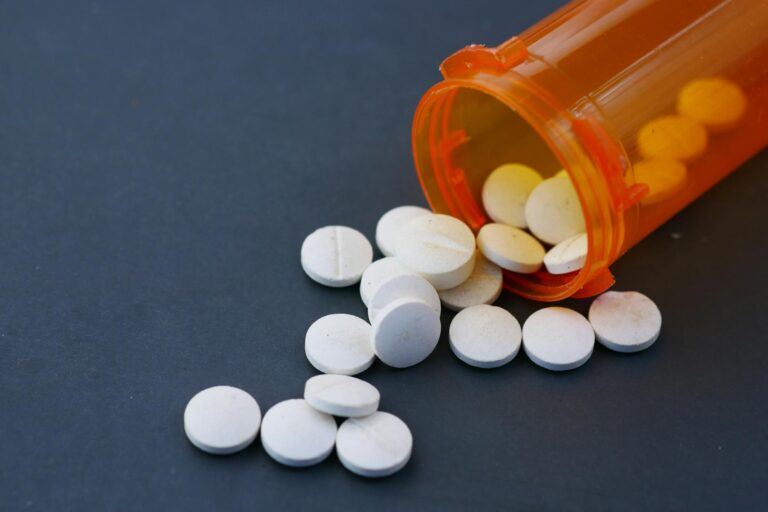
Patients are being warned about buying medication from online pharmacies because the vast majority of these websites are illegal operations that sell counterfeit, contaminated, or dangerously mislabeled drugs — and people are dying as a result. In October 2024, the CDC issued a public health alert after at least nine people died of narcotics poisoning from pills purchased through illegal online pharmacy networks. Then in February 2026, the DEA’s Operation Meltdown seized more than 200 website domains tied to an India-based transnational criminal organization that had been selling counterfeit and diverted prescription drugs without valid prescriptions, an operation linked to at least six fatal and four non-fatal overdoses. For patients managing dementia, Alzheimer’s disease, or other neurological conditions — many of whom take multiple medications daily and face significant financial pressures — the temptation to find cheaper drugs online is understandable.
But the risks are severe and well-documented. The National Association of Boards of Pharmacy estimates that 95% of websites offering prescription-only drugs online operate illegally. The World Health Organization puts it even more starkly: over 50% of medicines purchased from online pharmacies that conceal their physical address are counterfeit. This article breaks down the specific dangers these pharmacies pose, examines recent enforcement actions and what they revealed, explains how counterfeit medications can be particularly harmful to patients with cognitive conditions, and provides concrete steps for verifying whether an online pharmacy is legitimate before you or a loved one fills a prescription.
Table of Contents
- Why Are So Many Patients Being Warned About Buying Medication From Illegal Online Pharmacies?
- How Large Is the Illegal Online Pharmacy Problem and Who Is Most at Risk?
- What Happens When Counterfeit Medications Reach Dementia and Alzheimer’s Patients?
- How Can Patients and Caregivers Verify an Online Pharmacy Is Legitimate?
- Why Cost Pressures Drive Patients Toward Dangerous Online Pharmacies
- How Criminal Networks Exploit Search Engines and Social Media to Reach Patients
- What Is Being Done and What Still Needs to Change?
- Conclusion
- Frequently Asked Questions
Why Are So Many Patients Being Warned About Buying Medication From Illegal Online Pharmacies?
The warnings have escalated because the scale of the problem has grown far beyond what most people realize, and because the drugs being counterfeited now include medications that can kill with a single dose. According to DEA laboratory testing, six out of ten fentanyl-laced counterfeit pills now contain a potentially lethal dose — and just two milligrams of fentanyl, an amount that fits on the tip of a pencil, is considered potentially deadly. Deaths with evidence of counterfeit pill use more than doubled from 2.0% of overdose fatalities between July and September 2019 to 4.7% between October and December 2021. In western U.S. jurisdictions, that figure more than tripled, rising from 4.7% to 14.7% during the same period. The problem extends well beyond opioids. The FDA updated warnings in December 2025 about counterfeit Ozempic found in the U.S.
drug supply chain, and in June 2025 flagged counterfeit alli weight-loss capsules appearing at online retailers. Products from illegal pharmacies may contain the wrong ingredients, too little or no active ingredient, or harmful substances that cause unexpected side effects. For a patient with dementia who may already struggle to communicate new symptoms, receiving a medication with the wrong active ingredient or a dangerous adulterant is a nightmare scenario — the adverse effects might go unrecognized until serious harm has occurred. What makes these illegal pharmacies so effective at deceiving consumers is their sophistication. Many of the sites shut down in Operation Meltdown had falsely claimed to be legitimate, U.S.-based, and FDA-approved. They looked professional. They had customer service pages and branding that mimicked real pharmacies. A staggering 47% of consumers believe that top search engine results are safe and come from verified pharmacies — a dangerous misconception that these criminal operations exploit deliberately.

How Large Is the Illegal Online Pharmacy Problem and Who Is Most at Risk?
The numbers paint a grim picture. In 2025 alone, Interpol’s Operation Pangea XVI resulted in the shutdown of over 13,000 websites and social media pages selling illegal pharmaceuticals online. The NABP has found that 96% of illegal online pharmacies it reviewed did not require a valid prescription for prescription-only medicines — meaning virtually anyone, regardless of medical need or contraindications, could order powerful drugs with no medical oversight. Consumer exposure is alarmingly high. Thirty-eight percent of U.S. adults have purchased prescription medicines online, and of those, 47% took the medication without being fully confident it was as safe as medicine from a local pharmacy.
Even more concerning, 24% of Americans who have used an online pharmacy report having been exposed to harmful, counterfeit, or substandard medications. These are not small numbers. They represent tens of millions of people who may have ingested drugs of unknown origin, potency, and composition. Older adults and caregivers managing complex medication regimens face particular vulnerability. However, it is important to note that not all online pharmacies are dangerous — legitimate, state-licensed online pharmacies connected to verified brick-and-mortar operations do exist and can be a genuine convenience, especially for homebound patients or those in rural areas. The challenge is distinguishing the roughly 5% of legitimate operations from the 95% that are not. If you are a caregiver ordering medications for someone with dementia or another cognitive condition, the stakes of getting this wrong are higher because the patient may not be able to identify or articulate problems with a medication that looks slightly different, tastes wrong, or causes unusual reactions.
What Happens When Counterfeit Medications Reach Dementia and Alzheimer’s Patients?
Consider the practical reality of managing medications for someone with moderate-to-advanced dementia. These patients often take cholinesterase inhibitors like donepezil or rivastigmine, sometimes combined with memantine, along with medications for co-occurring conditions such as hypertension, diabetes, or depression. Each of these drugs must be precisely dosed. A counterfeit version of donepezil that contains too little active ingredient could lead to accelerated cognitive decline that the family and care team attribute to disease progression rather than medication failure. A counterfeit blood pressure medication with no active ingredient could trigger a stroke. The patient cannot reliably report that something feels off. Illegal online pharmacies contributed to an estimated $67 billion in extra healthcare costs and approximately 12.6% of avoidable adverse events from 2017 to 2022, according to a U.S.
State Department report. Those avoidable adverse events translate into emergency room visits, hospitalizations, worsened chronic conditions, and deaths — costs borne disproportionately by the most medically vulnerable populations. For families already strained by the enormous financial burden of dementia care, the initial savings from a cheaper online purchase can quickly be dwarfed by the cost of treating complications from a counterfeit or substandard drug. One specific danger that receives less attention is the risk of drug interactions from unknown adulterants. If a counterfeit medication contains an undisclosed active ingredient — as the FDA has documented in numerous cases — that ingredient could interact with other medications in the patient’s regimen in ways no physician would anticipate, because no one knows the adulterant is there. For patients on blood thinners, antiseizure medications, or psychiatric drugs alongside their dementia treatments, this is not a theoretical concern. It is a concrete, documented pathway to serious harm.
How Can Patients and Caregivers Verify an Online Pharmacy Is Legitimate?
The FDA recommends that patients verify online pharmacies are U.S. state-licensed and avoid sites that do not require prescriptions, offer unusually steep discounts, or lack proper licensing information. The practical tradeoff here is straightforward: a legitimate online pharmacy will be slightly less convenient and possibly more expensive than a rogue site, but it will not send you counterfeit pills. The DEA’s “One Pill Can Kill” campaign puts it bluntly — the only safe prescription medications are those prescribed by a licensed medical provider and dispensed by a trusted pharmacy. To check whether an online pharmacy is legitimate, the NABP operates a verification tool at safe.pharmacy where consumers can look up specific websites. Legitimate online pharmacies will require a valid prescription from a licensed provider, have a licensed pharmacist available to answer questions, be licensed in the state where they operate, and provide a verifiable U.S.
street address and phone number. If a site offers to sell you prescription medications without a prescription, allows you to “consult” with a doctor you have never met who approves your order in minutes, or offers prices that seem dramatically lower than what you would pay at a local pharmacy, those are red flags — not deals. However, caregivers should also be aware that even legitimate-looking verification seals on a website can be faked. Do not click a seal on the pharmacy’s own website and trust the page it takes you to. Instead, go directly to safe.pharmacy or your state board of pharmacy’s website and search for the pharmacy independently. This extra step takes two minutes and could prevent a catastrophic medication error.
Why Cost Pressures Drive Patients Toward Dangerous Online Pharmacies
Fifty-five percent of Americans said they would be open to purchasing from online pharmacies not approved by the U.S. government if it saved them money or if the medication was unavailable locally. That statistic should alarm public health officials, but it should also prompt honest reflection about why so many people are willing to take the risk. Prescription drug costs in the United States remain among the highest in the world, and for families managing dementia — where out-of-pocket costs for care can exceed $300,000 over the course of the disease — the pressure to cut costs anywhere possible is immense. This does not make buying from illegal pharmacies a reasonable gamble.
But it does mean that simply warning patients about danger without addressing the underlying cost problem will have limited effectiveness. Caregivers looking for legitimate ways to reduce medication costs should explore manufacturer patient assistance programs, state pharmaceutical assistance programs, Medicare Extra Help for those who qualify, and legitimate pharmacy discount programs like those offered through verified, licensed mail-order pharmacies. Generic versions of many dementia medications are available at substantially lower cost than brand-name versions and are held to the same FDA standards for safety and efficacy. The limitation worth acknowledging is that some patients, particularly those without insurance or those in the Medicare coverage gap, may genuinely struggle to afford their medications through any legitimate channel. In those cases, the answer is not to turn to unverified online sources but to work with a physician, social worker, or patient advocacy organization to find assistance programs. The risk of a counterfeit medication causing a hospitalization — or worse — far outweighs whatever savings the illegal pharmacy offered.
How Criminal Networks Exploit Search Engines and Social Media to Reach Patients
The 200-plus websites seized in Operation Meltdown did not attract customers by lurking in dark corners of the internet. They used search engine optimization, paid advertising, and social media to appear in front of patients who were simply looking for affordable medication. The DEA identified thousands of customers and sent more than 20,000 letters to the public requesting information — illustrating just how many ordinary people these sites had reached. These were not customers seeking illicit drugs.
They were patients and caregivers searching for prescriptions they could afford. Social media platforms present an additional vector. Interpol’s Operation Pangea XVI targeted not just websites but social media pages — part of the more than 13,000 sites and pages shut down globally in 2025. For caregivers who participate in online dementia support groups, the risk of encountering advertisements or recommendations for unverified pharmacies is real. A recommendation from someone in a trusted support group can carry more weight than a warning from a government agency, which is exactly what these criminal networks count on.
What Is Being Done and What Still Needs to Change?
Enforcement actions like Operation Meltdown and Pangea XVI demonstrate that federal and international agencies are taking the problem seriously. The DEA’s seizure of domains, arrests, and Immediate Suspension Orders sends a signal, and the CDC’s public health alerts help raise awareness. But the fundamental challenge remains: for every site that is shut down, new ones appear.
The criminal infrastructure is distributed, often based overseas, and capable of rapidly deploying new domains. Looking ahead, meaningful progress will likely require a combination of stronger international cooperation, better tools for consumers to verify pharmacies in real time, and — critically — policies that address the prescription drug affordability crisis driving patients toward these dangerous alternatives in the first place. For families managing dementia today, the most important step is also the simplest: never order medication from a pharmacy you have not independently verified through the NABP or your state board of pharmacy, no matter how legitimate the website appears or how attractive the price.
Conclusion
The warnings about buying medication from online pharmacies are grounded in hard evidence — counterfeit drugs have killed people, sickened thousands more, and cost the healthcare system tens of billions of dollars. With 95% of online pharmacy websites operating illegally and nearly a quarter of Americans who have used online pharmacies reporting exposure to harmful medications, the scope of the danger is not speculative. It is documented and ongoing. For patients with dementia and their caregivers, who manage complex medication regimens where dosing accuracy and drug purity are essential, the risks are magnified.
Protecting yourself and the person you care for starts with verification. Use the NABP’s safe.pharmacy tool, demand a valid prescription process, confirm state licensure, and never trust a website’s claims about itself without independent confirmation. If cost is the driving factor — and for many families it is — explore legitimate assistance programs before turning to an unverified online source. The few dollars saved on a counterfeit pill are not worth the potential cost of a medical emergency, a worsened condition, or a life lost.
Frequently Asked Questions
Are all online pharmacies dangerous?
No. Legitimate online pharmacies that are licensed by a U.S. state board of pharmacy and require valid prescriptions are safe and can be convenient, especially for homebound patients. The danger comes from the estimated 95% of online pharmacy websites that operate illegally. Always verify a pharmacy through the NABP’s safe.pharmacy tool before ordering.
How can I tell if an online pharmacy is counterfeit or illegal?
Key warning signs include not requiring a prescription, offering dramatically lower prices than local pharmacies, lacking a verifiable U.S. physical address and phone number, not having a licensed pharmacist available for questions, and selling medications that are not FDA-approved. Do not trust verification seals on the website itself — check independently through safe.pharmacy or your state board of pharmacy.
What should I do if I suspect I received counterfeit medication from an online pharmacy?
Stop taking the medication immediately and contact your healthcare provider. Report the suspected counterfeit to the FDA’s MedWatch program and to your state board of pharmacy. If you or someone you care for experiences adverse effects, seek medical attention right away. Keep the medication and its packaging for potential testing.
Are dementia medications commonly counterfeited?
While high-profile counterfeiting cases often involve pain medications, weight-loss drugs, and lifestyle medications, any prescription drug can be counterfeited. The core risk for dementia patients is not limited to counterfeits of their specific medications — it extends to any prescription in their regimen that might be sourced from an unverified pharmacy, since patients with cognitive impairment may not recognize or communicate problems with a suspect medication.
Can I save money on medications without risking counterfeit drugs?
Yes. Legitimate cost-saving options include generic versions of brand-name medications, manufacturer patient assistance programs, Medicare Extra Help, state pharmaceutical assistance programs, and verified mail-order pharmacies licensed in your state. Talk to your physician or a social worker about programs available to you.
What was DEA Operation Meltdown?
Operation Meltdown was a DEA enforcement action announced on February 4, 2026, that seized more than 200 website domains connected to an India-based transnational criminal organization selling counterfeit and diverted prescription drugs. The operation resulted in four arrests and was linked to at least six fatal overdoses. The DEA sent over 20,000 letters to identified customers seeking information.