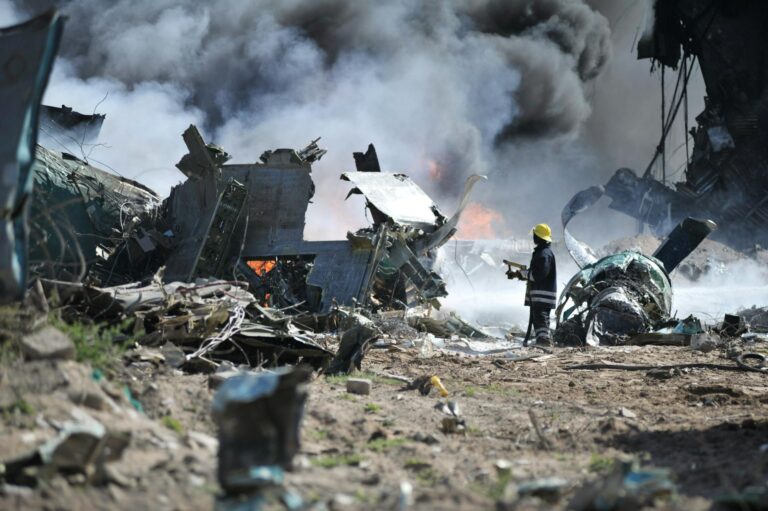
The U.S. Air Force is indeed losing fewer aircraft in its current conflict with Iran compared to the devastating losses suffered during the 1991 Gulf War over Iraq. As of late March 2026, approximately 16 U.S. military aircraft have been lost in roughly four weeks of operations against Iran, whereas during the 42-day 1991 Gulf War, the United States lost at least 28 fixed-wing aircraft and 15 helicopters. This stark difference—fewer losses in contested airspace after 35 years—reveals how dramatically military technology and operational strategy have evolved.
Understanding why the Air Force is suffering fewer casualties today than it did over a third of a century ago provides insight into the advancement of stealth technology, air defense systems, and tactical doctrine. The comparison between these two conflicts offers a window into the tangible improvements in military aviation over the past generation. The 1991 conflict saw coalition forces fly over 100,000 sorties and sustain significant personnel losses, including crew deaths. Today’s operations, despite facing advanced air defense systems and missile threats from Iran, demonstrate that technological superiority and refined operational tactics can substantially reduce aircraft attrition rates, even in active combat zones. This article examines the critical differences between these two conflicts and the technological and strategic factors that have fundamentally changed the cost of air warfare.
Table of Contents
- What Changed in Aircraft Losses Between 1991 and 2026?
- How Stealth Technology and Air Defense Systems Have Reduced Losses
- Operational Tactics and Lessons Learned Over 35 Years
- The Role of Unmanned Systems in Reducing Manned Aircraft Losses
- Equipment Costs and the Economic Reality of Modern Air Warfare
- Aircrew Survival and Medical Advances
- Implications for Future Air Operations and Emerging Threats
- Conclusion
What Changed in Aircraft Losses Between 1991 and 2026?
The raw numbers tell a compelling story about military evolution. The 1991 Gulf War resulted in 28 U.S. fixed-wing aircraft losses plus 15 helicopters over 42 days of intensive operations. In contrast, the current Iran conflict has seen approximately 16 total aircraft losses over roughly 28 days, with the majority being uncrewed MQ-9 Reapers—systems designed specifically to be expendable from a personnel standpoint. This represents a significant reduction in both the rate of loss and, more importantly, the human cost of those losses.
Three F-15E jets were shot down over Kuwait by friendly fire, with all crews surviving, compared to 1991 when aircraft losses frequently meant pilot casualties. The composition of losses is also strikingly different. While the 1991 conflict saw primarily manned fighter jets and helicopters being shot down, today’s losses heavily favor unmanned systems. The loss of a $60 million MQ-9 Reaper is operationally different from losing an F-15E with a two-person crew. This shift reflects a deliberate strategy to reduce pilot risk through automation and remote operations, allowing the Air Force to accept equipment losses without equivalent personnel casualties. Additionally, damage assessments show that some aircraft, like the F-35 that was hit by Iranian fire, managed to limp back to safety for emergency landings rather than being totally destroyed—a capability improvement that 1991-era jets often lacked.

How Stealth Technology and Air Defense Systems Have Reduced Losses
Stealth technology represents the most significant leap forward in reducing aircraft losses. The F-35, despite being hit during the current conflict, was able to return to base—a testament to its advanced design and survivability features. The 1991 gulf War largely predated modern stealth fighters; while the F-117 Nighthawk stealth fighter performed well, the broader fleet consisted of conventional aircraft like the F-15E Strike Eagle, which lacked stealth characteristics. Today’s stealth platforms are exponentially more difficult to detect and target, fundamentally changing the calculus of air defense. However, it’s important to recognize that stealth is not invulnerable.
The F-35 was still hit, and the MQ-9 losses show that even in a technologically advanced military, losses do occur. Modern air defense systems have evolved alongside stealth technology, creating a genuine contest between detection and evasion. Iran’s air defense arsenal includes sophisticated Russian-supplied systems that have proven capable of engaging U.S. aircraft. Yet despite this threat, the loss rate remains lower than 1991, suggesting that stealth and advanced countermeasures are still providing substantial advantages. The difference is not that stealth makes aircraft invincible, but that it makes them significantly harder to target, requiring enemies to use more missiles and air defense resources to achieve each successful hit.
Operational Tactics and Lessons Learned Over 35 Years
The U.S. military has spent 35 years refining its approach to air operations in contested environments. The 1991 Gulf War provided painful lessons about aircraft vulnerability, and subsequent conflicts in the Balkans, Afghanistan, Iraq, and Syria generated additional data about what tactics work and what doesn’t. Modern Air Force operations now incorporate real-time intelligence sharing, improved coordination between manned and unmanned platforms, and a clear understanding of when and where to risk assets. The 2026 Iran operations show more selective use of high-value platforms, with drone operations bearing the brunt of losses rather than manned jets.
One critical tactical change is the understanding of which systems to risk in which environments. The current conflict demonstrates that the Air Force is willing to lose MQ-9 Reapers to maintain surveillance and strike capabilities, but it’s more cautious with F-15E Strike Eagles—using them only when the intelligence and tactical situation warrant the risk. This discriminate approach to asset deployment reflects institutional learning that wasn’t fully developed in 1991. Additionally, improved pilot training and situational awareness systems mean that even when pilots do face danger, they’re better equipped to recognize threats and evade them. The fact that F-15E crews shot down by friendly fire over Kuwait both survived suggests that modern ejection systems, search-and-rescue procedures, and survival equipment are more effective than their 1991 counterparts.

The Role of Unmanned Systems in Reducing Manned Aircraft Losses
The proliferation of unmanned aerial vehicles like the MQ-9 Reaper has fundamentally changed military aviation strategy. The MQ-9 can conduct surveillance, carry weapons, and operate in contested airspace while keeping pilots thousands of miles away on the ground. In the current Iran conflict, over 10 MQ-9 Reapers have been destroyed, but no pilots died in those losses. This represents a tradeoff that modern militaries have embraced: accept the loss of expensive equipment in exchange for the certainty of keeping personnel alive and able to fight another day. The comparison with 1991 highlights this shift vividly.
Over 30 years ago, every reconnaissance mission, every strike sortie, and every close air support flight required putting a human pilot at risk in contested airspace. The average cost of an F-15E aircraft is roughly comparable to today’s MQ-9 ($200+ million versus $60-90 million for a Reaper), but the human element was non-negotiable. Today, that human element can remain in a protected location. However, this strategy has limitations: unmanned systems lack the judgment and adaptability of experienced pilots, and they can be vulnerable to electronic warfare or air defense systems designed to counter them. The heavy losses of MQ-9s in the current conflict (over 10 destroyed) suggest that Iran’s defenses are proving effective against unmanned platforms, even as they struggle against stealthier manned jets.
Equipment Costs and the Economic Reality of Modern Air Warfare
The financial scale of aircraft losses in the current Iran conflict is staggering: the U.S. military has lost nearly $2 billion in military equipment destroyed during operations against Iran. This includes not just the 16 aircraft losses but also radar systems, missile defense equipment, and other supporting infrastructure damaged in Iranian strikes. To put this in perspective, this $2 billion loss occurred in just the first few weeks of operations. However, the cost calculation in modern warfare is more complex than in 1991—today’s military accounts for the full lifecycle costs of personnel, including training, medical care, and long-term benefits, when calculating the true cost of a service member’s life.
By this reckoning, the 16 aircraft losses without significant pilot casualties represents a better outcome than the 1991 Gulf War, despite the high equipment costs. In 1991, the 43 U.S. aircraft losses resulted in crew deaths and long-term disability costs that extended far beyond the purchase price of the aircraft themselves. The reduction in aircrew losses from 1991 to 2026 means that today’s military can absorb equipment losses at higher rates without incurring the same human cost. This reflects a strategic calculation that wealthy, technologically advanced militaries can afford to “spend” equipment to save lives, while less advanced militaries must treat every loss as a strategic setback regardless of whether crews survive. The warning here is important: equipment losses still matter, and a high loss rate could eventually degrade operational capability, especially if the conflict extends beyond a few months.

Aircrew Survival and Medical Advances
Beyond the aircraft themselves, the survival rate for aircrew members has improved dramatically since 1991. The F-15E crews shot down over Kuwait both survived and were recovered, thanks to modern search-and-rescue procedures, advanced ejection seats, and improved survival equipment. In 1991, aircrew survival rates varied dramatically depending on location and circumstances. Some pilots were recovered quickly; others spent weeks evading enemy forces or were captured. Today’s integrated air defense systems, real-time satellite tracking, and rapid-response rescue forces mean that survival probabilities have increased substantially.
Modern military medicine has also transformed outcomes for injured personnel. The protocols developed through combat operations in Iraq and Afghanistan have reduced death rates from traumatic injury more effectively than at any point in military history. A pilot wounded in action in 2026 has a far higher probability of survival and meaningful recovery than a pilot injured in 1991. This reflects advances in trauma care, surgical techniques, and rehabilitation medicine that have applications far beyond the military. However, it’s important to note that this improved medical infrastructure requires proximity to advanced facilities. Operations in remote or contested areas can still result in slower evacuation and higher mortality rates, which is why the Air Force’s emphasis on reducing the number of aircraft shot down remains crucial despite improved medical technology.
Implications for Future Air Operations and Emerging Threats
The comparison between 1991 and 2026 reveals that technological advantage matters tremendously, but it is not permanent. Iran’s air defenses, despite being older Russian-supplied systems, have proven capable of engaging American aircraft. The $2 billion in equipment losses in the first few weeks suggests that as adversaries develop newer air defense systems and tactics, the current loss rate could increase. Future conflicts may see new threats—hypersonic missiles, advanced electronic warfare systems, or tactics designed specifically to counter stealth technology—that could alter the equation established over the past 35 years.
The path forward for the Air Force involves continued investment in stealth technology, artificial intelligence-assisted threat detection and evasion, and the integration of unmanned and manned systems into cohesive operations. The current conflict is demonstrating both the strengths and limitations of today’s air force: stealth works, unmanned systems reduce pilot risk, and operational experience matters. But it also shows that no technology provides perfect protection, and that military superiority is a dynamic condition requiring constant innovation and adaptation. As potential future adversaries develop counter-stealth and counter-drone capabilities, the Air Force’s loss rates in contested airspace may trend upward unless new technologies and tactics maintain the advantage.
Conclusion
The U.S. Air Force’s lower loss rate over Iran in 2026 compared to Iraq in 1991 reflects 35 years of technological advancement, operational learning, and strategic evolution in military aviation. Stealth technology, unmanned systems, improved pilot training, advanced air defense capabilities, and superior situational awareness have all contributed to a military that can accomplish air operations with fewer losses—both of equipment and of personnel lives. The shift toward accepting unmanned aircraft losses while protecting manned crews represents a pragmatic approach that leverages technological and economic advantages.
However, this advantage is not guaranteed to persist indefinitely. As adversaries develop new threats and countermeasures, military planners cannot assume that tomorrow’s air wars will follow the pattern of 2026. The critical lesson from comparing these two conflicts is not that air superiority is permanent, but that sustained investment in innovation, combined with institutional learning from past experience, can dramatically reduce the cost of military operations. The next 35 years will test whether these advantages can be maintained against emerging threats or whether new technologies will once again shift the balance between aircraft and air defenses.