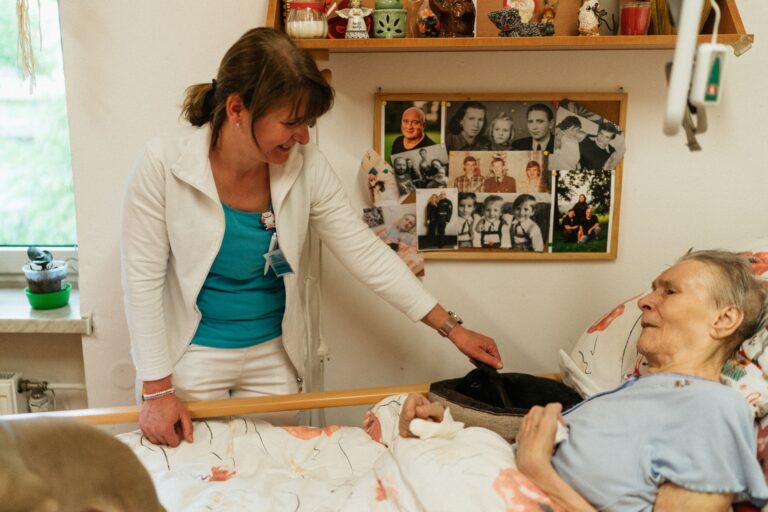
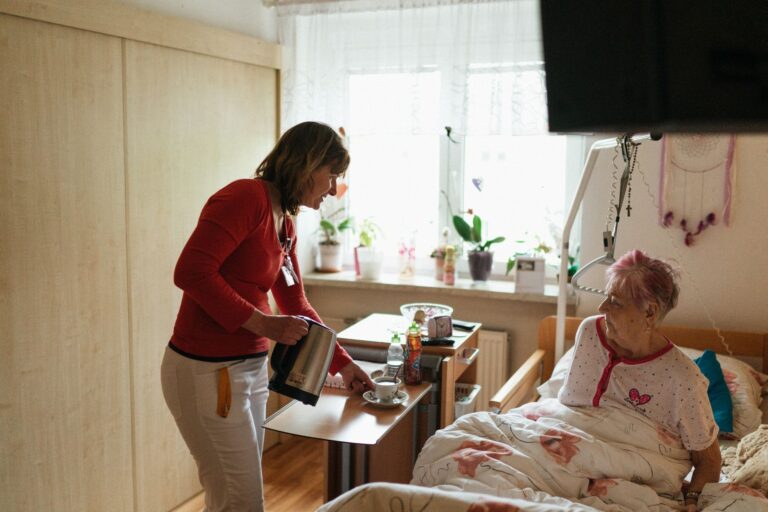
Hospital sitters matter for dementia safety because they provide continuous, one-to-one supervision that prevents the wandering, accidental injury, and dangerous behaviors that commonly occur when a person with cognitive decline is hospitalized and disoriented by the unfamiliar environment. A patient with moderate to advanced dementia admitted for a urinary tract infection or pneumonia faces multiple hazards in a hospital setting—removing their IV line, attempting to leave the unit unsupervised, pulling at catheter tubes, or becoming agitated during procedures—risks that escalate dramatically when no dedicated person is watching them. Hospital sitters, trained observers who remain bedside or nearby, serve as a practical barrier between the patient’s confused impulses and the consequences of acting on them.
Without a sitter, hospitals must rely on bed alarms, medication sedation, physical restraints, or nurse check-ins spaced hours apart. These alternatives carry their own costs: restraints increase agitation and fall risk, sedating medications can worsen cognitive function and mask new medical problems, and periodic checks leave long gaps of unsupervised time. A person with dementia can wander, climb out of bed, or remove medical devices in seconds. The sitter’s presence—simply being there, calm and attentive—often prevents crises before they start.
Medical information disclaimer: This article is for general educational purposes only and does not provide medical advice, diagnosis, or treatment. Always consult a physician or other qualified health professional about symptoms, medications, tests, or treatment decisions.
Table of Contents
- What Happens When Dementia Patients Enter the Hospital Without Continuous Supervision?
- The Economics and Reality of Hospital Sitter Availability
- Specific Safety Scenarios Where Sitters Prevent Harm
- How to Arrange Hospital Sitter Care and When to Insist on It
- The Problem of “Chemical Restraint” and Why Sitters Reduce the Need for Sedation
- Training, Expectations, and What to Look for in a Good Hospital Sitter
- Discharge Planning and the Transition Home
What Happens When Dementia Patients Enter the Hospital Without Continuous Supervision?
Hospital environments are inherently disorienting for people with cognitive decline. Bright fluorescent lighting, unfamiliar medical equipment, strange sounds, different staff members every shift, and the patient’s own inability to process or remember information about why they are there combine to trigger confusion, fear, and sometimes aggression. A person who was cooperative at home may become combative or attempt to flee. They may not understand that the IV in their arm is necessary or that they cannot safely walk to the bathroom alone.
The risks are concrete. Studies of hospitalized older adults with dementia document elevated rates of delirium (acute confusion that develops during hospitalization), falls, hospital-acquired infections from removing catheters or central lines, medication errors from patients refusing treatment they do not understand, and prolonged hospital stays because safety concerns delay discharge. Without a sitter, a patient might remove a urinary catheter, leading to infection and further complications. Another might climb over bed rails during the night because they do not recognize the hospital as different from home or remember that their leg is broken and cannot bear weight.
The Economics and Reality of Hospital Sitter Availability
Hiring hospital sitters is expensive. Private sitters cost anywhere from $15 to $25 per hour (or more in urban areas), meaning 24-hour coverage costs $360 to $600 daily—an out-of-pocket expense most families cannot sustain for more than a few days. Many hospitals do not routinely offer sitter services through the facility; instead, families must hire privately or the hospital may have limited staff dedicated to this role. Some institutions use their own employees, others contract with agencies, and many simply do not have the capacity to assign a sitter to every patient who needs one. Insurance coverage varies.
Medicare and some private insurers may cover hospital-provided sitters in certain circumstances (particularly if the sitter is deemed a medical necessity), but coverage is not universal and requires documentation and approval. Medicaid coverage similarly depends on state and individual plan terms. For uninsured or underinsured patients, the sitter expense may be impossible, leaving families to choose between paying out of pocket, requesting volunteer support, or hoping the nursing staff can manage without dedicated supervision. This creates a two-tier reality: patients with financial resources or good insurance get sitters; patients without do not, regardless of medical need. A person with advanced Alzheimer’s disease admitted for surgery faces the same risks whether their family can afford a sitter or not, but only one of them has continuous protection. Hospitals recognize the value but operate within budget constraints that make sitters a luxury rather than a standard of care.
Specific Safety Scenarios Where Sitters Prevent Harm
Consider a 78-year-old woman with Lewy body dementia admitted to the hospital for a fall at home that resulted in a fractured wrist. She is in pain, frightened by the hospital setting, and the medication she receives for pain and anxiety makes her drowsier and more confused. During the night, she wakes disoriented, does not remember she has a fractured wrist, and tries to get out of bed to use the bathroom. A bed alarm alerts staff, but by the time a nurse responds, the patient has already fallen again. With a sitter present, that second fall does not happen. The sitter helps her to the bathroom safely, or provides a bedpan, and she stays in bed. Another scenario: a man with moderate Alzheimer’s disease is in the hospital for treatment of aspiration pneumonia. He cannot reliably communicate his needs and becomes increasingly agitated.
He keeps trying to pull the oxygen mask away from his face because it frightens him and he does not understand why it is there. The nurses are busy, and he manages to remove it for extended periods, compromising his oxygen levels. His condition worsens. A sitter would recognize the mask is causing distress, explain it repeatedly in simple terms, keep it in place gently, and calm him through the anxiety—preventing the dip in oxygenation and the domino effect of complications. Sitters also prevent medication refusal. A person with dementia may refuse to take prescribed antibiotics or heart medication because they do not understand why they need it, or because they have forgotten they already took it an hour earlier and refuse a second dose they believe is the first. A sitter can explain, confirm compliance, and prevent the skipped doses that undermine treatment. These scenarios are common enough that experienced hospital staff recognize them immediately.
How to Arrange Hospital Sitter Care and When to Insist on It
If your family member with dementia requires hospitalization, the first step is to speak with the hospital social worker or case manager at admission and clearly state that your relative has cognitive decline and will likely need supervision. Ask whether the hospital employs sitters or has partnerships with sitter agencies. Request a sitter for your family member, understanding that the hospital may say no if capacity is limited or insurance does not cover it. Do not accept “we’ll monitor them closely” as a substitute if your relative has moderate to advanced dementia; periodic monitoring is not the same as continuous presence. If the hospital cannot provide a sitter, start calling private home care agencies immediately. Many have emergency placement capabilities and can provide sitters within 24 hours.
The cost is significant, but consider it against the risk of prolonged hospitalization, additional injuries, or medical complications from unsupervised behavior. Some families also arrange for a trusted family member or friend to stay with the patient during the day (less disruptive for patients), splitting costs by hiring a paid sitter for nights or rotating shifts. A tradeoff to consider: a paid sitter outside the hospital system is less integrated with medical staff and may miss subtle clinical changes a trained nurse would catch. They are there to prevent the patient from harming themselves, not to monitor vital signs or report complications. Ideally, you have both—a sitter for supervision and regular nursing rounds for medical assessment. If you can only afford one, the sitter prevents the acute behavioral crises that most families describe as the worst part of hospitalization for dementia patients.
The Problem of “Chemical Restraint” and Why Sitters Reduce the Need for Sedation
When hospitals cannot provide or families cannot afford sitters, staff sometimes turn to sedating medications as a substitute. A patient who is agitated or trying to leave the unit may be given antipsychotic medications or benzodiazepines to keep them calm and immobile. These drugs carry serious risks for older adults and people with dementia: they increase fall risk, cause confusion and delirium, mask medical problems (a patient may not report chest pain or shortness of breath if sedated), and can trigger dangerous side effects like low blood pressure or irregular heartbeat. This practice, sometimes called “chemical restraint,” is not ideal medicine—it is a workaround for insufficient supervision. A sitter makes it unnecessary. The patient remains alert, alert enough to communicate discomfort or symptoms, and their natural impulses are managed through presence and gentle redirection rather than drugs.
Studies consistently show that hospitals with robust sitter programs use fewer sedating medications and report better outcomes. The sitter approach treats the patient as a person; chemical restraint treats them as a problem to be solved. The limitation of this approach: not all behavioral issues can be resolved by sitting with someone. A patient with severe pain may need medication regardless. A person in the late stages of dementia with severe behavioral disturbance may benefit from some medical support. But overuse of sedation to replace adequate staffing is a known problem in hospital care, and sitters are the evidence-based antidote.
Training, Expectations, and What to Look for in a Good Hospital Sitter
A good sitter is not a medical professional, but they should have some training in dementia care and be able to recognize basic signs of distress—rapid breathing, repeated requests for pain relief, confusion that seems different from the patient’s baseline. They should know not to argue with a confused patient (this escalates agitation), how to redirect attention, and when to call a nurse for problems beyond their scope. Some agencies offer dementia-specific training; others do not. When hiring, ask about the sitter’s experience with dementia care and specify in advance what behaviors or situations you want them to alert you or staff about immediately.
The sitter’s job is presence and gentle supervision, not medical care. They should not adjust medications, interpret vital signs, or make clinical decisions. They should maintain regular contact with nurses to stay informed about the patient’s condition and should feel comfortable calling for help if something seems wrong. A sitter who knows the patient before hospitalization—perhaps a family friend or a caregiver from home—has a huge advantage because they know what “normal” behavior looks like for that person and will notice changes more readily.
Discharge Planning and the Transition Home
As discharge approaches, hospitals and families often discuss what level of care will be needed at home. Dementia patients who were hospitalized often show worsening cognitive function for weeks afterward (called post-hospitalization delirium), and they return home to an environment where they may be less supervised than they were in the hospital. The sitter at the hospital provided safety during acute crisis; now families must decide whether ongoing supervision at home is necessary, feasible, and what it will look like. Some families hire home care workers to provide supervision and assistance with daily tasks.
Others rely on family members who work from home or take time off. Still others transition to assisted living or memory care facilities where built-in supervision is standard. The hospital sitter serves an immediate, time-limited function during the crisis of hospitalization. The lessons that come from needing a sitter—recognizing that your family member cannot be left unsupervised, that they need help remembering medications or recognizing safety hazards—often shape decisions about living arrangements and ongoing care long after discharge.
- —