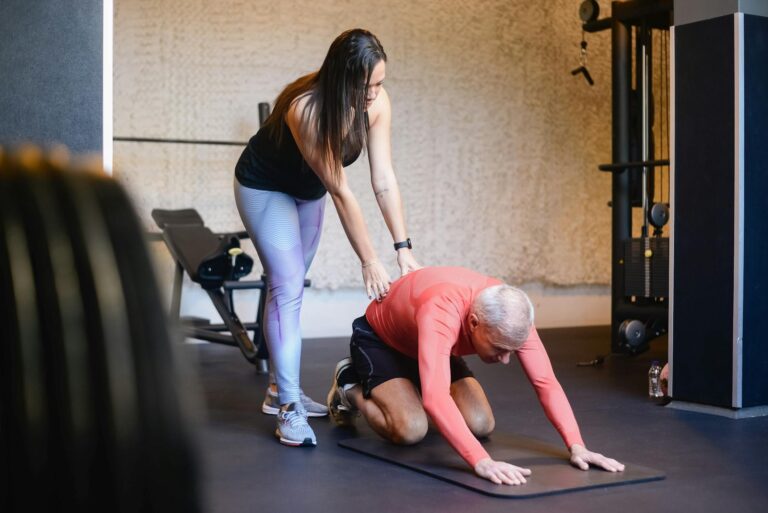
Herniated discs cause glute and hip pain primarily because they compress the sciatic nerve, the body’s longest nerve. When the inner jelly-like material of a disc ruptures through its outer covering, it pushes against nearby nerve roots, typically at the L4-L5 vertebral level—the most common site for this type of pain. A person experiencing this might suddenly feel sharp pain in one buttock that worsens when sitting at a desk or bending forward, sometimes radiating down the leg.
This article explores the anatomy behind the pain, why the L4-L5 level is particularly vulnerable, what symptoms to watch for, and how most people recover naturally. The sciatic nerve originates right where most disc herniations causing gluteal pain occur—at the junction where the L4 and L5 vertebrae meet. Understanding this connection helps explain why a problem in your lower spine creates pain that feels like it’s coming from your hip and buttock rather than your back.
Table of Contents
- How a Herniated Disc Compresses the Sciatic Nerve
- Why Symptoms Feel Like Hip and Glute Pain, Not Back Pain
- The Path from Spine to Symptoms
- Recovery Without Surgery: Why Most People Improve
- When Herniated Disc Pain Becomes Complicated
- Prevalence: Who Gets Herniated Discs with Gluteal Pain
- Long-Term Outlook and Prevention
- Conclusion
How a Herniated Disc Compresses the Sciatic Nerve
The spine is designed with tough outer rings (the annulus fibrosus) protecting a softer center (the nucleus pulposus). When a disc herniates, a tear forms in that outer ring, and the jelly-like center pushes through it. Because the sciatic nerve passes very close to the discs in the lower spine, this herniated material can compress the nerve roots feeding into the sciatic nerve. Approximately 90 percent of sciatica cases are caused by this exact mechanism—a herniated disc pressing on lumbar or sacral nerve roots. The sciatic nerve is the longest nerve in the human body, stretching from the L4-L5 junction through the deep gluteal space (the area between the large gluteal muscles and the femoral neck) and then extending down through the leg to the feet.
This path explains why compression at the spine creates pain felt in the buttocks and hip rather than at the spine itself. When the nerve is compressed, it generates inflammation, and the nerve sends pain signals all along its pathway. Research studying 286 patients identified L4-L5 herniation as the most common spinal level responsible for gluteal pain symptoms. This isn’t random—the anatomy at this level leaves the nerve particularly vulnerable to disc material. However, not every herniated disc causes symptoms, which is why many people have herniations visible on imaging but feel no pain at all.

Why Symptoms Feel Like Hip and Glute Pain, Not Back Pain
When a disc herniates in the lower spine, your brain doesn’t necessarily perceive the pain at the source. Instead, it perceives pain where the compressed nerve travels. The sciatic nerve carries sensation from the buttocks, hip, and leg, so when it’s irritated at the spine, your brain interprets the signal as coming from those areas. This phenomenon is called “referred pain,” and it can confuse diagnosis if you’re expecting back pain but experiencing hip and buttock pain instead. Typically, the pain from a herniated disc feels sharp or shooting rather than dull or throbbing, and it’s often worse when you sit—a position that can increase pressure on the herniated disc.
Some people describe it as a constant ache in the buttock, while others experience sudden, intense shooting pain. Weakness or numbness can also develop if the compression is severe enough, though this is less common than pain alone. A limitation to keep in mind: not all hip and glute pain comes from herniated discs. Muscle strains, hip joint problems, or other nerve compressions can cause similar symptoms. This is why imaging studies are helpful but not definitive—they show structure, not necessarily the source of pain. A person might have a herniated disc on an MRI but feel no symptoms whatsoever, while someone with severe symptoms might have minimal findings on imaging.
The Path from Spine to Symptoms
The sciatic nerve doesn’t simply run in a straight line from the spine to the leg. It travels through several structures, including the deep gluteal space—a region packed with muscle, blood vessels, and connective tissue. The herniated disc material irritates the nerve roots that form the sciatic nerve, triggering inflammation. This inflammation can extend beyond the immediate compression point, amplifying symptoms. For example, someone with an L4-L5 herniation might feel sharp pain in the center of one buttock that radiates down the outer thigh.
Another person with the same herniation might report hip pain concentrated toward the front and side of the hip joint, depending on which nerve roots are most compressed and how the inflammation spreads. The variability in pain location and intensity among different people makes herniated discs tricky to diagnose based on symptoms alone. The inflammation process also explains why symptoms can fluctuate day to day. When you rest and reduce pressure on the disc, inflammation subsides and pain improves. When you return to activities that load the spine—bending forward, lifting, or even prolonged sitting—you can re-irritate the area and pain flares again.

Recovery Without Surgery: Why Most People Improve
Despite the dramatic way herniated disc pain can feel, the prognosis is quite positive. Research shows that 80 to 90 percent of people recover without any specific medical treatment, with most recovering within three months or less. This happens because the herniated disc material can shrink over time as the body reabsorbs it, reducing compression on the nerve. Additionally, inflammation naturally subsides as you avoid movements that aggravate it. Conservative management—rest, anti-inflammatory medications, physical therapy, and activity modification—is the first-line approach for most people.
Physical therapy that targets core strength and flexibility can be particularly helpful because a stronger core reduces stress on the lower spine and prevents the herniation from worsening. Some people benefit from epidural steroid injections, which reduce inflammation around the compressed nerve. These approaches work without surgery for the vast majority of people. A comparison worth noting: while surgery for herniated discs exists and can be effective in specific cases, it’s reserved for people with severe, progressive neurological symptoms (such as leg weakness or loss of bowel/bladder control) or those who don’t improve after several months of conservative care. Since most people recover with non-surgical approaches, jumping to surgery early would subject many people to surgical risk unnecessarily.
When Herniated Disc Pain Becomes Complicated
Most people recover as described, but a meaningful minority experience longer-lasting pain or complications. If a herniated disc causes significant nerve compression, it can create persistent weakness or numbness that doesn’t resolve as quickly as pain does. This is called radiculopathy, and it affects approximately 85 out of every 100,000 US adults each year. Radiculopathy requires closer monitoring and sometimes more aggressive treatment because ongoing nerve compression can eventually cause permanent damage if left untreated. A warning to heed: persistent weakness in the leg—such as difficulty lifting your foot or difficulty controlling your bladder or bowel—indicates that compression is affecting nerve function more severely.
These symptoms warrant urgent medical evaluation, as waiting for natural recovery isn’t appropriate. Cauda equina syndrome, a rare but serious condition where multiple nerve roots are severely compressed, requires emergency surgery. However, this complication is uncommon, occurring in only a small percentage of herniated disc cases. Some people develop chronic pain even after the disc herniation resolves, a condition sometimes called post-herniation syndrome. Factors like the severity of initial inflammation, nerve damage that occurred during compression, and how well healing proceeded all influence whether pain persists long-term. Psychological factors—stress, anxiety, depression—also play a role in how people experience and recover from disc-related pain.

Prevalence: Who Gets Herniated Discs with Gluteal Pain
Herniated discs are remarkably common. Approximately 30 to 40 out of every 100 people aged 20 to 50 and older have herniated discs visible on imaging, often without any symptoms. However, more than 3 million Americans per year experience sciatica symptoms from disc-related compression. This gap between structural findings and symptoms explains why two people with identical-looking herniated discs on an MRI can have completely different experiences—one pain-free, the other severely limited. The prevalence of symptomatic herniated discs increases with age, though they’re not exclusive to older adults.
People in jobs requiring repetitive bending, lifting, or prolonged sitting face higher risk. An example: a warehouse worker who repeatedly bends to lift boxes while twisting is at higher risk than someone in a desk job with regular breaks for movement. However, even sedentary people can develop herniated discs, and even people with physically demanding jobs can have herniations without symptoms. The fact that most people with herniated discs remain asymptomatic highlights an important reality: having a disc herniation visible on an MRI is not a life sentence. Many of these asymptomatic herniations will remain asymptomatic indefinitely, requiring no treatment whatsoever.
Long-Term Outlook and Prevention
For those recovering from herniated disc-related gluteal pain, the outlook is optimistic. Once you’ve recovered, the risk of recurrence exists but is manageable through ongoing core strengthening, proper lifting mechanics, and maintaining flexibility. Many people recover completely and never experience a recurrence.
Others maintain long-term health by being mindful of their spine and staying active. Prevention strategies that work for disc health include maintaining core muscle strength, avoiding prolonged slouching or hunching, using proper lifting technique (bending at the knees rather than the back), and taking regular breaks if your work is sedentary. While you can’t eliminate all risk of disc herniation—genetics, age, and sometimes pure chance play roles—these habits reduce your risk substantially and promote overall spinal health.
Conclusion
Herniated discs cause glute and hip pain by compressing the sciatic nerve, most commonly at the L4-L5 vertebral level where the nerve is most vulnerable. The pain, while often intense and concerning, typically improves naturally within three months as the herniated disc material shrinks and inflammation subsides. Roughly 80 to 90 percent of people recover without surgery, using conservative approaches like rest, activity modification, and physical therapy.
If you’re experiencing sharp, shooting pain in your buttock or hip, especially when it radiates down your leg, seeing a healthcare provider for evaluation is appropriate. They can determine whether your symptoms likely stem from a herniated disc and recommend the right treatment approach for your specific situation. In most cases, patience combined with sensible activity modification and gentle rehabilitation leads to recovery.