Reviewed by the Help Dementia Editorial Team — our editors review every article for accuracy against guidance from the National Institute on Aging, the Alzheimer’s Association, and peer-reviewed sources.
Former athletes sits at the center of this dementia and brain health question.
Former athletes are developing dementia at younger ages because repetitive head impacts from sports cause chronic traumatic encephalopathy (CTE)—a progressive brain disease that dramatically increases dementia risk. A groundbreaking 2026 NIH-funded study of 614 brain donors found that athletes with advanced CTE (stage IV) are four times more likely to have dementia than those without CTE. This connection explains why former football players in their 30s and 40s are being diagnosed with dementia at rates 19 times higher than the general population. The research reveals a troubling pattern: the brain damage accumulates silently during athletic careers and manifests as cognitive decline, behavioral changes, and memory loss years or even decades after the last competition.
What makes this crisis particularly concerning is that dementia caused by CTE is frequently misdiagnosed. In the same study, 40% of dementia cases were initially diagnosed as Alzheimer’s disease during life, only to show no Alzheimer’s pathology when the brain was examined after death. This misdiagnosis delays proper diagnosis and prevents patients and families from understanding the true cause of their cognitive decline. For athletes and their families, understanding this connection is the first step toward getting appropriate care, making informed health decisions, and recognizing warning signs early.
Table of Contents
- What Is CTE and How Does It Cause Dementia?
- How Repetitive Head Impacts Create Brain Damage
- CTE Rates in Young Athletes Are Shockingly High
- NFL Players and Dementia Risk
- Why Dementia Gets Misdiagnosed as Alzheimer’s
- Clinical Symptoms and When to Seek Evaluation
- Future Research and the Path Forward
- Conclusion
What Is CTE and How Does It Cause Dementia?
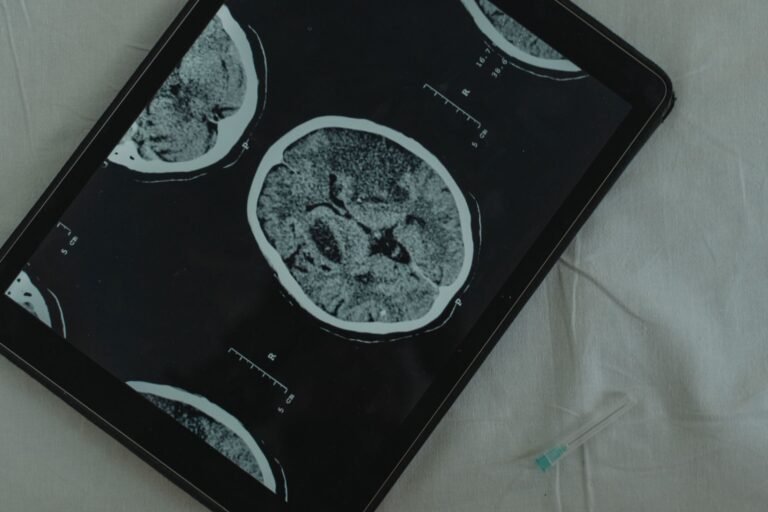
Chronic traumatic encephalopathy (CTE) is a neurodegenerative disease caused by repeated blows to the head, even when those blows don’t cause a concussion that the athlete feels or reports. The condition is defined by the accumulation of tau protein in the brain—a hallmark of neurodegeneration also found in Alzheimer’s disease. However, CTE develops independently and follows its own progression pattern. Over time, tau tangles spread through the brain, killing neurons and causing cognitive decline, behavioral problems, and eventual dementia. The disease has four stages, with stage IV representing the most severe form associated with dementia. The 2026 landmark study provides the clearest evidence yet that advanced CTE directly causes dementia. Researchers examined 366 brains of people who had CTE but no other progressive brain disease, and compared them to 248 donors without CTE.
The findings were unambiguous: the four-fold increase in dementia among stage IV CTE cases was not coincidental. Importantly, the study also found no measurable cognitive decline in early-stage CTE (stages I and II), meaning that dementia risk is concentrated in advanced disease. This distinction matters because it clarifies which patients face the highest risk and who may benefit most from early intervention and monitoring. Consider the case of a 45-year-old former high school football player who begins experiencing memory problems and depression. His neurologist initially suspects early-onset Alzheimer’s based on cognitive testing. Without CTE research and autopsy findings, the family might pursue Alzheimer’s-focused treatments that won’t address the underlying tau pathology specific to CTE. With proper understanding of CTE’s connection to dementia, the care team can tailor interventions and provide accurate prognostic information.

How Repetitive Head Impacts Create Brain Damage
The mechanism is brutal in its simplicity: repeated impacts cause the brain to shake within the skull, tearing connections between neurons and triggering a cascade of inflammatory and degenerative changes. A landmark 2025 study from Boston University examining young contact sport athletes found that 56% of neurons in key brain regions were lost—a catastrophic level of cell death that correlates directly with career length and years of exposure. Even more alarming, this neurodegeneration was observed in athletes who didn’t yet have a CTE diagnosis, suggesting that brain damage begins accumulating before CTE pathology is formally present. The inflammatory response adds another layer of injury. The study found significantly increased numbers of microglia—immune cells that should protect the brain but become hyperactive in response to repetitive injury. These activated microglia correlate with tau accumulation and spread, essentially amplifying the damage. Think of it as the brain’s immune system responding to chronic injury by becoming part of the problem.
An athlete who takes hundreds of subconcussive hits over a season may accumulate more damage than the medical team realizes, because the hits themselves are often “silent”—no symptoms, no immediate visible damage, but the inflammatory cascade is underway. A crucial caveat: not everyone with repetitive head impacts develops CTE or dementia. Research estimates that about 17% of people with years of repetitive concussions or mild traumatic brain injuries will develop chronic traumatic encephalopathy. However, the risk is dose-dependent—it doubles for every 2.6 years of football exposure. This means career duration and intensity of play matter tremendously. A college athlete who plays for four years faces a different risk profile than a professional player with a 10-year career. Understanding this relationship helps families contextualize their risk based on actual exposure history.
CTE Rates in Young Athletes Are Shockingly High
Perhaps the most disturbing finding from recent research is how prevalent CTE is among young athletes who died unexpectedly. In the Boston University CTE Center’s largest case series of youth and high school athletes, 41.4% of 152 contact sport athletes under age 30 had neuropathological evidence of CTE at autopsy. To put this in perspective, fewer than 1% of the general population has CTE. This means young contact athletes have roughly 40 times the rate of CTE compared to the general public. CTE has been identified in athletes as young as 17 years old, demonstrating that brain damage can accumulate during high school years. What’s particularly striking is that most of these young athletes had only mild CTE (stages 1-2)—yet they were already showing symptoms. Depression affected 70% of young CTE cases; apathy impacted 71.3%; behavioral control issues occurred in 56.8%; and decision-making impairment affected 54.5%.
These weren’t asymptomatic findings discovered incidentally at autopsy. Young people with CTE were struggling emotionally and cognitively, often before they were old enough to drink legally or rent a car. And among the 152 young athletes, 71.4% were amateurs—high school or college players—meaning the risk is not limited to professional athletes with multimillion-dollar contracts. It extends to teenagers playing tackle football in their local community. The sports represented in these cases included football (the largest group), hockey, soccer, rugby, and wrestling. Each sport’s impact mechanics differ, but they all involve repeated head contact or the potential for hits. A high school soccer player heading the ball hundreds of times per season, a wrestler taking takedowns repeatedly, or a hockey player checking opponents—all accumulate repetitive impacts. The young athletes with CTE had significantly more years of exposure (11.6 years versus 8.8 years for those without CTE), reinforcing the dose-response relationship.

NFL Players and Dementia Risk
The statistics for former professional football players are among the most sobering in sports medicine. Former NFL players aged 30 to 49 are diagnosed with dementia at 19 times the rate of the general population in that age range. Among players aged 50 and older, the risk drops slightly to five times higher—though “slightly” is misleading when discussing a condition that should be rare in a 50-year-old. A large research study of 202 former football player autopsies found that 87% showed CTE pathology; when looking specifically at former NFL players, this figure rose to 99%. These aren’t rare outliers.
Actuarial analysis of the data projects that nearly 14% of all former NFL players will develop Alzheimer’s disease during their lifetime, with another 14% developing moderate dementia from other causes. Including all neurodegenerative diseases—ALS, Parkinson’s disease, and dementia of any type—the risk to former NFL players is twice as high as the general public. This means a player who retired at age 35 might reasonably expect cognitive decline in his 50s, 60s, or 70s if his career involved heavy playing time. However, it’s important to note that not every former player develops dementia, and playing position, era, and helmet technology may influence individual risk. A third-string player with limited years of high-impact play faces different odds than a starting linebacker with a 15-year career. Yet the overall trend is unmistakable and affects thousands of former players who are currently alive and at risk.
Why Dementia Gets Misdiagnosed as Alzheimer’s
The 40% misdiagnosis rate revealed in the 2026 study represents a critical gap in clinical practice. A former athlete presents with memory loss and cognitive decline—classic dementia symptoms. The neurologist orders standard cognitive testing, possibly neuroimaging, and concludes the patient likely has Alzheimer’s disease. The family receives counseling about Alzheimer’s progression, genetic risk factors, and treatments designed for amyloid and tau pathology specific to Alzheimer’s. Yet at autopsy, when the brain is examined, there is no evidence of Alzheimer’s disease, only CTE pathology. The misdiagnosis was made because the clinical presentation of CTE-related dementia overlaps with Alzheimer’s, and most clinicians have limited exposure to CTE cases. This misdiagnosis has practical consequences.
Some Alzheimer’s-focused treatments target pathways that differ from CTE’s tau signature. The patient’s family may be given genetic counseling about familial Alzheimer’s risk when there is none. The patient may not understand why Alzheimer’s treatments aren’t working, and clinicians may attribute this to treatment resistance rather than diagnostic error. Furthermore, the family may not connect the dementia to the patient’s athletic history, missing the opportunity to share CTE risk information with other athletes or former players in the family. A significant caveat is that many neurologists have limited training in CTE diagnosis, partly because CTE can only be definitively diagnosed at autopsy. There is no blood test or imaging technique that reliably detects CTE during life, though research into biomarkers is advancing rapidly. Some academic medical centers with CTE research programs are better positioned to suspect CTE based on history and offer clinical support, but the average neurologist in a community hospital may not think to explore an athletic history or contact sports background when evaluating dementia in a middle-aged patient.

Clinical Symptoms and When to Seek Evaluation
The symptoms of CTE-related dementia extend beyond memory loss. In young athletes with CTE, depression and apathy dominated—two symptoms that a family might not initially attribute to brain disease, instead viewing them as mood disorders, burnout, or behavioral problems. A 25-year-old former college football player who becomes apathetic, loses interest in friends and activities, and develops depression may be sent to a psychiatrist rather than a neurologist. If the psychiatric treatment doesn’t resolve these symptoms—because the underlying cause is CTE-related neurodegeneration, not primary depression—the patient and family may grow frustrated. Behavioral control issues are equally important to recognize.
Difficulty controlling anger, impulsivity, poor judgment, and risky decision-making can mimic personality change or conduct problems, especially in younger patients. When a 35-year-old former athlete begins behaving uncharacteristically, making poor financial or relationship decisions, and becoming irritable, families often struggle to understand what’s happening. These symptoms, combined with memory or cognitive decline, should trigger consideration of neurodegenerative disease, particularly in anyone with a history of repeated head impacts. The practical takeaway is that any former or current contact sport athlete experiencing mood changes, behavioral shifts, cognitive decline, or personality changes should be evaluated by a neurologist familiar with concussion and CTE, not just treated symptomatically for depression or behavioral issues. Obtaining a detailed athletic history—when the person played, what position or event, how many years, any remembered concussions—helps the neurologist assess CTE risk. Early recognition won’t reverse damage already done, but it may guide management, family counseling, and plans for future care.
Future Research and the Path Forward
The field of CTE research is advancing rapidly, with major focus on developing biomarkers—blood tests or imaging techniques that can detect CTE during life. Current diagnostic capabilities are limited to autopsy, which means we only fully understand CTE cases in people who have died. Blood-based biomarkers measuring tau, phosphorylated tau, and other neural injury markers show promise in research settings and may soon allow neurologists to assess CTE risk in living patients. This would transform clinical care by enabling early detection, potentially allowing earlier interventions before advanced dementia develops.
Simultaneously, prevention efforts are intensifying at youth levels. Better helmet design, rule changes to reduce high-impact collisions, and education about cumulative concussion risk are all part of a broader sports injury prevention movement. However, even optimal helmets cannot eliminate all impact-related damage, since the problem is not just skull fracture but the brain’s movement within the skull. This means that reducing playing intensity, limiting contact practices, and implementing proper concussion management remain the most effective current prevention strategies.
Conclusion
The evidence from 2026 research is unequivocal: former athletes, particularly those in contact sports, face dramatically elevated dementia risk due to chronic traumatic encephalopathy caused by repetitive head impacts. With stage IV CTE carrying a four-fold increase in dementia risk, and 99% of autopsied NFL players showing CTE pathology, this is not a rare curiosity but a public health crisis affecting thousands of former athletes currently living with cognitive decline or at imminent risk of developing it. The 40% misdiagnosis rate as Alzheimer’s disease highlights the urgent need for greater clinical awareness and improved diagnostic tools.
If you are a former athlete experiencing mood changes, cognitive decline, behavioral shifts, or depression—or if you are concerned about a family member with this history—request a neurological evaluation that includes explicit consideration of CTE and brain injury from sports. Share your complete athletic history, including high school, college, and professional play, and any concussions or impacts you remember. Participate in research studies if possible; the advances that have clarified CTE’s role in dementia have come from patients and families willing to donate tissue and medical records. As biomarker research progresses, early detection may soon be possible, offering the potential for earlier intervention and better management of this serious but now undeniable consequence of contact sports.
You Might Also Like
- The Reagan Precedent Why Dementia Questions Around Trump Are Getting Louder
- Why Athletes Get Dementia More Often
- Trump’s Public Appearances Spark Reagan Dementia Parallels Again
For more, see Alzheimer’s Association — clinical trials.