Dementia symptoms often appear to improve during visits from family and friends. A person who struggled to form words all morning suddenly engages in clear conversation. Someone confused about time and place seems oriented and present. Then the visitors leave, and within hours—sometimes minutes—the confusion returns, the agitation sets in, or the withdrawal deepens. This isn’t the person “putting on a show” for guests. It’s a genuine but temporary cognitive boost that happens because visits activate functioning abilities the disease has obscured, then those abilities fade when external stimulation ends.
The mechanism is straightforward: dementia doesn’t destroy abilities evenly. It layers disruption over them. A person with moderate Alzheimer’s still has memory, language, and social skills buried in the brain, but accessing them requires significant cognitive energy and external cues. Visitors provide exactly that—novelty, faces to recognize, questions that pull responses, hand-holding that grounds attention. The brain surges. After visitors leave, there’s no more scaffolding, and the effort exhausts what reserves were mobilized. The baseline symptoms are more apparent not because the disease worsened—it didn’t, in minutes—but because the temporary boost wore off.
Table of Contents
- Why Dementia Symptoms Seem Better During Visits
- The Rebound Effect—Why Symptoms Feel Worse After Visitors Leave
- Does Timing and Fatigue Worsen the Transition?
- How to Prepare Visitors for the Symptom Shift
- Distinguishing Normal Rebound from Concerning Decline
- Overstimulation and Physical Fatigue After Social Engagement
- Practical Strategies to Ease the Transition After Visitors Leave
Why Dementia Symptoms Seem Better During Visits
During a visit, the person with dementia receives what researchers call “environmental stimulation”—multiple sensory and social inputs happening at once. A daughter arrives, there’s a hug, conversation about grandchildren, the person gets up to show a photo, sits back down, answers questions, maybe eats a snack together. None of this is passive. Each interaction requires the person to orient to the environment, recognize a face, retrieve memories, form words, and maintain attention. The brain engages systems that dementia has weakened but not destroyed. This engagement can be dramatic.
A person who hasn’t spoken in sentences all week might share a ten-minute story with a visitor. Someone who seemed completely disoriented might suddenly know their visitor’s name and make a joke. The family member leaves thinking the person is “having a good day” or “really not that bad.” What they’re witnessing is peak functioning—the person at their ceiling, not their typical baseline. The boost is real; the shift back down is equally real. A 78-year-old man with middle-stage Alzheimer’s might be articulate and engaged during his daughter’s Saturday afternoon visit, but by evening, after she leaves, he’s sundowning, confused about what day it is, and asking repeatedly where she went. He hasn’t declined; the stimulation has simply stopped, and his brain returned to its resting state.
The Rebound Effect—Why Symptoms Feel Worse After Visitors Leave
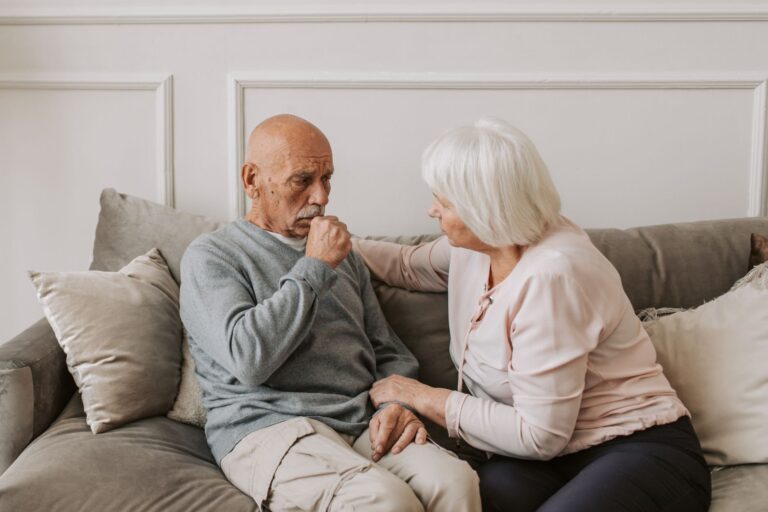
After visitors leave, the person often seems worse than before they arrived. Family members report: “He was fine during the visit, now he’s more agitated than ever” or “She was so clear when they were here. Now she’s asking the same question over and over.” This rebound is partly the contrast—visitors activate the person’s “best self,” so the return to baseline feels like a steep drop. It’s also neurological fatigue. Producing clear speech, maintaining focus, and managing the social effort of a visit exhausts neural resources. Once the stimulus ends, those resources are depleted.
Another layer: the person may not understand why the visitor left. To someone with dementia, time is fragmented. The visit felt immediate and present, and now the person is gone. But the person with dementia may not have a coherent sense of “she had to go back to work” or “she’ll visit again next week.” Instead, there’s a gap—absence without explanation. That can trigger anxiety or agitation that compounds the symptom rebound. A woman with advanced dementia may become persistently anxious after her son leaves, asking staff repeatedly “where is my son?” not because she’s forgotten he just left, but because the grief of absence is real and immediate, reset every time the memory dissolves.
Does Timing and Fatigue Worsen the Transition?
Visitors who arrive near evening, especially during what’s known as the “sundowning window” (typically 4 p.m. to 8 p.m.), may find the person more agitated after they leave. This isn’t because the evening is inherently worse—though it often is for dementia—but because the person is already running a cognitive deficit at that hour. Adding stimulation during a low-energy window can exhaust reserves faster. When the visitor leaves, there’s nothing left. A person visited at 2 p.m. has more time and energy to settle before the evening decline kicks in; a person visited at 6 p.m.
is already fighting fatigue and sundowning confusion, and the added social effort can push them past their limit. Longer visits sometimes produce stronger rebounds. A three-hour visit activates more abilities and consumes more energy than a 45-minute one. Some families notice their loved one is noticeably more agitated on the evening after a long visit than after a brief one. This is a trade-off without a clean solution: shorter visits mean less time together, but longer ones can mean harder crashes afterward. There’s no universal “ideal” visit length; it depends on the person’s stage of disease, energy level that day, and what time of day visitors come. A trial-and-error approach—noting what time and duration seem to produce the least difficult rebounds—is more useful than a fixed rule.
How to Prepare Visitors for the Symptom Shift
Family members who don’t understand the rebound effect often blame themselves or their loved one. “I upset him by leaving.” “She was doing so well, and I made her worse.” These aren’t true, but they feel true in the moment. Preparing visitors in advance can prevent that guilt and set better expectations. Explain to visitors that they’re seeing the person at peak activation, not baseline—that the skills and clarity visible during the visit are real but temporary. When the person seems more confused or agitated after the visitor leaves, that’s not the visitor’s fault or a sign that the visit was unwelcome.
Some care facilities now brief visitors before they see someone with dementia: “You may see a big improvement while you’re here. That’s the stimulation of your presence. It will likely fade once you leave. This is normal and doesn’t mean your visit was bad.” This simple framing—explaining the mechanism rather than leaving it mysterious—helps families understand what they’re witnessing and reduces the guilt or alarm that can otherwise follow. A son who knows his mother will seem worse in the evening after his afternoon visit is less likely to over-interpret that rebound as decline or rejection.
Distinguishing Normal Rebound from Concerning Decline
Not all behavior changes after visitors leave are simple rebound effects. There’s a real risk of conflating normal post-visit adjustment with genuine decline or distress that needs attention. If a person is consistently aggressive, refusing food, or showing new symptoms after visits, it may be a sign that the visit itself is too stressful, that the person has an unmet need (like pain or needing a bathroom), or that something else is wrong. The difference: normal rebound is a return to baseline confusion or agitation, usually resolving within a few hours and not escalating.
Concerning behavior involves new aggression, self-harm, refusal to eat or drink, or distress that doesn’t settle. A person who is more confused after a visitor leaves—that’s rebound. A person who becomes violent or stops eating—that warrants investigation into whether the visit itself is the problem, whether the person is ill, or whether something else changed. It’s not about the visitor’s fault; it’s about getting to the actual cause and adjusting visits or care accordingly.
Overstimulation and Physical Fatigue After Social Engagement
Some people with dementia, particularly those in later stages, can’t tell the difference between pleasant stimulation and overwhelming input. A visit that involves multiple family members talking at once, children playing, movement in and out of the room—that’s high-input stimulation. For a person whose brain is already struggling to process information, this can feel chaotic. They may seem engaged in the moment because the stimulation is powerful, but afterward, they’re exhausted or agitated. A 73-year-old woman with mid-stage dementia might sit calmly while three adult children and four grandchildren visit.
During the visit, she smiles and nods. She seems calm. Within an hour after they leave, she’s in tears, asking repeatedly for her mother (who died decades ago), and refusing to get ready for bed. This isn’t because the visit was unwelcome—but because the sensory load of managing multiple conversations, tracking who’s who, and processing the emotional weight of a crowded room exhausted her. She didn’t have the cognitive buffer to signal “that’s too much.” For some people, structured, quieter visits—one person, fewer topics, less time—prevent the severe rebound that high-stimulation visits produce.
Practical Strategies to Ease the Transition After Visitors Leave
If a person shows difficult behavior after visitors leave, consistent response helps. Don’t over-explain (“Your son had to go back to work”). Do redirect calmly to the present: “Let’s have some tea” or “Come see what’s outside.” This grounds attention without arguing about why the visitor left. Some facilities use gentle music, a quiet activity, or a familiar caregiver’s presence immediately after visits to ease the transition.
Visitors can also build in buffer time: a 15-minute wind-down before leaving, during which the energy of the visit deliberately quiets. Instead of a sudden “goodbye,” a visitor might suggest “Let’s sit for a few minutes” or “Walk me to the door slowly.” This doesn’t eliminate rebound, but it can reduce the sharpness of the drop. For people with evening sundowning, morning or early afternoon visits are structurally safer because the person has the whole rest of the day to settle. Accepting that post-visit behavior change is normal—not a failure of the visit or a sign the person doesn’t want visitors—allows families to plan visits for connection, not around trying to prevent an unchangeable rebound.
- —