Reviewed by the Help Dementia Editorial Team — our editors review every article for accuracy against guidance from the National Institute on Aging, the Alzheimer’s Association, and peer-reviewed sources.
Cooking at home offers significant cognitive and emotional benefits for people with dementia—it provides mental stimulation, preserves a sense of independence, and can trigger meaningful memories—but it also carries real safety risks including burns, falls, fire hazards, and accidental ingestion of harmful substances. The key is not avoiding cooking altogether, but rather understanding both the benefits and dangers so you can create an environment where someone with dementia can still engage in this meaningful activity while minimizing preventable accidents.
For example, a 72-year-old woman in the early stages of Alzheimer’s disease who loves baking might light the stove and forget about it, creating a fire risk. Yet if she’s prohibited from entering the kitchen entirely, she loses the therapeutic engagement of measuring flour, kneading dough, and the satisfaction of completing a familiar task. The challenge for caregivers is threading this needle—enabling participation while implementing safeguards that prevent harm.
Table of Contents
- How Does Cooking Benefit the Dementia-Affected Brain?
- What Are the Primary Safety Risks in the Kitchen?
- How Does the Stage of Dementia Affect Kitchen Safety?
- Creating a Safer Kitchen Environment Without Complete Restriction
- Recognizing Warning Signs That Kitchen Access Needs Further Restriction
- The Role of Medication and Cognitive Timing
- When and How to Involve Professional Support
- Conclusion
- Frequently Asked Questions
How Does Cooking Benefit the Dementia-Affected Brain?
Cooking engages multiple cognitive domains at once: working memory (following steps), procedural memory (muscle memory for chopping and stirring), and long-term memory (recipes and cooking habits from earlier in life). For many people, cooking is one of the last skills to fade with dementia, partly because it relies on deeply ingrained neural pathways formed over decades of repetition. Studies on cognitive training in aging populations show that engaging in familiar, purposeful activities slows cognitive decline compared to passive entertainment, though cooking offers more practical value since it produces an actual meal. Beyond cognition, cooking provides emotional benefits. Someone with dementia often experiences loss of identity and purpose.
If cooking has been central to their life—whether as a parent feeding their family or someone who enjoyed entertaining—being able to participate in meal preparation, even with modifications, preserves a sense of capability and self. A 65-year-old former chef who can no longer remember her grandchildren’s names may still light up when helping chop vegetables, connecting to who she was before the disease. There’s also a social element. Cooking together—with a spouse, adult child, or caregiver—becomes a structured activity where conversation flows naturally. It’s less confrontational than asking someone directly “Do you remember…?” and instead creates a shared task that feels meaningful to both parties.
What Are the Primary Safety Risks in the Kitchen?
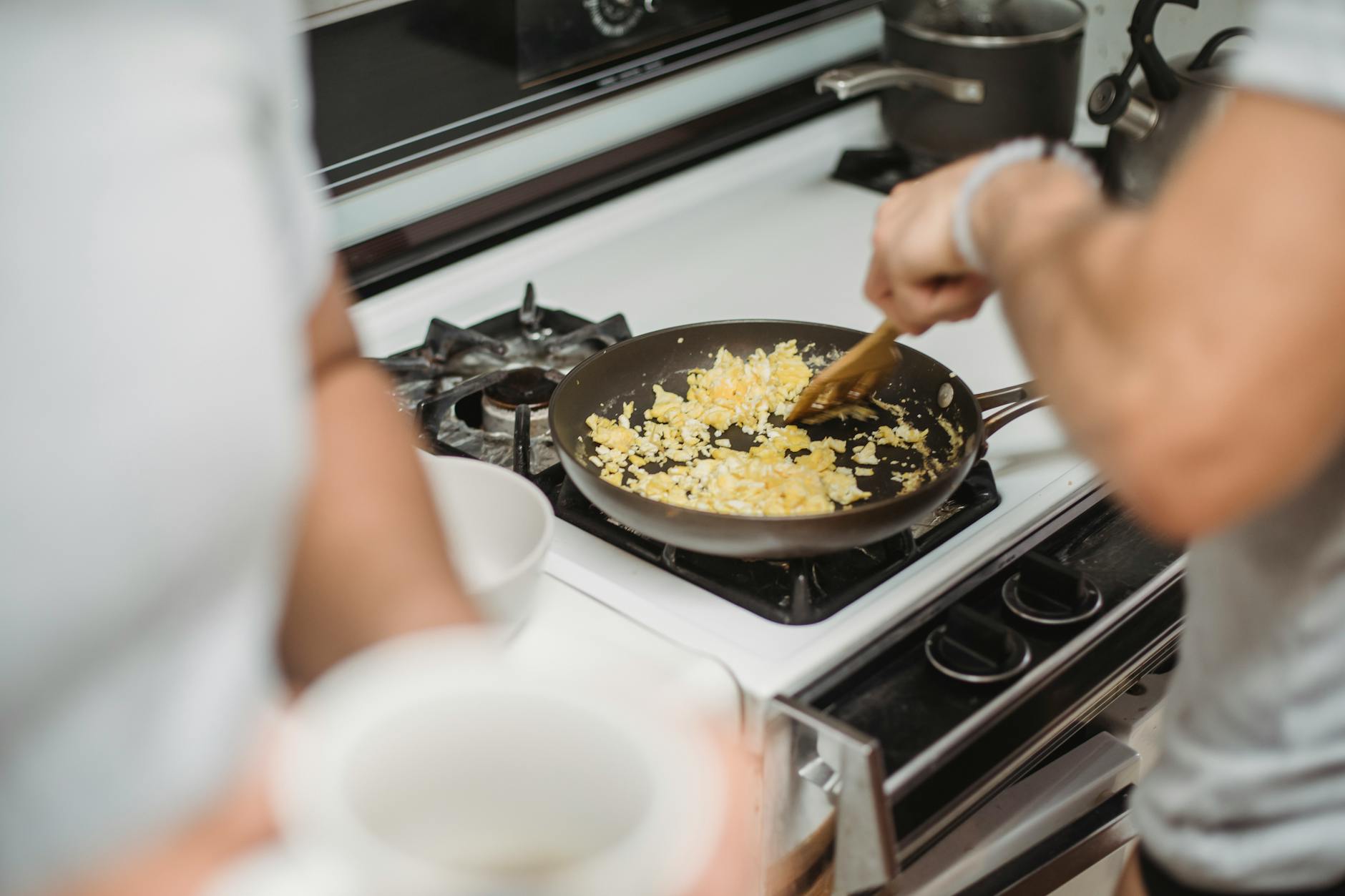
The kitchen is one of the most hazardous rooms in the home for someone with dementia. Forgetting that the stove is on is the most serious risk—a person might turn on a burner, get distracted, and never return, allowing a pot to boil dry or a towel left nearby to ignite. Unlike a younger person who might smell something burning or remember within minutes, someone with advanced dementia can lose track of time entirely, and a 20-minute gap can be catastrophic. Burns are another immediate danger. Someone with dementia may touch a hot pot or pan without hesitation, having forgotten temporarily that heat causes pain.
They might also spill boiling water on themselves while carrying it, or grab at steam rising from a pot. A 78-year-old man with mid-stage dementia reached toward a boiling pot of pasta and suffered second-degree burns on his forearm; he had no memory of the pot boiling just moments before and reacted without the usual protective reflex. Falls, medication interactions, and accidental poisoning round out the serious risks. A person cooking while confused might ingest raw cookie dough containing raw eggs, drink cooking wine, or accidentally consume ingredients they’ve mistaken for something else. The risk of falls increases in a busy kitchen environment—wet floors, open cabinet doors, and clutter become trip hazards that someone with balance issues or poor spatial awareness might not navigate safely.
How Does the Stage of Dementia Affect Kitchen Safety?
In early-stage dementia, someone might cook relatively independently with occasional lapses—forgetting to add salt, leaving ingredients out, or repeating steps. With gentle reminders, they can usually complete a task. A person in this stage might forget they’ve already eaten breakfast and want to cook again, but they’re still capable of understanding and following two-step instructions like “Turn off the stove, please” and responding appropriately. In mid-stage dementia, the dangers escalate.
Someone may forget why they entered the kitchen within seconds of arriving there, leaving them standing in front of an open refrigerator for extended periods. They might turn all the stove burners on instead of one, or combine incompatible foods—putting coffee grounds in a pot of soup—without recognizing the error. A 75-year-old woman with mid-stage disease left the oven on at 500 degrees while preparing a simple snack; when discovered hours later, the kitchen walls were warm to the touch. In late-stage dementia, independent kitchen use typically isn’t safe, but participation in supervised cooking activities—like stirring a bowl of ingredients or arranging prepared items on a plate—can still provide sensory and emotional engagement without access to heat sources or sharp tools.
Creating a Safer Kitchen Environment Without Complete Restriction
The goal for many families is to preserve cooking participation while reducing risk through environmental modification. One effective strategy is removing control of the stove itself: installing a locking device on the oven that requires a key or code to operate, or having an electrician install a switch outside the kitchen that controls stove power. This allows a person to participate in food prep work—chopping, mixing, seasoning—without the ability to initiate cooking unsupervised. Another approach is clearing the kitchen of dangerous materials. Store cleaning supplies, medications, and alcohol in a locked cabinet outside the kitchen. Keep only food and cooking tools accessible.
This prevents accidental poisoning while still allowing someone to move around and participate. One caregiver found that her husband was drinking cooking wine by mistake; when she moved the wine to a locked cabinet in the garage and stocked the kitchen with only beverages in clearly labeled cups, the behavior stopped. Supervision during cooking is crucial but doesn’t require constant hovering. Caregivers can sit at a kitchen table with a clear line of sight, reading or working on their own tasks while remaining present. This allows the person with dementia a sense of independence while ensuring rapid intervention if needed. For advanced dementia, structured cooking activities—such as preparing toppings for a pizza that someone else assembles—offer engagement without access to hazardous equipment.
Recognizing Warning Signs That Kitchen Access Needs Further Restriction
Even with modifications, there are behavioral and cognitive red flags that signal someone has moved beyond what can be safely managed. If a person regularly forgets basic safety steps—like not touching hot pans, or understanding that the stove is hot—then participation in active cooking should stop. If they regularly attempt to use the stove despite repeated redirection, the behavior is unlikely to improve with reminders alone.
Other warning signs include repeatedly trying to cook when already medicated with sedating drugs, showing confusion about the difference between cleaning supplies and food, or becoming aggressive when prevented from cooking. A 69-year-old woman with Lewy body dementia experienced visual hallucinations in the kitchen—seeing insects in the food and becoming distressed—and needed to be redirected to other activities entirely. Incontinence and inability to manage their own hygiene may also indicate that kitchen work isn’t feasible; if someone can’t manage basic self-care, supervising them in a busy kitchen becomes a two-person job, which isn’t practical for most families. At that point, shifting to simplified participation—helping to arrange pre-prepared items, or sitting nearby while someone else cooks—may be more realistic.

The Role of Medication and Cognitive Timing
Cooking safety is also dependent on when it happens in relation to medication. Someone whose dementia medications peak in the afternoon might be more confused then, making morning cooking a better option. Similarly, alcohol or sedating medications don’t mix with kitchen work. A 74-year-old man with Alzheimer’s took a mild sedative in the evening to help sleep, then woke at 2 a.m.
confused and wanted to make breakfast. His daughter locked the kitchen door during these hours, allowing him to use it during the day when his cognition was better and she was home. If someone takes insulin or has diabetes, cooking needs to account for their ability to track portions and timing of meals. Someone who forgets they’ve already eaten a snack and wants to cook another meal might inadvertently affect their blood sugar management. Coordinating with their doctor about optimal times for kitchen participation and what foods are safe for them to handle is important.
When and How to Involve Professional Support
For families struggling with this balance, an occupational therapist can assess the specific person’s capabilities and recommend modifications tailored to their stage of dementia and home layout. They can also suggest safe activities that feel like cooking—preparing salads, assembling sandwiches, arranging desserts on plates—that offer engagement without high-risk components.
Adult day programs often include cooking classes specifically designed for people with dementia, providing both the cognitive engagement and social connection in a supervised environment where safety equipment is already in place. For families managing kitchen access alone, considering respite care or in-home support a few hours per week can provide both the person with dementia and the caregiver with structured, safe opportunities for meaningful activities.
Conclusion
Cooking at home is not inherently unsafe for someone with dementia—it’s an activity that can preserve dignity, provide cognitive stimulation, and maintain a connection to identity and purpose. But it does require honest assessment of the individual’s current stage, clear implementation of environmental safeguards, and willingness to adjust as the disease progresses. The right approach is rarely an all-or-nothing decision between full kitchen independence and total restriction; instead, it’s a series of practical modifications that enable participation within realistic safety constraints.
Work with your healthcare team—your loved one’s neurologist, a geriatric care manager, or an occupational therapist—to establish clear, written guidelines for kitchen use that your care team can follow consistently. Revisit these guidelines every few months as dementia changes, and don’t hesitate to tighten restrictions or shift to modified activities when safety requires it. The goal is not to preserve cooking as it once was, but to preserve the meaning it holds.
Frequently Asked Questions
Is it safe for someone with early-stage dementia to cook alone?
In early-stage dementia, some people can cook with minimal supervision if the kitchen has safety modifications—such as a locked oven and cleared counters of hazards. However, they should not be left completely unsupervised around the stove. Periodic check-ins every 10-15 minutes are recommended.
What’s the biggest kitchen hazard for someone with dementia?
Forgetting that the stove is on is the most serious risk, potentially leading to fire. Other major hazards include burns from touching hot cookware, falls, and accidental poisoning from consuming non-food items or raw ingredients with contamination risks.
Can I still let my loved one cook if I install a stove lock?
Yes. A stove lock or external power switch removes the risk of unsupervised heating while allowing participation in food prep work like chopping, mixing, and seasoning. Many families find this a good balance between safety and maintaining purpose.
When should cooking activities stop entirely?
When someone cannot retain a simple instruction like “don’t touch that, it’s hot,” repeatedly attempts unsafe actions despite redirection, or shows confusion about what is and isn’t food, kitchen participation should transition to supervised, modified activities with no access to heat or sharp tools.
What are some safe cooking activities for someone with advanced dementia?
Stirring ingredients in a bowl, arranging pre-prepared items on a plate, tearing lettuce for a salad, arranging toppings on a pizza, or decorating a pre-made cake can provide engagement without hazardous equipment.
Should I involve their doctor in decisions about kitchen safety?
Yes. Medications, cognitive timing, and conditions like diabetes or poor balance should all factor into kitchen safety plans. Your loved one’s doctor or an occupational therapist can help create an individualized approach.