Reviewed by the Help Dementia Editorial Team — our editors review every article for accuracy against guidance from the National Institute on Aging, the Alzheimer’s Association, and peer-reviewed sources.
Caregiver training should start before the crisis happens—before your parent falls trying to transfer from bed to chair, before you strain your back doing a task wrong for six months, before the confusion and unpredictability of dementia catch you unprepared. Only 11% of family caregivers report receiving any formal training in basic Activities of Daily Living, even though most are managing toileting, bathing, medication administration, and safety supervision from day one. This is not a soft recommendation about taking a class someday. When caregiving begins without foundational training, injuries multiply, anxiety becomes the default state, and the person receiving care faces preventable harm. A 60-year-old woman, months after her husband’s diagnosis, struggled to help him shower without him slipping. She had never learned transfer techniques or how to use adaptive equipment.
After six weeks of trying to manage on her own, she injured her lower back severely enough to need physical therapy—just as her husband’s care demands were accelerating. This scenario plays out across millions of American households. The gap between what caregivers need to know and what they actually know at the start is enormous, preventable, and well-documented. Early training changes this equation. It gives you competence before panic sets in, prevents injuries to yourself and the person in your care, and provides a framework for managing the unpredictable behaviors and physical changes that dementia brings. Medicare now reimburses practitioners for caregiver training as of 2024, a signal that the healthcare system has finally recognized what researchers have long confirmed: training works better and costs less when it arrives early.
Table of Contents
- What Gaps in Caregiver Training Actually Cost
- The Dementia Caregiver’s Own Health Spiral
- Why Dementia Safety Requires Trained Hands and Eyes
- When the Training Window Actually Opens
- Why Caregivers Still Slip Through Without Training
- How Medicare Changed the Economics of Caregiver Training
- What Frontline Training Actually Teaches
What Gaps in Caregiver Training Actually Cost
Only 47% of caregivers feel they have received adequate training for major caregiving tasks like catheter management, transfer training, or wound care. Only 22% receive training for medical or nursing tasks despite holding major caregiving responsibilities. These are not edge cases—these are the core functions of dementia caregiving. Transfer training alone prevents falls, which account for 800,000 hospitalizations annually among older adults. Proper technique means the difference between a safe assist and a herniated disc.
The consequence is improvisation. Family members devise makeshift solutions based on what makes intuitive sense in the moment rather than what works biomechanically or medically. One caregiver, learning from a nurse during a one-time home health visit, discovered she had been helping her mother stand up in a way that put both of them at risk for injury. “I’d been doing it my own way for two years,” she said later. Two years of small, accumulated strain on her body before she learned the right approach. Over 60% of caregivers experience burnout symptoms—fatigue, sleep disruption, anxiety—and much of that stems from the physical and emotional strain of managing tasks without proper preparation.
The Dementia Caregiver’s Own Health Spiral
caregivers of people with dementia face specific health risks. They are 30% more likely to smoke, 27% more likely to develop hypertension, and 60% report at least one modifiable risk factor that increases their own risk of developing dementia. This is not collateral damage—this is a predictable consequence of stress, physical strain, sleep deprivation, and the neurological impact of chronic caregiving stress. Early training interrupts this spiral at multiple points. It reduces physical injuries that accumulate over months and years.
It provides tools for managing behavioral changes so you are not locked in constant crisis response. It normalizes asking for help and using assistive devices instead of relying on physical strength you do not have. But there is a timing limitation: training must come early enough to become automatic habit before exhaustion sets in. After six months of unmanaged caregiving, many caregivers are too depleted to absorb new information. Their nervous systems are already in survival mode. A training program offered at month one operates very differently from the same program offered at month eight.
Why Dementia Safety Requires Trained Hands and Eyes
Dementia introduces specific risks that untrained caregivers often miss or misinterpret. A person with moderate dementia might wander at 2 a.m. not because they are confused in a general sense, but because they have a urinary tract infection causing disorientation. They might refuse to eat not because they are being difficult, but because they have dental pain or swallowing difficulty. They might become aggressive during bathing not out of stubbornness, but because the water temperature or the sensation of hands on their skin triggers fear or pain responses.
Trained caregivers recognize these patterns. They know how to modify the environment to reduce fall risk—removing scatter rugs, ensuring adequate lighting, positioning furniture to create safe pathways. They understand how to communicate with someone whose language processing is failing, using shorter sentences, allowing processing time, offering choices within constraints. They know when behavioral changes warrant a call to the doctor instead of an attempt to manage through punishment or restraint. These skills prevent hospitalizations, ER visits, and the cascade of complications that follow an unmanaged UTI or a preventable fall.
When the Training Window Actually Opens
The ideal time to begin training is at diagnosis or when you first take on a caregiving role—ideally before you are managing hands-on tasks alone. This is not convenient. Many families receive a diagnosis and immediately scatter to their lives, planning to figure out caregiving later. By the time “later” arrives, you are already embedded in your own methods, already physically strained, already running on fumes.
Rural caregivers completed 40% more learning activities than urban counterparts in recent program participation data, suggesting that when caregivers face geographic isolation, they lean harder into available training. Urban caregivers with more available in-person resources often skip formal training, believing they can ask a healthcare provider ad hoc. This creates a tradeoff: convenience now, competence later. The programs with highest engagement among caregivers were those that began soon after diagnosis, when family members were actively building their care systems. Area Agencies on Aging reported a 111% increase in caregiver support program engagement from 2024 to 2026, and state programs saw 2.5x growth—signals that when training is offered and promoted early, people use it.
Why Caregivers Still Slip Through Without Training
Despite growing program availability, 50% of caregivers meet Medicare’s criteria for needing training but do not receive it. The barriers are practical. No one tells you training exists. Your doctor does not have time to refer you. You cannot afford the time away from caregiving to attend a class.
If you are coordinating care across multiple family members, no one takes ownership of making sure training happens. A major limitation: state programs and health plans expanded caregiver training availability 2-3x between 2024 and 2026, but this investment concentrated in certain regions and certain demographics. If you live in a rural area with minimal healthcare infrastructure, or if you are a low-income caregiver without transportation, availability remains theoretical. Caregivers also face psychological barriers—the belief that caregiving is intuitive, that paying for help or training means you are a failure, that you should simply be able to figure it out. These beliefs are costly. They delay training by months or years until a crisis forces action.
How Medicare Changed the Economics of Caregiver Training
In 2024, Medicare began reimbursing practitioners for caregiver training as a billable service. This removed financial barriers for Medicare-eligible caregivers and signaled that professional training is standard care, not an optional add-on. Practitioners can now bill for teaching transfer techniques, medication management, bathing and hygiene assistance, and behavior management strategies—the exact skills that prevent injuries and hospitalizations.
This change emerged from evidence showing that trained caregivers reduce healthcare utilization. A person with dementia whose caregiver has received training has fewer falls, fewer emergency room visits for behavioral crises, fewer hospitalizations for preventable complications like infections. Over a year, the savings to the healthcare system exceed the cost of training by a significant margin. The reimbursement reflects this logic: training is preventive care, not luxury education.
What Frontline Training Actually Teaches
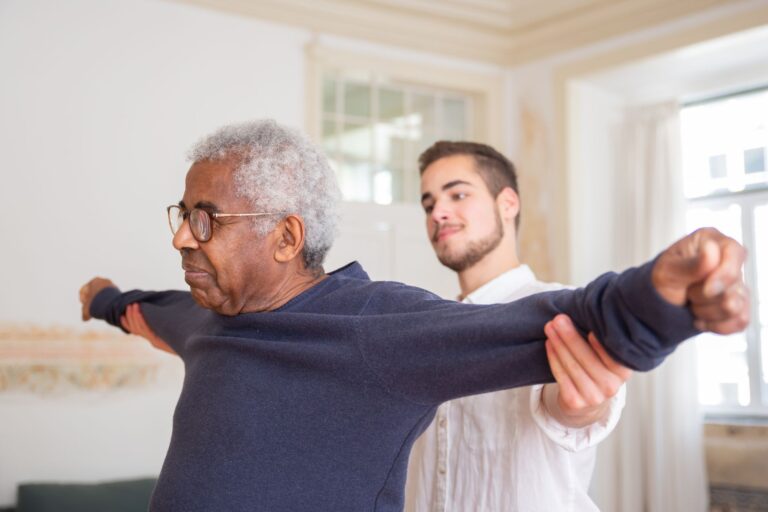
Effective caregiver training covers transfer techniques—how to help someone move from bed to wheelchair, wheelchair to toilet, standing to sitting, without creating injury risk for either person. It covers hygiene assistance in a way that preserves dignity and manages safety. It teaches how to recognize medication side effects and when they warrant a call to the doctor. It teaches how to modify communication when someone’s language processing is failing, how to manage repetitive questions without losing patience, how to recognize when behavioral changes signal medical problems rather than personality changes.
In 2025, caregivers spent 7 million minutes on training platforms, according to platform usage data. That volume reflects genuine demand once barriers drop. Trualta’s 2026 caregiver report concluded that training and early connection drive caregiver outcomes—not crisis response afterward. The practitioners and programs seeing the best outcomes are those that engaged caregivers within the first three months after diagnosis or care transition, before patterns became entrenched and exhaustion set in. One health plan that proactively offered transfer training to all new dementia caregivers saw a 23% reduction in caregiver-related injuries reported in follow-up surveys—not reduction in reported incidents, but reduction in actual injuries happening in homes.
- —