Caregiver education events are needed because unprepared caregivers face preventable crises: behavioral episodes that escalate, medication errors that land people in the hospital, and burnout that forces early placement into facilities. A caregiver who attends even one structured session on dementia communication techniques can recognize early signs of agitation and interrupt a full behavioral crisis before it happens. Without this knowledge, the same caregiver is working from instinct and guesswork—often making situations worse.
The stakes are high and visible. A family caregiver managing a loved one with dementia navigates problems that medical textbooks don’t prepare you for: how to respond when the person you’re caring for no longer recognizes you, how to maintain safety during toileting, what to do when they refuse meals, how to structure a day when they’ve lost sense of time. These are learned skills, not innate ones, and they are taught most effectively in group settings where caregivers can hear real examples, ask questions directly, and realize they are not alone in their struggles.
Table of Contents
- What Skills Do Caregivers Actually Lack Without Training?
- How Burnout and Isolation Intensify Without Structured Peer Learning
- Behavioral Management Strategies That Require Hands-On Teaching
- How Group Education Differs from Isolated Online Resources
- The Danger of Caregiver Assumptions About Competence
- The Physical Health Risks That Education Can Prevent
- Medication and Healthcare Communication Skills Specific to Dementia
What Skills Do Caregivers Actually Lack Without Training?
Most family caregivers enter their role with deep love and zero formal instruction. They learn through crisis—a fall, a refusal to bathe, a night of wandering—and by that point, both the caregiver and the care recipient are already suffering. Research on caregiver competence consistently shows gaps in three critical areas: recognizing the early signs of dementia-related behavioral changes, understanding how the disease changes communication, and knowing practical strategies for activities of daily living. One concrete gap: many untrained caregivers respond to repeated questions (a symptom of short-term memory loss) with frustration or logic. They say, “I already told you this,” not realizing that the person genuinely cannot form the memory. This response triggers shame and defensiveness in the care recipient, leading to behavioral escalation.
A trained caregiver learns to respond consistently, calmly, and without correcting—treating each instance as new. This simple reframing prevents hours of distress per week. Another critical gap is medication management. Caregivers who have never been taught about dementia medications and their side effects don’t know that certain behaviors might indicate a medication problem rather than disease progression. A caregiver might attribute new confusion, drowsiness, or agitation to “the dementia getting worse” when it’s actually a medication interaction or an incorrect dose. Without education, they miss the window to contact the doctor.
How Burnout and Isolation Intensify Without Structured Peer Learning
Caregiver burnout is not a character flaw—it’s a predictable outcome of providing 24/7 care without support, information, or community. When a caregiver attends an education event, they encounter other people in identical situations. This normalization is powerful and often unexpected. One caregiver may realize they are not “failing” because their loved one had a difficult morning; they’re experiencing a normal Tuesday in dementia care. The limitation of one-on-one professional advice—from a doctor, nurse, or social worker—is that it is episodic and narrow. A physician appointment lasts 15 minutes and addresses medical issues.
A caregiver education event, by contrast, typically runs 60 to 90 minutes, covers multiple practical topics, and allows caregivers to ask each other questions and share strategies that have worked. A nurse educator might teach hand-over-hand techniques for bathing; a peer caregiver shares what time of day their family member cooperates best. Without these connections, caregivers often suffer in isolation. They attribute their exhaustion and frustration to personal weakness rather than recognizing it as a natural response to an unsustainable situation. The research is stark: caregivers without support have higher rates of depression, anxiety, and physical illness than the general population. An education event acts as an early intervention against these outcomes.
Behavioral Management Strategies That Require Hands-On Teaching
Dementia-related behaviors—aggression, wandering, sexual disinhibition, accusations, extreme suspicion—are often a form of communication, but untrained caregivers interpret them as deliberate misbehavior. This misunderstanding is where real harm begins. A caregiver who thinks their loved one is “being difficult” applies pressure or correction; a caregiver who understands the behavior as a symptom rooted in fear or confusion responds with validation and redirection. An education event typically teaches the ABCs of behavior: Antecedent (what happened before), Behavior (what you observed), and Consequence (what happened after). A caregiver learns to keep a log, identify patterns, and spot triggers. For example, aggression during morning care might always precede confusion and fear about what is happening to their body.
Once the antecedent is clear, the strategy shifts: slow down, explain each step, give choices, or schedule care at a different time when the person is calmer. None of this is intuitive without training. Validation and redirection techniques—how to agree with an agitated person’s emotional truth without reinforcing false beliefs—must be practiced to work correctly. An untrained caregiver who is told “validate their feelings” might think this means agreeing that yes, someone stole their purse (when it’s actually lost in the bedroom). That approach backfires. A trained caregiver learns the distinction: validate the emotion (“You sound worried”), redirect the focus (“Let’s search your room together”), and avoid correcting the false belief. This nuance is nearly impossible to understand from reading alone; it requires discussion and practice scenarios.
How Group Education Differs from Isolated Online Resources
A caregiver searching alone online finds conflicting advice, some of it harmful. One source says to correct false memories; another says never to correct. One recommends medication for behavioral issues; another warns against overmedicating. A caregiver without training cannot evaluate which source is credible. A structured education event, led by someone with clinical or gerontological credentials, provides vetted information—not just options to sift through.
The tradeoff is that group events require time, travel, and sometimes cost. An online video can be watched at 11 PM when the care recipient is asleep. An in-person or synchronous virtual event requires scheduling and presence. However, the research shows that engagement—the ability to ask questions and interact—improves retention and behavioral change far more than passive consumption of information. A caregiver who watches a 30-minute video on communication forgets most of it within a week. A caregiver who attends a 90-minute workshop, asks two questions, and hears three peer stories retains and applies the strategies weeks later.
The Danger of Caregiver Assumptions About Competence
Many family caregivers believe they understand dementia because they know the person. This familiarity is valuable, but it is not the same as understanding the disease process. A caregiver might think that their loved one’s refusal to leave the house is stubbornness when it is actually agoraphobia caused by spatial disorientation from the dementia. They might interpret a loss of personal hygiene as laziness when it is actually apraxia—the inability to sequence steps.
These misattributions lead to pressure and blame where compassion is needed. Without education, a caregiver also may not understand the trajectory of the disease. They do not know that certain changes—such as increased sleeping, temperature sensitivity, or difficulty swallowing—are late-stage signs and not a sign that “something else” is wrong medically. This gap in knowledge creates unnecessary emergency room visits and tests, which are stressful and expensive. A caregiver trained in the expected progression of dementia can distinguish between disease-typical changes and genuine medical emergencies, making more informed decisions about when to seek urgent care.
The Physical Health Risks That Education Can Prevent
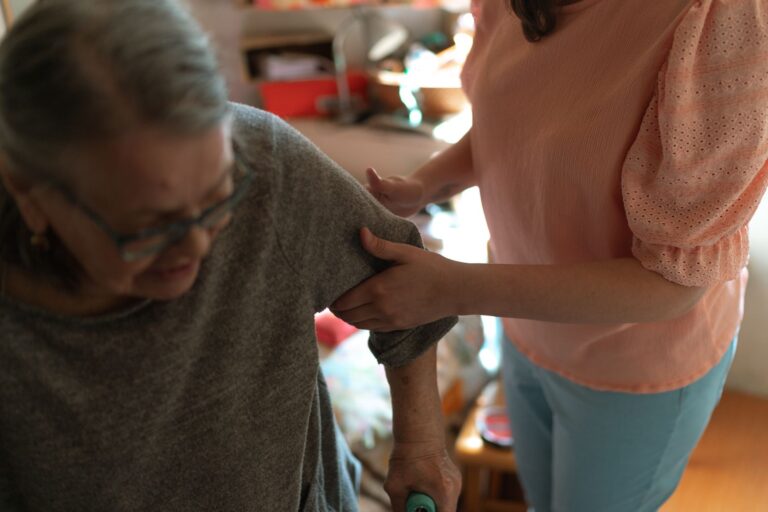
An untrained caregiver is at high risk for back injury, falls, and repetitive strain during tasks like transferring the care recipient from bed to chair or providing personal care. Education events that include physical demonstrations—how to use equipment, proper body mechanics, how to ask for help—directly prevent injury. This is not abstract; caregiver injuries force placement of the care recipient into facilities earlier than necessary.
A specific warning: many caregivers injure themselves trying to do too much alone. An education event that teaches how to use a gait belt, a shower chair, or other adaptive equipment, and equally important, how to ask for help without shame, reduces caregiver injury and allows the care recipient to stay at home longer. One caregiver who attended a workshop on safe transferring learned that professional home care aides could handle the physical tasks two days a week—freeing her from the jobs that were damaging her back and giving her energy to manage the behavioral and emotional aspects of care.
Medication and Healthcare Communication Skills Specific to Dementia
Caregivers often miss the opportunity to communicate critical information to doctors because they do not know what details matter. A doctor asks, “Is she eating?” and a caregiver says, “Some.” Without education, the caregiver may not realize they should be reporting specifics: how much, which foods are refused, whether there are swallowing difficulties, whether the person is eating at 8 AM but not at 5 PM. These patterns help the doctor diagnose problems. Education events often include sessions on how to advocate at medical appointments, what questions to ask, and how to communicate concerns when the care recipient cannot.
A trained caregiver brings a written log of concerning symptoms, specific examples, and the timeline of changes. This documentation changes the quality of medical care. A caregiver who says “She’s been confused” gets a shoulder shrug. A caregiver who says “Starting three weeks ago, she no longer recognizes me, sleeps 14 hours a day, and refuses breakfast” gives the doctor actionable data. These communication skills are taught and reinforced in group education settings where caregivers practice phrasing concerns clearly and learn what information doctors actually need.
- —