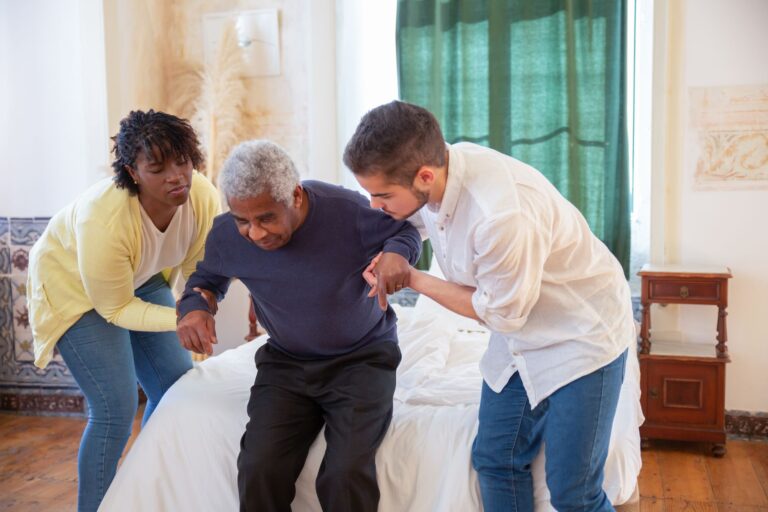
He can no longer use his house key because dementia has damaged the brain systems that plan skilled hand movements. This loss is called apraxia, difficulty doing learned movements despite normal muscle strength. A door key looks simple but needs sight, grip, aim, push, and turn in order. When planning and spatial judgment fade, that chain fails even when he tries hard.
Medical information disclaimer: This article is for general educational purposes only and does not provide medical advice, diagnosis, or treatment. Always consult a physician or other qualified health professional about symptoms, medications, tests, or treatment decisions.
Table of Contents
- What is apraxia at the front door?
- Why is a lock so hard to see and feel?
- Is this normal aging?
- What helps right now?
What is apraxia at the front door?
Clinicians define accompanying apraxia in dementia as trouble performing previously learned motor acts, plus trouble planning daily tasks, according to the MSD Manual in MSD Manual's memory-loss review. The muscles still work, but the brain cannot order the steps.
At the door this can look like holding the key upside down, pushing against the frame, missing the slot, or turning before the key is fully in. He may pause, switch hands, or say the lock changed.
Why is a lock so hard to see and feel?
A key needs distance judgment, angle matching, and steady pressure together. The Alzheimer's Association lists trouble understanding visual images and spatial relationships, including problems with distance, color or contrast, in the Association's 10 early signs list.
Researchers at Technische Universität München state that people who cannot button a jacket or have difficulty inserting a key in a lock have apraxia, reported in the university's brain-imaging report. A 2021 Journal of Alzheimer's Disease review describes similar spatiomotor complaints with keys, seatbelts, and remote controls.
Is this normal aging?
Normal aging may bring occasional trouble with settings or new devices. Persistent failure with a familiar key-and-lock sequence is different and warrants a prompt medical visit, the Alzheimer's Association notes.
Use the change as information, not proof of a stage. Note when it started, whether both doors are affected, and what else has slipped, such as cooking, driving, bills, or medication.
What helps right now?
Stay calm and keep cues short. Give one step, wait, then give the next. Keep the old key for guided practice only, and use a family-managed entry method for everyday coming and going.
- Place his hand with the key already aimed at the slot.
- Say "push in," pause, then say "turn."
- Keep the same lock, good porch light, and a large high-contrast key tag.
- Stay beside him and keep a spare key with you.
- Ask his care team about supervised entry and safer daily access if he is locked out or wanders.