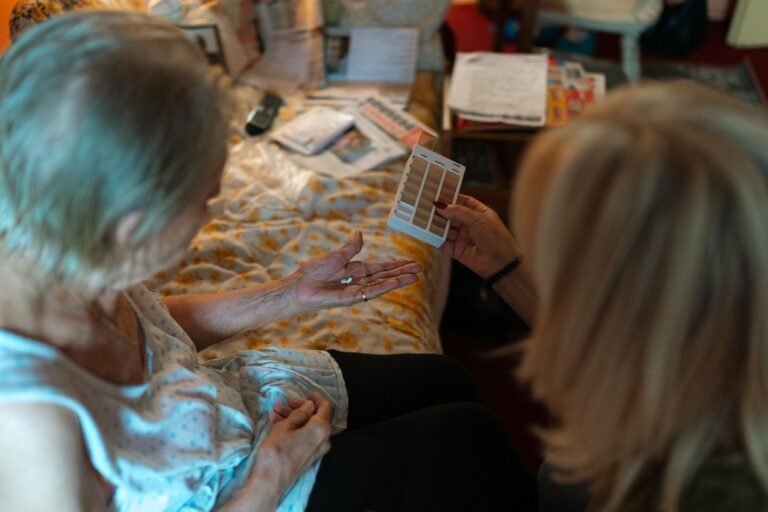
Dementia patients often cannot recognize the toilet because of agnosia, a loss of recognition in which the eyes work but the brain cannot match what it sees to meaning. Hospital dementia training from the University of Nottingham lists not recognising the toilet, food, or a chair as typical examples. This is not defiance or simple forgetfulness. Sight, spatial judgment, and memory can fail together, so a person may look directly at the toilet and still not know its purpose.
Medical information disclaimer: This article is for general educational purposes only and does not provide medical advice, diagnosis, or treatment. Always consult a physician or other qualified health professional about symptoms, medications, tests, or treatment decisions.
Table of Contents
- What does agnosia do?
- Why does the bathroom disappear?
- How do you make the toilet findable?
- When is it something else?
What does agnosia do?
The U.S. National Institute of Neurological Disorders and Stroke describes agnosia as failure to identify familiar objects despite working senses. The toilet looks present but unfamiliar.
The matching step between image and use never happens. Agnosia can also erase steps around the object. A Journal of Alzheimer's Disease case report described a patient with posterior cortical atrophy, severe visuospatial dysfunction, and multiple agnosias who could not remember how to flush the toilet or open his own door.
Why does the bathroom disappear?
Dementia alters depth, colour, contrast, and object location, according to Alzheimer's Society UK, which explains how visual perception changes in dementia. A white toilet against white walls and floor can blend into one surface. The person may enter the room and find nothing to use.
Naming tests show the same gap. Japanese researchers showed dementia patients photographs of kitchens, bathrooms, toilets, and washrooms and found lower correct naming and fewer identifying cues than healthy controls. Fewer cues mean slower or missed recognition in a real bathroom.
How do you make the toilet findable?
Increase contrast and visibility. Caregiver guidance recommends a toilet seat in a colour contrasting with walls and floor, plus a contrasting grab bar, because all-white bathrooms blend together.
The Government of Alberta advises caregivers to use clear bathroom signs, visibility, and regular prompting for bladder and bowel problems. Practical fixes include:.
- mark the bathroom door with words plus a toilet picture
- keep the door open so the toilet stays visible
- remove objects mistaken for toilets, such as bins or low seats
- prompt toilet use about every 2 hours
When is it something else?
New incontinence is not always recognition failure. The U.S. Alzheimer's Association notes that infection, medication, or another treatable condition can cause new incontinence.
Those causes need medical assessment rather than bathroom changes alone. Track timing, frequency, pain, fever, thirst, new drugs, and constipation. Bring that record to the clinician and ask whether urine testing or medication review is needed.