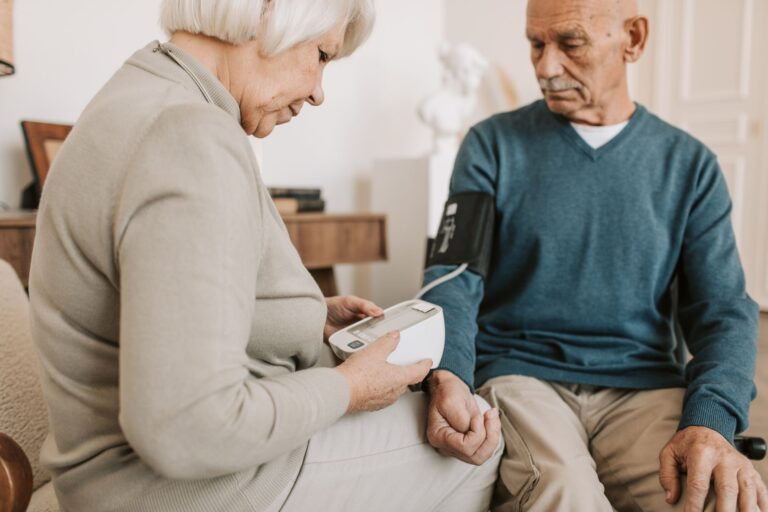
Adaptive tools matter in Alzheimer’s care because they create a bridge between what a person can no longer do independently and what they can still do with support. These tools—whether simple or technological—reduce the cognitive load on both the person with Alzheimer’s and their caregiver, extending the period during which meaningful activity and safety remain possible. A person who has begun to forget appointments might use a large-print wall calendar with color-coded family members, or a wearable that vibrates at medication time; without these supports, the day fragments into confusion, missed doses, and preventable crises that exhaust the entire household.
The reason adaptive tools work is practical, not sentimental. They don’t cure memory loss or slow disease progression. What they do is compensate for specific cognitive gaps in real time, allowing someone with Alzheimer’s to remain oriented at home, to eat regularly, to recognize family members through photos on a labeled board, to stay physically safe from wandering. Every tool that removes one decision or memory task from an overtaxed brain frees both the person and the caregiver to focus on connection, comfort, and the activities that remain possible.
Table of Contents
- What Counts as an Adaptive Tool in Alzheimer’s Care?
- How Adaptive Tools Protect Safety and Preserve Function
- Specific Adaptive Tools That Make a Measurable Difference
- Choosing and Implementing Tools—Practical Tradeoffs
- Common Pitfalls and Realistic Limitations
- How Adaptive Tools Support the Caregiver’s Wellbeing
- Real Integration—What This Actually Looks Like in a Home
- Frequently Asked Questions
What Counts as an Adaptive Tool in Alzheimer’s Care?
Adaptive tools in Alzheimer’s care are any device, system, or physical modification designed to compensate for cognitive or functional loss. They range from low-tech (a label maker, a printed schedule taped to the bathroom mirror, photos with names written underneath) to high-tech (medication reminder apps, GPS wearables for fall detection and location tracking, voice-activated assistants that read aloud, motion-sensor nightlights that activate when someone gets out of bed). The key distinction is that they’re not meant to challenge the person to think harder or remember better; they’re meant to make the environment do the remembering instead. The best adaptive tools disappear into routine. A person doesn’t think “I’m using a tool”—they see a red bowl for dinner, a labeled drawer that holds their clothes, or they tap a single button that calls their daughter.
Compare this to asking someone with moderate Alzheimer’s to learn a new phone system or remember a four-digit code: that’s not adaptive, that’s burdensome. True adaptive tools reduce friction at the moment of need, when executive function is already compromised. Different stages require different tools. Early-stage adaptive support might include a password manager, a large-print calendar, or a pill organizer. Mid-stage often requires photo boards, alarms, GPS devices, and simplified routines. Late-stage typically focuses on environmental safety—bed rails, grab bars, temperature controls, incontinence aids—because the person often can’t use technology meaningfully anymore, but the environment can still be designed to prevent harm.
How Adaptive Tools Protect Safety and Preserve Function
One of the most underestimated roles of adaptive tools is preventing the catastrophic cascade. A person forgets to turn off the stove. Without an adaptive tool (a timer, a stove guard, an automatic shutoff), that’s a fire risk. With a simple tool, it’s a non-event. A person wanders. Without a GPS watch or door alarm, you call 911. With one, you know their location within minutes. These tools don’t just add convenience; they prevent emergencies that require hospitalization, further cognitive trauma, and emergency medical costs. However, there’s a significant limitation: adaptive tools only work if they’re actually used, understood, and maintained.
Many families install expensive medication reminders or safety systems that the person with Alzheimer’s refuses, forgets how to use, or that break down within weeks. A GPS watch only helps if it’s worn and charged. A calendar only works if someone updates it. One common mistake is installing a high-tech solution and assuming the person will independently learn to use it or remember it exists. The tool must integrate into their existing routine so completely that it requires zero new decisions from them—or it will be abandoned within days. Another warning: tools can create a false sense of security. A door alarm may alert caregivers to wandering, but it doesn’t prevent falls once the person is outside. A medication reminder app won’t work if the person can’t reach their medications or swallow them properly. Adaptive tools are protective layers, not substitutes for supervision, and expecting a tool to replace human oversight is a common reason families are blindsided by preventable harms.
Specific Adaptive Tools That Make a Measurable Difference
Photo identification boards placed in common areas (bedroom, kitchen, living room) with pictures and names of family members and caregivers reduce agitation and confusion when a person wakes or encounters someone. A daughter photographs the regular caregiver, labels it “Maria – helps in the morning,” and places it on the nightstand. When the person wakes confused about who’s in their bedroom, the photo provides immediate context and reduces the fear response. Without this one simple tool, you have a frightened person, a frustrated caregiver, and potential combativeness during what should be a routine morning. Labeled drawers and shelves serve the same cognitive function. Instead of opening a drawer and seeing a jumble of clothing, a person sees a drawer with a photo of a sweater taped to the front. Instead of hunting through a bathroom cabinet, they see shelves labeled “toothbrush,” “soap,” “towels” with corresponding pictures.
This isn’t about dignity (though it helps); it’s about function. A person who can’t retrieve their own toothbrush stays dependent on a caregiver for every small task. A person who can point to a labeled drawer and say “I need this” maintains a fragment of agency and participation. Technology tools like motion-sensor lights reduce nighttime falls and disorientation by illuminating pathways automatically. Medication organizers that open only at the correct time prevent double-dosing, which is a real and dangerous risk in Alzheimer’s care. Simplified phone systems with large buttons programmed with one-touch calling to family members allow someone to reach help independently—or at least make the attempt, which caregivers can monitor. A person who can press one button to call their son, even if they don’t remember why, is still making a meaningful use of technology.
Choosing and Implementing Tools—Practical Tradeoffs
Selecting adaptive tools requires balancing complexity against benefit. A GPS watch with fall detection and medication reminders sounds comprehensive, but if the person finds it uncomfortable, heavy, or frightening (some people experience wearables as a restraint), it won’t be worn. A simple, lightweight GPS watch that does only one thing well—location tracking—might be worth far more than an expensive multi-function device gathering dust in a drawer. The tradeoff is always the same: more features mean more learning burden, more maintenance, more things that can break or confuse. Implementation matters more than the tool itself. The best approach is to introduce one tool at a time, integrate it into an existing routine, and test it over a week before adding another. Don’t hand someone a new pill organizer and expect them to figure it out. Instead, set it up beside the coffee maker (a routine they know), take their morning pills from the organizer yourself every day for a week, and let them watch.
By the second week, they may reach for it unprompted. By the third week, it’s part of the rhythm. Rushing implementation or introducing too many changes at once triggers resistance and abandonment. Cost is also a real consideration. Some families can afford a $400 GPS watch; others cannot. Low-tech alternatives—a laminated card in the wallet with the caregiver’s phone number, a temporary tattoo with contact information, a neighborhood notification system through community apps—cost little to nothing and often work as well. The most expensive tool is not always the best tool. An inexpensive label maker and color-coded system often outperforms an abandoned app.
Common Pitfalls and Realistic Limitations
One of the most common mistakes is assuming that because an adaptive tool works for one person, it will work for everyone. A medication reminder app that transforms a caregiver’s life in one household sits completely unused in another because the person refuses to carry a phone or doesn’t respond to audio alerts. A GPS watch prevents wandering emergencies in some situations but gives false confidence in others—a family stops checking in as often, and the device’s battery dies unnoticed. The tool is not magical; it works within the specific context of that person’s personality, cognitive abilities, and caregiver involvement. Another limitation: tools require maintenance that can fall through the cracks. Batteries die. Apps update and become unrecognizable. Passwords change.
Devices break. A caregiver manages medications, meals, hygiene, and their own work; maintaining a complex adaptive technology system can become overwhelming. Many families find that simpler tools endure longer because there’s less to maintain. A piece of tape with a photo holds up for months. An app requires monthly password resets and software updates. There’s also the risk of tool dependence creating new vulnerabilities. If an entire routine depends on a door alarm, and the alarm malfunctions, the person is suddenly less safe, not more, because the household has stopped compensating manually. If medication relies entirely on a digital reminder and the device fails, the person might not receive critical medications. The strongest adaptive strategy uses multiple layers—a backup system if the primary tool fails—rather than putting all safety into one device.
How Adaptive Tools Support the Caregiver’s Wellbeing
Adaptive tools matter not just for the person with Alzheimer’s but for their caregiver’s survival. Caregiver burnout is one of the leading causes of early placement in care facilities. Tools that extend a person’s independence—a simplified routine, environmental supports, accessible self-care—reduce the constant supervision and prompting required. A person who can use a labeled system to dress themselves, take their medications, and use the toilet with structural supports needs less active caregiving time.
That time savings translates directly into reduced burnout, more sleep, and a caregiver’s ability to maintain employment, relationships, and basic self-care. The data supports this. Studies of caregiver burden show that households using adaptive tools report lower depression and anxiety scores than those relying on constant supervision and hands-on care. A caregiver who can set up a routine and step back, knowing the environment is designed to keep the person safe and oriented, can actually rest. Without these tools, caregiving becomes an 24/7 reactive crisis management that destroys the caregiver’s health and accelerates family breakdown.
Real Integration—What This Actually Looks Like in a Home
In a real household, adaptive tools are not showcased; they’re woven into daily life so completely that visitors might not notice them. A man sits at his kitchen table every morning, and a printed three-step card shows him how to make his coffee in the same sequence: 1) Fill cup with water. 2) Add grounds to filter. 3) Press start. He’s been following this card independently for eight months. His daughter updates it only when the routine changes. The card is held to the counter with a magnet that cost two dollars.
It has prevented confusion, arguments, and his dependence on someone making coffee for him five days a week. In another home, a woman’s bedroom door has a large green check mark on it (indicating “this is your room—enter here”) and her bathroom door has a blue X on it (indicating “not your room”). Before these markers were added, she was becoming trapped in the guest bathroom at night, confused and frightened. With the visual markers in place, she navigates independently and the household sleeps through the night. The markers took ten minutes to create. They cost nothing. They changed the family’s quality of life fundamentally. These are adaptive tools: practical, integrated, invisible in their everyday operation, and irreplaceable in their effect.
Frequently Asked Questions
Are adaptive tools expensive?
Not necessarily. Many effective tools cost nothing or just a few dollars: label makers, photos, printed schedules, visual markers, and organizational systems are simple and low-cost. More expensive technology (GPS watches, medication reminders, monitoring systems) can help but aren’t required; simpler approaches often work better because they’re easier to maintain and use.
What if my relative refuses to use the adaptive tool I set up?
Resistance usually means either the tool is too complex, introduced too quickly, or doesn’t match the person’s needs. Introduce one tool at a time, integrate it into an existing routine they already follow, and let them use it with you present for a week before expecting independence. If they still refuse, the tool probably isn’t right for this person; try a different approach rather than forcing compliance.
At what stage of Alzheimer’s do adaptive tools stop working?
Late-stage Alzheimer’s typically requires environmental tools (bed rails, grab bars, incontinence management, temperature controls) rather than cognitive tools like reminders or labels. As language and recognition decline, the tools shift from supporting independence to preventing harm. They work throughout the disease, but their purpose changes.
Can adaptive tools delay moving to a care facility?
Yes, for many families. By extending safe independence and reducing caregiver burnout, well-designed adaptive tools can make home care sustainable for longer. However, they are not a substitute for placement when the person’s needs exceed what one caregiver can safely provide.
Should I use high-tech or low-tech tools?
Start with the lowest-tech solution that solves the problem. Low-tech tools are easier to maintain, less likely to break, don’t require passwords or software updates, and are often more intuitive. Move to higher-tech only if low-tech doesn’t address the specific gap.
How do I know which tools will actually work for my relative?
Watch for the specific moments of confusion, safety risk, or caregiver burden. A person who forgets appointments needs a calendar or reminder. A person who wanders needs a GPS device or door alarm. A person who can’t find their clothes needs labeled drawers. Start with the single biggest pain point, not multiple tools at once, and refine from there.