Standing still should be effortless. For most people, it is. But Parkinson’s disease strips away the automatic reflexes that keep the body upright, turning what was once unconscious into a constant battle. The disease causes a loss of reflexes needed to maintain an upright posture, delays reaction time, and impairs what neurologists call “righting reflexes”””the body’s ability to correct itself when it sways. When these systems fail, something as simple as waiting in line at a grocery store becomes an exercise in concentration and fear.
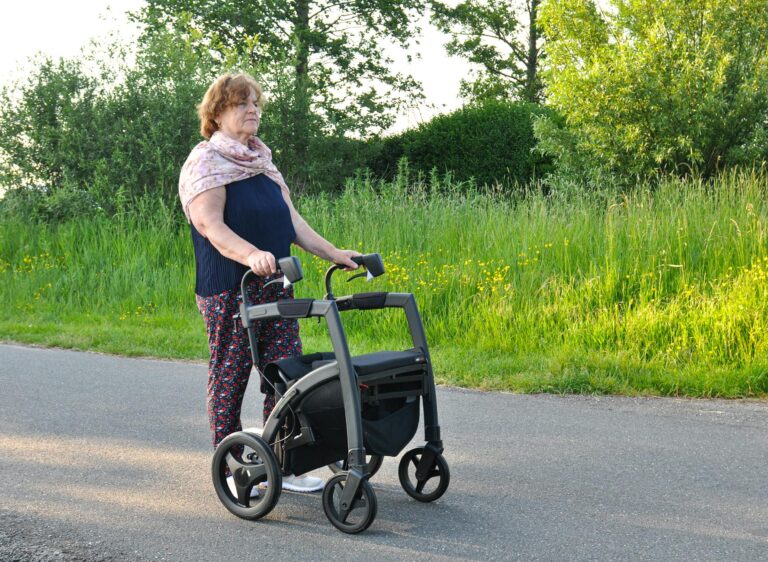
Consider a 68-year-old retired teacher who, five years after her Parkinson’s diagnosis, found herself gripping shopping carts not to push them, but to stay upright. Her feet would suddenly feel glued to the floor while her upper body continued moving forward””a phenomenon called freezing of gait that affects more than 60 percent of patients after a decade of living with the disease. Falls resulting from this postural instability occur in approximately 60 percent of Parkinson’s patients, and falls and fractures account for about 75 percent of total hospitalizations in this population. This article examines why Parkinson’s makes standing still so difficult, how the challenge progresses with age and disease duration, what current research reveals about the mechanisms involved, and what treatment options offer genuine hope. The statistics are sobering””11.77 million people worldwide had Parkinson’s disease in 2021, with more than 1.1 million affected in the United States alone””but the science of balance rehabilitation is advancing rapidly.
Table of Contents
- Why Does Parkinson’s Disease Affect the Ability to Stand Still?
- How Freezing of Gait Turns the Ground Into Quicksand
- Age at Diagnosis Changes Everything
- What Makes Balance One of the Most Retrainable Functions
- The Hidden Costs That Statistics Cannot Capture
- Wearable Technology and the Promise of Prediction
- Looking Toward 2040 and Beyond
- Conclusion
Why Does Parkinson’s Disease Affect the Ability to Stand Still?
The basal ganglia, a group of structures deep within the brain, serve as the body’s automatic pilot for movement. In Parkinson’s disease, dopamine-producing cells in this region die off, disrupting the brain’s ability to process sensory information and coordinate motor responses. This dysfunction leads to abnormal integration of sensory signals affecting posture””the brain receives information about body position but struggles to translate it into appropriate muscle adjustments. Healthy individuals make constant, tiny corrections to maintain balance without thinking about it. When the body sways slightly forward, muscles in the legs and back automatically contract to pull it back to center.
In Parkinson’s, these corrections come too slowly or not at all. The delays in reaction time and movement speed mean that by the time the body tries to correct a sway, the person may already be falling. Postural instability occurs in approximately 16 percent of Parkinson’s patients overall, though this figure understates the problem because it represents a specific clinical milestone rather than the full spectrum of balance difficulties. The distinction between moving and standing still matters here. Walking, while certainly affected by Parkinson’s, involves rhythmic, patterned movement that the brain can sometimes execute more easily than the sustained, subtle adjustments required for stationary balance. Standing still demands continuous recalibration””a task that becomes exhausting when automatic systems fail.
How Freezing of Gait Turns the Ground Into Quicksand
Freezing of gait represents one of the most disabling and least understood symptoms of Parkinson’s disease. Patients describe the sensation as having their feet suddenly glued to the floor while the rest of their body continues its forward momentum. This mismatch between intention and execution can last seconds or minutes, and it often strikes at the worst moments: doorways, crowded spaces, or when someone calls out unexpectedly. The statistics paint a picture of progressive vulnerability. Freezing affects up to 26 percent of people with early-stage Parkinson’s, but that number climbs to more than 60 percent after a decade of living with the disease.
The episodes are unpredictable, which compounds their psychological toll. A person might walk smoothly through their living room ten times, then freeze on the eleventh attempt. However, if you notice that freezing consistently occurs in specific situations””narrow hallways, turning corners, or approaching chairs””environmental modifications and targeted strategies may help reduce episodes significantly. Researchers at Emory University and Georgia Tech are now using artificial intelligence to analyze freezing patterns and predict when episodes are likely to occur. Their work has identified that modulating connectivity between specific brain regions””the left dorsolateral prefrontal cortex and the mesencephalic locomotor region””through neurostimulation could serve as a treatment target. This research represents a shift from treating symptoms after they occur to potentially preventing them.
Age at Diagnosis Changes Everything
Not all Parkinson’s journeys follow the same timeline. Age at diagnosis profoundly influences how quickly postural instability develops, creating vastly different experiences for patients diagnosed at different life stages. Patients younger than 50 at Parkinson’s onset take a median of 18.4 years to develop postural instability. Those diagnosed between 50 and 70 years old reach this milestone in a median of 14.2 years. But patients older than 70 at onset face a median of just 5.7 years before significant balance problems emerge. These numbers carry practical implications.
A person diagnosed at 45 may have nearly two decades of relatively stable balance, time enough to build exercise habits, strengthen supporting muscles, and adapt their environment before the most challenging phase begins. Someone diagnosed at 72 faces a compressed timeline that demands immediate attention to fall prevention and mobility planning. The same disease produces fundamentally different challenges depending on when it arrives. This age-related progression also complicates research and treatment. A therapy that works well for younger patients with slower progression may prove inadequate for older patients facing rapid decline. Clinical trials increasingly stratify participants by age at onset, recognizing that a single approach cannot serve all Parkinson’s patients equally.

What Makes Balance One of the Most Retrainable Functions
Despite the grim statistics about falls and hospitalizations, there is genuine cause for cautious optimism. Balance is described by rehabilitation specialists as one of the most retrainable mechanisms in the body, even when neurological damage has occurred. Exercise is proven to improve gait and balance and reduce falls in Parkinson’s patients, and physical therapy””especially programs involving highly challenging balance exercises””can meaningfully improve postural stability. The key word is “challenging.” Gentle stretching and light walking, while beneficial for general health, do not push the balance system hard enough to force adaptation. Effective programs involve activities that intentionally destabilize patients in controlled ways: standing on foam pads, catching balls while balancing, or practicing recovery from simulated slips.
The brain, even a Parkinson’s-affected brain, responds to demands placed upon it. A comparison illustrates the tradeoff involved. Traditional physical therapy might have patients practice walking on flat surfaces with handrails available, prioritizing safety above all else. More aggressive balance training removes those supports and introduces unpredictability, accepting a slightly higher risk of falls during therapy in exchange for building robust automatic balance responses. The evidence increasingly supports the latter approach, though it requires skilled supervision and careful patient selection.
The Hidden Costs That Statistics Cannot Capture
Combined direct and indirect costs of Parkinson’s disease reach nearly $61.5 billion per year in the United States according to 2025 estimates. Nearly 90,000 Americans receive a new diagnosis each year, and incidence is expected to double by 2040 due to population aging. These figures matter for healthcare planning and research funding, but they cannot capture the daily reality of living with balance impairment. The true cost includes the vacation not taken because navigating airports felt impossible, the grandchild not picked up because the risk of dropping them was too great, the dinner party declined because standing and mingling while holding a plate seemed like an invitation to disaster. Social isolation compounds physical decline in a cycle that statistics cannot measure.
Warning: well-meaning family members sometimes make this worse by hovering anxiously, which increases self-consciousness and paradoxically raises fall risk. The psychological component of balance cannot be separated from the physical. Healthcare systems designed around acute episodes struggle with chronic, progressive conditions. A patient hospitalized after a fall receives intensive attention; the same patient slowly withdrawing from activities to avoid falling receives little systematic support. The 75 percent hospitalization rate for falls and fractures represents intervention at the crisis point, not prevention of the circumstances that made crisis inevitable.

Wearable Technology and the Promise of Prediction
Novel deep brain stimulation targets are being developed specifically for controlling freezing of gait, building on decades of DBS success in treating Parkinson’s tremor. But perhaps more immediately practical are wearable technology systems being developed to detect imminent freezing and automatically deploy sensory cues””visual, auditory, or tactile signals that help break the freeze before it causes a fall. These devices work because freezing, despite feeling sudden to patients, often produces detectable changes in gait patterns moments before full episodes occur.
A sensor might notice subtle hesitation or asymmetry that the conscious mind cannot perceive and immediately provide a rhythmic beep or vibration that gives the brain something external to synchronize with. The technology essentially provides an artificial version of the automatic cues that healthy basal ganglia generate internally. Clinical validation continues, but early results suggest meaningful reduction in freezing episodes for some patients.
Looking Toward 2040 and Beyond
The expected doubling of Parkinson’s incidence by 2040 creates urgency that extends beyond any individual patient. Current healthcare infrastructure cannot absorb twice as many people with progressive balance impairment without fundamental changes in how care is delivered. Telehealth for physical therapy, community-based exercise programs, home modification services, and caregiver support networks will need to scale dramatically.
Research trajectories offer hope that future Parkinson’s patients may face different challenges than current ones. Disease-modifying therapies that slow or halt progression remain the ultimate goal, potentially making postural instability a late-stage rarity rather than an expected milestone. Until then, the combination of aggressive rehabilitation, emerging neurostimulation techniques, and wearable technology represents the best available strategy for keeping people upright and engaged with their lives.
Conclusion
Parkinson’s disease transforms standing still from an automatic function into a conscious struggle. The loss of righting reflexes, the delays in reaction time, and the unpredictable episodes of freezing combine to create a challenge that affects 60 percent of patients through falls and accounts for three-quarters of hospitalizations in this population. Age at diagnosis dramatically shapes the timeline, with older patients facing rapid progression that demands immediate intervention.
Yet balance remains remarkably trainable even in the presence of neurological damage. Exercise and challenging physical therapy genuinely reduce falls and improve stability. Emerging technologies””from AI-driven prediction systems to wearable cuing devices to novel deep brain stimulation targets””offer additional tools for a growing toolkit. For the 11.77 million people worldwide living with Parkinson’s disease, standing still may never again be effortless, but it need not be impossible.