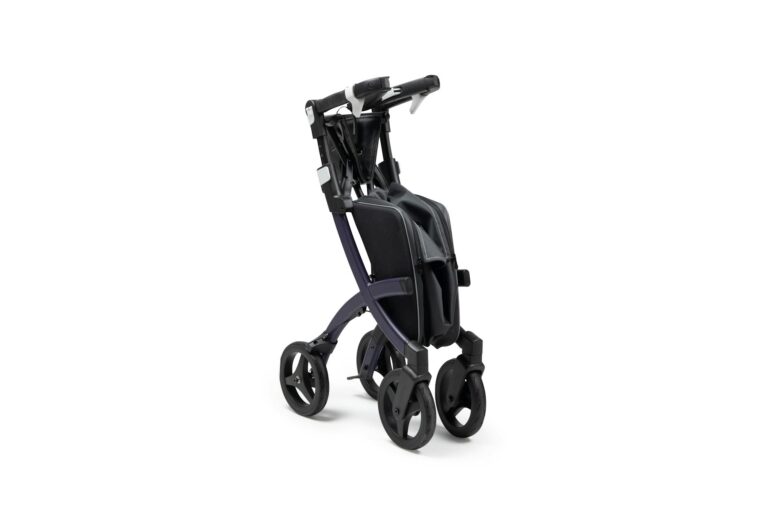
The best walker for someone with Alzheimer’s disease is typically a specialized mobility device designed with dementia-specific safety features, such as the Merry Walker or the U-Step Neuro Walker with Press Down brakes. Standard rollators—the four-wheeled walkers with hand brakes that you see everywhere—can actually become dangerous for people with dementia who may forget how to operate the brakes or even forget why they’re using the walker in the first place. The key difference lies in the braking mechanism: specialized walkers either eliminate traditional brakes entirely or reverse them so that the default state is “stopped” rather than “rolling.” Consider this scenario: an elderly woman with moderate Alzheimer’s uses a standard rollator and decides to sit down on its built-in seat. She forgets to engage the wheel locks first.
The walker rolls out from under her, and she falls backward. This happens more often than families expect—older adults with dementia fall two to three times more frequently than cognitively healthy older adults, with 60 to 80 percent of people with dementia experiencing falls annually. A walker designed for neurological conditions could prevent this entirely. This article covers the specific walker models built for Alzheimer’s patients, explains why standard rollators often fail this population, breaks down Medicare coverage for 2025 and 2026, and provides guidance on what safety features matter most when choosing a mobility aid for someone whose cognitive abilities are declining.
Table of Contents
- Why Do Standard Rollators Often Fail People with Dementia?
- What Makes the Merry Walker Different from Other Options?
- How Does the U-Step Neuro Walker Address Brake Confusion?
- What Should Caregivers Look for in Walker Safety Features?
- When Is a Walker Not the Right Solution?
- Understanding Medicare Coverage for Walkers in 2025 and 2026
- Making the Final Decision for Your Family Member
Why Do Standard Rollators Often Fail People with Dementia?
Standard rollators operate on a simple principle: squeeze the hand brakes to stop, release them to roll. This requires the user to remember two things—that the brakes exist and how to use them. For someone with Alzheimer’s disease, both of these can become unreliable. The person might push the walker forward without engaging the brakes, leading to uncontrolled movement. Or they might attempt to sit on the walker’s seat while it’s still unlocked, causing it to roll away. The problem compounds as the disease progresses.
A person in the early stages might use a standard rollator safely for months or even years. But dementia is progressive, and a walker that worked fine last year might become hazardous this year. Caregivers sometimes don’t recognize this shift until after a fall occurs. The challenge isn’t just physical instability—it’s the mismatch between the device’s design assumptions and the user’s cognitive reality. There’s also the issue of purpose confusion. Some individuals with dementia forget what the walker is for entirely, or they become anxious and agitated by equipment they don’t recognize. A walker that looks institutional or medical can sometimes trigger resistance, while designs that appear more like furniture or supportive chairs may be accepted more readily.
What Makes the Merry Walker Different from Other Options?
The Merry Walker represents a fundamentally different approach to mobility assistance. Rather than a traditional walker frame, it’s a combination walker and chair device that surrounds the user, providing 360-degree support. Developed in 1993 by Mary M. Harroun, a licensed nursing home administrator, the design emerged specifically from her experience working with dementia patients who were losing their ability to walk or recovering from hip fractures. The most distinctive safety feature is its bottom-weighted construction, which prevents tipping. Unlike standard walkers that can flip forward or backward if a user leans too far, the Merry Walker’s weight distribution keeps it stable.
The institutional model supports users up to 300 pounds and accommodates heights from 4.2 feet to 6.6 feet tall. Users essentially walk inside the device, with a seat always positioned directly behind them—if they need to stop or lose their balance, they can sit down immediately without worrying about brake locks or wheel positions. However, the Merry Walker isn’t ideal for everyone. Its larger frame makes it less maneuverable in tight spaces like narrow hallways or small bathrooms. It’s also more expensive than standard rollators and may not be covered by insurance in the same way. For someone who still has relatively good cognitive function and primarily needs outdoor mobility support, it might be more restrictive than necessary. The device works best for individuals in facility settings or homes with adequate floor space, and for those whose dementia has progressed to the point where standard walker operation is genuinely unreliable.
How Does the U-Step Neuro Walker Address Brake Confusion?
The U-Step Neuro Walker, particularly the Press Down model, solves the brake problem through reversal. Instead of squeezing to stop and releasing to roll, users press down on the handles to release the brakes and allow movement. When they let go, the walker stops immediately. This means the default state is always locked—a critical distinction for someone who might forget mid-walk what they’re doing or why. The Press Down model is specifically recommended for individuals who have difficulty squeezing hand brakes, which includes many people with dementia who may also have reduced grip strength or arthritis. The walker also offers an optional Laser and Sound Cueing Module for users with irregular gait patterns, projecting a visual line on the floor and providing auditory cues to help maintain walking rhythm.
This can be particularly useful for people with Parkinson’s disease or Parkinson’s-related dementia, where freezing of gait is common. Pricing for the U-Step runs significantly higher than standard rollators—approximately $1,150 to $1,400 USD based on UK pricing of £920 to £1,128. This cost can be prohibitive for many families, especially if Medicare coverage is limited. The walker is available in Standard, Platform, and Press Down configurations, with the Press Down being most appropriate for dementia patients. One limitation to consider: the reverse braking system requires some learning, which can be challenging if dementia is already advanced. Ideally, the transition to a U-Step should happen while the person can still adapt to new routines.

What Should Caregivers Look for in Walker Safety Features?
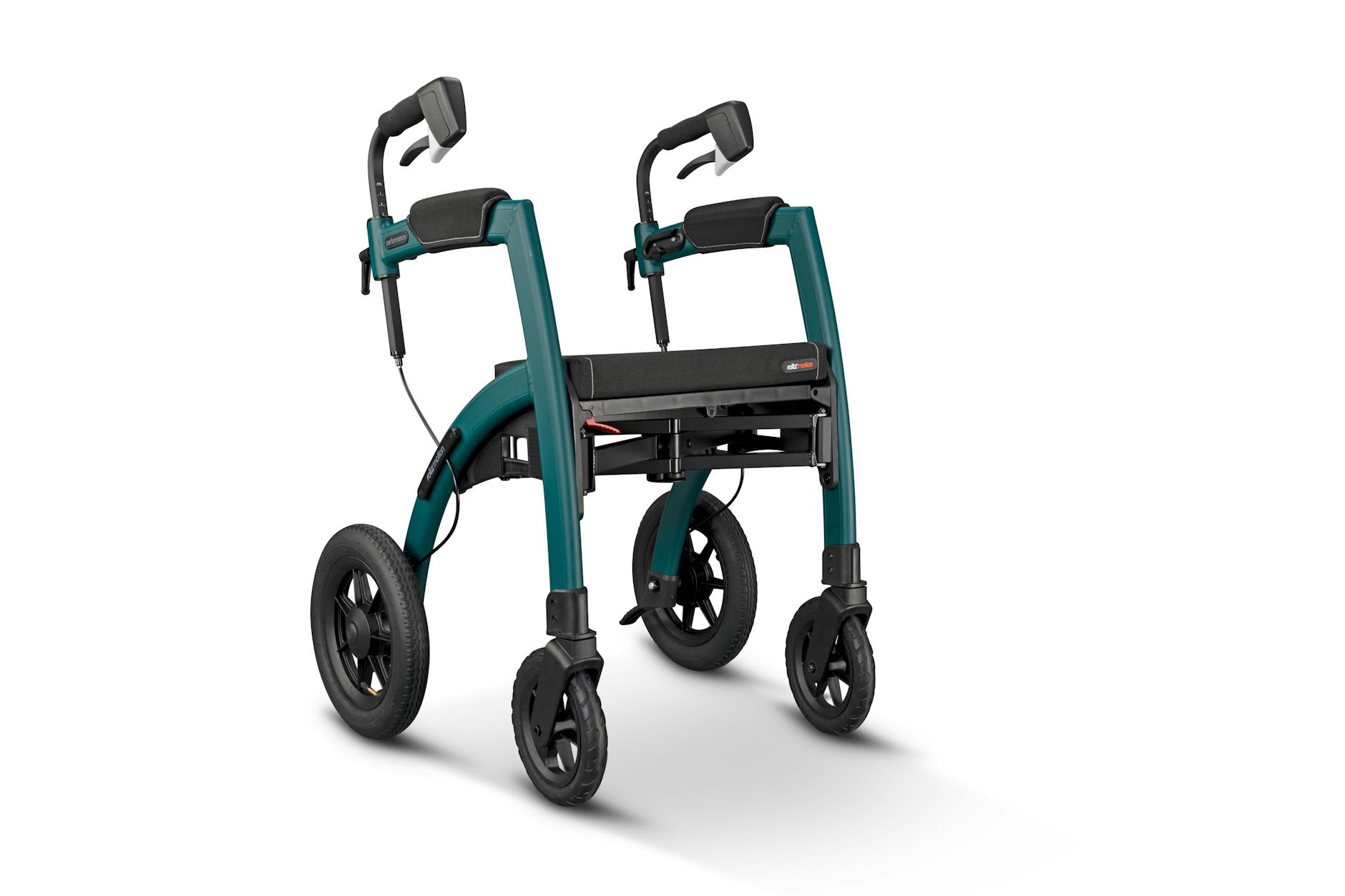
When evaluating any walker for someone with Alzheimer’s disease, four features matter most: brake design, seating stability, weight, and storage capacity. The brake design should either be automatic, reversed, or eliminated entirely through a supportive frame like the Merry Walker. Any system that relies on the user remembering to squeeze handles before sitting is a potential fall risk. For seating, look for a comfortable, padded, sturdy seat that the person will actually use for frequent rests. Many people with dementia become fatigued quickly but resist sitting down, sometimes because the seat is uncomfortable or because stopping feels like an interruption. A seat that invites rest can prevent exhaustion-related falls.
The seat should also be at an appropriate height for the user—too high makes it hard to reach, too low makes standing up difficult. Weight matters for indoor use. A lightweight frame allows easier navigation through rooms and around furniture. However, lighter isn’t always better—some stability requires mass. The tradeoff is between maneuverability and tip resistance. Finally, storage space for essentials like water bottles, medications, or comfort items can reduce the number of trips a person needs to make, decreasing overall fall exposure. A walker with a basket or pouch keeps necessities within reach without requiring the person to carry items in their hands while walking.
When Is a Walker Not the Right Solution?
A walker assumes the user can still walk, which isn’t always the case. As Alzheimer’s disease progresses, some individuals lose the ability to initiate or sustain walking entirely, making even the most specialized walker useless. In these situations, a wheelchair or transport chair becomes necessary. Families sometimes resist this transition, viewing it as giving up on mobility, but continuing to use a walker when walking ability is gone creates dangerous situations. There’s also the wandering problem.
More than 60 percent of people with dementia will wander at some point, often becoming lost or injured. A walker that enables independent movement might actually increase wandering risk in some cases. If an individual is prone to wandering, mobility aids need to be considered within a broader safety context that might include door alarms, GPS tracking, or supervised walking programs rather than independent walker use. Another limitation: some people with dementia become aggressive or agitated when presented with medical equipment. A walker might be thrown, pushed over, or used as a weapon in moments of confusion or fear. For these individuals, environmental modifications—like installing grab bars throughout the home—might provide safer mobility support than any portable device.
Understanding Medicare Coverage for Walkers in 2025 and 2026
Medicare Part B covers walkers and rollators when they are medically necessary and prescribed by a physician. The coverage applies to Medicare-approved equipment, which generally means rollators priced between $80 and $250. Specialized devices like the Merry Walker or U-Step may not fall within standard coverage categories, requiring additional documentation or appeals. For 2025, the Part B deductible is $257. Once you meet this deductible, Medicare typically pays 80 percent of the approved amount, leaving you responsible for 20 percent coinsurance.
The 2026 deductible increases to $283. If you’re purchasing a $200 rollator after meeting your deductible, you would pay approximately $40 out of pocket. However, if you need a $1,200 specialized neuro walker, your 20 percent share would be $240 assuming Medicare approves the full amount—which is not guaranteed for non-standard equipment. Supplemental insurance or Medicaid may cover additional costs in some cases. Veterans may have access to specialized equipment through VA healthcare. The key is documentation: a prescription that clearly states why a dementia-specific walker is medically necessary rather than a standard rollator increases the likelihood of coverage for more expensive options.
Making the Final Decision for Your Family Member
Choosing a walker for someone with Alzheimer’s requires balancing current needs against anticipated decline. A person in early-stage dementia might do well with a standard rollator today but need a Merry Walker or U-Step within two years. Buying the specialized equipment early means they can learn to use it while still adaptable; buying too early means paying for features they don’t yet need and possibly facing resistance to unfamiliar equipment.
The best approach often involves consultation with a physical therapist who has experience with dementia patients. They can assess current mobility, anticipate progression, and recommend specific equipment with proper fitting. Many durable medical equipment suppliers allow trial periods—take advantage of these to see how the person actually interacts with the device in their home environment before committing.