
The best seating support for Alzheimer’s patients during winter months combines clinical-grade pressure redistribution with warmth-retaining features, and it starts with a chair that offers tilt-in-space functionality, lateral trunk supports, and fabric surfaces that breathe rather than trap moisture against the skin. A resident in a memory care unit who spends six or more hours a day seated in a standard wheelchair without these features faces compounding risks: pressure injuries, hypothermia from poor circulation, and falls driven by agitation — all of which spike during the colder months when mobility naturally decreases and ambient temperatures fluctuate between rooms. This is not a minor equipment decision.
With 7.2 million Americans age 65 and older now living with Alzheimer’s — the first time that figure has exceeded 7 million, according to the Alzheimer’s Association’s 2025 report — and health and long-term care costs projected at $384 billion this year alone, the seating choices caregivers make have measurable consequences for both patient outcomes and household budgets. Nearly two-thirds of those affected are women, many of whom are in the later stages of the disease where prolonged sitting becomes the norm rather than the exception. This article walks through the specific seating features that matter most, explains why winter creates a distinct set of dangers for people with dementia, compares popular chair and cushion systems on the market, covers what Medicare will and will not pay for, and makes the case for getting a professional assessment before spending a dollar.
Table of Contents
- Why Do Alzheimer’s Patients Need Specialized Seating Support During Winter?
- Key Seating Features That Protect Against Pressure Injuries and Falls
- How Heated Cushions and Warmth Features Change the Winter Equation
- Comparing Geri Chairs, Tilt Wheelchairs, and Rocking Chairs for Dementia Care
- What Medicare Covers — and What It Does Not
- The Role of an Occupational Therapist in Choosing the Right Chair
- Planning Ahead for Colder Months and Changing Needs
- Conclusion
- Frequently Asked Questions
Why Do Alzheimer’s Patients Need Specialized Seating Support During Winter?
The core problem is straightforward: as dementia progresses, patients spend significantly more time seated due to cognitive decline and decreased mobility. That prolonged sitting puts them at much higher risk of developing pressure ulcers — pooled prevalence of pressure injuries in nursing homes sits at 11.6 percent among older residents, with Stage 2 ulcers accounting for roughly half of all cases. In winter, this baseline risk gets worse. Reduced daylight, colder indoor environments, and the natural tendency to move less when it is cold outside all conspire to keep patients in their chairs longer, with less circulation reaching their extremities. What makes winter uniquely dangerous is that people with dementia may not recognize they are cold, may not dress appropriately for the temperature, and may not be able to communicate their discomfort.
The Alzheimer’s Society UK has flagged this as a recurring safety concern: a patient sitting by a drafty window in a care home may be slowly losing core body heat without anyone noticing, because the person cannot articulate the problem. The National Institute on Aging warns that hypothermia occurs when core body temperature drops below 95 degrees Fahrenheit, and even mildly cool indoor environments of 60 to 65 degrees can trigger it in older adults. Homes should be kept at a minimum of 68 degrees, but seating itself plays a role — a vinyl-covered wheelchair seat, for example, conducts cold and holds no warmth, while a fabric-covered cushion with proper insulation retains body heat far more effectively. Then there is the fall risk. Older adults with dementia fall two to three times more frequently than cognitively healthy peers, largely because dementia impairs balance, mobility, and the ability to transition safely from sitting to standing. During winter, agitation tends to increase — shorter days and disrupted routines contribute to sundowning behaviors — and agitation-driven attempts to stand and walk from an inadequate chair are a primary fall mechanism in both home and institutional settings.
Key Seating Features That Protect Against Pressure Injuries and Falls
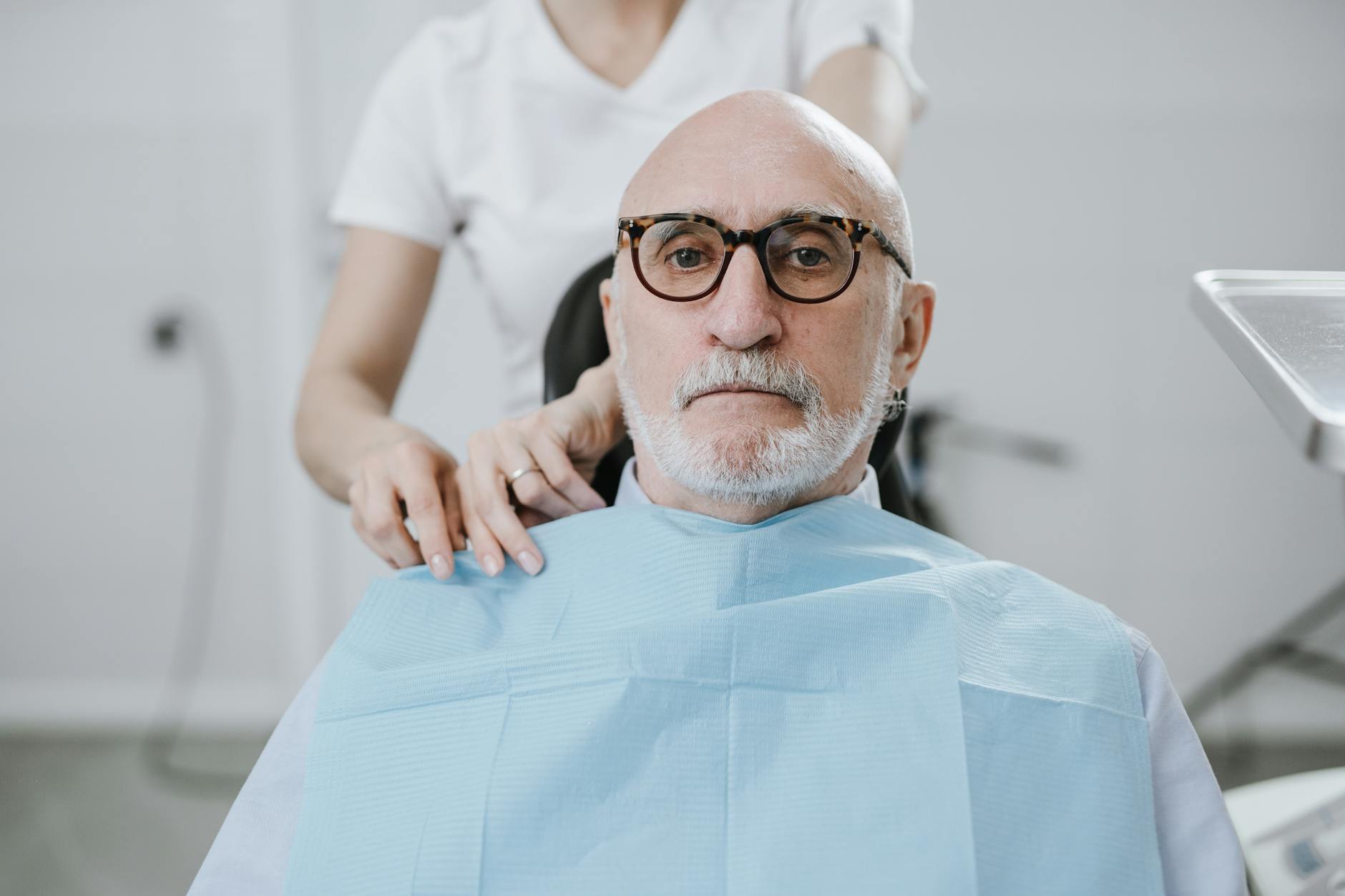
The single most important feature to look for in a dementia-appropriate chair is tilt-in-space functionality. This mechanism tilts the entire seat backward while maintaining the patient’s hip angle, redistributing pressure away from the thighs and ischial tuberosities and centralizing posture. Clinical sources describe this as the foundation of a good pressure care strategy because it accomplishes what simply reclining the backrest cannot — it shifts gravitational load across a broader surface area without creating shear forces on the skin. Beyond tilt, lateral supports and wedges address a problem that families often do not anticipate: patients in mid-to-late-stage Alzheimer’s frequently lack the cognitive capacity to recognize when they are slumped to one side. Without lateral trunk supports, a patient can sit leaning heavily for hours, concentrating pressure on one hip and compressing the ribcage in a way that restricts breathing. An angled seat rake — where the seat surface slopes slightly downward toward the back — keeps the pelvis anchored and prevents the forward sliding that precedes many falls.
When 19 percent of a person’s body weight passes through the feet while seated, proper leg rests and foot positioning become essential for distributing that load and preventing the patient from using their feet to push themselves out of the chair. However, there is an important limitation here. No single chair configuration works for every patient. A person with severe kyphosis needs different back support angles than someone with a hip contracture. A patient who is highly agitated and constantly attempting to stand requires different restraint-free safety features than a patient who is largely passive. This is precisely why an Occupational Therapist assessment is consistently recommended across clinical sources before selecting seating — the OT may observe the patient over several weeks to understand individual postural, pressure care, and comfort needs before making a recommendation.
How Heated Cushions and Warmth Features Change the Winter Equation
Heated seat cushions have become a practical option for addressing the cold-weather circulation problem. Battery-powered models, like the ActionHeat 5V heated cushion, provide more than five hours of continuous warmth on a single charge and are designed for both wheelchair and stationary chair use. Plug-in options with three adjustable heat settings offer therapeutic lumbar support alongside warming capability — useful for patients who spend long periods in a single position in a care facility or living room. The safety considerations around heated cushions for dementia patients are serious and worth spelling out. A cognitively healthy person will shift positions when they feel too warm, or turn a heating element off. A person with Alzheimer’s may not perceive the heat at all, or may not understand how to remove themselves from a surface that is causing a burn.
This is why pressure-activated heating, where the cushion only generates warmth when someone is sitting on it, and silicone-insulated heating wire matter. Caregivers should inspect the skin beneath any heated cushion regularly, especially in patients who cannot report discomfort, and should never leave a plug-in heated cushion running unattended overnight. Beyond cushions, the broader warmth strategy matters. The Alzheimer’s Society UK recommends encouraging movement at least once per hour to boost circulation and maintain warmth. For patients in tilt-in-space chairs or geri chairs, this might mean assisted standing transfers, brief walks with support, or even gentle range-of-motion exercises performed in the chair. The goal is to prevent the combination of cold, immobility, and pressure from compounding into a medical crisis — hypothermia can cause arrhythmia, heart failure, and kidney or liver damage in elderly populations, and a patient who is already compromised by sitting-related pressure injury is in an especially precarious position.
Comparing Geri Chairs, Tilt Wheelchairs, and Rocking Chairs for Dementia Care
The geri chair — a reclining chair on wheels with built-in trays, side panels, and adjustable leg rests — remains the institutional standard for patients who need both mobility and postural containment. They are bulky, they are not attractive in a home setting, and they work. Models with gliding or rocking functionality provide a gentle calming motion that clinical evidence and caregiver experience suggest reduces agitation and wandering behaviors in dementia patients. If your parent or patient paces constantly and attempts to leave the chair multiple times an hour, a rocking geri chair may address the underlying restlessness in a way that a static chair cannot. Broda’s Comfort Tension Seating system takes a different approach, using a mesh-like tension fabric rather than a traditional foam cushion. This reduces the sliding that leads to shear injuries and enhances safety for patients who shift constantly.
Their wheelchairs include fall prevention features, come with a 10-year frame warranty and a 2-year parts warranty, and select models offer Dynamic Rocking. The tradeoff is cost — Broda chairs are significantly more expensive than a standard geri chair, and the specialized tension seating makes it harder to swap in aftermarket cushions or heated pads. For home caregivers weighing options, the decision often comes down to how much time the patient spends in the chair versus in bed, and whether transfers happen independently or with assistance. Grip-able armrests and a high seat-to-floor height facilitate safer sit-to-stand transfers, which matters enormously for patients who still have some mobility. A chair that is too deep or too low to the ground makes every transfer a fall risk, regardless of how well it manages pressure. If the patient is transferring with a caregiver’s help multiple times per day, the chair’s compatibility with a Hoyer lift or stand-assist device should factor into the selection.
What Medicare Covers — and What It Does Not
Medicare classifies geri chairs as Durable Medical Equipment, which means the program will cover up to 80 percent of the approved amount for the seat lift mechanism — the motorized component that assists a patient in transitioning from sitting to standing. This requires a valid doctor’s prescription, and the patient must meet specific medical necessity criteria. What Medicare does not cover is everything that arguably matters most for winter comfort and pressure prevention: the cushions, pillows, footrests, heated pads, and specialized seating surfaces that transform a basic lift chair into a therapeutic device. This gap creates real financial pressure for families. Lift chair costs range from several hundred to several thousand dollars depending on reclining features, manufacturer, and add-ons. A cool-gel or alternating air cushion system that meaningfully reduces pressure ulcer risk might add another $200 to $600 on top of the chair.
A heated cushion adds $30 to $100. Breathable, vapour-permeable cover fabrics — materials like Dartex that absorb moisture and reduce pressure wound risk — are typically only available on clinical-grade chairs that fall in the higher price range. The total cost of a properly equipped seating system for an Alzheimer’s patient can easily exceed what Medicare reimburses, and families should plan for significant out-of-pocket expense. One important warning: do not assume that a doctor’s prescription for a lift chair automatically means your insurer will pay. Medicare Advantage plans, Medicaid, and supplemental insurance policies all have different coverage rules, and the approval process can take weeks. Start the paperwork early — ideally before winter arrives — and ask the prescribing physician to document not just the need for a lift mechanism but the clinical rationale for pressure care and fall prevention features, even if those components are not covered. That documentation can sometimes support appeals or secondary claims.

The Role of an Occupational Therapist in Choosing the Right Chair
An Occupational Therapist does something that no product review or buying guide can replicate: they watch the patient in their actual environment, over time, and match the seating to the person rather than the diagnosis. A patient who lists to the left due to a prior stroke needs different lateral support than a patient who slumps forward from trunk weakness. A patient who is calm in the morning but severely agitated by 4 p.m. may need a chair with rocking capability for the afternoon and a more static, reclined position for the morning.
These nuances are invisible in a catalog. The OT assessment typically includes observation of the patient’s sitting posture, skin integrity checks on pressure-bearing areas, evaluation of transfer ability, and a review of the home or facility environment for temperature, lighting, and space constraints. For winter-specific concerns, the OT can recommend positioning schedules that incorporate hourly movement, identify areas of the home where drafts or temperature drops create risk, and advise on which cushion materials will retain warmth without creating moisture problems. If you are spending significant money on seating equipment, the cost of an OT evaluation — which is often covered by insurance — is the most cost-effective step you can take to avoid buying the wrong chair.
Planning Ahead for Colder Months and Changing Needs
Winter seating is not a one-time purchase decision. Alzheimer’s is a progressive disease, and the chair that works in the moderate stage — when the patient can still assist with transfers and communicate discomfort — may be dangerously inadequate two winters later when the patient is fully dependent and nonverbal. Families and care facilities that plan for this progression spend less overall, because they select modular systems where cushions, supports, and tilt angles can be adjusted as needs change, rather than replacing entire chairs every 18 months.
The wandering risk also escalates in winter. Six in ten people living with dementia will wander at least once, and about one in four people with dementia live alone. A well-designed seating system that reduces agitation and restlessness — through rocking motion, proper pressure relief, and comfortable warmth — can be one layer in a broader strategy that includes door alarms, GPS tracking, and neighbor awareness. No chair prevents wandering on its own, but a patient who is physically comfortable and not driven by pain or cold to seek relief is less likely to attempt an unsupervised exit into freezing temperatures.
Conclusion
The best seating support for Alzheimer’s patients during winter months is not a single product but a system: a chair with tilt-in-space functionality and lateral supports for pressure and fall prevention, fabric-covered cushions that retain warmth without trapping moisture, heated pads with automatic safety shutoffs for cold-weather circulation, and an environment kept at or above 68 degrees Fahrenheit with hourly movement breaks built into the care routine. Medicare will cover part of the cost for qualifying lift chairs, but families should budget for the accessories and specialized surfaces that do the real clinical work.
Before purchasing anything, get an Occupational Therapist involved. The assessment costs far less than the wrong chair, and it accounts for the individual variables — posture, agitation patterns, skin integrity, transfer ability, home layout — that determine whether a $300 cushion actually prevents a $30,000 hospital stay. Winter compounds every risk that Alzheimer’s patients already face from prolonged sitting, and the seating decisions made in October or November can define the quality of life from December through March.
Frequently Asked Questions
Can I just use a regular recliner with extra blankets for my parent with Alzheimer’s during winter?
A standard recliner lacks the tilt-in-space mechanism, lateral supports, and angled seat rake that prevent pressure injuries and falls. Adding blankets addresses warmth but can actually increase fall risk if the fabric is slippery or bunches under the patient. If a clinical seating system is not yet in the budget, at minimum add a pressure-relieving cushion, ensure the recliner has firm armrests for transfers, and never leave the patient unattended in a chair they can slide out of.
Are heated seat cushions safe for someone with dementia?
They can be, with the right precautions. Choose models with pressure-activated heating that turns off when the patient stands up, and check for silicone-insulated heating wire. Inspect the skin under the cushion at every transfer. Avoid leaving plug-in models running when the caregiver is not in the room. Battery-powered cushions with automatic shutoff timers offer an added safety margin.
Does Medicare pay for specialized dementia seating?
Medicare covers geri chairs as Durable Medical Equipment and will pay up to 80 percent of the approved amount for the seat lift mechanism with a valid doctor’s prescription. However, Medicare does not cover cushions, footrests, heated pads, or other accessories. The approval process requires documented medical necessity, so work with the prescribing physician to ensure thorough documentation.
How often should an Alzheimer’s patient be repositioned during winter?
The Alzheimer’s Society UK recommends encouraging movement at least once per hour to boost circulation and maintain warmth. For patients who cannot stand or walk, assisted repositioning in the chair — shifting weight side to side, adjusting tilt angle, or performing seated range-of-motion exercises — should happen on a similar schedule. In colder environments, more frequent movement may be warranted.
What is tilt-in-space and why does it matter for dementia patients?
Tilt-in-space tilts the entire seat unit backward while keeping the patient’s hip and knee angles the same. This redistributes pressure from the thighs and sitting bones across the back, reducing the concentrated force that causes pressure ulcers. It also centralizes the patient’s posture and makes forward sliding — a common precursor to falls — much less likely. Clinical sources describe it as the foundation of effective seated pressure care.
My parent with Alzheimer’s lives alone. What winter seating precautions are most critical?
About one in four people with dementia live alone, which makes self-correcting seating features essential. Prioritize a chair with an angled seat rake to prevent sliding, pressure-activated heated cushions rather than plug-in models, and a room thermostat set to at least 68 degrees Fahrenheit. Arrange for regular check-ins — hypothermia can develop even in a mildly cool home of 60 to 65 degrees, and a person living alone with dementia may not recognize or report the danger.





