The best reminder device for people with dementia depends on the stage of cognitive decline and specific care needs, but smart reminder clocks like the RecallCue and Relish Day Hub consistently rank among the most effective options for those in early to moderate stages. These devices combine large, clear displays with customizable audio and visual alerts that can prompt medication, meals, and daily activities without requiring the user to remember how to operate complex technology. For someone like Margaret, an 78-year-old with early-stage Alzheimer’s who kept forgetting her afternoon medications, a Relish Day Hub solved the problem within weeks—the flashing orange button and audio alert gave her the multi-sensory cue she needed to take action independently. However, the “best” device varies considerably based on individual circumstances.
A person who wanders may benefit more from a GPS-enabled wearable like the Medical Guardian MGMini Lite or Tranquil GPS Watch, while someone living alone might need the remote monitoring capabilities of Amazon Alexa Together or The Idem tablet device. Research supports the value of these tools: one study of 18 elderly participants with mild dementia found that 72.2% showed improvement in self-administered medication rates after three months of using reminder devices. This article examines the major categories of reminder devices available in 2026, their costs and limitations, research on their effectiveness, and practical guidance for matching the right technology to specific dementia care situations. With over 57 million people living with dementia worldwide and nearly 10 million new cases diagnosed annually, the demand for reliable assistive technology has never been greater.
Table of Contents
- Which Reminder Devices Work Best for Early-Stage Dementia?
- Smart Clocks vs. Wearable Devices: Understanding the Tradeoffs
- GPS Tracking Devices for Wandering Prevention
- Voice Assistants and Remote Monitoring Solutions
- Why Some Reminder Devices Fail: Common Implementation Mistakes
- Medication Management: Specialized Devices for a Specific Problem
- The Cost Reality: Budgeting for Dementia Care Technology
Which Reminder Devices Work Best for Early-Stage Dementia?
For individuals in the early stages of dementia who still maintain significant independence, smart reminder clocks offer the most practical daily support. The RecallCue device operates as a free basic clock but truly shines with its Pro subscription at £7.99 per month (approximately $10 USD), which unlocks pop-up reminders, photo displays, an agenda function, and two-way video calling that allows family members to check in visually. The device won Gold in McKnight’s 2022 Excellence in Technology Awards, reflecting its thoughtful design for cognitive accessibility. The Relish day Hub takes a slightly different approach by combining task management with unmistakable sensory cues. When a scheduled task comes due, the device sounds an alert, displays a visual prompt, and flashes an orange button—this redundancy matters because dementia often affects different sensory processing pathways unevenly.
Someone who might miss an audio-only alert could respond to the visual cue, or vice versa. The Idem represents a newer category of tablet-sized devices that the Alzheimer’s Society UK has tested with real users. Caregivers can send reminders and photos remotely through a mobile app, making it particularly useful when family members cannot be physically present. However, these more sophisticated devices work best when introduced early in the disease progression, while the person can still learn new interfaces. Waiting until moderate or severe stages often means the technology becomes too confusing to use effectively.
Smart Clocks vs. Wearable Devices: Understanding the Tradeoffs
Smart reminder clocks and wearable devices serve fundamentally different purposes, and many families eventually use both. Stationary clocks like the RecallCue and Day Hub excel at structured daily routines—medication times, meal reminders, appointment alerts—but they only work when the person is near the device. Wearables solve the mobility problem but introduce their own challenges around comfort, charging, and the risk of removal. The medical Guardian MGMini Lite represents the lightweight end of the wearable spectrum, weighing just one ounce with IP67 water resistance. At $46.95 per month (plus $10 for fall detection), it provides 10-second emergency response times and approximately 80% fall detection accuracy.
For comparison, the Tranquil GPS Watch costs $749.95 upfront but offers over seven days of battery life on a single charge, reducing the daily management burden that can derail wearable adoption. The critical limitation with wearables is compliance. A person with dementia may remove an unfamiliar watch or pendant, forget to charge it, or become agitated by wearing something they do not recognize. If your family member has historically worn a watch daily, a watch-style device like the Kanega Watch ($299 upfront plus $69.95 monthly for monitoring) may integrate more naturally into their routine than a pendant they have never worn before. Conversely, someone who never wore jewelry may reject any wearable entirely, making home-based reminder clocks the only viable option.
GPS Tracking Devices for Wandering Prevention
Wandering affects a significant portion of people with dementia and represents one of the most dangerous symptoms for both the individual and their caregivers. GPS tracking devices have become increasingly sophisticated, with the Family1st Senior GPS Tracker rated as the best overall option for dementia patients in 2026 due to its reliable live tracking and geofencing alert capabilities. Geofencing allows caregivers to set virtual boundaries—around a home, neighborhood, or care facility—and receive immediate alerts when the person crosses those boundaries. The practical reality of GPS tracking involves balancing safety with dignity. Constant location monitoring can feel invasive to someone in early-stage dementia who still values their independence, potentially causing conflict and resistance.
Many families find success by framing these devices as safety tools rather than surveillance, sometimes choosing designs that look like ordinary watches rather than medical equipment. One specific example illustrates the stakes: a GPS watch with geofencing detected when Harold, a 71-year-old with moderate Alzheimer’s, left his daughter’s property at 2 AM during a winter night. The alert reached his daughter within minutes, and she found him three blocks away before temperatures dropped below freezing. Without the device, the outcome could have been tragic. However, GPS devices require cellular connectivity and battery power, meaning they can fail precisely when needed most if not properly maintained.
Voice Assistants and Remote Monitoring Solutions
Amazon’s Alexa Together service, priced at $19.99 per month, represents a growing category of voice-first reminder technology that leverages existing smart speaker infrastructure. The service enables remote monitoring through Echo devices, allowing caregivers to check in, set reminders, and receive alerts if expected routines are disrupted. For households that already use Alexa, this approach builds on familiar technology rather than introducing something entirely new. Voice assistants work best for verbal reminders and simple interactions but struggle with complex tasks or situations requiring visual confirmation.
Telling someone with dementia to “take your pills” only helps if they can locate the pills and remember the correct dosage. This limitation explains why voice assistants often work best as a supplement to physical devices like automatic pill dispensers rather than as standalone solutions. The Idem device bridges this gap by allowing caregivers to send visual reminders—including photos—through a mobile app. A picture of the correct pill bottle, the front door that should be locked, or a family member’s face can communicate more effectively than words alone. Research on the MindMate app found that 2 of 3 Alzheimer’s patients showed significant increases in memory performance during the intervention phase, suggesting that well-designed digital tools can genuinely support cognitive function rather than merely compensating for decline.
Why Some Reminder Devices Fail: Common Implementation Mistakes
The most expensive and well-reviewed device will fail if introduced incorrectly or matched to the wrong stage of dementia. Electronic memory aids show potential for supporting prospective memory—remembering to do future tasks—but research published in Frontiers in Psychology notes that devices still need development for reliable function across the full spectrum of dementia severity. Expecting too much from any single device leads to frustration for everyone involved. A common mistake involves purchasing sophisticated technology after dementia has progressed past the point where the person can learn new interfaces. The Idem tablet and RecallCue’s video calling features require some baseline comfort with screens and buttons.
Someone diagnosed five years ago who has declined significantly since then may find these devices confusing rather than helpful, whereas a simple day clock displaying date and time in large letters—typically costing between $30 and $100—might actually provide more practical benefit. Another frequent error involves inadequate caregiver training and involvement. Remote features only work if someone is actively monitoring alerts and responding appropriately. The Kanega Watch’s fall detection and the Medical Guardian’s emergency response depend on caregivers or monitoring services being available around the clock. Purchasing a device without establishing clear response protocols leaves critical gaps in the safety net these tools are meant to provide.
Medication Management: Specialized Devices for a Specific Problem
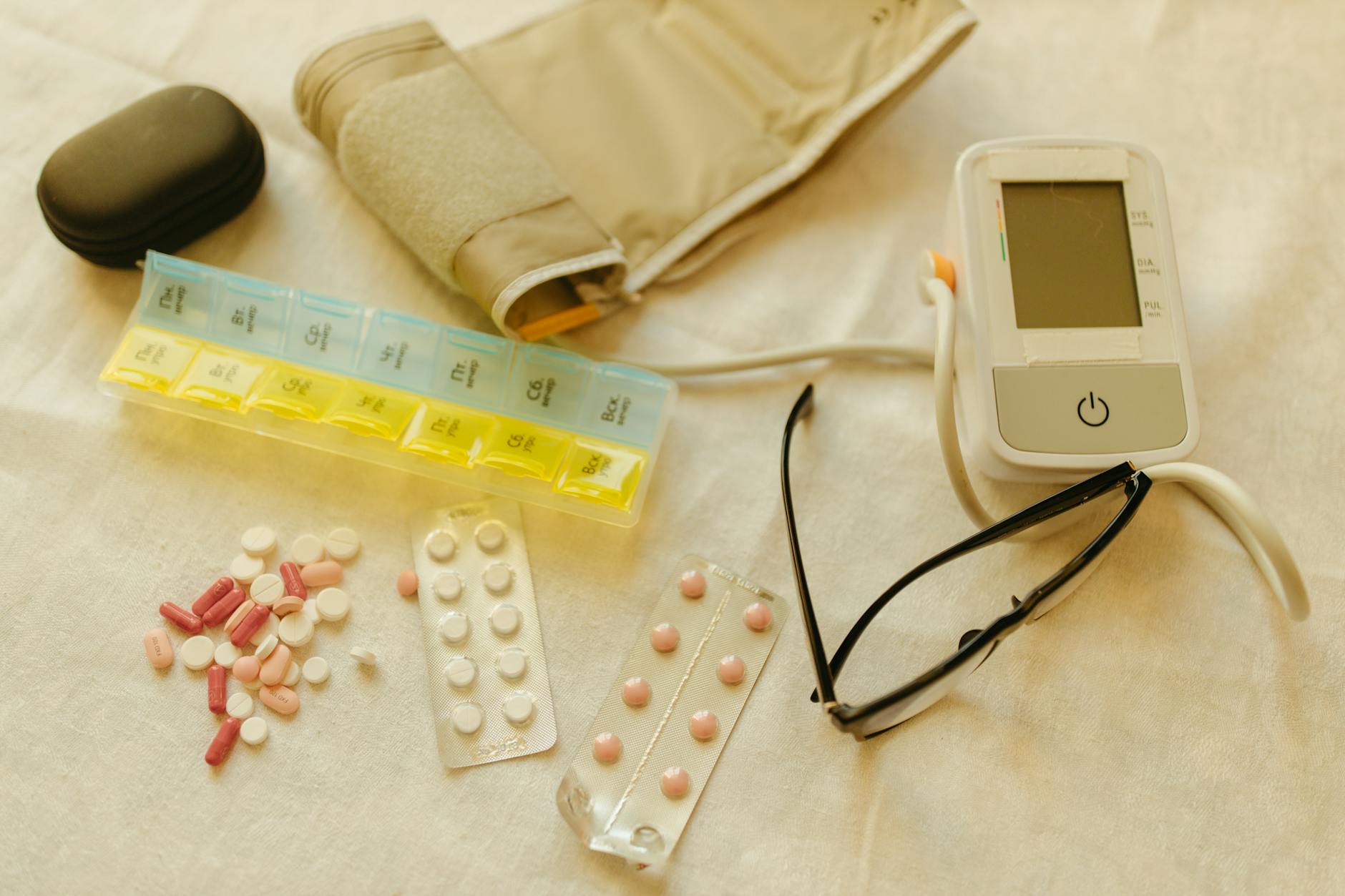
Automatic pill dispensers represent a specialized category of reminder device focused entirely on medication adherence. Modern locked-compartment dispensers can hold up to four weeks of medication, dispensing the correct pills at programmed times while preventing double-dosing by keeping future doses inaccessible. This addresses a critical safety concern, as medication errors in dementia patients can cause serious health consequences.
The 72.2% improvement rate in self-administered medication found in clinical research involved devices specifically designed for this purpose rather than general-purpose reminder clocks. If medication management is the primary concern—as it often is for families dealing with complex drug regimens for multiple conditions—a dedicated pill dispenser may provide better outcomes than an all-in-one device that handles reminders less precisely. The limitation here involves medications that cannot be pre-loaded into dispensers, including liquids, inhalers, and temperature-sensitive drugs. Some families use a combination approach: automatic dispensers for pills and smart clock reminders for other medications, with caregivers handling the most complex items directly during visits.
The Cost Reality: Budgeting for Dementia Care Technology
Device costs span an enormous range, from $30 basic day clocks to the $749.95 Tranquil GPS Watch, with ongoing subscription fees adding significantly to long-term expenses. Amazon Alexa Together at $19.99 monthly seems modest, but accumulates to nearly $240 annually. The Kanega Watch’s $69.95 monthly monitoring fee totals over $839 per year on top of the $299 purchase price. Families must budget realistically for both acquisition and operational costs. This financial burden falls unevenly across the global dementia population.
Over 60% of people with dementia live in low and middle-income countries where even basic reminder clocks may be inaccessible. With worldwide cases expected to reach between 139 and 152 million by 2050 according to Alzheimer’s Disease International, the gap between available technology and affordable access represents a growing crisis in global health equity. For families in higher-income countries facing tight budgets, prioritization matters. A $50 day clock that gets used consistently provides more value than a $750 GPS watch that sits in a drawer because the person refuses to wear it. Starting with simpler, lower-cost options and adding technology as needs evolve often proves more practical than purchasing comprehensive systems upfront.