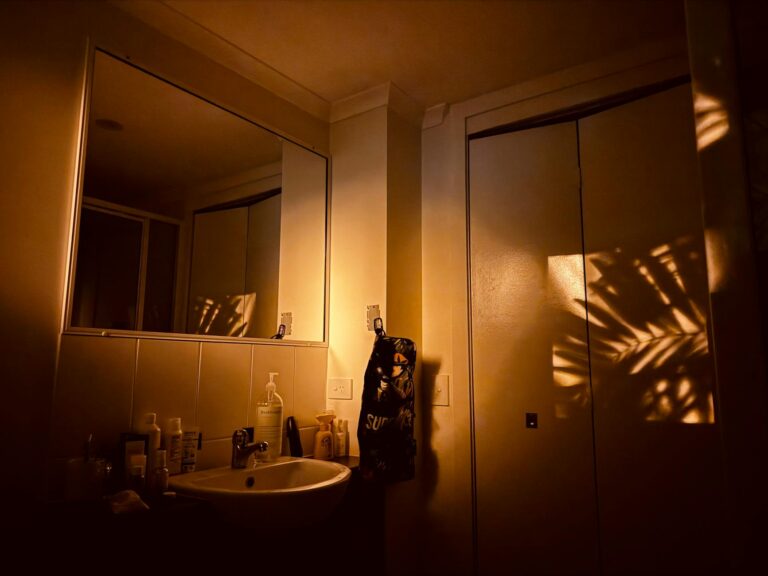
The best night light for Alzheimer’s safety is a motion-activated model with amber or red lighting, battery-powered operation, and automatic dusk-to-dawn sensing. This combination addresses the three critical needs of dementia care: eliminating the need to find switches (which people with cognitive impairment often cannot do), preserving melatonin production for better sleep, and removing cord-related tripping hazards. A practical example: when someone with Alzheimer’s gets up at 3 a.m. disoriented, a motion-sensing amber light automatically illuminates their path to the bathroom without requiring any action on their part—and without the blue-spectrum light that would make it harder for them to fall back asleep. The stakes are significant.
Falls are two to three times more common among people living with dementia compared to those without cognitive impairment, and the consequences can be devastating. In 2020, adults age 75 and older accounted for 32 percent of traumatic brain injury-related hospitalizations and 28 percent of TBI-related deaths. With 7.2 million Americans age 65 and older now living with Alzheimer’s disease—roughly one in nine people in that age group—proper nighttime lighting has become a critical safety intervention for millions of families. This article covers the science behind light color selection, specific features to prioritize when shopping, optimal brightness levels backed by clinical research, placement strategies throughout the home, common mistakes to avoid, and how to balance safety with sleep quality. Understanding these factors will help you choose lighting that reduces fall risk without disrupting the already-fragile sleep patterns common in Alzheimer’s disease.
Table of Contents
- Why Do People with Alzheimer’s Need Specialized Night Lights?
- The Science Behind Amber and Red Night Light Colors
- What Brightness Level Is Safe Without Disrupting Sleep?
- Essential Features for Dementia-Friendly Night Lights
- Common Mistakes When Choosing Alzheimer’s Night Lights
- Placement Strategies for Maximum Safety Coverage
- Cost Considerations and Product Options
- Looking Ahead: Lighting as Part of Comprehensive Dementia Care
- Conclusion
Why Do People with Alzheimer’s Need Specialized Night Lights?
Alzheimer’s disease disrupts circadian rhythms, the internal biological clock that regulates sleep-wake cycles. This disruption causes frequent nighttime waking, often under conditions of little or no light. When someone with dementia wakes disoriented in darkness and attempts to navigate to the bathroom or kitchen, they face compounded risks: unfamiliar surroundings due to memory impairment, impaired depth perception, balance problems, and inability to remember where light switches are located. Standard night lights fail this population for several reasons.
Traditional plug-in models with simple on-off switches require the user to remember they exist and physically operate them—an unreasonable expectation for someone experiencing cognitive decline. Bright white or blue-tinted lights, while providing visibility, suppress melatonin production and make it harder to return to sleep, potentially worsening the sundowning behaviors and sleep disturbances that plague many Alzheimer’s patients. The comparison is stark: a person without dementia who wakes at night can flip a switch, walk safely to the bathroom, and return to bed with minimal disruption. A person with moderate Alzheimer’s may not remember where the switch is, may not recognize their own bedroom, and may wander for extended periods if the environment doesn’t provide automatic guidance. Motion-activated lighting essentially removes decision-making from the equation, providing illumination exactly when and where it’s needed.

The Science Behind Amber and Red Night Light Colors
Research demonstrates that light color profoundly affects melatonin production, the hormone essential for sleep regulation. A study comparing red and blue LED light exposure found that amber light allows melatonin levels to recover to 26.0 pg/mL, while blue light suppresses melatonin to just 7.5 pg/mL after two hours of exposure. This represents a roughly 3.5-fold difference in the body’s ability to maintain sleep-promoting hormone levels. Both Harvard Health and the Sleep Foundation recommend dim red or amber lights over other colors for nighttime visibility. The explanation is physiological: the eye’s photoreceptors responsible for regulating circadian rhythms are most sensitive to blue wavelengths and least sensitive to red wavelengths.
Amber-tinted light exposure before bed has been shown in clinical trials to help people achieve approximately 30 additional minutes of sleep—a meaningful improvement for Alzheimer’s patients who often struggle with fragmented rest. However, there’s an important distinction between amber bulbs and amber lenses. For elderly individuals at fall risk, amber lenses are preferable because they filter out sleep-disrupting wavelengths without reducing overall light levels. An amber-tinted bulb produces less total light than a white bulb of the same wattage, while an amber lens over a brighter source maintains visibility while still protecting melatonin production. If your family member has significant vision impairment in addition to dementia, the lens approach may provide better safety margins.
What Brightness Level Is Safe Without Disrupting Sleep?
Clinical research has identified a specific target: 5 to 10 lux at the cornea represents the optimal range for night lights that reduce fall risk while maintaining sleep quality. For context, a full moon on a clear night provides about 0.1 lux, a dimly lit room is typically 50 lux, and normal office lighting runs 300 to 500 lux. The recommended night light range falls between extremely dim and what most people would consider adequate reading light. This narrow window presents a genuine challenge. Too little light and fall risk increases because obstacles remain invisible.
Too much light and sleep disruption follows. The 5-to-10-lux recommendation assumes the light reaches the eye directly; if the night light is positioned low near the floor to illuminate walking paths, the actual lux at eye level will be lower than the bulb’s rated output suggests. Practical implementation varies by room. A hallway might need multiple low-positioned lights to achieve safe illumination across its length. A bedroom might require only one strategically placed unit near the path to the door. Bathrooms present particular challenges because the light needed to safely use the toilet is higher than ideal sleep-preserving levels, making it especially important to use amber wavelengths in this location to minimize circadian disruption during necessary nighttime visits.
Essential Features for Dementia-Friendly Night Lights
Motion-activated sensors represent the single most important feature for Alzheimer’s safety. These lights illuminate when sensing movement and typically stay on for approximately 30 seconds after motion stops—long enough for someone to complete their immediate task. Standard detection ranges cover about 16.4 feet with a 110-degree angle, sufficient for most hallways and bedrooms. The critical advantage: the person with dementia never needs to remember to do anything. Automatic dusk-to-dawn operation provides a secondary layer of reliability.
These sensors detect ambient light levels and turn the night light on when darkness falls, off when daylight returns. Combined with motion activation, this creates a system that requires zero user input while adapting to seasonal changes in daylight hours. A night light that worked well in summer might be too slow to activate in winter without photosensitive automatic controls. Battery-powered and wireless designs eliminate cord-related tripping hazards, a significant consideration when the person using the space has impaired awareness of obstacles. These units can be placed anywhere—attached to walls, set on furniture, positioned in locations where no outlet exists. The tradeoff is battery replacement or recharging requirements; rechargeable models with USB charging and six-month battery life between charges represent a reasonable middle ground between safety and maintenance burden.
Common Mistakes When Choosing Alzheimer’s Night Lights
The most frequent error is prioritizing brightness over color temperature. Families often assume that more light equals more safety, selecting bright white LED night lights that provide excellent visibility but devastate sleep quality. A person with Alzheimer’s who gets adequate rest is generally safer and more cognitively functional than one who is chronically sleep-deprived, even if the sleep-deprived person has better nighttime visibility. The research supporting amber wavelengths is robust enough that compromising on color to gain brightness represents a poor tradeoff. Another common mistake is installing night lights only in obvious locations like hallways and bathrooms while neglecting transition points and decision areas. Someone with dementia may become confused at doorways, intersections between rooms, or near stairs—anywhere that requires choosing a direction.
These spots need illumination even if they seem adequately lit by nearby lights. A single bright light at the end of a hallway can actually worsen disorientation by creating harsh shadows and making the space feel unfamiliar. Smart home integration features, while appealing to tech-savvy caregivers, can backfire if they require app-based control or complex programming. When a system fails—as technology inevitably does—the fallback should be automatic operation, not darkness. Similarly, voice-activated lighting assumes the person can remember and articulate the correct command, an unreliable expectation as Alzheimer’s progresses. Simple, sensor-based systems with minimal failure points outperform sophisticated solutions that require troubleshooting.
Placement Strategies for Maximum Safety Coverage
Strategic night light placement follows the likely path someone will take when waking: bedside to bedroom door, through the hallway, into the bathroom. A practical example involves Mrs. Chen, whose family installed motion-sensor amber lights at three points—one on the wall near her bed at knee height, one in the hallway at waist height, and one inside the bathroom door.
Each triggers the next as she moves, creating a continuous lit pathway without illuminating areas where she shouldn’t be walking unsupervised. The bedroom itself deserves particular attention. Placing a night light near potential obstacles—the corner of the bed frame, a chair, the dresser edge—helps make these hazards visible without requiring overhead lighting. Low placement (12 to 18 inches from the floor) illuminates walking surfaces where tripping hazards exist while minimizing direct eye exposure that could further disrupt sleep.
Cost Considerations and Product Options
Basic motion-sensor night lights with amber lighting start around $25.99, representing an accessible entry point for most families. More comprehensive systems, such as the Smart Caregiver Wireless line at $114.99, add features like caregiver alerts when motion is detected, useful for monitoring nighttime wandering. The price difference reflects whether you need simple illumination or an integrated monitoring solution.
The tradeoff between battery-powered and plug-in models involves convenience versus ongoing costs. Battery units offer placement flexibility and eliminate cord hazards but require periodic maintenance. Plug-in models with photosensors and motion detection provide set-and-forget reliability but limit placement to outlet locations. Many families find that combining both types—plug-in units where outlets are conveniently located, battery units to fill gaps—provides the best coverage.
Looking Ahead: Lighting as Part of Comprehensive Dementia Care
Night lighting represents one component of a broader environmental modification strategy for Alzheimer’s safety. As the disease progresses, lighting needs may change: someone in early stages might do well with a single hallway night light, while someone with moderate dementia may need comprehensive whole-home coverage. Reassessing the lighting setup every six months, or whenever there’s a notable decline in function, helps ensure the environment keeps pace with changing needs.
Emerging research continues to refine our understanding of how light affects dementia patients. The consistent finding across studies is that protecting sleep quality through appropriate light wavelengths may help slow certain aspects of cognitive decline, in addition to reducing fall risk. This makes amber night lights not merely a safety device but potentially a therapeutic intervention—though families should approach such claims cautiously until larger clinical trials confirm the magnitude of benefit.
Conclusion
Selecting the right night light for Alzheimer’s safety requires balancing visibility against sleep preservation, with motion-activated amber lights representing the current best practice supported by clinical research. Key features to prioritize include automatic operation (both motion-sensing and dusk-to-dawn photosensors), amber or red wavelengths rather than blue-spectrum white light, battery power or careful cord management, and brightness in the 5-to-10-lux range at eye level.
The practical next step is auditing your current nighttime environment: walk through the home after dark following the paths your family member typically uses. Identify spots where visibility is poor, where shadows create confusion, and where existing lights use sleep-disrupting wavelengths. Replacing even a few problem lights with appropriate alternatives can meaningfully reduce fall risk while supporting the restorative sleep that becomes increasingly precious as Alzheimer’s disease progresses.