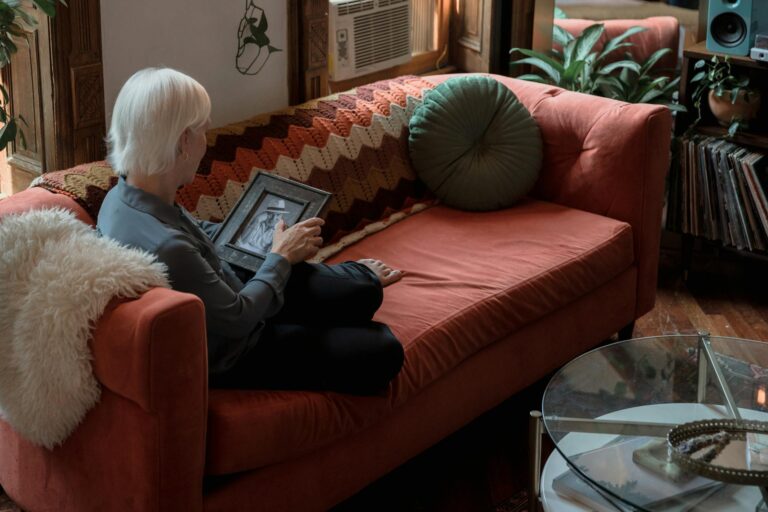
Understanding what’s the best living room setup for dementia safety? is essential for anyone interested in dementia care and brain health. This comprehensive guide covers everything you need to know, from basic concepts to advanced strategies. By the end of this article, you’ll have the knowledge to make informed decisions and take effective action.
Table of Contents
- Why Does Lighting Matter So Much for Dementia Safety?
- How Should Furniture Be Arranged to Prevent Falls?
- What Role Does Color Contrast Play in Dementia-Safe Design?
- How Can You Reduce Confusion and Anxiety in the Living Room?
- What Are the Limitations of Common Safety Recommendations?
- When Should You Consider Smart Home Technology?
- What Does a Complete Dementia-Safe Living Room Look Like?
Why Does Lighting Matter So Much for Dementia Safety?
Lighting is arguably the single most important factor in creating a safe living room for someone with dementia, yet it’s frequently underestimated by caregivers. Older adults need up to 60% more light to see clearly than younger people, and this need intensifies with cognitive decline. The research is specific: living areas should maintain 300-1,500 lux during daytime hours with a color temperature between 4,500-6,500K, which mimics natural daylight and supports alertness. The lighting requirements change as the day progresses. Evening lighting should drop to 300-500 lux with warmer tones (2,700-3,500K) to signal to the brain that nighttime is approaching. This matters because disrupted circadian rhythms worsen confusion and increase nighttime wandering.
For overnight, ambient lighting should stay at 50-60 lux maximum—bright enough to navigate safely to the bathroom, but dim enough not to interfere with sleep. Motion-activated nightlights in warm tones work well for this purpose. There’s an additional consideration many families miss: circadian rhythm support requires exposure to 1,000+ lux for at least two hours daily. This doesn’t mean harsh overhead fluorescents. Position seating near windows for natural light exposure, or invest in full-spectrum light panels designed for this purpose. However, if the person with dementia becomes agitated near windows—perhaps due to reflections or activity outside—you may need to rely more heavily on artificial full-spectrum lighting instead.

How Should Furniture Be Arranged to Prevent Falls?
The statistics are sobering: 41,400 individuals aged 65 and older died from preventable falls in 2023, with over 3.5 million treated in emergency departments for fall-related injuries. Fall-related deaths among older adults have increased by 53% over the past decade. In the living room, furniture arrangement directly impacts these numbers. The fundamental principle is creating clear, unobstructed pathways. This means pushing furniture toward walls rather than clustering it in conversational groupings in the center of the room. Every piece of large furniture—bookshelves, entertainment centers, tall cabinets—must be secured to the wall to prevent tipping.
Seating should be at an appropriate height that allows the person to sit down and stand up without struggle, and armrests are essential for providing leverage and stability during these transitions. A chair that’s too low or too soft becomes a fall risk every time someone tries to get up. The coffee table presents a particular challenge. Traditional glass-topped or sharp-cornered tables in the center of a room create both a collision hazard and a visual obstacle. If you keep a coffee table, choose one with rounded corners and ensure it contrasts visibly with the flooring. Some families remove the coffee table entirely, replacing it with a small side table next to the primary seating. This isn’t ideal for everyone—some people rely on having a surface within reach—so evaluate based on the individual’s habits and mobility level.
What Role Does Color Contrast Play in Dementia-Safe Design?
The visual processing changes that accompany dementia mean that color and contrast become critical safety tools, not just aesthetic choices. Use furniture and furnishings in bright or bold colors that contrast sharply with walls and floors. A beige couch against a beige wall essentially disappears to someone with impaired visual processing, making it easy to misjudge distances or miss the furniture entirely. One of the most important and counterintuitive rules: avoid black or very dark brown rugs and flooring. To someone with dementia, these dark areas often appear as holes, pits, or drop-offs. The person may freeze, refuse to walk across the area, or attempt to step over what they perceive as an obstacle—any of which increases fall risk.
This same principle applies to dark thresholds between rooms or dark bathroom mats. Even if the floor covering is securely attached, the visual perception problem remains. Equally important is avoiding busy patterns. A rug with an intricate geometric design or a floor with complex tile work creates visual noise that increases anxiety and confusion. The brain struggles to process the pattern, making it harder to identify actual obstacles or changes in floor level. Solid colors or very simple, subtle patterns work best. However, there’s a balance to strike: a completely monochromatic environment can be disorienting in its own way, making it difficult to distinguish where walls meet floors or where one piece of furniture ends and another begins.

How Can You Reduce Confusion and Anxiety in the Living Room?
Beyond physical fall prevention, the living room environment significantly impacts the psychological wellbeing of someone with dementia. Clutter is more than a tripping hazard—it creates cognitive overload. When there are too many objects competing for attention, the brain struggles to make sense of the environment, leading to anxiety and agitation. Keep surfaces relatively clear, with only essential items visible. Mirrors present a specific challenge that catches many families off guard. People with dementia may not recognize their older reflection, leading to distressing encounters with what they perceive as a stranger in their home.
If you notice signs of confusion or fear around mirrors, remove them or cover them with fabric panels that can be moved aside when needed for grooming. This isn’t necessary for everyone—some individuals retain self-recognition well into their disease progression—but watch for signs of distress. Consistency matters enormously. Keep the TV remote, reading glasses, and other frequently used items in the same visible location every time. Consider a small basket or tray on a side table where these items always live. When things move around, the person must expend cognitive energy searching, which depletes an already limited resource. The same principle applies to furniture arrangement: once you’ve established a safe layout, resist the urge to redecorate or rearrange, as even positive changes require relearning the space.
What Are the Limitations of Common Safety Recommendations?
Not every standard safety recommendation works for every person with dementia, and understanding these limitations prevents frustration and wasted effort. The common advice to remove all rugs, for example, makes sense from a pure fall-prevention standpoint—scatter rugs and throw rugs are consistently identified as hazards. However, if someone has spent decades walking on carpeted floors and suddenly encounters hard surfaces, the unfamiliarity itself can cause hesitation and instability. In some cases, wall-to-wall carpeting (not area rugs) in a light, solid color provides both familiarity and cushioning for falls. Technology solutions like motion sensors and smart lighting also have limitations. While these can be tremendously helpful—automatically turning on lights when someone gets up at night, or alerting caregivers to unusual activity—they can also create confusion. A light that turns on unexpectedly may startle someone.
A sensor that beeps may cause anxiety. Any technology should be introduced gradually and monitored for negative reactions. If the person with dementia finds a device distressing, the stress it causes may outweigh its safety benefits. Background noise recommendations illustrate another nuance. Total silence can be disorienting, as some ambient sound helps the brain stay oriented to the environment. But too much noise—a television left on all day, multiple people talking, traffic sounds from outside—creates sensory overload. The goal is gentle, predictable background sound. Soft music the person enjoys, a ticking clock, or nature sounds at low volume can provide orientation without overwhelming.

When Should You Consider Smart Home Technology?
Smart home technology can add valuable layers of safety without requiring constant caregiver presence. Motion sensors that trigger pathway lighting help someone navigate safely if they get up at night. Smart plugs can automatically turn off appliances that might pose a danger if left on. Video monitoring allows family members to check in remotely, providing peace of mind and enabling faster response if something goes wrong.
The key is matching technology to the individual’s stage of dementia and comfort level. In earlier stages, someone might benefit from and even appreciate a voice assistant that can answer questions, play music, or make calls. In later stages, a disembodied voice might cause fear or confusion. Medication dispensers that provide alerts can support independence, but only if the person retains enough cognitive function to respond to the alerts appropriately. For someone in later stages, the dispenser becomes just another confusing object.
What Does a Complete Dementia-Safe Living Room Look Like?
Putting all these elements together, picture a living room with pale walls, light-colored solid flooring (or light solid carpeting), and furniture in contrasting colors positioned along the walls. A comfortable chair with armrests sits near a window for natural light exposure, with a small side table holding a labeled basket for the remote and glasses. Layered lighting includes overhead fixtures for daytime brightness, table lamps for evening warmth, and motion-activated nightlights along the path to the bathroom.
There are no scatter rugs, no glass tables, no mirrors at eye level. This setup isn’t about creating an institutional environment—it’s about thoughtful design that supports both safety and quality of life. Many families find that these modifications, implemented gradually, actually make the living room more comfortable for everyone. Good lighting, clear pathways, and reduced clutter benefit people of all ages and cognitive abilities, while giving someone with dementia the best possible chance of maintaining independence and avoiding the falls that so often accelerate decline.