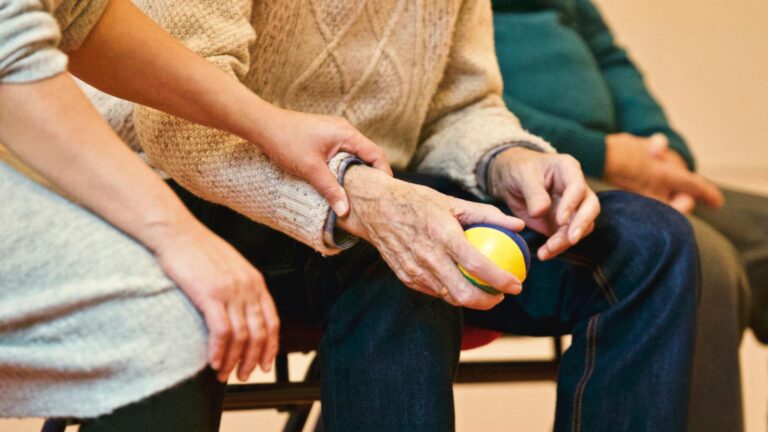
The best chair cushion for an Alzheimer’s patient with spinal curvature is not a single product but a combination matched to the individual’s specific spinal deformity, stage of dementia, and daily positioning needs. For most patients dealing with kyphosis or scoliosis alongside cognitive decline, a contoured pressure-redistribution cushion paired with tilt-in-space seating offers the strongest balance of postural support and skin protection. A system like the Broda Comfort Tension Seating, which uses adjustable tension straps that can be removed or reversed to accommodate kyphosis, scoliosis, contractures, and bony prominences, represents one of the more targeted solutions available. Air-cell cushions such as the ROHO Enhancer provide excellent pressure relief but may sacrifice some postural stability, making them better suited for patients whose skin integrity is the primary concern rather than spinal alignment.
This matters more than many caregivers realize. Between 20 and 40 percent of adults aged 60 and older develop hyperkyphosis, that exaggerated forward rounding of the upper spine, and the prevalence climbs with age. A 2025 cross-sectional study published in BMC Geriatrics confirmed that higher kyphosis index is independently associated with decreased physical function and cognitive decline in community-dwelling older adults. For someone already navigating Alzheimer’s disease, poor seated posture compounds problems that extend well beyond comfort, affecting breathing, digestion, and fall risk. This article covers the main cushion categories, what clinical evidence actually says about their effectiveness, the positioning features that matter most for spinal curvature, and why a professional seating assessment is the single most important step before buying anything.
Table of Contents
- Why Do Alzheimer’s Patients With Spinal Curvature Need a Specialized Chair Cushion?
- Comparing Cushion Types — Air-Cell, Contoured Foam, and Tension-Strap Systems
- The Role of Sensory and Proprioceptive Cushions in Dementia Care
- Positioning Features That Matter Most for Spinal Curvature
- Pressure Injury Risk and Why It Escalates With Dementia and Spinal Deformity
- Why a Professional Seating Assessment Is Non-Negotiable
- What Is Changing in Cushion Technology for Dementia Patients
- Conclusion
- Frequently Asked Questions
Why Do Alzheimer’s Patients With Spinal Curvature Need a Specialized Chair Cushion?
The intersection of Alzheimer’s disease and spinal curvature creates a problem that standard cushions are not designed to solve. Research has found an approximately 10 percent reduction in spinal cord volume in Alzheimer’s patients compared to controls, and a 2022 study published in Nature’s Scientific Reports showed that spinal balance anteriorization, meaning a forward shift of the spine’s center of gravity, in males with a sagittal vertical axis of 100 millimeters or more was significantly associated with cognitive decline. The body’s structural deterioration and the brain’s functional decline feed each other. A person with advancing dementia loses the ability to self-correct posture, shift weight, or communicate discomfort, which means the cushion has to do work the patient can no longer do for themselves. Standard foam cushions, the kind that come with most wheelchairs and recliners, offer little more than padding. They do not redistribute pressure across bony prominences, they do not accommodate the asymmetric weight distribution caused by scoliosis, and they do not prevent the sacral sitting posture that worsens thoracic kyphosis.
More than half of residents in long-term care facilities with Alzheimer’s or related dementias who use wheelchairs are at elevated risk for pressure injuries, according to a 2025 study in JMIR Formative Research. A flat, one-size-fits-all cushion for this population is not just inadequate. It is a clinical liability. The distinction between a comfort cushion and a therapeutic positioning cushion is critical here. A comfort cushion makes sitting more pleasant. A therapeutic cushion stabilizes the pelvis, accommodates spinal deformity, redistributes pressure away from vulnerable tissue, and does all of this for a patient who cannot adjust themselves. For someone with both Alzheimer’s and spinal curvature, only the second category is appropriate.
Comparing Cushion Types — Air-Cell, Contoured Foam, and Tension-Strap Systems
Three categories of cushions dominate the therapeutic seating market, and each comes with real tradeoffs for Alzheimer’s patients with spinal curvature. Air-cell cushions like the ROHO line use interconnected air cells that conform to body contours and redistribute pressure dynamically. The ROHO Enhancer, priced at approximately $727.75 for the 17-by-17-inch and 17-by-19-inch sizes, is a well-regarded option for pressure ulcer prevention. A randomized clinical trial following 232 nursing home residents aged 65 and older for six months found that skin protection cushions reduced pressure ulcer incidence to 0.9 percent compared to 6.7 percent with standard segmented foam cushions, a statistically significant difference. However, air-cell cushions create an inherently unstable seating surface. For a patient with kyphosis or scoliosis who already lacks postural control, this instability can increase rather than decrease fall risk and promote the very sacral sitting pattern clinicians want to avoid. Contoured cushions that stabilize the pelvis are preferred over flat immersion-only cushions for patients who need postural support. These cushions use shaped foam or gel inserts to cradle the ischial tuberosities and guide the pelvis into a neutral or near-neutral position.
They provide better postural stability than air-cell alternatives, but they are less customizable. If the patient’s spinal curvature is severe or asymmetric, a pre-contoured cushion may not match the deformity closely enough, creating new pressure points rather than eliminating old ones. Tension-strap seating systems represent a third approach that is specifically engineered for complex postural deviations. The Broda Comfort Tension Seating system uses adjustable straps that clinicians can individually tension, remove, or reverse to accommodate the exact shape of a patient’s kyphosis, scoliosis, or contractures. Clinicians report improvements in breathing, digestion, and postural alignment after customization. The limitation is cost and access. These are full seating systems, not drop-in cushions, and they require a trained clinician to configure properly. If your loved one is in a facility without access to a seating specialist, the benefit of this system cannot be fully realized.
The Role of Sensory and Proprioceptive Cushions in Dementia Care
For Alzheimer’s patients specifically, a category of cushion exists that addresses not just posture and pressure but the neurological dimension of the disease. The Protac SenSit is a sensory chair system lined with weighted 1.5-inch and 2-inch plastic balls that deliver deep proprioceptive pressure to trigger points in the neck, arms, and back. It was designed specifically for dementia, brain injury, and sensory processing conditions and is available in Standard models for users up to 180 centimeters tall and High Back models. Prices start around $559 to $612 AUD from Australian retailers, with availability in other markets through specialty distributors like Rehabmart. The rationale behind proprioceptive cushions is that many Alzheimer’s patients experience sensory processing disruptions that contribute to agitation, restlessness, and an inability to settle into a seated position.
The weighted balls in the Protac SenSit provide constant, distributed sensory input that some patients find calming, similar in principle to weighted blankets but integrated into the seating surface. For a patient with spinal curvature who is also combative or agitated during seated care, this type of system can serve a dual purpose, addressing both the behavioral and postural challenges. The caveat is that proprioceptive cushions are not primarily engineered for pressure redistribution or spinal alignment. If a patient has significant kyphosis and is at high risk for pressure injuries, a sensory cushion alone may not provide adequate skin protection. In those cases, combining a proprioceptive system with a pressure-relieving overlay or using the sensory cushion for shorter supervised sitting periods while relying on a more clinical cushion for extended use may be the better strategy.
Positioning Features That Matter Most for Spinal Curvature
Beyond the cushion itself, the way a patient is positioned in their chair determines whether any cushion can do its job. Tilt-in-space is cited by seating specialists as one of the most important positioning features for centralizing alignment in patients with kyphosis or scoliosis. Unlike a standard recline, which opens the hip angle and can promote sacral sliding, tilt-in-space maintains the relationship between the seat and the back while tilting the entire frame, using gravity to help hold the patient in position rather than fighting against it. An excessive hip-to-back angle, common in recliners and poorly configured wheelchairs, promotes sacral sitting, which worsens thoracic kyphosis, constricts the chest and abdomen, and increases fall risk. This is one of the most frequent mistakes caregivers make when trying to keep an Alzheimer’s patient comfortable. They recline the chair further, thinking it reduces pressure, but the recline actually shifts the patient’s weight onto the sacrum and coccyx, compresses the lungs, and rounds the thoracic spine further forward.
A contoured cushion designed for postural support is effectively neutralized by a seating position that forces the pelvis out of alignment. Adjustable lumbar support and lateral support cushions or wedges are also recommended to accommodate the individual’s specific spinal curvature. These are not luxury features. For a patient with scoliosis whose trunk leans to one side, a lateral trunk support on the concave side can prevent progressive leaning and the cascading pressure issues that follow. For a patient with lumbar lordosis loss, a lumbar roll positioned at the correct vertebral level can reduce the compensatory thoracic kyphosis that develops when the lower spine flattens. The tradeoff is that every additional positioning component adds complexity for caregivers, and in facilities with high staff turnover, components that require precise placement are often positioned incorrectly or omitted entirely.
Pressure Injury Risk and Why It Escalates With Dementia and Spinal Deformity
Pressure injuries are not a secondary concern for this population. They are one of the most common, most preventable, and most dangerous complications of prolonged sitting in Alzheimer’s patients with spinal curvature. The 2025 International Clinical Practice Guideline for pressure injury prevention recommends pressure-redistributing seat cushions as a core component of seated pressure ulcer prevention strategies. The evidence base supporting this recommendation is substantial, yet pressure injuries remain endemic in long-term care, largely because cushion selection is treated as a purchasing decision rather than a clinical one. Spinal curvature concentrates pressure on specific bony prominences depending on the type and severity of the deformity. Kyphosis shifts weight toward the sacrum and coccyx.
Scoliosis creates asymmetric loading on one ischial tuberosity more than the other. Combined deformities create unpredictable pressure maps that no generic cushion can fully address. An Alzheimer’s patient cannot feel, or at least cannot report, the early discomfort that signals tissue damage, which means by the time a pressure injury is visible, it may already be at stage two or beyond. The warning here is that even a clinically appropriate cushion requires a repositioning schedule. No cushion, regardless of how advanced its pressure redistribution technology, eliminates the need to shift the patient’s weight at regular intervals. For Alzheimer’s patients who cannot initiate their own weight shifts, caregivers must be trained and reminded to assist with repositioning at least every two hours, and more frequently if the patient’s skin shows any early signs of breakdown. A $700 cushion paired with four hours of uninterrupted sitting will still produce a pressure injury.
Why a Professional Seating Assessment Is Non-Negotiable
Every clinical source and product manufacturer reviewed for this article arrives at the same conclusion: the single most important step in selecting a cushion for an Alzheimer’s patient with spinal curvature is a professional seating assessment by an occupational therapist or a certified assistive technology professional. This is not a formality. The assessment involves evaluating the patient’s specific spinal deformity profile, skin integrity, stage of dementia, mobility level, behavioral patterns, and the seating environment in which the cushion will be used. A seating assessment can reveal problems that no amount of online research will catch.
A patient who appears to have simple thoracic kyphosis may also have a pelvic obliquity that requires an asymmetric cushion. A patient whose caregivers report frequent sliding may have a hip flexion contracture that makes standard seat depths inappropriate. In many cases the assessment leads to a combination of interventions, a specific cushion, a positioning wedge, a modified back support, and a repositioning schedule, rather than a single product recommendation. The cost of the assessment is almost always recoverable through reduced hospital admissions for pressure injuries and falls, though insurance coverage for seating evaluations varies widely by plan and region.
What Is Changing in Cushion Technology for Dementia Patients
The field of therapeutic seating is moving toward greater individualization, driven partly by improved pressure mapping technology and partly by growing recognition that dementia patients require seating solutions designed around their cognitive limitations, not just their physical ones. Pressure mapping mats that display real-time pressure distribution across the seating surface are becoming more accessible outside of specialized clinics, enabling caregivers and therapists to verify that a cushion is actually performing as intended for a specific patient.
There is also increasing interest in smart cushion technology that integrates sensors to detect prolonged static positioning and alert caregivers when a weight shift is overdue. For Alzheimer’s patients in facilities where staffing ratios make consistent two-hour repositioning difficult, these systems could meaningfully reduce pressure injury rates. Whether these technologies reach the patients who need them most depends on reimbursement policy and facility adoption, but the direction of the field is toward seating that monitors and adapts rather than simply sitting beneath the patient.
Conclusion
Selecting the right chair cushion for an Alzheimer’s patient with spinal curvature requires matching the cushion type to the individual’s specific deformity, skin integrity, and stage of dementia. Air-cell cushions like the ROHO Enhancer excel at pressure redistribution but may lack the postural stability that kyphosis and scoliosis demand. Contoured cushions stabilize the pelvis but may not accommodate severe or asymmetric curvature. Tension-strap systems like the Broda Comfort Tension Seating offer the most customizable spinal accommodation but require clinical setup. Sensory systems like the Protac SenSit address the neurological dimension of dementia but should not be the sole intervention for pressure or posture management.
Tilt-in-space positioning, lumbar support, and lateral trunk supports are not optional accessories but essential components of a complete seating strategy. The most actionable step is to arrange a professional seating assessment before purchasing any cushion. An occupational therapist or certified assistive technology professional can evaluate the patient’s unique combination of spinal curvature, cognitive impairment, and skin risk, and recommend a system rather than a single product. No cushion replaces regular repositioning, attentive caregiving, and ongoing monitoring of skin condition. The best cushion is the one that was chosen based on clinical evaluation, configured by someone who understands spinal deformity, and used within a care plan that accounts for the realities of Alzheimer’s disease.
Frequently Asked Questions
Can I just buy a memory foam cushion from a retail store for my parent with Alzheimer’s and kyphosis?
A standard retail memory foam cushion provides comfort but does not redistribute pressure effectively or accommodate spinal curvature. These cushions lack the contouring, postural support, and adjustability that clinical-grade options provide. For mild kyphosis with no skin integrity concerns, a retail cushion may serve as a temporary measure, but it should not be considered a long-term solution.
How much should I expect to spend on an appropriate cushion?
Prices vary widely. ROHO cushions range from $64 to $545 depending on the model, with the ROHO Enhancer at approximately $727.75. The Protac SenSit sensory system starts around $559 to $612 AUD. Broda seating systems are priced as full chair systems rather than standalone cushions. Insurance may cover part or all of the cost with a prescription and documented medical necessity.
How often should the cushion be checked or replaced?
Air-cell cushions should be checked daily to ensure proper inflation. Foam cushions typically need replacement every one to three years as the foam compresses and loses its pressure-redistributing properties. Any cushion should be reevaluated whenever the patient’s spinal curvature, weight, or skin condition changes significantly.
Does the stage of Alzheimer’s disease affect which cushion is appropriate?
Yes. In early stages, a patient may still be able to perform some self-correction and weight shifting, making a less restrictive cushion feasible. In moderate to advanced stages, the patient loses the ability to shift weight, communicate discomfort, or maintain posture, requiring a more supportive and protective cushion system. The cushion strategy should evolve as the disease progresses.
Is tilt-in-space really necessary, or is a reclining chair sufficient?
Tilt-in-space and recline are not interchangeable. Recline opens the hip angle and tends to promote sacral sliding and worsened kyphosis. Tilt-in-space maintains the hip angle while using gravity to centralize the patient’s alignment. For patients with spinal curvature, tilt-in-space is strongly preferred over recline alone.
Will a good cushion reduce my loved one’s agitation or behavioral symptoms?
It can. Discomfort from poor positioning is a known contributor to agitation in Alzheimer’s patients who can no longer articulate pain. Improving seated comfort and reducing pressure on bony prominences may decrease restlessness, though behavioral symptoms in dementia are multifactorial and a cushion alone is unlikely to resolve them entirely.