The best chair cushion for Alzheimer’s patients in nursing homes depends on the individual’s mobility level, skin integrity, and stage of disease, but for most residents, a pressure-redistributing cushion with passive operation and incontinence-resistant cover is the starting point. ROHO air cushions, which use patented Dry Floatation technology with individual air cells, remain the most prescribed wheelchair cushion by physicians and clinicians, with prices ranging from roughly $89 to $350 or more depending on model and size. For residents who spend extended hours in geri chairs or recliners, foam-based options like the ProHeal Foam Geri Chair Cushion or alternating pressure systems offer strong alternatives. The right choice ultimately requires an occupational therapist evaluation, but understanding the options puts families and caregivers in a much stronger position to advocate for their loved one.
This matters more than many families realize. A randomized clinical trial found that 6.7% of participants using standard foam cushions developed pressure ulcers at the ischial tuberosities, compared to only 0.9% on skin protection cushions — a statistically significant difference (p<0.04). When you combine that with the fact that nursing home residents with dementia fall at a rate of 4.05 times per year versus 2.33 for residents without dementia, the seating system becomes one of the most consequential daily care decisions a facility makes. This article breaks down the specific cushion types, the features that matter most for dementia patients, the regulatory landscape around geri chairs, and how to work with clinical professionals to get the right setup — potentially covered by Medicare.
Table of Contents
- Why Do Alzheimer’s Patients in Nursing Homes Need Specialized Chair Cushions?
- Comparing the Top Cushion Types for Dementia Care
- Features That Matter Most for Alzheimer’s and Dementia Patients
- How to Choose Between a Cushion Upgrade and a Complete Seating System
- Regulatory Concerns — Why Geri Chairs Are Classified as Restraints
- The Role of Appearance in Dementia-Friendly Seating
- Working With Professionals to Get the Right Cushion Setup
- Conclusion
Why Do Alzheimer’s Patients in Nursing Homes Need Specialized Chair Cushions?
Alzheimer’s disease fundamentally changes the way a person interacts with their seating. Healthy adults unconsciously shift their weight dozens of times per hour, relieving pressure on bony prominences like the ischial tuberosities and sacrum. A person with moderate to advanced Alzheimer’s may lose this ability entirely — they may not perceive discomfort, may forget to shift position, or may lack the motor planning to execute a weight shift even if prompted. This is why more than one-third of wheelchair users in nursing homes experience sitting discomfort, and more than half have dangerously high sitting interface pressure, according to clinical literature cited by Shaw and colleagues. The cushion, in effect, must do the work the patient’s own body can no longer do. The fall risk compounds the problem. A meta-analysis published in ScienceDirect found a pooled annual fall prevalence of 44.27% among older adults with Alzheimer’s disease, with an average of 1.30 falls per person per year.
Research from Drexel University, published in January 2023, put it even more starkly: older adults with dementia face twice the risk of falling and three times the risk of serious fall-related injuries like fractures. A standard dining chair or basic wheelchair with a thin foam pad does nothing to address this risk. Specialized cushions work in concert with properly designed seating systems to keep residents positioned safely, reduce sliding, and minimize the chance that a confused patient will attempt an unsafe transfer. The pressure injury statistics are equally sobering. According to the CDC’s National Center for Health Statistics, more than 1 in 10 nursing home residents — 11% — had pressure ulcers, and among those with high immobility, the rate climbed to 16%, compared to 5% for more mobile residents. Alzheimer’s patients, who may sit in the same chair for hours without meaningful movement, fall squarely into that high-risk category. A specialized cushion is not a luxury or a comfort upgrade; it is a medical intervention with documented outcomes.

Comparing the Top Cushion Types for Dementia Care
The market breaks down into three broad categories: air-cell cushions, foam and gel cushions, and alternating pressure systems. Each has genuine advantages and real limitations, and the best choice depends on the individual patient’s clinical picture. ROHO air cushions represent the gold standard in pressure redistribution. Their Dry Floatation design uses interconnected air cells that conform to the body’s contours, distributing weight evenly and reducing peak pressure at bony prominences. They are lightweight, adjustable, and effective across a wide range of body types. However, they require initial setup — someone must inflate them to the correct level and check periodically that they maintain proper inflation. In a busy nursing home, a deflated ROHO cushion sitting under a patient who cannot report the problem is worse than useless; it provides a false sense of security while offering minimal protection. Facilities that choose ROHO cushions need protocols for regular inflation checks. Foam and gel cushions like the ProHeal Foam Geri chair Cushion take a different approach.
The ProHeal uses Visco Gel Polymer Technology foam for pressure redistribution, with a fluid-resistant stretch nylon upper layer and a non-skid vinyl bottom with three safety straps. It supports up to 300 pounds in the 19-inch size and 500 pounds in the 24-inch size, and carries a one-year warranty on the foam. The advantage here is zero maintenance — there are no air cells to inflate, no pumps to charge, and no moving parts. The tradeoff is that foam compresses over time and must be replaced, and it cannot match the peak pressure reduction of a properly inflated air cushion. Alternating pressure systems represent the most active intervention. The ProHeal Alternating Pressure Geri Chair Overlay cycles through inflation and deflation on a 10-minute cycle, actively redistributing pressure rather than passively absorbing it. The Apex Sedens 500 offers a 12-hour battery life and operates at just 30 decibels — quiet enough to avoid startling a dementia patient. These systems are particularly valuable for patients who spend very long periods seated and who are at high risk for skin breakdown. However, the mechanical components introduce potential failure points, the pump adds noise (even at 30 decibels, some patients may find it distressing), and the cost is higher than passive cushion options. If a patient has the cognitive capacity to be agitated by the sensation of the cushion inflating and deflating beneath them, an alternating pressure system may create more problems than it solves.
Features That Matter Most for Alzheimer’s and Dementia Patients
The single most important feature for a dementia-specific cushion is passive operation. Unlike a younger wheelchair user who can perform pressure reliefs, adjust an air valve, or report that something feels wrong, an Alzheimer’s patient may not be aware of discomfort at all. Clinical sources consistently emphasize that cushions for this population should require no user interaction — they must work without any input from the person sitting on them. This eliminates certain products from consideration, including cushions that rely on the user to perform periodic weight shifts or manually adjust firmness. Incontinence resistance is the second non-negotiable feature. Later-stage Alzheimer’s patients frequently experience urinary and fecal incontinence, and a cushion that absorbs moisture becomes a breeding ground for bacteria, contributes to skin maceration, and accelerates pressure ulcer formation. The best cushions for this population use waterproof, anti-ingress fabrics that can be wiped clean between changes. The ProHeal’s fluid-resistant stretch nylon cover is one example.
Products without incontinence-resistant covers should be paired with separate waterproof barriers, though this adds a layer that can affect pressure redistribution and create additional sliding risk. Anti-slip surfaces matter more than many facilities appreciate. A patient with Alzheimer’s who slides forward in their chair is at immediate fall risk, and the sliding itself creates shear forces on the skin that contribute to pressure injuries. The combination of a vinyl cushion surface with polyester clothing is particularly dangerous — the two materials slide against each other readily. Cushions designed for dementia patients should use high-friction cover materials, and the cushion itself should be secured to the chair frame. The ProHeal’s three safety straps and non-skid vinyl bottom address this directly. For patients in clinical seating systems, the Seating Matters Envelo Cushion takes a different approach, providing proprioceptive feedback through envelopment and immersion that helps the patient feel securely held in position. It comes standard on all Seating Matters clinical chairs.

How to Choose Between a Cushion Upgrade and a Complete Seating System
Families often focus on the cushion in isolation, but for many Alzheimer’s patients, the cushion is only part of the equation. The chair itself plays an equally important role, and in some cases, replacing a standard cushion on a standard wheelchair or geri chair is like putting premium tires on a car with a broken suspension — it helps, but it does not solve the underlying problem. Tilt-in-space functionality is one of the most effective interventions for pressure redistribution in patients who cannot reposition themselves. By tilting the entire seat and backrest together, tilt-in-space systems redistribute the patient’s weight across a larger surface area without changing the hip angle, which reduces shear forces. When combined with a quality cushion, tilt-in-space seating can dramatically reduce both pressure injury risk and sliding. Carefoam takes this concept further with their Fall Prevention Chairs, which are constructed entirely of foam with no hard armrests or hardware. These chairs are specifically designed for patients with Alzheimer’s, Parkinson’s, Huntington’s, and other neuromuscular disorders, eliminating the risk of injury from contact with rigid chair components.
The NYOrtho Geri-Chair Comfort Seat, measuring 72 by 18 inches, takes yet another approach by using water-resistant, machine-washable foam padding to cover the metal components of existing geri chairs, protecting sensitive skin without requiring a complete chair replacement. The tradeoff is cost and complexity. A quality pressure-redistributing cushion might cost $89 to $350. A custom tilt-in-space wheelchair with specialized cushioning can cost several thousand dollars. However, the Alzheimer’s Foundation of America and clinical sources note that custom tilt-in-space wheelchairs with specialized cushioning may be covered by Medicare if prescribed after an occupational therapist evaluation. The OT assessment is the critical step — it documents medical necessity and matches the patient to the appropriate level of intervention. Without that evaluation, families are guessing, and insurance will not cover the equipment.
Regulatory Concerns — Why Geri Chairs Are Classified as Restraints
This is the issue that catches most families off guard. Under federal nursing home regulations administered by the Centers for Medicare and Medicaid Services, geri chairs are classified as restraints. This is not a technicality — it carries real implications for how facilities can use them, and it means that placing a loved one in a geri chair, even with the best cushion available, triggers specific regulatory requirements. Facilities must follow established guidelines for geri chair use, including obtaining consent. The regulatory landscape has been shifting in recent years, with new rules also restricting the use of fall alarms. Even patients with advanced dementia must agree to the alarm, and power of attorney consent alone may not be sufficient in all cases, according to reporting by AgingCare.
For families, this means that advocating for a particular seating system is not as simple as requesting it. The facility’s care team, the patient’s physician, and in many cases an occupational therapist must be involved in the decision. Understanding this framework does not mean accepting inadequate care — it means knowing the right channels through which to pursue better seating. A practical warning: some facilities may resist upgrading seating systems because of the regulatory burden associated with geri chairs and restraint documentation. If a family encounters this resistance, requesting an occupational therapy evaluation is often the most effective path forward. The OT can document the medical necessity for specific seating interventions, which creates a clinical record that supports both the regulatory requirements and any insurance claims.

The Role of Appearance in Dementia-Friendly Seating
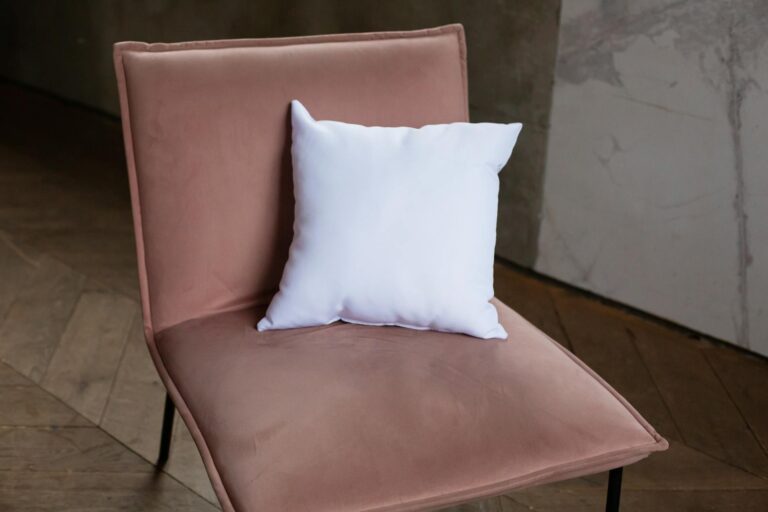
One frequently overlooked factor is how the cushion and chair look to the patient. Clinical sources note that a familiar, non-clinical appearance can reduce confusion and agitation in dementia patients. A chair that looks like a medical device — covered in clinical blue vinyl, bristling with straps and tubes — can be distressing to a person with Alzheimer’s who does not understand why they are being placed in it. The same patient might accept a chair with a fabric cover in a warm color that resembles furniture they would have had at home.
This is not merely an aesthetic preference. Agitation in Alzheimer’s patients carries real clinical consequences, including increased fall risk, resistance to care, and elevated stress hormones that worsen cognitive decline. When choosing cushion covers and seating systems, selecting options that look residential rather than institutional is a legitimate clinical consideration, not a frivolous one. Several manufacturers now offer cushion covers in a range of colors and materials specifically to address this need.
Working With Professionals to Get the Right Cushion Setup
The Alzheimer’s Foundation of America and virtually every clinical source on this topic arrive at the same recommendation: work with an occupational therapist. An OT can evaluate the individual patient’s posture, skin integrity, mobility level, cognitive status, and daily routine to recommend a cushion and seating system matched to their specific needs. This evaluation also opens the door to Medicare coverage for equipment that might otherwise be an out-of-pocket expense. The seating landscape for dementia patients continues to evolve.
Alternating pressure systems are getting quieter and more battery-efficient, as demonstrated by the Apex Sedens 500’s 12-hour battery and 30-decibel operation. Foam technologies are improving in durability and pressure redistribution. And the clinical understanding of how seating affects both physical and cognitive outcomes in dementia patients is deepening. Families who engage with this process early — before a pressure injury develops or a serious fall occurs — have far more options and far better outcomes than those who react to a crisis.
Conclusion
Choosing the right chair cushion for an Alzheimer’s patient in a nursing home is a medical decision with measurable consequences. The data is clear: dementia patients face fall rates nearly double those of other nursing home residents, pressure ulcer rates that climb to 16% among those with high immobility, and a population-wide challenge with sitting discomfort and dangerous interface pressure. The right cushion — whether a ROHO air system, a ProHeal foam cushion, an alternating pressure overlay, or a component of a complete clinical seating system — must work passively, resist incontinence, prevent sliding, and ideally look like something the patient would willingly sit in.
The most important next step is not choosing a product from a catalog. It is requesting an occupational therapy evaluation for your loved one. That evaluation documents medical necessity, identifies the right level of intervention, and may qualify the patient for Medicare-covered equipment including custom tilt-in-space wheelchairs with specialized cushioning. Armed with the OT’s recommendations and an understanding of the options outlined here, families can have informed, productive conversations with nursing home staff about getting their loved one into a seating system that protects their skin, reduces their fall risk, and supports their dignity.