For people with Alzheimer’s disease who need balance support, quad canes are the best choice. The four-pronged base provides significantly more stability than standard single-point canes, distributing weight more evenly and reducing the risk of falls—a critical concern given that 60-80% of people with dementia fall each year. Among the options available, the Hugo Adjustable Quad Cane stands out as the best value, offering 12 precision height adjustments and a weight capacity of 300 pounds while being 54% lighter and 80% more compact than traditional large-base quad canes. The stakes for getting this right are considerable.
Research shows that older adults with dementia have twice the risk of falling and three times the risk of serious fall-related injuries like fractures compared to those without cognitive impairment. A woman caring for her 78-year-old father with early-stage Alzheimer’s, for instance, might notice him gripping furniture more often or hesitating before standing—early signs that a mobility aid could prevent a devastating hip fracture. This article covers why quad canes work best for dementia-related balance issues, compares top product options and their price ranges, explains what features matter most, and addresses when a cane might not be enough. We also discuss how to work with healthcare providers to make the right choice.
Table of Contents
- Why Do Quad Canes Work Best for Dementia-Related Balance Problems?
- Comparing Top Quad Cane Options: Features, Prices, and Tradeoffs
- Understanding Fall Risk: Why This Choice Matters So Much
- When a Cane Isn’t Enough: Recognizing the Need for More Support
- Getting Professional Guidance for the Right Fit
- The Scope of the Challenge: Alzheimer’s Prevalence in 2025
- Looking Ahead: Adapting as Needs Change
Why Do Quad Canes Work Best for Dementia-Related Balance Problems?
The fundamental advantage of a quad cane is physics. Four points of contact with the ground create a stable base that remains upright even when a user leans on it heavily or approaches from an imperfect angle. For someone with Alzheimer’s, whose spatial awareness and motor planning may be compromised, this forgiveness matters enormously. A standard single-point cane requires more precise placement and provides less support if the user stumbles.
Physical therapist Milicia McDowell, DPT, explains the broader context: “Canes can be used to improve balance, reduce fall risk, enhance confidence and help folks maintain their independence longer. They are used for all types of ailments such as balance problems, a weak lower body, difficulties with maintaining an upright posture or for use after a stroke, surgery or other degenerative conditions like Parkinson’s, dementia or Alzheimer’s.” The confidence factor shouldn’t be underestimated. When someone with Alzheimer’s feels unstable, they often become more sedentary, which accelerates muscle loss and worsens balance in a dangerous cycle. A quad cane that genuinely makes walking feel safer can help break that pattern, keeping the person more active and engaged.

Comparing Top Quad Cane Options: Features, Prices, and Tradeoffs
The Hugo Adjustable Quad Cane earns its “best value” designation through thoughtful engineering. Its height range of 28-39 inches accommodates users from 5’0″ to 6’5″, and the Quadpod tip design addresses one of the main complaints about traditional quad canes—bulk and weight. However, users with very narrow hallways or cluttered homes may still find even this compact design catches on furniture or door frames. The HurryCane Freedom Edition takes a different approach with its pivoting base that mimics natural foot motion.
The SteadiGrip three-point contact system excels on uneven surfaces like cracked sidewalks or gravel driveways. The tradeoff is that the pivoting mechanism adds complexity—something that may confuse users with more advanced dementia who struggle to understand why their cane “moves differently” than expected. Budget options like the KingGear quad base cane (around $21) or HealthSmart offset quad cane (approximately $35) provide basic four-point stability at lower cost. The PELEGON Quad Cane, with its adjustable height range of 29.5-38.4 inches and anti-slip rubber tips on each prong, represents a middle-ground option. For families uncertain whether their loved one will consistently use a cane, starting with a less expensive model to test acceptance makes practical sense before investing in premium features.
Understanding Fall Risk: Why This Choice Matters So Much
The statistics on falls among people with Alzheimer’s are sobering. A pooled analysis found a 44.27% annual fall prevalence in older adults with Alzheimer’s disease, with 45% of those who fall sustaining injuries. People with dementia fall two to three times more frequently than cognitively healthy older adults—a disparity that reflects both the physical changes affecting balance and the cognitive challenges in recognizing and avoiding hazards. Consider what a fall means beyond the immediate injury. A 72-year-old with moderate Alzheimer’s who fractures a hip faces surgery, hospitalization, rehabilitation, and potential permanent placement in a care facility.
The confusion of unfamiliar hospital environments often worsens dementia symptoms, and the forced immobility during recovery accelerates cognitive decline. A $30 quad cane that prevents even one fall represents extraordinary value. The three-times-higher risk of serious fall-related injuries in dementia patients points to another factor: impaired protective reflexes. Someone with intact cognition often catches themselves or breaks a fall with outstretched hands. Alzheimer’s can slow these automatic responses, meaning falls result in harder impacts and worse injuries.

When a Cane Isn’t Enough: Recognizing the Need for More Support
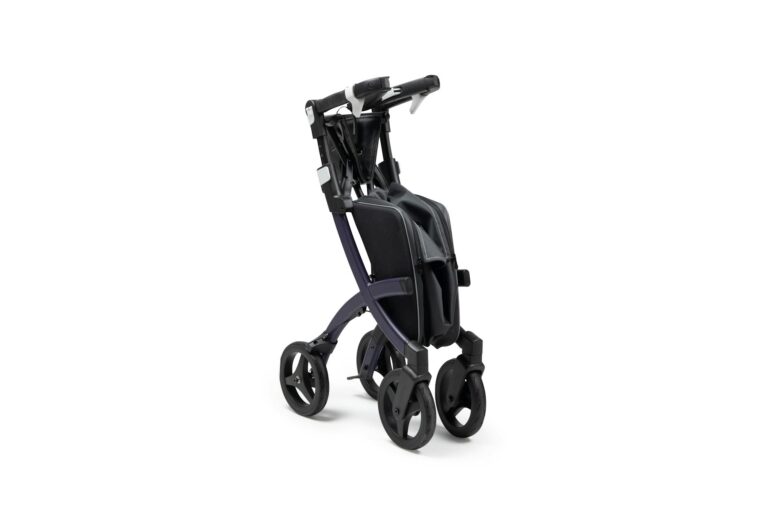
A quad cane provides meaningful stability, but it has limits. If your loved one cannot bear weight through one leg, has severe balance impairment affecting both sides of their body, or forgets to use the cane consistently, a walker or rollator may be necessary. The Alzheimer’s Foundation of America recommends working with physical or occupational therapists specifically to assess which assistive device matches the person’s current abilities. The cognitive component adds complexity not present in other balance conditions.
A person who had a stroke but retains normal cognition can learn to use a cane reliably within days. Someone with Alzheimer’s may struggle to remember which hand to hold it in, forget to bring it when standing up, or become frustrated with anything that feels unfamiliar. These patterns often emerge gradually—the cane that worked well six months ago may no longer be appropriate as the disease progresses. Warning signs that suggest reassessment include: finding the cane abandoned in random locations, observing your loved one holding the cane without actually bearing weight on it, increased near-falls despite using the cane, or resistance to using it that wasn’t present before. Any of these warrant a conversation with a healthcare provider about whether a different mobility aid—or additional interventions like home modifications—would help.
Getting Professional Guidance for the Right Fit
Healthcare professionals bring expertise that online research cannot replace. A physical therapist can assess gait patterns, measure leg-length discrepancies, evaluate grip strength, and observe how the person actually uses assistive devices—something that matters particularly when cognitive impairment affects motor learning. Occupational therapists add perspective on how the cane fits into daily routines and home environments. The fitting process itself is straightforward but precise. With the user standing in their typical shoes, the cane handle should align with the wrist crease when arms hang naturally at the sides.
This positions the elbow at about 15-20 degrees of bend when gripping the handle, allowing efficient weight transfer without straining joints. The Hugo Adjustable Quad Cane’s 12 height settings make dialing in this fit relatively simple. For people with Alzheimer’s, therapists can also assess whether the person can cognitively manage a particular device. They might observe whether the user spontaneously reaches for the cane, understands verbal cues about using it, and demonstrates consistent use across multiple attempts. This evaluation helps families avoid purchasing equipment that ends up unused in a closet.

The Scope of the Challenge: Alzheimer’s Prevalence in 2025
Understanding how many families face these decisions provides important context. Approximately 7.2 million Americans aged 65 and older have Alzheimer’s dementia—about one in nine people (11%) in that age group.
The prevalence increases dramatically with age: 5% among those 65-74, 13.2% among those 75-84, and a striking 33.4% among those 85 and older. These numbers translate to millions of households navigating the same questions about balance support, fall prevention, and maintaining independence. The woman researching quad canes for her father is part of an enormous community facing similar challenges, which has driven both product innovation and expanded resources for caregivers.
Looking Ahead: Adapting as Needs Change
The right cane today may not be the right solution next year. Alzheimer’s is progressive, and mobility needs typically evolve from occasional support to consistent reliance to eventual need for wheeled devices or full physical assistance. Families who establish relationships with physical therapists early gain partners who can monitor changes and recommend adjustments proactively rather than after a fall.
The goal throughout is preserving safe mobility as long as possible. Walking independently—even with assistance—maintains muscle strength, supports cardiovascular health, and provides the stimulation that comes from moving through environments rather than remaining seated. A well-chosen quad cane isn’t just a safety device; it’s a tool for preserving quality of life during a difficult journey.