Firefighters use handheld thermal imaging cameras, thermal drones, and evacuation chairs, sleds and stair-descent devices to rescue dementia patients from fires. The cameras and drones find people hidden by smoke, darkness, or distance, while the chairs and sleds move people who cannot use stairs safely. A thermal imaging camera detects temperature differences to reveal people and room shapes. Firehouse describes locating elderly Alzheimer's patients who wander outdoors away from homes or groups as a mainstay search-and-rescue use.
Medical information disclaimer: This article is for general educational purposes only and does not provide medical advice, diagnosis, or treatment. Always consult a physician or other qualified health professional about symptoms, medications, tests, or treatment decisions.
Table of Contents
- How crews search inside smoke and darkness
- How crews find someone who wandered outdoors
- How crews move someone who cannot use stairs
- What caregivers can set up before a fire
How crews search inside smoke and darkness
Fire Engineering describes handheld thermal imaging cameras as tools to see through heavy smoke and darkness to navigate rooms and locate victims, in its training guide. Crews carry the camera during interior search to check bedrooms, closets, bathrooms, and floors where a confused person may hide.
The City of Andalusia reports that its firefighters used thermal imaging to find a safe 90-year-old woman with dementia after she slipped away from home and caregivers late at night. Night search favors heat detection because a person stands out from cooler surroundings. A person with dementia may not answer calls or open a door.
How crews find someone who wandered outdoors
Drone Camps reports that a Kilgore Fire Department thermal drone found a missing Alzheimer's patient at an oil-lease site about three-quarters of a mile away, roughly 90 minutes after launch, in its account of the Kilgore response. The drone crew then guided deputies in on foot to reach the patient.
Heat detection has limits. Firehouse notes that thermal imagers detect temperature difference, with human skin about 90°F, so rain, snow, hot days and warm backgrounds make a lost person harder to distinguish. Caregivers should report the last seen location, clothing, and direction of travel quickly so crews can search before conditions worsen.
How crews move someone who cannot use stairs
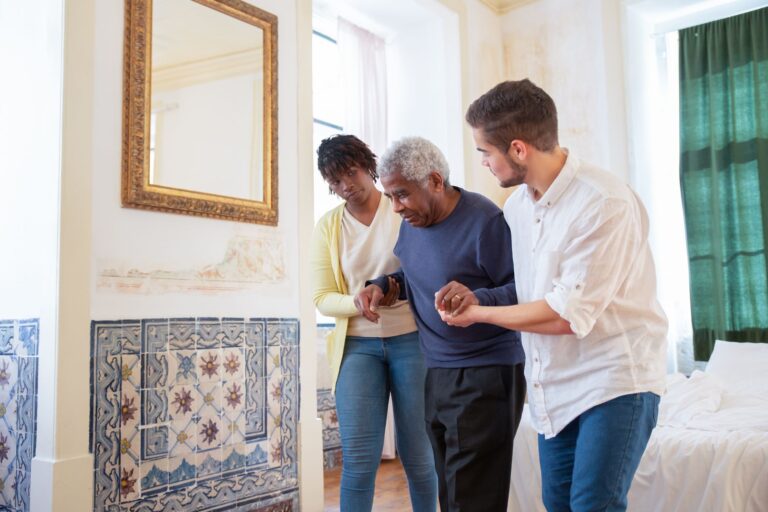
FacilitiesNet notes that firefighters and building staff move people who cannot use stairs with evacuation chairs, sleds and stair-descent devices, in its evacuation-tools tip. When immediate descent is unsafe, they stage the person in an area of refuge with two-way communication to await rescue.
U.S. Fire Administration caregiver guidance, republished by SeniorNavigator, says to plan escape around the person's abilities. It calls for two exits from every room, clear doorways, an outside meeting place, and no elevator use unless firefighters direct it.
What caregivers can set up before a fire
The National Park Service advises caregivers to call the fire department's non-emergency line and dispatch in advance to file special-needs information. It also advises using a ground-floor bedroom near an exit for a person who moves slowly or becomes confused.
The same guidance advises alarms on every level, including vibrating, flashing-light and outdoor-strobe models. Place the bed near an exit path and keep doorways, halls, and windows clear for firefighters.