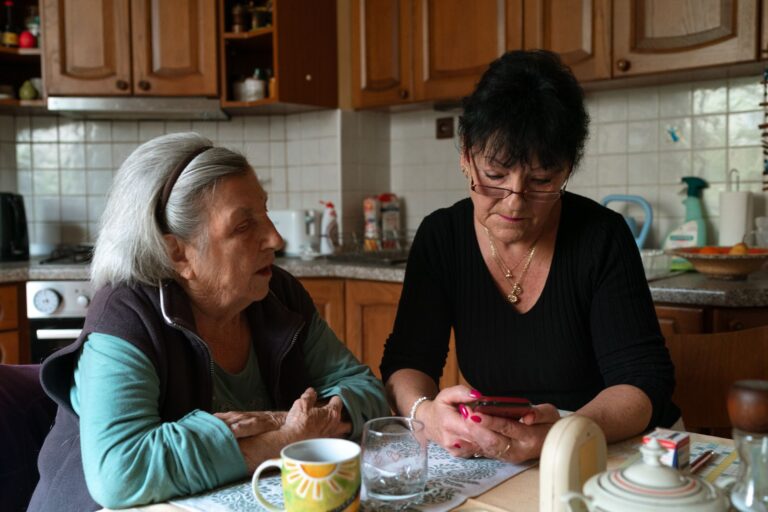
Neighbors can support someone with dementia in remarkably practical ways—offering to pick up groceries, visiting regularly to check in, sitting with them on the porch, helping with yard work, or simply being a familiar presence who stops by. These are not heroic gestures, but they matter enormously because dementia narrows the world. As a person’s memory falters and the disease progresses, neighborhood connections often become the threads that keep them tethered to something beyond their immediate household.
A neighbor’s willingness to show up—with no agenda beyond “I’m here”—can mean the difference between a person feeling forgotten and feeling like they still belong somewhere. The reality is that dementia caregiving falls disproportionately on spouses, adult children, and close family members, many of whom are already stretched thin with work, their own families, and the relentless emotional and physical labor of the disease itself. Neighbors occupy a unique position: they are close enough to help regularly without the burden of primary care responsibility, yet frequent and familiar enough to become part of someone’s daily world. Whether it is helping with tasks the person can no longer manage safely, providing relief so the main caregiver can sleep or step away, or simply maintaining the person’s social connections, neighbors can meaningfully ease the weight of this disease on an entire household.
Table of Contents
- How Can Neighbors Provide Practical Daily Support?
- The Importance of Maintaining Social Connection and Preventing Isolation
- Offering Respite and Relief for Primary Caregivers
- Organizing Neighborhood Support Systems and Resources
- Recognizing Changes and When to Alert Caregivers or Professionals
- Creating a Safe and Accessible Environment
- Building Relationships That Honor Dignity and Independence
How Can Neighbors Provide Practical Daily Support?
The practical help neighbors offer often centers on tasks that become hazardous or overwhelming for someone with dementia to manage alone—taking out the trash, getting the mail, watering plants, or doing yard work. For a person in early-stage dementia who still lives independently, a neighbor might go grocery shopping together, helping them navigate the store and manage a list. For someone in mid to later stages, a neighbor might simply bring a prepared meal or pick up medications from the pharmacy. These are not complicated favors, but they reduce the friction of daily life in ways that free up family caregivers to focus on supervision, medication management, and emotional support. One common pitfall is for neighbors to take on too much without establishing clear boundaries.
A retired woman who volunteers to help with housecleaning once a week may find herself expected to visit daily, run all errands, or become an unpaid home health aide. Setting realistic expectations at the start—”I can help every Tuesday morning for two hours”—protects both the neighbor’s capacity to sustain the help over time and ensures the caregiver family knows exactly what they can count on. A neighbor who overcommits and then burns out helps no one. Specific examples make this concrete: one neighbor might organize a meal train where different households deliver dinner twice a week; another might handle larger tasks like helping with tax documents or taking the person to medical appointments when the primary caregiver cannot. The goal is to identify where the largest gaps are and offer support that fits both the neighbor’s availability and the family’s actual needs.
The Importance of Maintaining Social Connection and Preventing Isolation
Dementia carries an insidious risk of social erasure. As the disease progresses, people with dementia often withdraw from social activities—partly because they are confused, partly because they feel ashamed of memory loss, and partly because family caregivers, overwhelmed and exhausted, have fewer resources to manage social outings. Neighbors who continue to engage—who sit and talk, invite the person to a neighborhood gathering, or simply wave and chat at the mailbox—provide what researchers call “cognitive enrichment” and emotional continuity. People with dementia often retain the ability to feel connection, warmth, and recognition long after they lose the ability to form new memories. A familiar neighbor who smiles and speaks kindly can lighten the emotional climate of someone’s day. The risk of isolation compounds the isolation dementia itself creates. A person who is isolated socially is more likely to experience depression, accelerated cognitive decline, and behavioral changes that can be misinterpreted as worsening dementia when they are actually responses to loneliness.
One study found that people with dementia who maintained social engagement showed slower cognitive decline than matched peers who became socially withdrawn, though isolation alone did not cause the dementia and engagement is no substitute for proper medical care. The point is that neighborhood presence has a measurable protective value. One limitation neighbors should understand: they cannot substitute for family or professional care, and they should not feel responsible for being someone’s primary social connection. A neighbor’s role is to supplement, not replace, the person’s family relationships and any formal care the person receives. Sometimes the person with dementia will not recognize the neighbor at first or will be confused about when they last visited. This is normal and not a reflection of the neighbor’s efforts. Consistency and patience matter more than perfect mutual recognition.
Offering Respite and Relief for Primary Caregivers
Respite care—any period when the primary caregiver gets a break—is one of the most underutilized and underappreciated forms of support in dementia caregiving, yet it is also one of the most needed. A neighbor who can sit with someone for two hours while the primary caregiver leaves the house gives that caregiver time to sleep, exercise, handle personal errands, or simply decompress. Respite does not have to be complex: it is not therapy or skilled supervision, but rather a trusted presence who can keep the person safe and occupied while the caregiver is away. The caregiver benefit is substantial and well-documented. Caregiver burnout, depression, and health problems are major consequences of unrelenting caregiving, and these in turn reduce the quality of care the person with dementia receives.
A neighbor who offers two hours on a Saturday afternoon does not sound like much, but multiplied over months and years, it creates space for the caregiver to function as a human being rather than purely as a care provider. One family reported that a neighbor’s willingness to stay with their mother on weekday mornings meant the working adult child could finally take a job with flexible hours instead of constantly taking unpaid leave. A boundary to establish clearly: if the neighbor is not a trained caregiver, they should not be responsible for medical tasks like medication administration, catheter care, or management of behavioral crises. The neighbor should know what to do if the person becomes agitated, wanders, or has a medical event. The primary caregiver should provide clear instructions, emergency contact numbers, and a realistic description of what the person can and cannot do safely. The neighbor’s role is to provide a calm, safe presence and simple structure—maybe a snack, a walk, watching television together—not to manage clinical care.
Organizing Neighborhood Support Systems and Resources
In some neighborhoods, formal support systems emerge—a church group organizes meal delivery, neighbors create a phone tree to check in on someone, or a group raises money for professional cleaning or yard care. In others, support is more ad hoc. Neighbors might benefit from simple structure: a shared spreadsheet showing who can help with what, a group chat to coordinate rides to appointments, or a casual schedule of visit times. The goal is to make helping easy and coordinated rather than leaving it to chance or expecting the family caregiver to orchestrate neighborhood support while already managing everything else. One effective model is to identify a lead neighbor—someone organized and willing to take on light coordination—who can communicate with the family about specific needs and match those needs with available helpers.
This prevents redundancy (five people all bringing casserole on the same night) and prevents gaps (everyone assumes someone else is helping, so no one does). It also protects the family from having to ask repeatedly and handle logistics while they are in crisis mode. The tradeoff is between formal structure and organic spontaneity. A highly organized system with sign-up sheets and schedules ensures consistent help but can feel impersonal or burdensome to some neighbors. A loose, informal network of friends naturally reaching out feels warmer but may be unreliable and may depend on one or two highly engaged people doing most of the work. Most effective systems find a middle ground: clear enough that people know when they are needed, flexible enough that helpers do not feel locked into rigid commitments.
Recognizing Changes and When to Alert Caregivers or Professionals
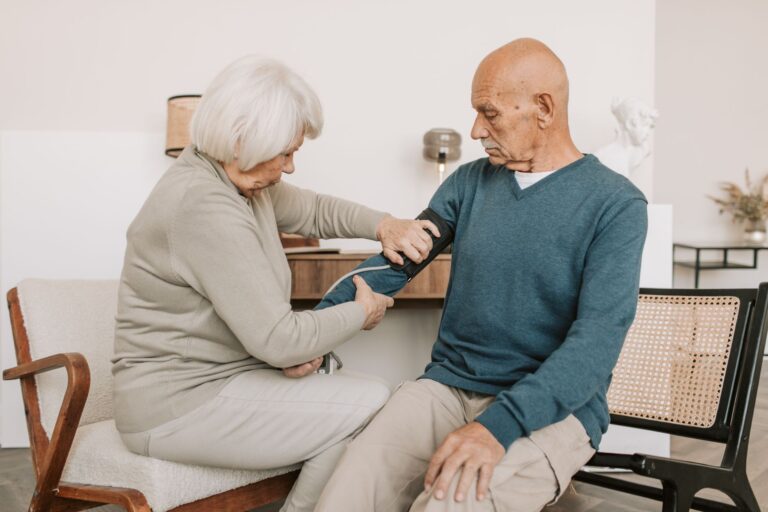
Neighbors who interact regularly with someone with dementia are often among the first to notice subtle changes—a new gait problem, apparent weight loss, sudden increased confusion, or a shift in mood or behavior. Because neighbors see the person in different contexts than family members might, their observations can be valuable. A neighbor might notice the person seems more fearful when being given instructions, or that they are dressing inappropriately for the weather, or that their speech has become more difficult to understand. These observations, shared with the primary caregiver or family, can prompt medical evaluation that might otherwise be delayed. The warning here is important: neighbors should not diagnose or interpret changes, but rather report them as facts. Instead of “I think their dementia is getting much worse,” a neighbor should say, “The last three times I visited, he could not find his way to the kitchen, whereas before he was able to show me around.
He also seemed more confused about what year it is.” The family or physician can interpret whether this represents disease progression, a medication side effect, a urinary tract infection (which can masquerade as sudden mental decline), or something else entirely. A neighbor’s factual observations help; a neighbor’s medical interpretations muddy the picture. Boundaries matter here too. Neighbors should not feel obligated to monitor someone’s health status or behavior as though they were a professional caregiver. If a neighbor is genuinely concerned about someone’s immediate safety—they appear malnourished, the home is unsafe, they are being neglected—it is appropriate to contact the family or, in some cases, local adult protective services. But neighbors are not responsible for diagnosing or managing dementia progression, and they should not shoulder guilt or anxiety about changes they observe.
Creating a Safe and Accessible Environment
Environmental modifications—both large and small—can prevent falls, reduce confusion, and make the neighborhood and public spaces safer for someone with dementia. A neighbor might install better lighting on a shared fence or pathway, remove tripping hazards in a yard, label a person’s mailbox more clearly, or encourage the household to ensure locks are secure and the person’s car keys are not accessible if they have stopped driving safely. These are practical gestures that reduce the burden on the caregiver to manage safety alone.
One concrete example: a group of neighbors in a cul-de-sac, learning that one household included a person with dementia who had a history of wandering, agreed to keep an eye out for the person leaving the home unsupervised and to gently redirect them or alert the family. This neighborhood watch approach, built on informal cooperation rather than surveillance, gave the family confidence that someone would notice if their mother left without supervision. Similarly, a neighbor might alert the household to potential dangers—a loose gate, a broken step, an uncovered pool—that the family, in their overwhelm, might miss.
Building Relationships That Honor Dignity and Independence
The most effective neighborhood support treats the person with dementia as a person first, not as a medical condition to be managed. This means engaging them in conversation, asking about their interests and opinions, accepting their version of reality rather than correcting it, and allowing them to do what they still can rather than taking over tasks they can manage with minimal help. A neighbor who asks “What are you working on today?” and listens to the answer, even if the person is recounting the same story they told yesterday, is offering something profoundly important: recognition that the person still exists and still has thoughts worth hearing.
A concrete example of this dignity-centered approach: when a neighbor visits, instead of directly asking the caregiver what the person needs, they might sit with the person directly, engage them in low-key activity—looking at old photographs, having a simple craft, playing a familiar game, or just sitting quietly together—and let the caregiver move to the background. This reverses the common pattern where the person with dementia becomes invisible and only the caregiver is addressed. A neighbor might also ask the person with dementia questions that do not depend on recent memory—”What was your favorite dessert as a child?” or “What did you like to grow in your garden?”—because these questions allow the person to participate meaningfully in conversation even when they cannot remember what they had for breakfast.