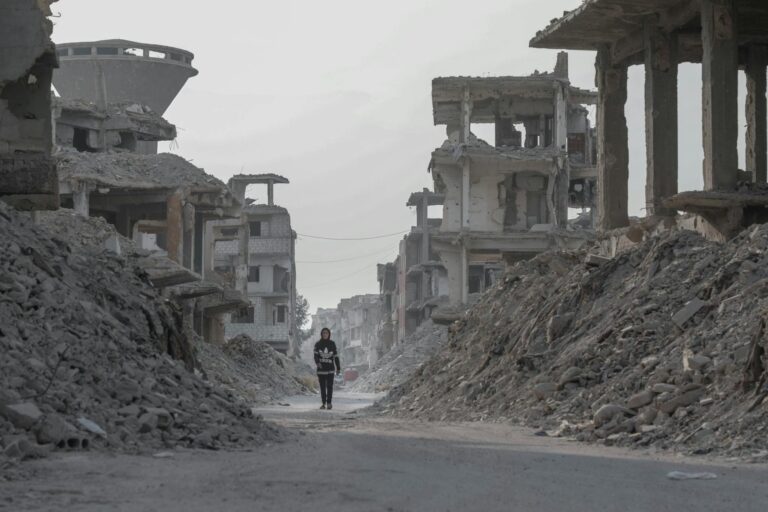
After four weeks of coordinated U.S.-Israeli airstrikes that began on February 28, 2026, Iranian military bases have suffered extensive damage across the country. Israeli officials report that over 330 ballistic missile launchers—more than two-thirds of Iran’s estimated 470-launcher fleet—have been destroyed or disabled through the campaign. This represents one of the most significant military operations against Iranian infrastructure in recent decades, fundamentally degrading the Islamic Republic’s ballistic missile capabilities and forcing a dramatic shift in how Iranian military forces can operate.
The four-week offensive has targeted nuclear facilities, military infrastructure, and leadership positions, striking approximately 6,000 targets throughout Iran. The coordinated nature of these strikes, involving both U.S. and Israeli forces working in tandem, has created cascading damage across multiple Iranian military bases and weapons production facilities. This article examines what has happened to Iranian military infrastructure during these four weeks, the extent of documented damage, Iran’s military response, casualty figures, the dramatic decline in Iran’s missile launch capacity, and what the degradation of these capabilities means for the region going forward.
Table of Contents
- How Much of Iran’s Ballistic Missile Arsenal Has Been Destroyed?
- The Scope of Strikes Across Iranian Military Infrastructure
- Iran’s Military Response During the Four-Week Campaign
- The Dramatic Collapse in Iran’s Ballistic Missile Launch Capacity
- Documented Casualties and Strategic Leadership Changes
- The Four-Week Timeframe and Strategic Planning
- Regional Implications and Strategic Realignment
- Conclusion
- Frequently Asked Questions
How Much of Iran’s Ballistic Missile Arsenal Has Been Destroyed?
The destruction of ballistic missile launchers stands as the campaign’s most quantifiable military achievement. Israeli Air Force officials have documented the destruction or disabling of at least 330 ballistic missile launchers out of an estimated total of 470 across iran. This leaves approximately 140 operational launchers still intact—a figure that Israeli forces continue actively pursuing in the remaining days of the four-week offensive. The targeting of these systems suggests careful intelligence coordination, with strikes designed to maximize damage to Iran’s ability to launch ballistic missiles from prepared positions across the country.
What makes this degradation particularly significant is that ballistic missiles represent Iran’s most reliable long-range strike capability. Unlike drones, which require active guidance and can be intercepted, ballistic missiles follow predetermined flight paths and arrive at much higher speeds. Losing approximately two-thirds of these launchers represents a substantial setback to Iran’s military deterrent. However, the remaining ~140 launchers still represent a meaningful threat, and Iran has demonstrated the ability to relocate systems or improvise launch positions, making the hunt for remaining launchers an ongoing priority for coalition forces.

The Scope of Strikes Across Iranian Military Infrastructure
With approximately 6,000 targets struck over four weeks, this campaign represents one of the largest offensive operations in recent military history by target count. The campaign has targeted military bases and missile launchers, but also nuclear facilities and the broader military-industrial complex that supplies Iran’s weapons production. One particularly notable strike targeted a turbine engine production facility in Qom province, which supplies critical components to the Islamic Revolutionary Guard Corps (IRGC) for drone and aircraft manufacturing. This represents a deliberate strategy to disrupt Iran’s ability to produce and maintain advanced weapons systems into the future.
Individual base strikes have inflicted significant casualties and damage. The bombing of Kerman Air Base, located approximately 500 miles southeast of Tehran, killed at least 13 iranian troops according to reports. Kerman represents one of several bases that has sustained major damage from coordinated strikes. Satellite imagery has confirmed extensive physical destruction at multiple Iranian military installations across the country, validating strike effectiveness through independent visual verification. However, it’s important to note that while damage to fixed installations has been extensive, distributed military assets and mobile units present a more difficult targeting problem, which explains why some Iranian military capabilities have survived the initial phase of operations.
Iran’s Military Response During the Four-Week Campaign
Iran has not remained passive during the bombardment. As of early March 2026, Iran had launched over 500 ballistic missiles and nearly 2,000 drones against both israeli and U.S. targets in the region. These attacks came in at least 70 separate waves rather than concentrated assaults, distributed between Israel and U.S. regional installations.
Approximately 40% of Iran’s attacks targeted Israel directly, while roughly 60% targeted U.S. military assets and facilities in the Persian Gulf region and broader Middle East. This barrage represents Iran’s attempt to impose costs on coalition forces despite suffering degradation in its own strike capabilities. The scale of Iran’s response—nearly 2,500 missiles and drones delivered across multiple waves—demonstrates significant depth in Iran’s inventory of these weapons systems. The distributed nature of attacks, coming in 70 separate waves rather than a single concentrated assault, suggests Iran was carefully rationing its response to preserve additional capabilities for potential future escalation. This measured approach contrasts with the overwhelming scale of the initial strikes against Iran.

The Dramatic Collapse in Iran’s Ballistic Missile Launch Capacity
One of the clearest indicators of the campaign’s impact on Iranian military capability is the documented decline in ballistic missile launch rates. On the first day of the conflict, Iranian forces launched approximately 90 ballistic missiles. By late March, that rate had collapsed to roughly 10 missiles per day—representing a 90% decline according to U.S. Central Command.
This decline reflects not simply Iran choosing to conserve weapons, but rather the practical reality that with the majority of launch platforms destroyed or disabled, Iran has far fewer assets capable of conducting ballistic missile operations. This capability degradation matters strategically because ballistic missiles are particularly difficult to intercept and represent Iran’s most reliable method of delivering large payloads across regional distances. The shift from 90 missiles per day to 10 per day means that if conflict continues beyond the four-week window, Iran’s ability to sustain high-tempo operations has been severely restricted. However, even at the reduced rate of 10 missiles per day, Iran could theoretically sustain meaningful bombardment for many weeks depending on total inventory, suggesting this is a significant restriction on scale rather than a complete collapse of capability.
Documented Casualties and Strategic Leadership Changes
The human cost of the four-week campaign has been substantial according to official accounts. Iran’s Health Ministry reports at least 1,500 Iranians killed and 18,551 injured during the strikes. These figures represent the official Iranian tally and may not capture all military casualties in remote areas or contested regions, but they provide a baseline for understanding the human impact of sustained air operations. Beyond these casualty figures, the campaign achieved a significant strategic objective: reports indicate that Supreme Leader Ali Khamenei was killed in strikes on Tehran.
Khamenei’s death, if confirmed, represents the removal of Iran’s most senior leader—a figure who has held power since 1989 and controlled Iran’s military apparatus for more than three decades. This leadership decapitation creates unprecedented uncertainty about Iran’s command structure, decision-making processes, and succession. The combination of degraded military capabilities and potential leadership disruption creates acute vulnerability for the Iranian state at a critical moment. However, Iran’s governmental structure includes institutional redundancies, and while succession creates instability, it does not necessarily mean Iranian military forces will cease operations or that conflict will end.

The Four-Week Timeframe and Strategic Planning
The Trump administration specified that this operation was intended to unfold within a “four-week timetable,” suggesting that a defined endpoint was contemplated for the initial offensive phase. As of late March 2026, that four-week window is nearing completion. The subsequent trajectory—whether strikes continue, how Iran’s new leadership responds to sustained losses, and whether diplomatic openings emerge—remains unclear from publicly available information.
The fact that Israeli forces continue actively hunting remaining ballistic missile launchers suggests the offensive may extend beyond the initial four-week framework if targets of opportunity present themselves. The degradation achieved—330+ launchers destroyed, thousands of targets struck, and missile launch rates reduced by 90%—represents substantial military accomplishment within the defined timeframe. Whether this becomes a discrete operation or prelude to extended operations depends on decisions yet to be made by political leadership on both sides.
Regional Implications and Strategic Realignment
The four-week offensive has fundamentally altered the military balance in the Middle East. With Iran’s ballistic missile capacity degraded by two-thirds and leadership potentially in transition, regional actors’ risk calculations have shifted substantially.
Israel’s security posture relative to Iranian long-range strike capabilities has improved significantly in the near term, though whether this produces regional stability or encourages further escalation depends on subsequent political and military developments. For the United States, the campaign represents the most substantial military commitment to the region in several years and has strained military resources and important diplomatic relationships. The four-week framework suggests an intentional effort to limit operational scope and duration, yet the actual trajectory—including Iran’s potential responses, internal political developments in Tehran, and positions of other regional actors—may ultimately determine whether this becomes a contained operation or the opening phase of longer-term confrontation.
Conclusion
After four weeks of coordinated U.S.-Israeli strikes beginning February 28, 2026, Iranian military bases have been extensively damaged, with over 330 ballistic missile launchers destroyed or disabled, approximately 6,000 targets struck, and ballistic missile launch rates reduced by 90% from initial levels. The campaign has achieved significant military objectives against Iranian infrastructure, weapons production facilities, and leadership, while Iran has responded with nearly 2,500 missiles and drones across 70 waves of counterattacks—though at dramatically reduced rates as its capabilities have been degraded. The strategic implications of these four weeks remain uncertain as the initial four-week window approaches completion.
Iran’s military capacity has been substantially reduced, its leadership structure has been disrupted by the reported death of Supreme Leader Khamenei, and the regional military balance has shifted decisively. However, Iran retains significant residual military capability and demonstrated motivation to continue operations. The question of whether this four-week campaign becomes a discrete historical event or the opening phase of prolonged conflict will be determined by diplomatic developments, decisions of Iran’s new leadership, and the willingness of the U.S. and Israel to sustain or expand operations beyond the initially planned timeframe.
Frequently Asked Questions
How many Iranian ballistic missile launchers have been destroyed in this campaign?
Israeli officials report over 330 ballistic missile launchers out of an estimated 470 total have been destroyed or disabled, leaving approximately 140 operational launchers still being pursued by coalition forces.
What was the total number of targets struck during the four-week offensive?
Approximately 6,000 targets were struck throughout Iran, including military bases, nuclear facilities, weapons production sites, and other military infrastructure.
By how much have Iran’s ballistic missile launch rates declined?
Ballistic missile launches declined from approximately 90 missiles on the first day of conflict to roughly 10 missiles per day by late March—a 90% reduction according to U.S. Central Command.
What are the reported casualty figures from the campaign?
According to Iran’s Health Ministry, at least 1,500 have been killed and 18,551 injured, though these official figures may not account for all military casualties in remote areas.
How has Iran responded militarily to the air campaign against its bases?
Iran has launched over 500 ballistic missiles and nearly 2,000 drones against Israeli and U.S. targets in at least 70 separate waves, with approximately 40% targeting Israel and 60% targeting U.S. regional installations.