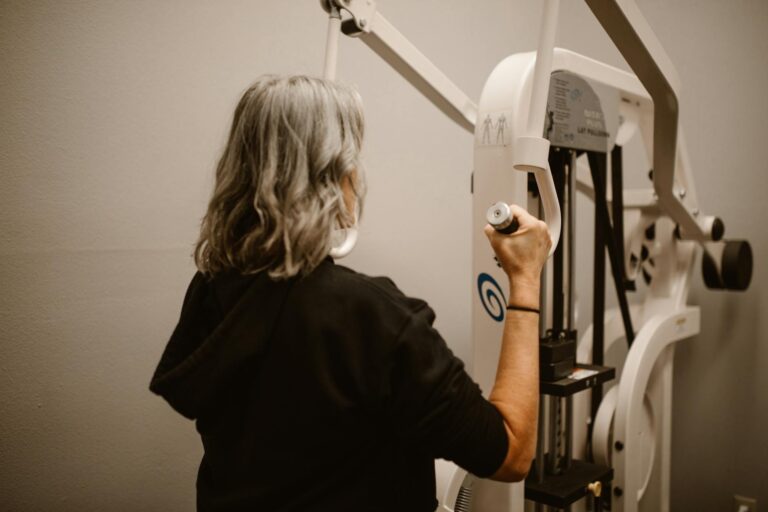
Doctors consistently recommend three foundational practices for long-term back health: maintaining proper posture and body mechanics during daily activities, staying physically active with regular movement and targeted exercises, and managing body weight to reduce strain on the spine. For someone experiencing chronic back pain, these evidence-based approaches work together to prevent deterioration and improve quality of life, rather than relying solely on medication or temporary fixes. The most important insight from decades of medical research is that the back thrives on movement and proper alignment—not rest and immobilization, as people once assumed. This article covers the specific recommendations orthopedic surgeons, physical therapists, and spine specialists give their patients, practical ways to implement them, common mistakes that worsen back problems, and how to adapt these strategies if you have existing conditions like arthritis or osteoporosis.
Table of Contents
- Which Exercises Do Doctors Recommend Most for Back Strength?
- How Does Posture Shape Long-Term Spine Health?
- What Role Does Weight Management Play in Back Pain Prevention?
- How Should You Safely Lift and Move Throughout the Day?
- What About Sleep Position and Bed Support for Overnight Back Health?
- How Do Flexibility and Mobility Work Into Back Health?
- What Does Long-Term Back Health Look Like Beyond Pain Relief?
- Conclusion
Which Exercises Do Doctors Recommend Most for Back Strength?
Doctors prioritize exercises that strengthen the core muscles—the abdominals, obliques, and deeper stabilizing muscles—because these act as natural support for the spine and reduce abnormal movement in the vertebrae. Walking, swimming, and water aerobics rank among the safest and most frequently recommended activities because they build endurance without repetitive impact on the discs.
Physical therapists often prescribe specific exercises like planks, bridges, bird-dogs, and dead bugs that target stability rather than pure strength. However, heavy weightlifting or exercises that hyperextend the spine (such as full backbends or aggressive leg presses) can accelerate disc wear in some people, which is why personalized assessment matters. For someone with a desk job who sits eight hours daily, doctors emphasize that 30 minutes of walking five times per week produces measurable improvements in back function within six to eight weeks, whereas sporadic intense workouts followed by sedentary periods often worsen symptoms.

How Does Posture Shape Long-Term Spine Health?
Posture directly influences how load distributes across the discs and facet joints; poor alignment concentrates pressure on specific areas, causing premature wear similar to how a tire wears unevenly when wheel alignment is off. Many people sit with rounded shoulders and forward head position (often called “tech neck”), which shifts stress from the large stabilizing muscles to the smaller ligaments and discs—a pattern doctors see repeatedly in younger adults.
Correcting posture isn’t about rigid military positioning; instead, doctors teach a neutral spine concept where the natural curves of the cervical, thoracic, and lumbar regions are preserved, whether sitting, standing, or lifting. If you have existing osteoporosis or compressed vertebrae, aggressive posture correction exercises can temporarily increase discomfort before improvement, so gradual adaptation over weeks is preferable to forcing perfect alignment immediately. A practical test: if you can slide your hand behind your lower back with moderate pressure when sitting, your lumbar curve is likely neutral; if your hand slides in easily with no resistance, your back is likely overly flattened.
What Role Does Weight Management Play in Back Pain Prevention?
Each extra pound of body weight increases compressive forces on the lower back by approximately 1.5 pounds of pressure on the discs, so a 20-pound weight gain concentrates significant additional stress on structures designed for your baseline weight. Doctors note that even modest weight reduction—losing 10 percent of body weight—measurably reduces back pain symptoms in people with obesity, partly because less weight reduces mechanical strain and partly because weight loss typically improves cardiovascular fitness and inflammatory markers.
This doesn’t mean backaches are caused exclusively by weight; thin people experience back pain from poor posture and weak stabilizers too, but the combination of excess weight plus weak core muscles creates particularly challenging conditions. A person with arthritis in their spine and 30 extra pounds faces different treatment options than someone at a healthy weight with the same arthritic changes; weight loss might delay or eliminate the need for spinal fusion surgery in one case but not affect outcomes in another. Some individuals find that strength training and posture correction alone sufficiently reduce back pain to make aggressive weight loss unnecessary, while others only achieve real improvement when addressing both factors together.

How Should You Safely Lift and Move Throughout the Day?
Doctors teach a specific lifting technique that has prevented countless injuries: keep the object close to your body, bend at the knees rather than rounding your back, engage your core before lifting, and avoid twisting the spine while holding weight. The grocery bag twisted from arm’s length while reaching with a rounded back is a classic mechanism for disc herniations and muscle strains, accounting for many preventable acute injuries.
For repeated lifting during work or home tasks, spacing lifts throughout the day and varying positions (alternating between standing and sitting tasks) reduces cumulative fatigue that leads to injury. However, perfect form deteriorates when you’re fatigued or distracted, which is why doctors recommend breaking tasks into smaller segments; lifting five bags properly over an hour is safer than muscling ten bags through quickly. Someone with a history of disc problems might benefit from a lightweight lumbar support belt during heavy activity, though the belt should not become a permanent dependency—the goal remains training your core to handle lifting independently.
What About Sleep Position and Bed Support for Overnight Back Health?
Back pain often worsens at night or upon waking if your sleep position strains the spine or if your mattress doesn’t provide adequate support, yet no single sleep position works for everyone—side-sleepers, back-sleepers, and even some stomach-sleepers can experience relief with proper positioning. Doctors most commonly recommend side-sleeping with a pillow between the knees to maintain neutral spine alignment, or back-sleeping with a pillow supporting the neck and a second pillow under the knees; stomach-sleeping tends to rotate the spine and strain the neck, though some people have done it for years without problems.
The mattress surface should neither be too soft (causing excessive spinal curvature) nor too firm (creating pressure points); a medium-firm mattress suits most people, but if you have osteoporosis or significant arthritis, you might need additional cushioning to prevent excessive pressure on bony prominences. A warning: switching sleep positions suddenly often temporarily worsens discomfort as muscles adapt to new mechanics, so gradual change over one to two weeks is preferable to abrupt repositioning. Testing a mattress for 30 days before committing to purchase allows sufficient time to assess whether it reduces your typical morning stiffness and pain.

How Do Flexibility and Mobility Work Into Back Health?
Tight hamstrings, hip flexors, and chest muscles create compensatory strain on the lumbar spine because restricted movement in nearby joints forces the back to move in unnatural patterns to accomplish daily tasks. Gentle daily stretching—holding stretches for 20 to 30 seconds without bouncing—gradually improves mobility and often reduces back pain significantly, with benefits typically apparent within two to three weeks of consistent practice.
Yoga and tai chi appeal to many patients because these practices combine strength, flexibility, and mindfulness, though vigorous styles can worsen acute pain, so modifications or restorative styles are preferable during flare-ups. A specific example: tight hip flexors (common from prolonged sitting) cause an exaggerated forward pelvic tilt, which exaggerates the lumbar curve and strains the posterior discs; opening the hip flexors through gentle stretching often paradoxically relieves lower back pain.
What Does Long-Term Back Health Look Like Beyond Pain Relief?
True back health extends beyond absence of pain to include functional capacity—the ability to work, play, move with your grandchildren, and travel without limitation—and doctors measure success by these real-world outcomes rather than imaging studies alone. Many people with visible degenerative changes on MRI scans experience minimal symptoms because they maintain strength, flexibility, and weight, while others with minimal imaging findings experience severe pain due to poor body mechanics and weakness.
The trajectory of back health depends heavily on habits you establish and maintain; the person who exercises consistently, sits mindfully, and maintains weight at forty can often delay or prevent the fusion surgeries their sedentary peers require at sixty. Looking forward, emerging approaches like targeted regenerative medicine and minimally invasive procedures show promise for specific conditions, but they remain complementary to—not replacements for—the fundamental practices doctors have long recommended: movement, appropriate loading, strength, and proper body mechanics.
Conclusion
Doctors recommend long-term back health through a sustained approach combining regular exercise, proper posture, appropriate weight management, safe movement mechanics, and attention to sleep and flexibility—rather than pursuing single solutions or waiting for pain to appear before taking action. The evidence is clear that consistent small habits compound into significant protection against age-related decline, while neglecting these fundamentals almost guarantees progressive problems.
Your next step is assessing which single recommendation resonates most with your current lifestyle—whether that’s adding a daily walk, fixing your desk posture, beginning a stretching routine, or addressing weight—and implementing that change for four to six weeks before adding another. Small, sustainable changes create lasting back health far more reliably than dramatic overhauls that fade within weeks.