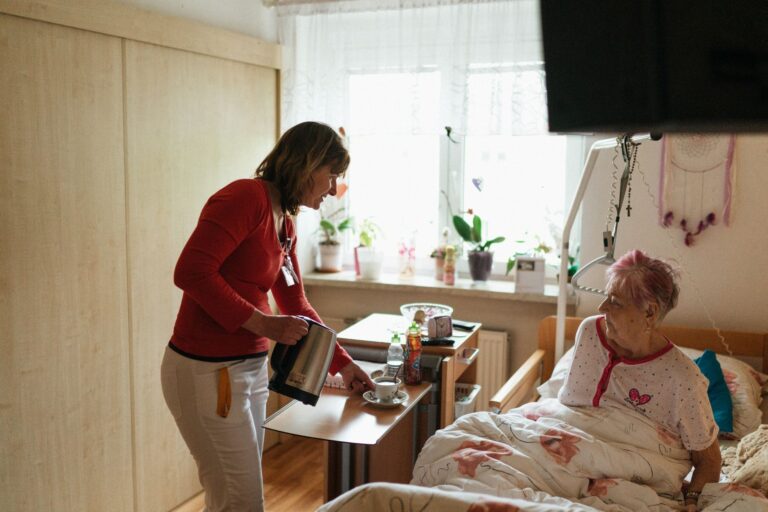
When someone with dementia forgets the steps in a familiar task—like the sequence for getting dressed, preparing a meal, or bathing—caregivers can help by breaking down the activity into smaller pieces, providing cues at each step, and modifying the environment to reduce confusion. Rather than expecting someone to remember a complex sequence on their own, caregivers who offer verbal reminders, physical guidance, or visual prompts can often keep the person engaged and independent for longer than they might otherwise be. The goal is not to force memory but to work around it, allowing the person to continue participating in daily life despite cognitive decline.
This challenge appears early in many dementia diagnoses and persists as the disease progresses. A person who could dress themselves last year may now forget whether the shirt goes on before the pants, or forget they need to find their shoes at all. This is not laziness or refusal—it reflects damage to the brain regions that sequence and execute multi-step actions, even when each individual step remains intact in memory.
Table of Contents
- How Can Caregivers Recognize When Steps Are Being Forgotten?
- Environmental Modifications to Reduce Step-Forgetting
- Verbal and Physical Cueing Strategies
- Creating Written and Visual Step Guides
- Safety Concerns When Steps Are Forgotten
- Adapting Routines as Cognitive Decline Progresses
- When Cueing Works and When It Doesn’t
- Frequently Asked Questions
How Can Caregivers Recognize When Steps Are Being Forgotten?
The first sign is usually repetition within a single task. A person may brush their teeth, then immediately brush them again, having forgotten they just completed the action. Or they may start getting dressed and put on two shirts because they forgot they already selected and put on the first one. Another pattern is abandonment—someone begins a task, then wanders away mid-process, having lost the thread of what they were doing. A typical example: a person fills a glass with water, sets it down, and leaves the kitchen, unable to recall that they were in the middle of getting a drink. Some people skip steps entirely.
They may wash their hands but skip drying them, or sit down for a meal without having washed their hands first. The internal map of “what comes next” has become unreliable. Caregivers might also notice that the person can perform a task if someone talks them through it step-by-step but cannot initiate or complete it independently. This difference—competence with cues versus struggle without them—is a clear signal that step sequencing, not the ability to perform the actions themselves, is the problem. Caregivers should watch for whether the person can still describe the steps verbally even if they cannot execute them. If someone can say “first you wash, then you dry” but cannot follow that sequence when given supplies, the breakdown is in the execution pathway, not semantic memory. This distinction matters because it shapes the kind of help that works best.
Environmental Modifications to Reduce Step-Forgetting
One of the most effective strategies is to remove choices and distractions that complicate the task sequence. If someone forgets the steps to getting dressed, laying out clothes in the order they should be put on—underwear, then socks, then pants, then shirt—eliminates the need to remember the sequence. Similarly, a bathroom set up with only the items needed for grooming in plain view (toothbrush, soap, washcloth) reduces the cognitive load of deciding what comes next. However, environmental modification has limits. It works well for tasks with a clear, linear sequence but is harder to apply to tasks that require decision-making or problem-solving within the steps. Preparing a simple meal might be supported by a laid-out kitchen, but only if the person still remembers what they intended to cook.
If they have forgotten the goal itself, not just the steps, environmental cues alone will not be enough. A written or pictured recipe, or a caregiver sitting nearby, becomes necessary. Some caregivers attempt to create laminated step-by-step photo cards for common tasks—getting ready for bed, preparing breakfast, using the bathroom—and post them in the relevant rooms. This works for some people, particularly those in earlier stages of cognitive decline who can still read and interpret photos. But it requires that the person remember to look at the card in the first place, remember what the photos mean, and follow the sequence. For someone with more advanced dementia, a photo card may be ignored, misinterpreted, or used incorrectly.
Verbal and Physical Cueing Strategies
The most immediate tool a caregiver has is the spoken word. Giving step-by-step instructions aloud—”Now we’re going to put on your left shoe. Here’s your left foot. Now the shoe goes on like this”—works because the caregiver is providing the missing sequence in real time. This approach is labor-intensive; it requires the caregiver to be present and attentive throughout the task. But it often allows the person to participate actively rather than passively receiving help.
Some caregivers use what is called “hand-over-hand” guidance—physically guiding the person’s hand or arm through the motion while also describing it verbally. For example, when someone forgets how to use a toothbrush, a caregiver might stand behind them, gently guide their hand with the brush to their mouth, and say “now brush your top teeth, back and forth.” This combines physical and verbal cues and often works even when either alone would fail. The limitation is that hand-over-hand guidance is time-consuming and requires physical closeness that not every person finds comfortable. Another cueing method is to ask prompting questions rather than give commands. Instead of saying “Now put your socks on,” a caregiver might ask “What do you need to put on your feet?” This allows the person to generate the next step themselves, preserving a sense of agency and autonomy. The effectiveness depends on whether the person’s memory for the step exists but is just not triggered; if the step has been genuinely forgotten, prompting will not elicit it.
Creating Written and Visual Step Guides
Many caregivers create personalized task cards for the person with dementia—written or printed step-by-step guides for common routines. A card for “getting ready for bed” might list: (1) Use the bathroom, (2) Put on pajamas, (3) Brush teeth, (4) Get into bed. Some families use photos instead of words, with a picture for each step. These tools work best when the person can read and understand the medium, remembers to check the card, and follows the sequence reliably. The tradeoff is that written guides shift the cognitive demand from remembering the sequence to remembering to read the guide and interpret it correctly. Some people become frustrated by seeing the card, viewing it as a reminder of their decline.
Others misinterpret the text or images and perform steps in the wrong order or skip them. A caregiver still needs to check in periodically to verify that the steps are actually being followed, especially in the early days of using a new guide. Over time, some people internalize the routine and the guide becomes less necessary. Video demonstrations can also help some caregivers and their loved ones. Recording a simple video of a family member or caregiver performing the task step-by-step provides a moving, contextual reference that a static card cannot. However, this requires that the person with dementia remember to watch the video, have access to the device showing it, and be able to follow along.
Safety Concerns When Steps Are Forgotten
When step-forgetting involves safety-critical activities, the stakes are high. Someone who forgets to turn off the stove after cooking, or forgets to lock the door after coming home, or forgets to take their medication in the correct order or dosage, faces real risk. The answer in these situations is not always to provide cueing—it is to restructure the task so that the risky step is either removed or controlled by someone else. A caregiver might move cooking responsibilities to a safer appliance or take over cooking entirely. Medication can be pre-sorted by a pharmacy into daily packets so the person simply takes what is in the labeled packet rather than remembering the sequence and dosage. The warning here is that some caregivers try to balance independence and safety by supervising from a distance, assuming that the person will remember the critical steps.
This often fails. A person who has forgotten the steps to a task will not suddenly remember the most important safety step when unsupervised. If the task is safety-critical, supervision or task restructuring is necessary, not optional. Another safety issue is fall risk. A person who forgets the steps in a familiar route—for example, the steps to walk from the bedroom to the bathroom—may become confused, lose balance, or wander into a dangerous area. This is why many caregivers eventually remove scatter rugs, ensure clear pathways, install handrails, and sometimes place motion-sensor lights to illuminate the route at night.
Adapting Routines as Cognitive Decline Progresses
In early-stage dementia, a person might forget the steps to a complex task like preparing a full meal but still manage a simple breakfast with cues. As the disease progresses, the number and complexity of steps they can handle shrink. A caregiver’s job includes recognizing this decline and simplifying tasks before the person becomes frustrated or unsafe. This might mean moving from “prepare lunch with verbal prompts” to “choose between two pre-made options” to eventually “accept plated food prepared by the caregiver.” Some caregivers resist simplification, believing that continued effort and practice will preserve skills longer.
The research on this is mixed. In some cases, repeated practice and cueing can maintain function temporarily. In others, the underlying neurological damage is progressive, and pushing too hard leads to frustration and agitation without functional gain. A realistic assessment—based on observing what actually works versus what causes distress—helps a caregiver adjust expectations appropriately. For one person, daily practice dressing might maintain independence for months longer; for another, accepting increasing help early on may reduce daily conflict and improve quality of life.
When Cueing Works and When It Doesn’t
Caregivers often find that cueing works better at certain times of day. Someone might follow a multi-step morning routine with just a few verbal prompts but become unable to sequence the same steps in the evening when fatigue or sundowning has set in. This variation is common and reflects that dementia symptoms fluctuate with fatigue, stress, and time of day.
A caregiver who can shift demanding tasks to better times of day may see improved outcomes. Additionally, cueing by a familiar person often works better than cueing by a stranger or even a different family member. A spouse or adult child who has lived with the person for years may be able to convey instructions in a way that the person with dementia trusts and follows, while a new caregiver’s instructions are ignored or misunderstood. This dynamic reflects both the power of familiarity and the reality that the person’s ability to process and act on information is compromised—a trusted voice can bridge that gap more effectively than unfamiliar authority.
- —
Frequently Asked Questions
Is step-forgetting the same as Alzheimer’s disease?
Step-forgetting is common in Alzheimer’s and other dementias but is not unique to any one diagnosis. It reflects damage to brain regions involved in executive function and task sequencing. Many types of dementia cause this symptom. Difficulty with sequencing can also occur in stroke, Parkinson’s disease, and other neurological conditions.
Can I train someone with dementia to remember steps again?
Repeated practice and cueing can sometimes maintain function temporarily, but once the ability to sequence is lost due to brain damage, retraining is unlikely to restore it. The focus shifts to working around the lost ability—providing cues, simplifying tasks, or doing them together—rather than attempting to reverse the underlying cognitive loss.
How much help should I give—should I let them struggle and figure it out?
This depends on safety, the person’s emotional state, and the stage of dementia. Gentle struggling can preserve some autonomy and confidence, but repeated failure and frustration serve no one. If prompts or cues can guide them to completion successfully, that is better than either passive help or forced struggle.
What if they refuse help or get angry when I prompt them?
Resistance to help often reflects loss of awareness—the person may not realize they need help and experience prompting as criticism or interference. Changing the approach (asking questions instead of giving commands, or doing the task with them rather than telling them how), timing help differently, or involving a different family member may reduce resistance. If resistance is consistent, it may be time to accept that the task cannot be done together and to handle it without their participation.
Are there medications that can help with step-forgetting?
Medications can sometimes help with attention and focus in earlier stages of dementia, which may indirectly help with task sequencing. However, no medication directly restores the ability to sequence steps. The primary treatments are behavioral and environmental—cueing, simplification, and caregiver support.
Should I use picture cards or written instructions?
This depends on the individual’s remaining literacy and visual abilities. Some people respond better to written text, others to photos. Trial and error is often needed. Starting with the medium the person used most before cognitive decline (a reader might prefer written text, for example) is a reasonable starting point. —