Memory loss sits at the center of this dementia and brain health question.
The clearest sign that memory loss has crossed the line from normal aging into something more serious is when it starts disrupting daily life. Forgetting where you left your keys is one thing. Forgetting what keys are for, or putting them in the freezer and having no memory of doing so, is something else entirely. The distinction matters because more than 40 percent of adults over 65 will experience some form of memory loss, but most of them will never develop dementia. The real red flags are not about how often you forget, but about what you forget, whether you can eventually retrieve the information, and whether the lapses are getting in the way of cooking, driving, managing money, or holding a conversation.
Right now, 7.2 million Americans age 65 and older are living with Alzheimer’s disease, a number that crossed the 7 million threshold for the first time in 2025, according to the Alzheimer’s Association. Roughly 1 in 9 people over 65 has the disease, and almost two-thirds of them are women. Those numbers are large enough that most families will encounter this question at some point, either about a parent, a spouse, or themselves. The anxiety around memory lapses is real and understandable, but the answer is not always the worst-case scenario. This article walks through the specific warning signs that separate ordinary forgetfulness from something that warrants medical attention, explains the middle ground of mild cognitive impairment, covers what recent brain research tells us about how memory decline actually works, and lays out practical steps for knowing when and how to get help.
Table of Contents
- What Are the Warning Signs That Memory Loss Goes Beyond Normal Aging?
- How Normal Age-Related Forgetfulness Differs from Early Dementia
- Mild Cognitive Impairment, the Gray Zone Between Normal and Dementia
- What to Do When You Notice Memory Changes in Yourself or a Loved One
- Why Brain Changes Are Not as Straightforward as You Might Think
- The Emotional Weight of Watching for Warning Signs
- Where Dementia Research and Care Are Heading
- Conclusion
What Are the Warning Signs That Memory Loss Goes Beyond Normal Aging?
The Alzheimer’s Association identifies 10 warning signs that memory loss may be more than age-related forgetfulness. At the top of the list is memory loss that disrupts daily life, such as forgetting recently learned information, missing important dates repeatedly, or asking the same question over and over without realizing it. Other warning signs include trouble completing familiar tasks like driving to a location you have been to dozens of times, confusion about what day, month, or season it is, and new difficulty with words, like stopping in the middle of a sentence with no idea how to finish it. The distinction that matters most is not whether you forget things, but whether the forgetting interferes with your ability to function. A person experiencing normal aging might occasionally blank on an acquaintance’s name at a party but recall it later that evening.
A person with early dementia might forget the name of a close friend and not recognize the gap. Normal aging means sometimes struggling to find the right word. A warning sign is calling common objects by the wrong name consistently, like referring to a watch as a “hand clock,” and not catching the error. Two of the most overlooked warning signs are changes in judgment and changes in personality. Giving away large sums of money to phone scammers, neglecting personal hygiene when you have always been fastidious, or withdrawing from hobbies and social activities you used to enjoy are all signals worth taking seriously. Personality normally stays fairly consistent throughout life, so when someone who has always been easygoing becomes suspicious, anxious, or easily agitated without an obvious cause, that is a red flag that clinicians consider significant.

How Normal Age-Related Forgetfulness Differs from Early Dementia
Normal age-related memory loss has a few consistent features that set it apart from dementia. The most important one, according to the Mayo Clinic, is that it does not significantly interfere with daily life, work, or independence. You might forget an appointment but remember it when someone reminds you. You might make an occasional error balancing your checkbook but still manage your finances overall. You might misplace your reading glasses but retrace your steps and find them on the kitchen counter. The information is still in there. It just takes a little longer to retrieve. Dementia-related memory loss works differently.
The information is not misplaced; it is gone. The National Institute on Aging notes that dementia makes it hard to do everyday things like using the phone, finding the way home from a familiar place, or following simple instructions. A person with early dementia might put the iron in the freezer or the milk in the linen closet and have absolutely no memory of doing so, and no ability to retrace their steps. However, it is important to note that a single bizarre lapse does not mean dementia. Everyone has moments of distraction. The concern arises when these incidents form a pattern, when they increase in frequency, and when the person seems unaware that anything unusual happened. If you are worried about your own memory, the fact that you are worried is actually a somewhat reassuring sign. people in the early stages of dementia often do not recognize or acknowledge their lapses.
Mild Cognitive Impairment, the Gray Zone Between Normal and Dementia
Between normal aging and dementia sits a stage called mild cognitive impairment, or MCI, and it affects an estimated 12 to 18 percent of people age 60 and older. MCI means cognitive changes that are noticeable and measurable on testing but are not severe enough to interfere with daily independence. A person with MCI might have more trouble than expected remembering recent conversations or keeping track of a complex schedule, but they can still live on their own, manage their medication, and handle their affairs. The trajectory of MCI is not a straight line into dementia, and this is where the conversation gets more nuanced than most people expect. Of those diagnosed with MCI, roughly 10 to 20 percent per year do progress to dementia. But up to 16 percent revert to normal cognition within a year, according to the Alzheimer’s Association.
That means MCI is not a guaranteed waypoint on the road to Alzheimer’s. For some people, it may be caused by medication side effects, depression, sleep disorders, or other treatable conditions. For others, it may be an early signal of neurodegenerative disease. The only way to know is to get evaluated and, critically, to follow up over time rather than treating a single assessment as a final verdict. For example, a 68-year-old woman who starts struggling to follow recipes she has made for decades might receive an MCI diagnosis. If her doctor discovers she has been sleeping poorly due to untreated sleep apnea and taking a medication with anticholinergic side effects, treating those issues might resolve the cognitive symptoms entirely. If, on the other hand, her difficulties persist and gradually worsen over the next year or two, further evaluation for early Alzheimer’s would be warranted.

What to Do When You Notice Memory Changes in Yourself or a Loved One
The first practical step is documentation. Before seeing a doctor, spend a few weeks writing down specific examples of the memory lapses you are observing. Note what happened, when it happened, and whether the person was aware of the lapse. “Mom seems forgetful” is not actionable information for a clinician. “Mom asked me three times in one hour when my flight arrives, and each time she seemed to be hearing the answer for the first time” is. The tradeoff many families face is between acting too early and waiting too long. Acting too early, before there is a clear pattern, can cause unnecessary alarm and lead to expensive testing that reveals nothing actionable. Waiting too long can mean missing the window where interventions, medication adjustments, and lifestyle changes can make a meaningful difference.
The University of Utah Health recommends seeing a doctor if memory problems persist for more than a few weeks. That is a reasonable middle ground. Do not panic over a single bad week, but do not wait a year hoping things will improve on their own. When you do seek medical evaluation, expect a multi-step process. A physician will typically start with a medical history, a cognitive screening test, blood work to rule out thyroid problems, vitamin deficiencies, and other reversible causes, and possibly brain imaging. No single test diagnoses Alzheimer’s definitively. The process is about ruling out treatable causes and establishing a baseline that can be compared against future assessments. Ask the doctor to explain what they are testing for and what the results mean, and push back if you feel your concerns are being dismissed as “just aging.”.
Why Brain Changes Are Not as Straightforward as You Might Think
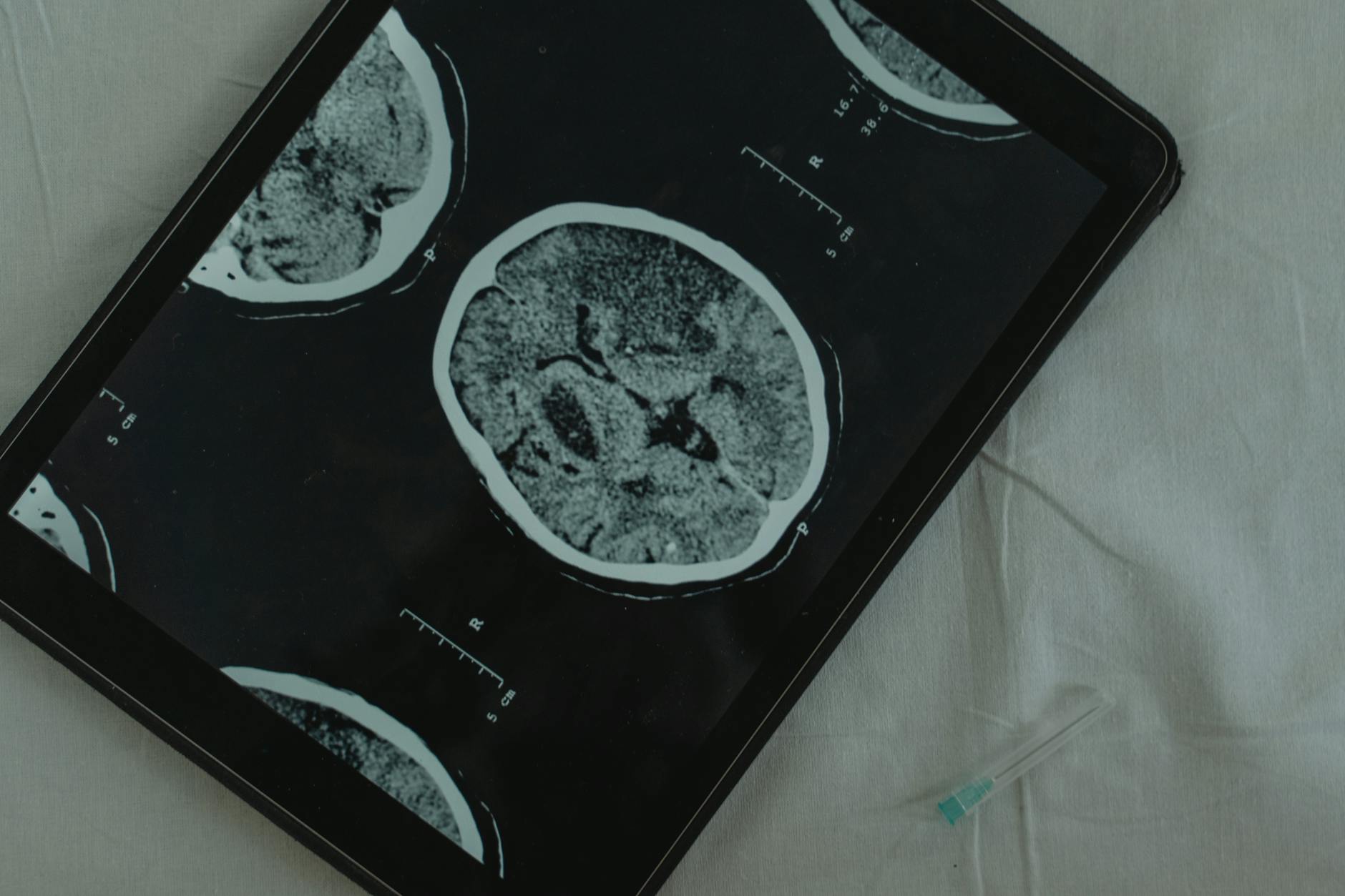
A common assumption is that memory decline happens gradually and steadily, like a slow leak. Recent research suggests it is more complicated than that. A mega-analysis published in *Nature Communications* in January 2026, covering more than 10,000 MRI scans and 13,000 memory assessments from 3,700 healthy adults across 13 studies, found that memory loss accelerates as brain tissue shrinkage increases, especially later in life. Once brain shrinkage passes a certain threshold, memory decline speeds up rather than progressing in a straight line. The hippocampus, the brain region most associated with memory, plays a central role, but the study found that many brain regions contribute, forming a broad vulnerability pattern rather than a single point of failure. This matters because it undercuts the reassuring idea that if decline is slow now, it will stay slow. For some individuals, there may be a tipping point where cognitive changes that have been mild for years begin to accelerate.
It also means that brain health is not just about one structure. Cardiovascular health, inflammation, sleep quality, and overall brain volume all feed into the equation. The limitation here is that population-level findings do not predict individual outcomes with any precision. Two people with similar levels of brain shrinkage on an MRI can have very different cognitive abilities. Researchers call this “cognitive reserve,” and it varies based on education, social engagement, and lifelong intellectual activity. One encouraging finding from a separate study published in February 2026 suggests that just five weeks of targeted brain training may offer protective effects against dementia lasting up to 20 years. That is a single study and should not be treated as a miracle cure, but it points toward the possibility that cognitive intervention, even brief intervention, may have durable benefits.
The Emotional Weight of Watching for Warning Signs
One aspect that rarely gets discussed in clinical terms is the toll that vigilance takes on family members. When you start watching a parent or partner for signs of dementia, every forgotten word becomes a data point. Every repeated story triggers a silent alarm. This hyper-awareness can strain relationships, especially when the person being watched does not share your concern or becomes defensive.
A daughter who has been tracking her father’s memory lapses for months might reach a point where she cannot have a normal conversation with him without mentally cataloging what he remembers and what he does not. That is an unsustainable way to relate to someone you love. It helps to have a clear framework, like the Alzheimer’s Association’s 10 warning signs, so you can evaluate patterns against a defined standard rather than reacting to every individual lapse with dread. It also helps to talk to a doctor about your observations without the person present, if necessary, so you can get professional input without turning every family dinner into an assessment.
Where Dementia Research and Care Are Heading
The financial scale of this problem is staggering. Healthcare costs for dementia are projected at $384 billion in 2025 and are expected to approach $1 trillion by 2050, according to the Alzheimer’s Association. Those numbers are driving significant investment in early detection, biomarker research, and preventive interventions.
Blood tests for Alzheimer’s biomarkers are becoming more accurate and accessible, which may eventually allow for earlier identification of people at risk, years before symptoms appear. The research trajectory suggests that the future of dementia care will focus less on treating advanced disease and more on catching and intervening at the MCI stage or earlier. For individuals and families navigating memory concerns today, the most important thing is not to wait for a breakthrough but to act on the tools already available: medical evaluation, lifestyle modifications that support brain health, and honest conversation about what you are observing.
Conclusion
The signs that memory loss is more than normal aging come down to pattern, severity, and impact on daily life. Normal forgetfulness means occasionally misplacing things or blanking on a name but eventually recovering the information. Warning signs of dementia include forgetting recently learned information entirely, confusion about time and place, difficulty completing tasks that were once routine, personality changes, and impaired judgment.
Mild cognitive impairment occupies a middle ground where some people progress to dementia but others stabilize or even improve, especially when treatable underlying causes are identified. If you are noticing persistent memory changes in yourself or someone you care about, document what you are seeing, consult a physician, and do not accept dismissive answers. Early evaluation does not guarantee a diagnosis of dementia, but it does open the door to treatment for reversible causes, planning for the future, and interventions that may slow progression. The worst response to the question “is this more than aging?” is to avoid asking it at all.
You Might Also Like
- What are the signs that someone with dementia is in pain
- What are the signs of dementia that doctors often overlook
- What are the visual symptoms of posterior cortical atrophy
For more, see Alzheimer’s Association — caregiving.