The landscape of Alzheimer’s diagnosis changed significantly in 2025, and if you or a family member are watching for early signs of cognitive decline, here is what you need to know: blood tests can now detect Alzheimer’s-related biological changes years before a definitive diagnosis was previously possible. In May 2025, the FDA cleared the first blood test specifically to help diagnose Alzheimer’s disease — the Lumipulse G pTau217/β-Amyloid 1-42 Plasma Ratio test by Fujirebio — followed in October 2025 by Roche’s Elecsys pTau181, cleared specifically for use in primary care settings. These are not research tools or experimental markers; they are cleared, available tests that neurologists and, increasingly, primary care physicians can use today.
The biomarkers powering these tests — primarily phosphorylated tau proteins and amyloid-beta ratios — reflect real biochemical changes happening in the brain, often a decade or more before memory symptoms become obvious. A 68-year-old who passes a standard memory screening but carries elevated p-tau217 levels may already be accumulating the kind of protein tangles that define Alzheimer’s pathology. That gap between biology and symptoms is exactly where these new tools are designed to reach. This article covers how the leading blood-based biomarkers work, what the FDA clearances actually mean for patients, where the tests fall short, and what emerging biomarker categories — including speech patterns and advanced MRI signatures — are being developed for even earlier detection.
Table of Contents
- What Are the New Blood-Based Biomarkers for Early Alzheimer’s Detection?
- How Accurate Are the New Alzheimer’s Blood Tests — and What Are Their Limits?
- What Is P-Tau217 and Why Does It Matter for Alzheimer’s Diagnosis?
- How Do Blood Biomarker Tests Compare to PET Scans and Spinal Taps?
- Beyond Blood Tests — Speech, Cognitive Patterns, and Digital Biomarkers
- MRI-Based Biomarkers and Structural Brain Changes
- What the 2025 Alzheimer’s Association Guidelines Mean for Patients
- Conclusion
- Frequently Asked Questions
What Are the New Blood-Based Biomarkers for Early Alzheimer’s Detection?
The core biomarkers driving the current wave of Alzheimer’s blood tests are phosphorylated tau proteins, particularly p-tau217 and p-tau181, and the ratio of amyloid-beta peptides in the bloodstream. In Alzheimer’s disease, the tau protein becomes abnormally phosphorylated and forms tangles inside neurons, while amyloid-beta plaques accumulate between brain cells. For decades, detecting these changes required either a lumbar puncture to analyze cerebrospinal fluid or a specialized PET brain scan — both expensive, invasive, or logistically difficult for most patients to access. The new blood tests measure the same biological signatures from a simple blood draw. P-tau217 has emerged as the standout marker. Multiple independent studies have shown it can detect Alzheimer’s pathology at all stages of disease progression, including before any cognitive symptoms appear.
Patients whose p-tau217 levels fall above the high-end diagnostic cutoff have greater than a 90% likelihood of having Alzheimer’s disease — a figure that rivals the accuracy of PET imaging in many study populations. To put that in practical terms, a primary care physician in a rural area where PET scans may be weeks away and thousands of dollars out of pocket now has a tool that can give meaningful signal in a routine blood draw. That is a substantial shift in who gets timely information and when. The Fujirebio Lumipulse test, the first FDA-cleared option, uses the ratio of p-tau217 to amyloid-beta 1-42 and demonstrated greater than 91% agreement with amyloid PET brain scans in clinical studies. It is indicated for patients 55 and older who are already experiencing cognitive symptoms. The Roche Elecsys pTau181 test, cleared in October 2025, takes a different but complementary approach — it was validated specifically for its ability to rule out Alzheimer’s-related amyloid pathology, showing a 97.9% negative predictive value. In practical terms, a negative result on that test makes Alzheimer’s highly unlikely, which can be enormously reassuring and redirect clinical attention to other possible causes of cognitive symptoms.

How Accurate Are the New Alzheimer’s Blood Tests — and What Are Their Limits?
Accuracy numbers like “91% agreement with PET scans” sound reassuring, but it is worth understanding what those figures do and do not guarantee. The Fujirebio test’s 91% concordance with amyloid PET means that roughly 9% of results will diverge from what a brain scan would show — some will be false positives, some false negatives. Neither test is a standalone diagnosis. Both the FDA and the Alzheimer’s Association have been explicit on this point: a blood biomarker result must be interpreted alongside clinical evaluation, patient history, and in many cases additional imaging or cognitive testing. A positive p-tau217 result is not a death sentence, and a borderline result should prompt further workup, not immediate conclusions. The Roche Elecsys pTau181’s 97.9% negative predictive value is particularly strong on the exclusion side — making it highly useful for ruling out Alzheimer’s when results are negative.
However, its positive predictive value, while clinically meaningful, is lower, meaning a positive result still requires confirmatory evaluation rather than standing alone. This asymmetry is not a flaw in the test so much as a reflection of how biomarker diagnostics work in practice. Rule-out power and rule-in power are different things, and patients and families should understand which type of information a given result provides. There is also the question of access and cost. The Roche test being cleared for primary care use is significant precisely because most people see their primary care physician first when cognitive concerns arise. But clearance does not automatically mean insurance coverage, and that gap between regulatory approval and widespread reimbursement has historically slowed adoption of diagnostic tools in neurology. Additionally, both tests are currently indicated for patients who already have cognitive symptoms — they are diagnostic aids, not screening tools for asymptomatic people, which is an important distinction that sometimes gets lost in news coverage of these developments.
What Is P-Tau217 and Why Does It Matter for Alzheimer’s Diagnosis?
Tau is a protein that normally helps stabilize the internal structure of neurons — think of it as scaffolding holding the cell’s transport system together. In Alzheimer’s disease, tau becomes hyperphosphorylated, meaning it acquires extra phosphate groups at specific locations on the protein chain. This abnormal phosphorylation causes tau to detach from the scaffolding and clump into the neurofibrillary tangles that are one of the disease’s defining pathological features. Measuring phosphorylated tau in the blood — particularly at the threonine-217 position, giving us p-tau217 — turns out to track remarkably closely with what is happening in the brain. What makes p-tau217 especially valuable is its specificity to Alzheimer’s pathology.
Other forms of dementia can cause cognitive decline, but p-tau217 elevation is more closely tied to amyloid-beta accumulation and the specific tau pathology of Alzheimer’s disease than earlier tau markers. This distinguishes it from general markers of neurodegeneration, which can be elevated in a wide range of conditions from traumatic brain injury to other dementias. For a clinician trying to understand whether a patient’s cognitive symptoms reflect Alzheimer’s specifically or something else, that specificity matters considerably. Consider the diagnostic journey of someone in their early 60s experiencing word-finding difficulties. Previously, a definitive workup might have required a referral to a neurologist, a wait of several months, a costly pet scan, and possibly a spinal tap — a process that took over a year in many health systems and was often financially prohibitive. A p-tau217 blood test can now provide meaningful biological information at a primary care visit, allowing earlier referral to specialists when warranted, earlier discussion of treatment options, and — critically — earlier access to the new generation of disease-modifying treatments that are now approved for early-stage Alzheimer’s, since those therapies require confirmed early-stage pathology for eligibility.

How Do Blood Biomarker Tests Compare to PET Scans and Spinal Taps?
Before the 2025 FDA clearances, the gold standards for detecting Alzheimer’s biomarkers in living patients were amyloid and tau PET brain scans and cerebrospinal fluid analysis via lumbar puncture. Each has real advantages: PET imaging provides spatial information about where plaques and tangles are accumulating in the brain, and CSF analysis directly samples the fluid surrounding the brain and spinal cord, giving highly specific biomarker readings. The tradeoffs are significant, however. A single amyloid PET scan can cost several thousand dollars and is rarely covered by insurance outside clinical trials. Lumbar punctures are invasive, uncomfortable for many patients, and require a specialist to perform. Blood-based biomarkers offer a dramatically different profile: lower cost, minimally invasive, faster turnaround, and now — with the Roche clearance — accessible in primary care settings rather than only academic medical centers or specialty neurology practices.
The practical effect is that patients who might never have received a biological confirmation of their diagnosis can now get meaningful information earlier. The tradeoff is that blood tests measure systemic levels of proteins that have partly crossed the blood-brain barrier, introducing some variability that direct CSF or brain imaging avoids. Factors like kidney function, body mass index, and individual variation in how proteins cross into the bloodstream can affect results. The two approaches are increasingly seen as complementary rather than competitive. A reasonable clinical pathway emerging in practice is to use blood biomarkers as a first-line screen — ruling out Alzheimer’s pathology in those who test negative, and directing those who test positive toward confirmatory imaging or CSF analysis before major treatment decisions are made. The Alzheimer’s Association’s 2025 clinical practice guideline, the organization’s first specifically addressing blood-based biomarkers, provides a framework for how specialists should incorporate these tests — while acknowledging that guidelines for primary care use are still evolving as real-world data accumulates.
Beyond Blood Tests — Speech, Cognitive Patterns, and Digital Biomarkers
One of the more unexpected developments in Alzheimer’s biomarker research is the growing evidence that changes in how people speak and use language can signal early disease — before any score on a standard cognitive test falls outside normal ranges. Researchers analyzing speech samples from people with mild cognitive impairment found that characteristics like reduced semantic diversity, shorter sentence complexity, increased use of filler words, and subtle changes in word-finding patterns could distinguish healthy individuals from those with MCI more than 80% of the time. These are not dramatic changes that family members necessarily notice — they are statistical patterns detectable through natural language processing algorithms applied to recorded speech. The appeal of speech-based biomarkers is obvious: they are completely non-invasive, can potentially be administered via smartphone or telehealth platforms, and could theoretically enable longitudinal monitoring over years — tracking whether someone’s language patterns are changing, rather than taking a single snapshot. However, these tools are not yet cleared by any regulatory authority and remain in active research and validation phases.
Significant questions remain about how to account for educational background, multilingualism, speaking style, and other factors that affect speech independently of cognitive health. A retired English professor and a first-generation immigrant with limited formal schooling will produce very different speech samples for reasons unrelated to Alzheimer’s, and algorithms must account for this heterogeneity to be useful across diverse populations. The warning here is that speech biomarker tools are generating genuine scientific excitement, and some companies are already marketing speech-based cognitive assessments directly to consumers. Patients and families should treat any commercially available speech analysis tool with caution until peer-reviewed validation data in large, diverse populations has been published and independent clinical guidelines have addressed their use. Promising research results are not the same as diagnostic validity.

MRI-Based Biomarkers and Structural Brain Changes
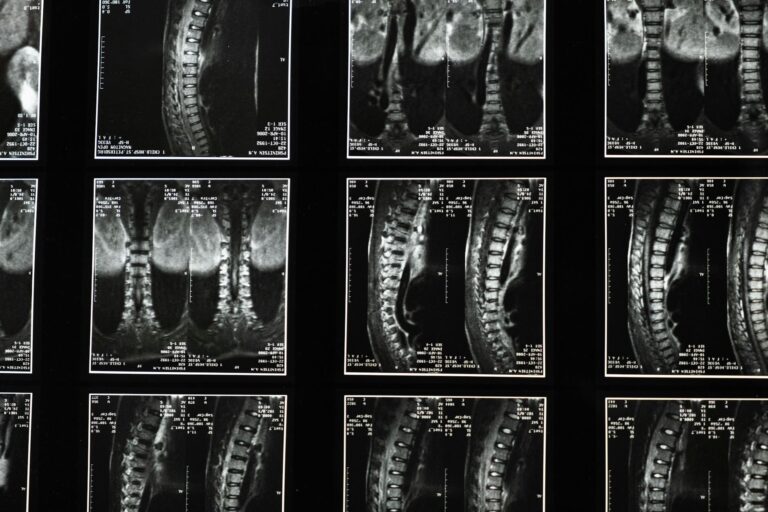
Standard MRI has long been used in Alzheimer’s evaluation, primarily to rule out other causes of cognitive decline like tumors or strokes, and to assess overall brain volume. What is new in the research pipeline is the development of more sophisticated MRI analysis approaches that can detect subtle changes in brain topology — the shape, thickness, and connectivity patterns of cortical regions — that precede the visible atrophy associated with established Alzheimer’s disease.
These novel MRI biomarkers are being validated both for early diagnosis and for predicting how quickly a patient’s disease will progress, which matters enormously for treatment planning and clinical trial enrollment. One active area involves analyzing the hippocampus and entorhinal cortex with greater precision than conventional volumetric measurements, using machine learning to identify patterns that distinguish early Alzheimer’s pathology from normal aging variation. Combining MRI-derived structural biomarkers with blood-based p-tau measurements is showing promise as a multimodal approach that may be more accurate than either method alone — though this work remains in the research and validation phase rather than routine clinical use.
What the 2025 Alzheimer’s Association Guidelines Mean for Patients
The Alzheimer’s Association released its first clinical practice guideline in 2025 addressing blood-based biomarker tests, specifically for use by specialists. This is notable both for what it contains and for what it represents: an acknowledgment by the leading professional organization in the field that these tests have moved from research into clinical practice and need structured guidance. The guideline is described as brand-agnostic, meaning it does not advocate for one commercial test over another, and evidence-based, meaning the recommendations are grounded in published research rather than manufacturer-provided data alone.
For patients, the practical implication is that if you are seeing a neurologist or geriatric psychiatrist for cognitive concerns, blood biomarker testing is now a recognized, guideline-supported part of the diagnostic workup — not experimental, not optional, not something you need to advocate loudly for. The guidelines also signal where the field is moving: toward making Alzheimer’s diagnosis accessible earlier, more equitably, and with less dependence on expensive imaging infrastructure. What remains to be developed are equivalent guidelines for primary care physicians, who will see the majority of patients with early cognitive concerns and need clear guidance on when to test, how to interpret results, and when to refer.
Conclusion
The year 2025 brought genuine, regulatory-backed progress in Alzheimer’s biomarker testing, with two FDA-cleared blood tests now available that can meaningfully inform diagnosis earlier than was practically possible before. The Fujirebio Lumipulse test, measuring the p-tau217 to amyloid-beta 1-42 ratio, and the Roche Elecsys pTau181, cleared for primary care with a 97.9% negative predictive value, represent the most immediately actionable developments. Neither test diagnoses Alzheimer’s on its own, and neither should be used that way — they are powerful additions to a diagnostic process that still requires clinical judgment, specialist input, and often additional evaluation.
For families navigating cognitive concerns, the most important takeaway is that asking about blood-based biomarker testing is now a reasonable and supported thing to do at a neurology appointment. Earlier biological confirmation matters because treatments now exist that require early-stage confirmation for eligibility. Research into speech biomarkers and advanced MRI signatures continues to expand the horizon of how early detection might eventually reach, but those tools need more validation before they can be relied upon clinically. The biology of Alzheimer’s is now measurable in a blood draw in ways that were not possible even a few years ago — and that is a real and meaningful shift for patients, families, and clinicians alike.
Frequently Asked Questions
Can I ask my regular doctor for an Alzheimer’s blood test?
The Roche Elecsys pTau181 test was specifically cleared for primary care use in October 2025, so yes — your primary care physician may be able to order it. However, the tests are indicated for patients who already have cognitive symptoms, not for general screening of asymptomatic people. Reimbursement and availability may also vary by location, so it is worth asking your physician whether the test is covered by your insurance.
Does a positive blood biomarker test mean I have Alzheimer’s?
No. A positive result means there is a meaningful likelihood of Alzheimer’s-related pathology, but both FDA-cleared tests are intended as one component of the diagnostic process, not a standalone diagnosis. Your clinician will use the result alongside your symptoms, history, cognitive testing, and possibly additional imaging before reaching a diagnosis.
How early can p-tau217 detect Alzheimer’s?
Research indicates that p-tau217 levels can detect Alzheimer’s pathology at all stages of disease, including before symptoms appear. However, the current FDA-cleared tests are indicated for people who already have cognitive symptoms, meaning they are not yet approved or recommended for pre-symptomatic screening.
Are these blood tests covered by insurance?
FDA clearance does not automatically mean insurance coverage. Coverage is evolving and varies by insurer and plan. It is important to verify coverage before ordering, as the cost of a non-covered biomarker test can be significant.
What is the difference between p-tau217 and p-tau181?
Both are forms of phosphorylated tau protein associated with Alzheimer’s pathology, but they differ in where the tau protein is phosphorylated. P-tau217 has shown particularly strong correlation with amyloid-beta plaque burden and Alzheimer’s pathology across disease stages in research studies. P-tau181 was validated and cleared for use in ruling out amyloid pathology in primary care, with a very high negative predictive value.
Are speech-based Alzheimer’s tests available to the public yet?
Some companies offer speech-based cognitive assessments commercially, but none have received FDA clearance as diagnostic biomarker tools. Research results are promising, but independent clinical validation in diverse populations is still ongoing. Treat direct-to-consumer speech analysis tools with caution.