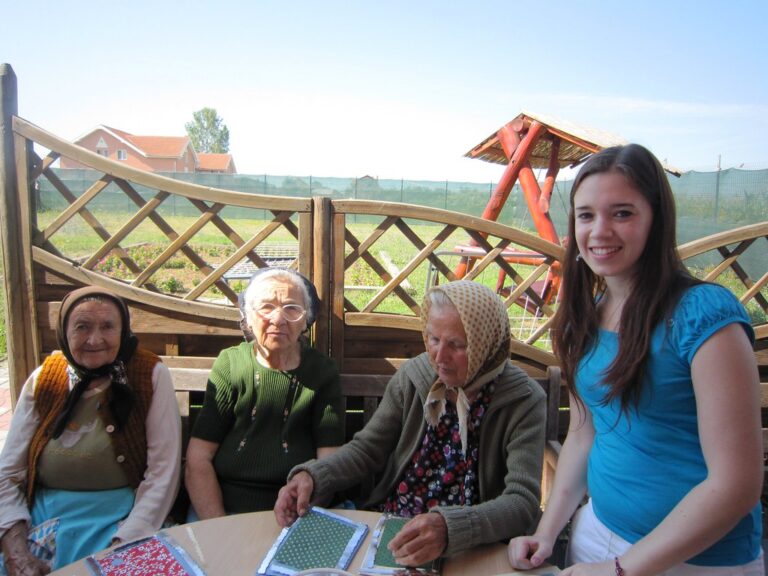
Family volunteering serves as a practical dementia prevention tool by combining cognitive engagement, social connection, and physical activity—three factors that research links directly to slowing cognitive decline. When your family volunteers together at an animal shelter, community garden, food bank, or literacy program, each member gets protective benefits: the person at risk of dementia maintains mental sharpness through problem-solving, your entire family strengthens relationships that act as a buffer against isolation, and the structure of regular volunteering creates predictable routines that older adults’ brains thrive on. A family that commits to four hours of volunteering per week is not just doing community work; they are running a dementia prevention intervention inside the framework of meaningful activity.
The key distinction is that volunteer work differs from passive retirement. A retired engineer who sits at home watching television is at higher cognitive risk than one who volunteers rebuilding bicycles at a nonprofit—same age, vastly different brain stimulation. Similarly, family members who volunteer together report stronger bonds and better communication, which protects not just the older adult but everyone involved from the isolation and depression that accelerate cognitive decline. Volunteering is not a substitute for medical oversight, a Mediterranean diet, or sleep, but it fills a gap that formal prevention strategies often miss: it makes protective behaviors feel like meaningful contribution rather than obligation.
Table of Contents
- What Brain Benefits Does Family Volunteering Actually Provide?
- How Social Connection Through Volunteering Differs From Other Social Activities
- Designing a Family Volunteer Schedule That Fits Your Household
- Choosing the Right Volunteer Role to Match Your Family’s Capacity
- Recognizing When Volunteer Work Is Adding Stress Rather Than Protection
- Integrating Volunteering Into a Broader Prevention Plan
- Documentation and Checking In on Progress
What Brain Benefits Does Family Volunteering Actually Provide?
cognitive decline develops when the brain stops being challenged. Volunteering introduces the kind of problems that demand active thinking: figuring out how to organize donations at a food bank, learning the names and stories of people you serve, remembering details across weeks, planning logistics, and troubleshooting when things go wrong. These tasks recruit the same prefrontal and temporal regions—attention, memory, executive function—that decline in early dementia. A study in JAMA Psychiatry found that cognitive engagement in later life reduced dementia risk by approximately 47% compared to low-engagement controls, with volunteering showing effects comparable to formal cognitive training. However, the protection is not automatic. Volunteering at a task that requires no real thinking—mindlessly stacking items with no variation, no social interaction, no problem-solving—provides almost no cognitive benefit and may simply feel like unpaid work.
The effective volunteer task has novelty, some complexity, and social feedback. A grandmother who volunteers as a tutor at an after-school program and has to adapt her teaching to different students’ learning styles gets much stronger protection than one who does the same filing task every week with no variation. The second benefit is emotional regulation and purpose. Volunteer work combats depression and anxiety, both of which accelerate cognitive aging. When a family member sees their work produce tangible change—a child reads better, a garden produces vegetables, a senior feels less lonely—the brain releases dopamine and their sense of purpose strengthens. This is not sentimentality; purpose is a measurable neuroprotective factor.
How Social Connection Through Volunteering Differs From Other Social Activities
Volunteering creates a specific type of social bond: working toward a shared goal with people outside your family. This is neurologically different from attending a social club or having dinner with friends. When you work on a problem together—painting a community center, sorting donations, mentoring a student—the interaction has structure, it requires coordination, and success is measurable. This combination activates the brain differently than unstructured socializing. A limitation here is important to name: volunteering does require capacity. A person with moderate cognitive decline may find the expectations of a volunteer position confusing or stressful.
If your family member is forgetting what they did the previous week, cannot track multi-step instructions, or becomes distressed when routines change, a demanding volunteer role may actually increase anxiety rather than protect cognition. In this case, simpler roles—helping with a specific, repetitive part of an activity rather than holding a responsibility—work better. A person can sort donations without remembering all the donation categories, or help with a garden’s watering routine without managing the whole plot. The other limitation is availability bias. If your family volunteer time means your older adult stays home alone more often while you go out to “help others,” the net effect on their isolation may be negative. Effective family volunteering usually means the at-risk person is volunteering too, or their primary family members are volunteering in shifts that maintain home presence and social time together.
Designing a Family Volunteer Schedule That Fits Your Household
The most protective routine is one that family members can sustain for months or years. A family that volunteers four hours per week, every week, for two years has more cognitive protection than one that does an intensive eight-hour volunteer weekend once a year. Consistency matters more than intensity. Start with a realistic inventory: How much time can each family member commit? What skills do you have collectively? What causes matter to your family? A family with an older adult in early-stage cognitive decline, two working-age children, and one retired spouse might commit to Saturday mornings at an animal rescue, with the older adult and retired spouse working together on animal care tasks while the children help as schedules allow. Another family might choose a weeknight literacy tutoring program where the older adult does one-on-one work while family members fill administrative roles.
The practical checklist includes: selecting a volunteer position with clear, limited responsibility; establishing a regular day and time; confirming transportation logistics (especially if your older adult cannot drive); creating a simple written reminder of the role and location; identifying a primary point person at the volunteer organization to contact with questions; and planning a post-volunteer routine (coffee, debrief, meal) that gives you time together. A specific example: the Martinez family volunteers Tuesday mornings at their local food bank. Grandmother Rosa does quality checks on produce (looking at items for damage), which requires visual attention and decision-making but is not overwhelming. Her daughter handles the inventory system, and her son fills orders. They car pool together, spend 90 minutes volunteering, then have lunch. This routine has continued for 18 months, and Rosa’s memory test scores have stabilized rather than declining.
Choosing the Right Volunteer Role to Match Your Family’s Capacity
Not all volunteer work is equal for dementia prevention. The best volunteer role for someone at cognitive risk has these features: clear, limited scope (you know exactly what you’re responsible for); some novelty or variety (not literally the same task every visit); interaction with other people; visible outcomes; and low consequence for small mistakes. A role that fails these tests—one that requires remembering dozens of details, creates high stress about getting things “right,” or leaves someone isolated—may harm rather than help. Consider the differences: Volunteering as a classroom aide who helps individual students with reading provides novelty, social connection, visible impact, and low stress if something gets missed.
Volunteering as the sole person responsible for organizing an entire warehouse does not, especially for someone with memory changes. Volunteering as a museum guide on the same day each week, greeting visitors and answering simple questions, works; volunteering as a grant writer who must manage complex systems and deadlines does not. A warning: If a volunteer organization is clearly looking to save money by using your family member as free labor on tasks a paid employee should do, the role often becomes isolating and underestimating of the person’s actual capacity. Seek organizations that genuinely value their volunteers, provide a little training, have clear expectations, and give feedback.
Recognizing When Volunteer Work Is Adding Stress Rather Than Protection
Cognitive decline sometimes reveals itself through changes in response to volunteering. If your family member becomes anxious the night before volunteering, frequently forgets what they did during their volunteer shift, seems confused by instructions they understood the previous week, or expresses reluctance to continue a role they initially enjoyed, these are signs the cognitive demands may have shifted. The protective effect of volunteering assumes the person feels capable and engaged, not frustrated and confused. A second warning involves burnout in the family members supporting the volunteer.
If coordinating transportation, managing role changes, or dealing with confusion at the volunteer site is creating resentment or stress in your family, the arrangement is not sustainable. Sustainable dementia prevention requires that the care system itself not break down. If the Tuesday morning routine means your working adult child is constantly late to work, the protection is false. The adjustment may be simple: shifting to a less complex role, reducing frequency, or moving to a different volunteer position altogether. Some volunteer organizations have different roles designed for people with varying abilities—if your family member can no longer do the primary role, they might move to a supporting role that still provides cognitive engagement but with lower stakes.
Integrating Volunteering Into a Broader Prevention Plan
Volunteering is one lever in a multi-lever approach. It is not sufficient on its own. The strongest dementia prevention combines cognitive engagement, physical activity, sleep, nutrition, hearing correction, treatment of depression, and blood pressure control. A family that volunteers four hours weekly but whose older member watches television another 30 hours per week, sleeps poorly, and has untreated hearing loss is not getting full benefit from the volunteering effort.
One concrete example of integration: a family commits to a Saturday morning volunteer shift at a community garden. That provides cognitive engagement, problem-solving, and social connection. They couple it with a twice-weekly walking group that family members join (physical activity), they establish a Sunday dinner together (consistency, connection, and monitoring for mood changes), and they ensure annual physician visits including hearing screening and blood pressure management. The volunteering becomes the anchor, but it is part of a structure.
Documentation and Checking In on Progress
Effective family volunteer arrangements benefit from a simple log and check-in. Document: the volunteer date, role, hours, and observations about how the experience went. Did the person seem engaged? Were there confusion points? Did they enjoy it? Did anything surprise you? After four to eight weeks, review with your family member and with the volunteer coordinator.
This serves two purposes: it creates a record of whether the volunteering arrangement is working, and it gives you data to share with the physician. Memory test scores and doctor visits give you formal measures of cognitive trajectory, but your informal observations of how someone handles volunteering—whether they seem more purposeful, more connected, more mentally engaged—are equally valuable signals. A doctor can recommend volunteering in theory, but your family sees whether it is actually helping or becoming frustrating.
- —