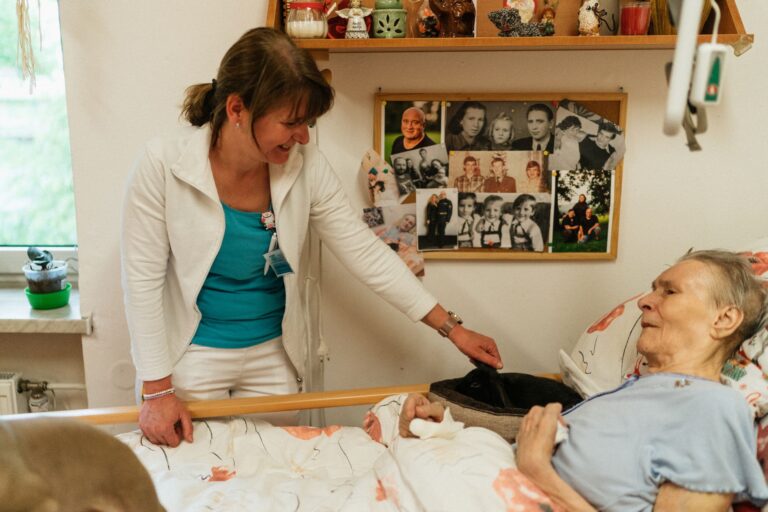
VA Aid and Attendance can help pay for memory care. It is a monthly payment added to a VA pension for qualified veterans and surviving spouses who need help with daily activities.
The U.S. Department of Veterans Affairs says Aid and Attendance is for people who need help with daily activities, are bedridden, live in a nursing home for disability, or have 5/200 vision or less, as described in the Aid and Attendance eligibility rules. Dementia care often meets that test because supervision and hands-on help count.
Medical information disclaimer: This article is for general educational purposes only and does not provide medical advice, diagnosis, or treatment. Always consult a physician or other qualified health professional about symptoms, medications, tests, or treatment decisions.
Table of Contents
Who can get it?
A veteran must first qualify for VA pension. The VA requires discharge other than dishonorable and service including at least one wartime day: 90 days if service began before Sept. 8, 1980, or generally 24 months thereafter. A surviving spouse may qualify on the veteran's service. The VA also applies a financial test to both veterans and survivors.
Care need alone does not create eligibility without the service and financial tests. The VA sets a net-worth limit of $163,699 for Dec. 1, 2025 through Nov. 30, 2026. It counts spouse assets and income but excludes the primary home, car, and basic furnishings.
How much does it pay?
The VA pays the difference between the maximum rate and countable income. Non-reimbursed medical costs, such as memory-care or home-care fees, can be subtracted to lower countable income. The VA lists the maximum Aid and Attendance pension at $29,093 per year, about $2,424 per month, for a veteran with no dependents and $34,488 per year, about $2,874 per month, with one dependent in the current Veterans Pension rates.
A surviving spouse with no dependents can receive up to $18,697 per year, about $1,558 per month. Actual payment depends on income after allowable medical costs. That means two families with the same diagnosis can receive different amounts. Lower countable income after care bills usually means a larger payment, up to the maximum.
How does memory care fit?
Help with bathing, dressing, eating, or medications satisfies the care test. Daily supervision for dementia also fits because safety monitoring is a covered need. Families should document the exact help needed.
Useful proof includes a doctor letter, a care plan, and invoices showing assistance with daily tasks or medication management. The benefit helps but rarely covers the full bill. CareScout reports 2024 national median assisted living of $5,900 per month, or $70,800 per year, in the Cost of Care survey. Compare the monthly VA payment to the facility fee to see the remaining gap.
What limits should families plan for?
Gifts to qualify can delay benefits. The VA reviews asset transfers below fair value during the 36 months before a pension claim and can impose up to a five-year penalty period.
Families facing memory-care decisions can take these practical steps: Keep every care invoice and proof of payment. Those records support the medical-expense deduction and any later VA review.
- Confirm discharge type, service dates, and wartime service.
- List income, assets, and recurring memory-care or home-care bills.
- Ask the doctor to describe supervision needs and daily-activity help in writing.
- Get advice before moving money, adding names to accounts, or giving large gifts.