Reviewed by the Help Dementia Editorial Team — our editors review every article for accuracy against guidance from the National Institute on Aging, the Alzheimer’s Association, and peer-reviewed sources.
The comparison between Donald Trump and Ronald Reagan regarding cognitive decline has become a persistent fixture in American political discourse, but the question itself is built on faulty foundations. The short answer is that we cannot fairly compare the two men’s cognitive health based on available evidence.
While Trump is 79 years old and the oldest president to take office (surpassing Reagan’s age of 69 at his inauguration in 1981), age alone does not determine cognitive function. Unlike Reagan, who was eventually diagnosed with Alzheimer’s disease while in office but whose diagnosis wasn’t publicly disclosed until after his presidency ended, Trump has taken cognitive screening tests and released results showing perfect scores. However, this comparison persists because Americans are understandably concerned about presidential fitness at advanced ages, and because the tools available to assess cognition publicly are inadequate for answering the deeper question people are really asking: Is the sitting or candidate president mentally capable of the job? This article examines why the Trump-Reagan comparison remains popular, what cognitive testing actually measures, and what the limitations of assessing a public figure’s mental fitness really are.
Table of Contents
- Why Does the Reagan Comparison Keep Resurfacing?
- What the Montreal Cognitive Assessment Actually Measures—and What It Doesn’t
- The Speech Pattern Question That Experts Genuinely Debate
- The Diagnostic Problem: Why Remote Assessment Is Medically Invalid
- Reagan’s Actual Diagnosis: What We Know and Why It Was Hidden
- What Cognitive Testing Actually Requires in Medical Practice
- The Political and Medical Future of Presidential Cognition
- Conclusion
- Frequently Asked Questions
Why Does the Reagan Comparison Keep Resurfacing?
The trump–reagan comparison exists for three primary reasons: age, Reagan’s actual diagnosis, and the public’s legitimate concern about presidential cognitive capability. Reagan was diagnosed with Alzheimer’s disease while serving as president, though his diagnosis remained undisclosed until after he left office. His mother also experienced dementia, raising questions about family history.
When Trump assumed office at 79, he became the oldest president to be inaugurated, which naturally prompted comparisons to Reagan and concerns about whether age brought cognitive risk. The problem is that these two cases are fundamentally different. Reagan’s diagnosis was made retrospectively and kept secret; Trump’s cognitive status has been proactively tested and publicly disclosed, albeit in limited fashion. The comparison conflates age with decline, proximity to death with current function, and historical secrecy with modern transparency.

What the Montreal Cognitive Assessment Actually Measures—and What It Doesn’t
Trump underwent the Montreal cognitive Assessment (MoCA) in 2018, reportedly scoring 30 out of 30, and again in April 2025 with the same reported result. The MoCA is a brief screening tool, lasting only 3 to 10 minutes, designed to detect obvious cognitive impairment or dementia risk. It measures memory, attention, language, and basic problem-solving.
However—and this is critical—the MoCA does not assess the complex reasoning, judgment, strategic thinking, or emotional regulation required to run a country. A perfect score on the MoCA does not mean someone is fit for the presidency any more than a clear eye exam means someone is fit to be a pilot; they are different skill sets. The test can identify dementia, but it cannot assess whether someone’s decision-making is sound, whether their priorities align with the job, or whether they have the temperament for the role. Additionally, knowing that Trump took the test twice raises questions about transparency: was the first test done for medical reasons or for public relations? Were there intervening concerns that prompted the second test? The public disclosure of test scores is unusual and creates its own questions about selective information sharing.
The Speech Pattern Question That Experts Genuinely Debate
Neurologists and speech experts have noted changes in Trump’s language patterns when comparing his speaking style in the 1990s to his public statements in recent years. Some observers point to instances of incomplete sentences, topic diversion, and different cadence. The observation itself is factually accurate—his speaking style has changed. However, interpreting what that change means is where experts diverge sharply.
Some speech pathologists suggest the changes could indicate age-related cognitive shifts; others argue that his speaking style has simply adapted to different contexts (rallies versus boardroom negotiations), or that aging affects speech patterns in ways that are completely normal and unrelated to cognitive decline. The problem with diagnosing from speech alone is that it requires specialist training and longitudinal comparison, not armchair analysis from television appearances. A neurologist would need to conduct in-person testing to determine whether speech changes reflect cognitive decline, medication effects, or simply the natural evolution of how a person communicates as they age. Public speculation based on speech clips lacks the rigor needed to draw medical conclusions.

The Diagnostic Problem: Why Remote Assessment Is Medically Invalid
This is perhaps the most important limitation that gets overlooked in the Trump-Reagan comparison. Medical experts consistently emphasize that diagnosing cognitive decline or dementia requires in-person examination by a qualified healthcare provider, complete medical history, blood work, imaging studies, and comparison over time. A neurologist cannot diagnose dementia from a distance based on public statements, news footage, or even released test scores without context. The MoCA score, for instance, provides no information about how the test was administered, whether there were distractions, whether the person was fatigued or unwell that day, or what baseline testing showed before.
Remote “diagnosis” is not medicine—it is speculation. This is why Trump’s perfect MoCA scores, while reassuring, also raise questions about transparency: How were they administered? Who administered them? What was the full clinical context? Were other tests performed? The same limitation applies to any backward-looking assessment of Reagan’s early cognitive status. We cannot accurately diagnose Reagan’s Alzheimer’s progression during his presidency because the medical records were not public and the condition was deliberately hidden. Both cases illustrate why presidential fitness for office cannot be determined through public assessment tools or released test scores.
Reagan’s Actual Diagnosis: What We Know and Why It Was Hidden
Ronald Reagan was formally diagnosed with Alzheimer’s disease, but this diagnosis came in 1994, after he had left office in 1989. The public did not learn of his diagnosis until a letter he himself wrote in 1994, in which he disclosed his condition. This means that during his presidency, the nation had no indication of what would later become a serious medical condition. His family and advisors were aware of cognitive concerns before the diagnosis was formally made, yet this information was not disclosed.
Reagan’s case demonstrates the risks of secrecy around presidential health: voters cannot evaluate fitness if they do not have accurate health information. Additionally, Reagan’s mother experienced dementia, but family history alone does not determine individual outcomes. Genetic factors exist for Alzheimer’s, but having a family history does not guarantee that someone will develop the disease. Reagan’s situation is important context for understanding why transparency matters, but it cannot be directly compared to Trump’s situation, where cognitive testing has at least been conducted and results released. The two men operated under different standards of disclosure and different levels of medical scrutiny.

What Cognitive Testing Actually Requires in Medical Practice
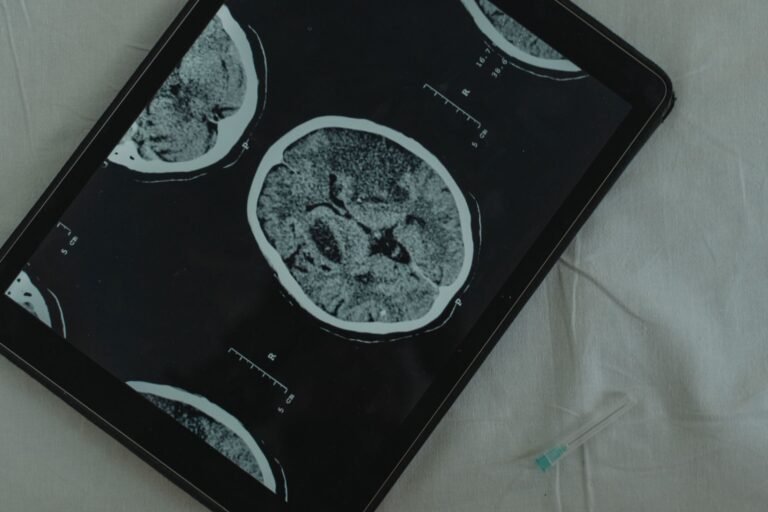
Outside the public sphere, cognitive assessment is far more thorough than a single MoCA test. In clinical practice, a neurologist assesses cognition through multiple tests, reviews medical history including stroke, head injury, medication effects, sleep disorders, and depression (all of which can mimic cognitive decline), performs neuroimaging like MRI or PET scans, and may recommend memory testing or other specialized evaluations. The goal is to distinguish between normal aging, mild cognitive impairment, and dementia.
This process takes hours and may require specialist referral. A single perfect score on a brief screening test tells us what it tells us—that someone scored perfectly on that test on that day—but it does not rule out mild cognitive impairment, does not establish baseline function, and does not provide enough information for a comprehensive fitness assessment. It is similar to taking one blood pressure reading and concluding someone’s cardiovascular health is excellent without considering their full medical picture.
The Political and Medical Future of Presidential Cognition
The Trump-Reagan comparison will likely persist because it touches on a genuine vulnerability: Americans now expect their leaders to take office while still relatively young, but the oldest presidents in U.S. history have taken office in the past decade. This trend will likely continue. The medical and political communities will eventually need to establish clearer standards for presidential cognitive fitness testing—what tests are required, who administers them, what results are disclosed, and how that information is verified.
Some democracies have required medical disclosure for elected officials; the U.S. has resisted this but may face pressure to reconsider. Moving forward, the comparison between Trump and Reagan should not drive health policy. Instead, the comparison should highlight what went wrong in Reagan’s case (secrecy) and what remains inadequate in current practice (limited testing, selective disclosure, inability to diagnose from afar). The goal should be transparent, rigorous assessment—not speculation based on age or speech patterns.
Conclusion
The Trump-Reagan dementia comparison persists because of legitimate concerns about presidential age and capability, but the comparison itself is fundamentally flawed. Trump at 79 surpassed Reagan’s age at inauguration, and Reagan was eventually diagnosed with Alzheimer’s, but these facts do not establish that Trump faces the same risks or that we can fairly compare their cognitive status. The tools available to assess cognition publicly—brief screening tests, released scores without full context, and observation of public speech—are insufficient for real medical diagnosis.
What we can conclude is that both cases highlight the need for clearer, more transparent standards: complete medical evaluation, full disclosure of results and methodology, and recognition that no single test or observation can establish presidential fitness. For those concerned about cognitive health in aging populations, whether in political leaders or family members, the lesson is simple: real assessment requires professional evaluation, complete medical history, and time. Comparisons based on age alone, speculation about speech patterns, or selective test results are not medicine—they are politics. The question that will not go away deserves a more rigorous answer.
Frequently Asked Questions
Did Ronald Reagan show signs of dementia while in office?
Reagan was not formally diagnosed with Alzheimer’s until after he left office in 1994. Whether he showed signs during his presidency remains debated, partly because his health information was not transparent at the time. His family later disclosed concerns about his memory and cognition, but a definitive retrospective diagnosis is impossible without complete medical records.
What does a perfect MoCA score of 30/30 actually mean?
A perfect score on the Montreal Cognitive Assessment indicates that the person did not show obvious signs of dementia or cognitive impairment on that brief screening test. It does not assess complex reasoning, emotional regulation, decision-making under stress, or fitness for any specific job. It is a screening tool, not a comprehensive cognitive evaluation.
Can doctors diagnose dementia by watching someone’s public statements?
No. Medical diagnosis requires in-person examination, full medical history, blood work, imaging, and comparison over time. Observing speech patterns or public behavior may raise questions but cannot establish a diagnosis. Anyone claiming to diagnose cognitive decline from a distance without medical training and access is engaging in speculation, not medicine.
Should presidential candidates be required to release full cognitive testing results?
That is a policy question rather than a medical one. Currently, no such requirement exists in the U.S. Some experts argue for transparent health disclosure; others see it as an invasion of privacy. Other democracies have different standards. The medical consensus is clear: if testing is done, methodology and full results should be transparent, not selective.
Is age alone a reason to worry about cognitive decline?
Age is a risk factor for certain conditions, including Alzheimer’s disease, but age does not determine individual outcomes. Many people remain cognitively sharp into their 80s and 90s, while others experience decline in their 60s. Family history, lifestyle, medical conditions, and genetics all play roles. Age alone is not a diagnosis.
What happened to Ronald Reagan’s diagnosis and why wasn’t it public?
Reagan was diagnosed with Alzheimer’s disease in 1994, five years after leaving office. He himself disclosed this in a letter to the public. The diagnosis had not been publicly known during his presidency, raising questions about what his advisors and family members knew at the time and why it was not disclosed. His case is often cited as an example of why health transparency in politics matters.