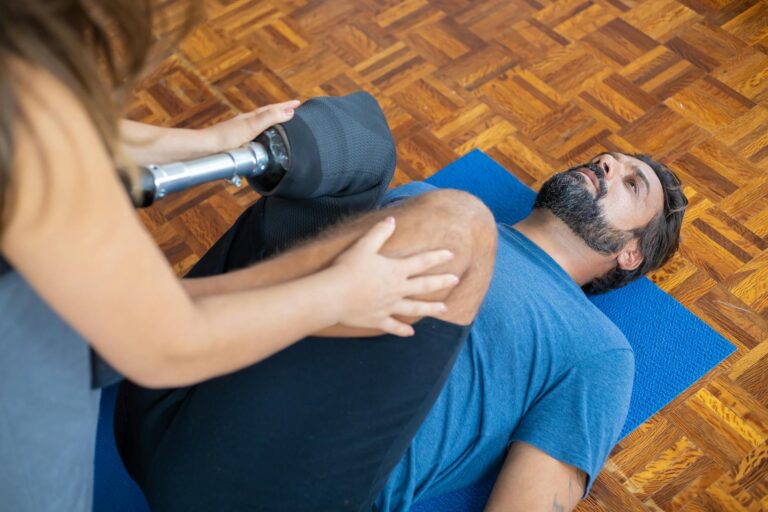
The “dead bug” exercise—where you lie on your back and move opposite arms and legs in a coordinated pattern—is one of the most frequently recommended spine stabilization exercises by physical therapists, particularly for older adults and those concerned with maintaining cognitive and physical health. Therapists favor this exercise because it safely engages the deep core muscles that support the spine while keeping you in a controlled, low-risk position, making it especially appropriate for individuals with dementia or balance concerns. This article explores why the dead bug has become such a cornerstone of spine stabilization work, how to perform it correctly, the connection between spinal health and brain function, and how to integrate this exercise into a sustainable routine.
Table of Contents
- Why Physical Therapists Recommend the Dead Bug Exercise for Spine Stability
- How Spine Stability Connects to Brain Health and Cognitive Function
- Proper Technique for the Dead Bug Exercise
- Modifications and Progressions for Different Ability Levels
- Common Mistakes and Safety Concerns
- Integrating Spine Stabilization into a Daily Routine
- Long-Term Benefits and Prevention Framework
- Conclusion
Why Physical Therapists Recommend the Dead Bug Exercise for Spine Stability
The dead bug exercise targets the transverse abdominis and multifidus muscles—the deep stabilizers that act like a corset around your spine, rather than the superficial “six-pack” muscles most people think about. These stabilizer muscles are crucial because they maintain the spine’s natural curves and prevent excessive movement between vertebrae, which is where pain and injury often originate. For people in dementia care settings, this matters tremendously because these muscles are among the first to deteriorate with inactivity; a person who spends most of their day seated loses core stability rapidly, which then cascades into poor posture, increased fall risk, and reduced mobility. Physical therapists recommend the dead bug specifically because you can perform it safely lying down, where gravity assists control rather than fighting against it—unlike standing exercises where balance becomes a confounding variable.
A practical example: a 72-year-old woman with mild cognitive decline noticed she was increasingly hunching forward while sitting. Her physical therapist prescribed dead bugs three times weekly before progressing to other exercises. Within four weeks, she maintained better posture while seated and had fewer instances of losing her balance when standing—improvements that came directly from restored core engagement, not from any medication or cognitive intervention. The spine had simply regained the muscular support it needed.

How Spine Stability Connects to Brain Health and Cognitive Function
The relationship between spinal health and cognitive function is often overlooked but well-documented in neuroscience research. A stable spine promotes proper blood flow to the brain by allowing the vertebral arteries—which run through the neck vertebrae—to function optimally; postural slouching compresses these vessels, reducing oxygen delivery to the brain. Additionally, the proprioceptive feedback from your core muscles (the sense of where your body is in space) gets transmitted directly to the cerebellum and cortex, continuously updating your brain about your physical position. In dementia patients, this proprioceptive input may actually help maintain cognitive processing pathways that are otherwise deteriorating.
A stable spine also reduces fall risk, and falls are among the most dangerous complications in dementia care, often resulting in hospitalization and further cognitive decline. Simply maintaining spinal stability can therefore indirectly protect cognitive function by preventing traumatic injury. However, if someone has advanced dementia with severe mobility limitations or contractures (permanently shortened muscles), the dead bug exercise may not be appropriate without modification, and a physical therapist should assess individual capability first. The connection between spine stability and brain health is real, but it’s not a cure for cognitive decline—it’s a risk-reduction and quality-of-life measure.
Proper Technique for the Dead Bug Exercise
To perform the dead bug correctly, lie on your back on a comfortable surface with knees bent at 90 degrees (shins parallel to the floor) and arms extended straight up toward the ceiling. This is the starting position: your lower back should have a neutral curve, not pressed flat against the floor and not arched. From here, slowly extend your right arm overhead while simultaneously straightening your left leg, hovering your leg just above the floor without actually touching down. Return to the starting position and repeat on the opposite side—right leg extends while left arm reaches overhead. Move slowly and deliberately; this is not a speed exercise. Each repetition should take 3-4 seconds, and most people should start with 8-12 repetitions per side, resting between sets.
The most important detail is that your lower back must not arch off the floor during the movement. If it does, you’ve extended your limbs too far, and you should reduce your range of motion. For someone in dementia care, a caregiver should watch the first few sessions to ensure the movement stays controlled and the breathing stays steady (many people hold their breath during core work, which is counterproductive). An example of proper progression: Week 1, perform the movement with knees bent and arms extended as described. Week 2, extend the arms a bit further back. Week 3, straighten the legs a bit more. This gradual progression prevents compensation patterns and builds genuine stability rather than just going through the motions.

Modifications and Progressions for Different Ability Levels
Not everyone can perform the standard dead bug, and that’s entirely normal. A simpler modification is the “marching” dead bug, where you keep both legs bent and simply lift one knee up toward your chest while extending the opposite arm, then alternate sides—no leg straightening required. This maintains the core engagement principle while reducing the balance and strength demands. For someone with arthritis in the neck, you can perform dead bugs with your head resting on a pillow throughout rather than in a neutral position.
Another modification for very deconditioned individuals is to keep one leg bent with foot on the floor the entire time, moving only the opposite arm and opposite leg together in a controlled pattern. Once the standard dead bug becomes easy, progression involves holding light weights (1-2 pounds) in your hands, or adding a slight pause at the bottom of each movement, or extending both limbs simultaneously (which is dramatically more challenging). The comparison between static and dynamic exercises matters here: a plank exercise holds a fixed position and builds endurance, while the dead bug teaches moving stability, which is more functionally relevant to daily activities like reaching for something while seated or standing up from a chair. For dementia care, the progressive version with weights should only be attempted under professional supervision to ensure the movement doesn’t become too complex to perform safely without thinking.
Common Mistakes and Safety Concerns
The most common mistake is allowing the lower back to arch upward as limbs extend, which shifts the work from deep stabilizers to the hip flexors and back extensors—defeating the purpose of the exercise. A related error is moving too quickly; speed generates momentum that does the work for your muscles rather than your muscles doing the work itself. Some people also hold their breath throughout, which increases intracranial pressure and defeats the relaxation and core engagement that the exercise is meant to cultivate.
Proper breathing is: exhale as you extend your limbs, inhale as you return to starting position—a pattern that supports core activation rather than bracing. A safety warning specific to dementia care: if someone has significant balance problems or is prone to dizziness, performing this exercise while lying on their back might briefly cause vertigo, particularly if they have inner ear issues or certain medication side effects. The first session should be short (just 2-3 repetitions) to assess tolerance. Additionally, anyone with recent spinal surgery, severe osteoporosis, or diagnosed spinal instability should get physician clearance before starting, as even safe-seeming exercises can sometimes irritate these conditions.

Integrating Spine Stabilization into a Daily Routine
The most sustainable approach is to perform the dead bug exercise at a consistent time each day or on alternate days (Monday, Wednesday, Friday works well for most people). Many caregivers find success doing the exercise right after breakfast or during a regular “movement time” when the care recipient is already alert and cooperative. A typical routine would be 2-3 sets of 10-12 repetitions per side, which takes about 10 minutes including transitions and rest between sets.
For someone with dementia, consistency and routine matter enormously—the brain may not remember *why* you’re doing the exercise, but the body will build the habit and the muscle memory will develop. An example of integration: A care facility added dead bug exercises to their Tuesday and Thursday morning activity schedule, performed in a group setting where residents did them at their own pace while staff circulated for safety. Several residents who had been increasingly sedentary became more engaged, and the facility noticed fewer falls within two months. The key was embedding it into existing routine rather than treating it as extra work.
Long-Term Benefits and Prevention Framework
Maintaining spine stability through consistent exercise is one of the most effective ways to prevent the cascade of mobility loss that often accompanies aging and dementia. As spinal stability improves, people naturally move more (less fear of pain or instability), which triggers better cardiovascular function, improved sleep quality, and enhanced cognitive function—benefits that extend well beyond the spine itself. The dead bug exercise is a starting point; once stability improves, adding walking, tai chi, or other functional movement becomes more sustainable because the foundation is secure.
Looking forward, emerging research suggests that proprioceptive exercise (movement that activates the brain’s sense of body position) may support neuroplasticity in aging brains—meaning the brain’s ability to form new neural connections. While spine stabilization exercises are not a treatment for dementia, they appear to support the brain’s capacity to maintain function and may slow certain types of cognitive decline. For dementia care specifically, any intervention that maintains physical safety, encourages regular movement, and builds routine is worth implementing consistently.
Conclusion
The dead bug exercise is recommended by physical therapists because it safely engages the deep spinal stabilizers that support upright posture, reduce fall risk, and promote blood flow to the brain—all critical concerns in dementia care. Performed correctly, with attention to form and breathing, the exercise takes just 10 minutes and can be integrated into existing daily routines, making it practical for home and care facility settings. The investment in spinal stability today pays dividends in mobility, independence, and cognitive resilience for months and years to come.
If you’re considering this exercise for someone in your care, start with a physical therapist or physician to ensure it’s appropriate for their specific condition, then commit to consistency rather than intensity. The body builds stability through repeated, controlled movement—not through occasional vigorous effort. Small, regular effort compounds into genuine improvement.