The Japanese diet appears to reduce dementia risk by roughly 20 to 40 percent, depending on the study and how closely people follow traditional eating patterns. The protection comes not from any single miracle food but from a consistent dietary pattern built around fish, soy products, green tea, vegetables, seaweed, and mushrooms. In the landmark Hisayama Study, elderly Japanese adults with high adherence to a traditional dietary pattern had a 34 percent reduction in all-cause dementia risk. A 20-year follow-up in the NILS-LSA Study found an even sharper result: those in the highest tertile of the Japanese Diet Index had a 42 percent lower risk of dementia compared to those who scored lowest. But this story has an important wrinkle that most health articles leave out. Japan actually has one of the increasing dementia prevalence trends in the world, not a decreasing one.
In 2022, dementia affected 12.3 percent of Japanese adults aged 65 and older, roughly 4.4 million people, and that number is projected to reach 5.8 million by 2040. Countries like the United States, the United Kingdom, and Sweden have seen their age-adjusted dementia rates stabilize or decline. Japan’s rising numbers are driven primarily by its extreme aging population, the oldest demographic profile on earth, rather than any failure of its dietary traditions. What the research actually tells us is that among Japanese adults who eat traditionally, the diet itself is measurably protective against cognitive decline. This article breaks down the specific foods that appear to matter most, the biological mechanisms behind their protective effects, what the cohort studies actually measured, and the honest limitations of applying Japanese dietary patterns outside Japan. We will also look at a surprising finding about rice and a recent discovery linking the Japanese diet to gut bacteria and brain health.
Table of Contents
- What Do Japanese People Eat Differently That May Lower Dementia Risk?
- How Strong Is the Evidence from Japanese Dementia Studies?
- The Biological Mechanisms Behind the Japanese Diet’s Brain Protection
- Can You Adopt a Japanese-Style Diet Outside Japan to Protect Your Brain?
- Surprising Findings and Common Misconceptions About the Japanese Diet and Brain Health
- The Role of Vegetables, Seaweed, and Mushrooms in Cognitive Protection
- Where the Research Is Heading
- Conclusion
- Frequently Asked Questions
What Do Japanese People Eat Differently That May Lower Dementia Risk?
The traditional Japanese diet diverges from Western eating patterns in several concrete ways. Fish and shellfish occupy a central role, consumed multiple times per week and often daily. Japan has among the highest blood levels of omega-3 fatty acids globally, and research published in the American Journal of Clinical Nutrition found that each 0.1 gram per day increment of DHA or EPA intake is associated with an 8 to 9.9 percent lower risk of cognitive decline. Compare that to the typical American diet, where fish appears once a week or less and omega-3 levels in the blood are substantially lower. Soy products represent another major departure. Tofu, miso, edamame, and especially natto, a fermented soybean product with a pungent flavor and sticky texture, are staples rather than novelties. The JPHC Disabling dementia Study found that natto intake may reduce the risk of disabling dementia in women, particularly those under 60.
The nattokinase enzyme found in natto has been shown in laboratory research to degrade amyloid fibrils, the protein clumps linked to Alzheimer’s disease. Green tea consumption rounds out the picture. A systematic review found that six of eight eligible studies reported preventive effects of green tea on dementia, Alzheimer’s disease, or cognitive impairment. A molecule in green tea called EGCG has been shown to dismantle tau tangles, another hallmark of Alzheimer’s pathology. The contrast with Western dietary patterns is stark. Where a typical American lunch might center on a sandwich with processed meat, cheese, and chips, a traditional Japanese lunch often includes grilled fish, miso soup with tofu and seaweed, pickled vegetables, and green tea. It is not that any one of those items is a silver bullet. It is that the entire plate looks fundamentally different.
How Strong Is the Evidence from Japanese Dementia Studies?
The evidence comes from several large, well-designed cohort studies conducted over decades. The Hisayama Study, one of the longest-running epidemiological studies in Japan, tracked residents of Hisayama, a town in Fukuoka Prefecture, and found that a dietary pattern emphasizing soybeans and soybean products, vegetables, algae, and milk, with relatively low rice intake, was associated with a 34 percent reduction in all-cause dementia risk. The Ohsaki Cohort Study, which followed a separate population, reported a 21 percent reduction in dementia risk for those with the highest adherence to the Japanese Diet Index. And a 2025 study of 8,938 older Japanese adults found that a Japanese diet rich in protein and minerals was significantly associated with lower dementia prevalence and smaller white matter lesion volumes in the brain, providing both epidemiological and neuroimaging evidence. However, these are observational studies, not randomized controlled trials. People who eat traditional Japanese diets may also exercise more, smoke less, have stronger social networks, or differ in other ways that independently affect dementia risk. Researchers control for these confounders statistically, but no observational study can fully eliminate them.
It is also worth noting that these studies were conducted in Japanese populations. Genetic factors, particularly the distribution of the APOE4 allele, differ across ethnic groups and can interact with diet in ways that may not transfer cleanly to other populations. There is also a dose-response question that remains imperfectly answered. The NILS-LSA Study’s 42 percent reduction was observed at the highest tertile of dietary adherence over a 20-year follow-up. That represents people who ate this way consistently for decades. Someone who adds miso soup to an otherwise Western diet a few times a week is not replicating what these studies measured. The protection appears to come from sustained, comprehensive dietary patterns, not occasional additions.
The Biological Mechanisms Behind the Japanese Diet’s Brain Protection
The protective effects of the Japanese diet appear to operate through several distinct biological pathways that, taken together, address multiple drivers of neurodegeneration. The omega-3 polyunsaturated fatty acids from fish, particularly DHA and EPA, reduce neuroinflammation, a chronic low-grade inflammatory state in the brain that accelerates neuron loss and is increasingly recognized as a core feature of Alzheimer’s disease. DHA is also a structural component of brain cell membranes, and adequate levels help maintain membrane fluidity and signaling efficiency. Isoflavones from soy products exert antioxidant, anti-apoptotic, and anti-inflammatory effects. In practical terms, they help prevent the premature death of brain cells and reduce the oxidative stress that damages DNA and proteins in neural tissue. The antioxidants in green tea, vegetables, and seaweed complement these effects by neutralizing reactive oxygen species.
EGCG from green tea has drawn particular interest because of its demonstrated ability to dismantle tau tangles, one of the two protein aggregates, along with amyloid plaques, that define Alzheimer’s pathology at the cellular level. The National Institute on Aging has highlighted this finding as a potential foundation for new therapeutic strategies. A newer and particularly intriguing line of research involves the gut microbiome. A cross-sectional study found links between the Japanese-style diet, gut microbiome composition, and dementia markers, suggesting that the diet may protect the brain partly by cultivating beneficial gut bacteria. Fermented foods like natto, miso, and pickled vegetables are rich in probiotics and prebiotics, and the gut-brain axis is now understood to influence neuroinflammation, neurotransmitter production, and even amyloid metabolism. This is still an emerging area, but it adds another layer to the explanation of why the overall dietary pattern matters more than any single nutrient.

Can You Adopt a Japanese-Style Diet Outside Japan to Protect Your Brain?
Adapting the Japanese dietary pattern in Western countries is possible but involves genuine tradeoffs. Fresh fish, particularly the varieties common in Japanese cuisine like mackerel, sardines, salmon, and squid, is more expensive and less accessible in many parts of the United States and Europe than it is in coastal Japan. Natto, which showed specific benefits for women under 60 in the dementia research, is an acquired taste that many Westerners find difficult to tolerate. Its slimy texture and strong fermented odor make it one of the least approachable health foods for the uninitiated. A more realistic approach for most people involves focusing on the principles rather than exact replication. This means increasing fish consumption to three or more servings per week, incorporating tofu and other soy products as regular protein sources, replacing sugary or caffeinated beverages with green tea, and building meals around vegetables, mushrooms, and seaweed rather than treating them as side dishes. The Mediterranean diet, which shares several features with the traditional Japanese diet, including high fish intake, abundant vegetables, and healthy fats, has also shown protective effects against cognitive decline, suggesting that these dietary principles translate across cultural contexts.
The comparison between the two diets is instructive. The Mediterranean diet emphasizes olive oil, nuts, and legumes where the Japanese diet features soy, seaweed, and green tea. Both are low in processed foods and red meat. A person who dislikes fish might lean toward the Mediterranean pattern’s emphasis on nuts and olive oil for healthy fats. Someone who already enjoys Asian cuisine might find the Japanese pattern more sustainable. The critical finding from the research is that it is the overall dietary pattern, not any single superfood, that provides protection. A nutritionally balanced diet integrating fish, soy, vegetables, seaweed, mushrooms, green tea, and moderate dairy appears most effective for maintaining brain function.
Surprising Findings and Common Misconceptions About the Japanese Diet and Brain Health
One of the most counterintuitive findings from the Hisayama Study is that low rice intake was part of the protective dietary pattern. Rice is the foundational staple of Japanese cuisine, yet the dietary pattern most strongly associated with reduced dementia risk did not emphasize it. This suggests that the traditional Japanese diet’s benefits come from its diverse, nutrient-dense components, not from its staple grain. For people who assume that eating Japanese means eating large quantities of white rice, this is an important correction. The protective pattern was defined by what accompanied the rice, and those who ate less rice and more of the accompanying dishes fared better. Another finding that complicates the narrative involves dairy. Recent research from the JAGES 2019 to 2022 cohort found an association between cheese consumption and lower dementia incidence among Japanese older adults. Dairy is not traditionally central to the Japanese diet, which historically included very little milk or cheese.
This finding suggests that dietary patterns can evolve and incorporate non-traditional elements while maintaining or even enhancing their protective effects. It also serves as a caution against treating any traditional diet as a fixed, immutable prescription. A common misconception is that Japan’s reputation as a long-lived, cognitively healthy society means its population has low dementia rates. As noted earlier, Japan’s dementia prevalence is actually rising, and the country has one of the highest absolute numbers of dementia cases in the developed world. The aging of its population overwhelms the dietary protection. This does not invalidate the dietary research, but it does mean that diet alone cannot prevent dementia in a society where people routinely live into their 90s. Diet reduces risk. It does not eliminate it.

The Role of Vegetables, Seaweed, and Mushrooms in Cognitive Protection
A 2025 literature review published in J-STAGE found that participants without dementia consumed significantly more vegetables, seaweed, and mushrooms than those who developed the condition. These foods contribute antioxidants, fiber, and micronutrients that are difficult to obtain from other sources. Seaweed, for instance, provides iodine, fucoidan, and unique polysaccharides that have anti-inflammatory properties. Mushrooms, particularly shiitake and maitake varieties common in Japanese cooking, contain ergothioneine, an amino acid with antioxidant properties that concentrates in tissues with high oxidative stress, including the brain.
In practice, these foods appear in Japanese meals not as special supplements but as everyday ingredients. Wakame seaweed floats in miso soup at breakfast. Shimeji mushrooms are tossed into stir-fries at dinner. Pickled vegetables accompany almost every meal. The cumulative exposure over decades likely matters more than any single serving, which is consistent with the cohort studies showing that sustained dietary adherence is what drives the measurable reductions in dementia risk.
Where the Research Is Heading
The next phase of research on the Japanese diet and dementia is moving in two directions. First, the gut microbiome connection is being investigated more rigorously, with longitudinal studies planned to track how Japanese dietary patterns shape gut bacterial populations over time and whether those changes correlate with biomarkers of neurodegeneration. If the gut-brain axis proves to be a primary mechanism, it could explain why fermented foods like natto and miso show particular promise and could open the door to targeted probiotic interventions.
Second, neuroimaging studies like the 2025 analysis of 8,938 older adults are providing direct evidence of structural brain changes associated with diet, not just clinical dementia diagnoses. Finding that the Japanese diet correlates with smaller white matter lesion volumes gives researchers a measurable, pre-symptomatic marker to study. This could eventually allow dietary interventions to be tested in middle-aged populations, decades before dementia symptoms appear, when the potential for prevention is greatest.
Conclusion
The Japanese dietary pattern offers one of the most well-studied and consistent examples of food-based neuroprotection in the scientific literature. Studies ranging from the Hisayama cohort to the NILS-LSA 20-year follow-up to recent neuroimaging research converge on a similar finding: a diet built around fish, soy products, green tea, vegetables, seaweed, mushrooms, and moderate dairy is associated with meaningful reductions in dementia risk, ranging from 21 to 42 percent depending on the study and level of adherence. The mechanisms span neuroinflammation reduction, antioxidant defense, amyloid and tau protein clearance, and gut microbiome modulation. The practical takeaway is not that everyone needs to eat natto for breakfast, but that shifting your overall dietary pattern toward these principles, more fish, more plant diversity, more fermented foods, less processed food, is a reasonable and evidence-supported strategy for brain health.
It is also important to maintain realistic expectations. Diet is one modifiable risk factor among several, including exercise, sleep, social engagement, and cardiovascular health. Japan’s own rising dementia numbers, driven by its aging population, remind us that no single intervention can fully prevent cognitive decline. But among the things within your control, what you eat every day is one of the most actionable.
Frequently Asked Questions
Does eating sushi count as following a Japanese diet for brain health?
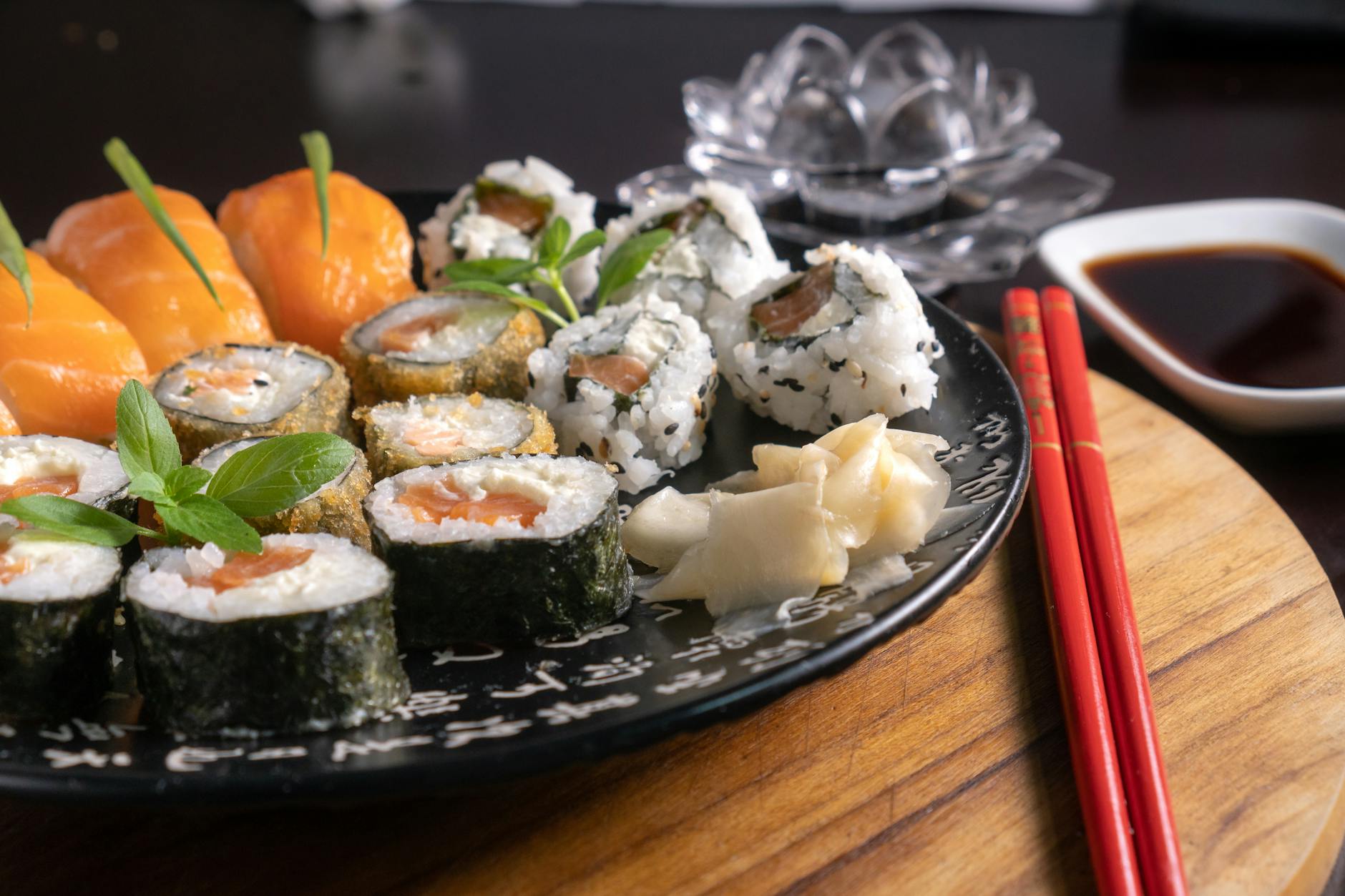
Not in a meaningful way. Restaurant sushi in Western countries typically emphasizes white rice and raw fish, often with added sugar in the rice and heavy sauces. The protective Japanese dietary pattern is defined by its variety, including soy products, green tea, vegetables, seaweed, and mushrooms, not just fish and rice. A few sushi rolls per week does not replicate what the cohort studies measured.
How much fish do you need to eat for the brain benefits?
The research on omega-3 fatty acids suggests that each 0.1 gram per day increment of DHA or EPA intake is associated with an 8 to 9.9 percent lower risk of cognitive decline. Most guidelines recommend at least two to three servings of fatty fish per week to achieve meaningful omega-3 levels, but the Japanese populations studied typically consumed fish daily or near-daily.
Is green tea better than coffee for preventing dementia?
Green tea has specific compounds, particularly EGCG, that have been shown to dismantle tau tangles in laboratory studies, and six of eight studies in a systematic review found preventive effects on cognitive impairment. Coffee also has some evidence for neuroprotection through different mechanisms. They are not mutually exclusive, and switching entirely from coffee to green tea is not necessary. The Japanese dietary studies measured green tea as part of a broader pattern, not in isolation.
If Japan has rising dementia rates, does the Japanese diet actually work?
Yes, but with important context. Japan’s rising dementia numbers are driven by its extreme population aging. It has the oldest demographic profile in the world, with a large proportion of adults living into their 80s and 90s. Within that population, those who adhere most closely to traditional dietary patterns show significantly lower dementia risk than those who do not. The diet reduces individual risk; it does not override the demographic reality of a super-aged society.
Can supplements replace the foods in the Japanese diet?
The research consistently points to the overall dietary pattern as protective, not isolated nutrients. While omega-3 supplements, green tea extract capsules, and soy isoflavone pills exist, supplement trials have generally shown weaker and less consistent results than dietary studies. The gut microbiome effects of whole and fermented foods, the synergistic interactions between nutrients in real meals, and the displacement of processed foods that occurs when you eat this way are all lost when you reduce the diet to pills.