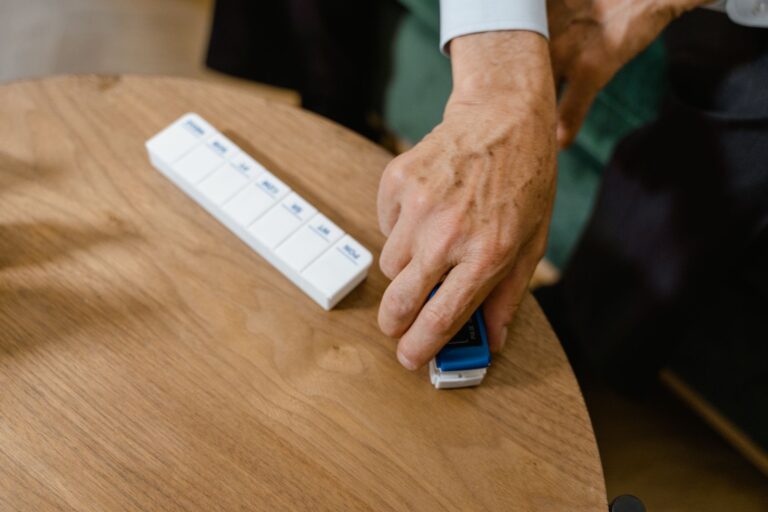
Inhaler technique sits at the center of this dementia and brain health question.
If you or someone you care for uses a metered-dose inhaler, there is a strong chance that most of the medication never reaches the lungs. Studies consistently show that with standard inhaler technique, only 10 to 20 percent of the emitted dose actually deposits where it needs to go. The remaining 80 to 90 percent ends up coating the mouth, throat, or is simply exhaled into the air. For families managing COPD or asthma alongside dementia, where coordinating complex multi-step tasks is already a daily struggle, this waste is not just a pharmacological footnote. It translates directly into poorly controlled symptoms, more emergency room visits, and money spent on medication that never does its job.
The scope of the problem is staggering. A systematic meta-analysis found that 86.7 percent of patients made at least one inhalation technique error, and only 31 percent of patients demonstrate fully correct technique. Perhaps most discouraging, incorrect inhaler technique has not improved over the past 40 years despite ongoing awareness campaigns and educational efforts. For caregivers of people with cognitive decline, this reality demands attention, because a person with dementia who once managed their inhaler independently may now be losing nearly all the benefit of their prescribed medication without anyone realizing it. This article breaks down exactly where medication goes wrong during inhalation, which specific mistakes cause the greatest losses, how cognitive decline compounds the problem, and what practical steps caregivers can take, including the use of spacer devices, to ensure that inhaled medications actually reach the lungs.
Table of Contents
- Why Does 80 Percent of Your Inhaler Medication Never Reach Your Lungs?
- The Five Most Common Inhaler Mistakes and Which Ones Matter Most
- Why Dementia Makes Inhaler Technique Dramatically Worse
- How Spacers Can Recover Most of Your Wasted Medication
- When Inhaler Technique Education Works and When It Does Not
- The Real Cost of Wasted Inhaler Medication
- Better Devices and What the Future Looks Like for Inhaler Technology
- Conclusion
- Frequently Asked Questions
Why Does 80 Percent of Your Inhaler Medication Never Reach Your Lungs?
The physics of a metered-dose inhaler work against the user from the moment the canister is pressed. The aerosol plume exits at roughly 30 meters per second, which is about 67 miles per hour, and the initial particle size averages around 25 microns. At that speed and size, the medication behaves more like a spray hitting a wall than a fine mist settling deep into airways. Research shows that 50 to 80 percent of the drug aerosol impacts in the oropharyngeal region, the back of the mouth and upper throat, before it ever has a chance to travel into the bronchial passages. Even in the best-case scenarios with optimized technique, lung deposition peaks at roughly 45 percent. In the worst cases, it drops to as low as 4 to 5 percent. To put this in practical terms, consider a caregiver administering two puffs of a rescue inhaler to a parent with COPD and moderate Alzheimer’s disease.
If the technique is poor, and the person does not coordinate their breath with the spray, each puff may deliver almost nothing to the lungs. The caregiver sees the puff happen, hears the hiss, and assumes the medication was taken. But the drug is sitting on the tongue and throat lining, where it gets swallowed into the stomach rather than absorbed into the respiratory system. The symptoms persist, the caregiver gives another dose, and the cycle of waste and frustration continues. Timing matters at a level that most people do not appreciate. Actuating the inhaler just half a second too early, before the inhalation breath has begun, can result in losing approximately 23 percent of the medication from that single timing error alone. When you layer multiple technique mistakes on top of each other, the compounding effect explains why so many patients receive virtually no clinical benefit from their prescribed inhalers.

The Five Most Common Inhaler Mistakes and Which Ones Matter Most
Researchers have catalogued the specific errors patients make, and the data is remarkably consistent across studies. The most frequent mistakes are failing to breathe out fully before inhalation, affecting 46 percent of patients; poor coordination between inhaling and pressing the canister, at 45 percent; incorrect speed or depth of inspiration, at 44 percent; skipping the post-inhalation breath hold, at 37 to 46 percent; and failing to shake the inhaler before use, at roughly 33 percent. Each of these errors independently reduces the amount of medication reaching the lungs, and most patients commit more than one simultaneously. Not all errors are equal, however. Studies distinguish between non-critical errors, like forgetting to shake the inhaler, and critical errors, which essentially render the dose therapeutically useless. Critical error rates across all device types range from 14 to 92 percent depending on the population studied and the device used.
A critical error, such as failing to coordinate the press-and-breathe sequence or inhaling through the nose instead of the mouth, means the medication deposits almost entirely in the mouth and throat. For someone with intact cognition, these errors are correctable with a single training session. For someone with dementia, the multi-step coordination required, exhale fully, position the inhaler, begin a slow deep breath, press the canister at the right moment, continue inhaling, then hold the breath for ten seconds, represents exactly the kind of sequential task that cognitive decline erodes first. There is an important caveat here. If the person you are caring for uses a dry powder inhaler rather than a metered-dose inhaler, the error profile changes. Dry powder inhalers require a fast, forceful inhalation to disperse the powder, which is the opposite of the slow, steady breath needed for an MDI. Mixing up these techniques, which happens frequently when patients are switched between device types, can be just as wasteful as using no technique at all. Always confirm which type of device is being used before coaching on technique.
Why Dementia Makes Inhaler Technique Dramatically Worse
Cognitive decline attacks precisely the skills that proper inhaler use demands. Sequential task execution, the ability to perform steps in the correct order without skipping any, is one of the earliest casualties of Alzheimer’s disease and related dementias. A person who managed their inhaler independently for decades may begin omitting steps without realizing it. They may press the canister without inhaling, inhale without pressing, forget the breath hold, or simply not remember whether they took their dose at all. Because the physical act of pressing the canister still happens, and because the hiss of the spray sounds normal, caregivers often have no visible indication that the technique has degraded. This matters beyond respiratory health. Uncontrolled COPD and asthma cause sleep disruption, anxiety, and reduced oxygen saturation, all of which accelerate cognitive decline.
A person with dementia whose breathing condition is poorly managed due to wasted medication may experience faster progression of their cognitive symptoms, creating a vicious cycle. The respiratory condition worsens the dementia, and the dementia worsens the respiratory condition, all because the medication that could help is landing in the throat instead of the lungs. One family described the situation this way during a clinical consultation documented in respiratory care literature: their father with moderate dementia was prescribed four different inhaled medications. He was taking all of them every day. His COPD was still uncontrolled, and his pulmonologist kept adding medications. When a respiratory therapist finally observed his technique, he was exhaling into the inhaler instead of inhaling from it on two of the four devices. For months, he had been receiving essentially zero medication from half his prescriptions.
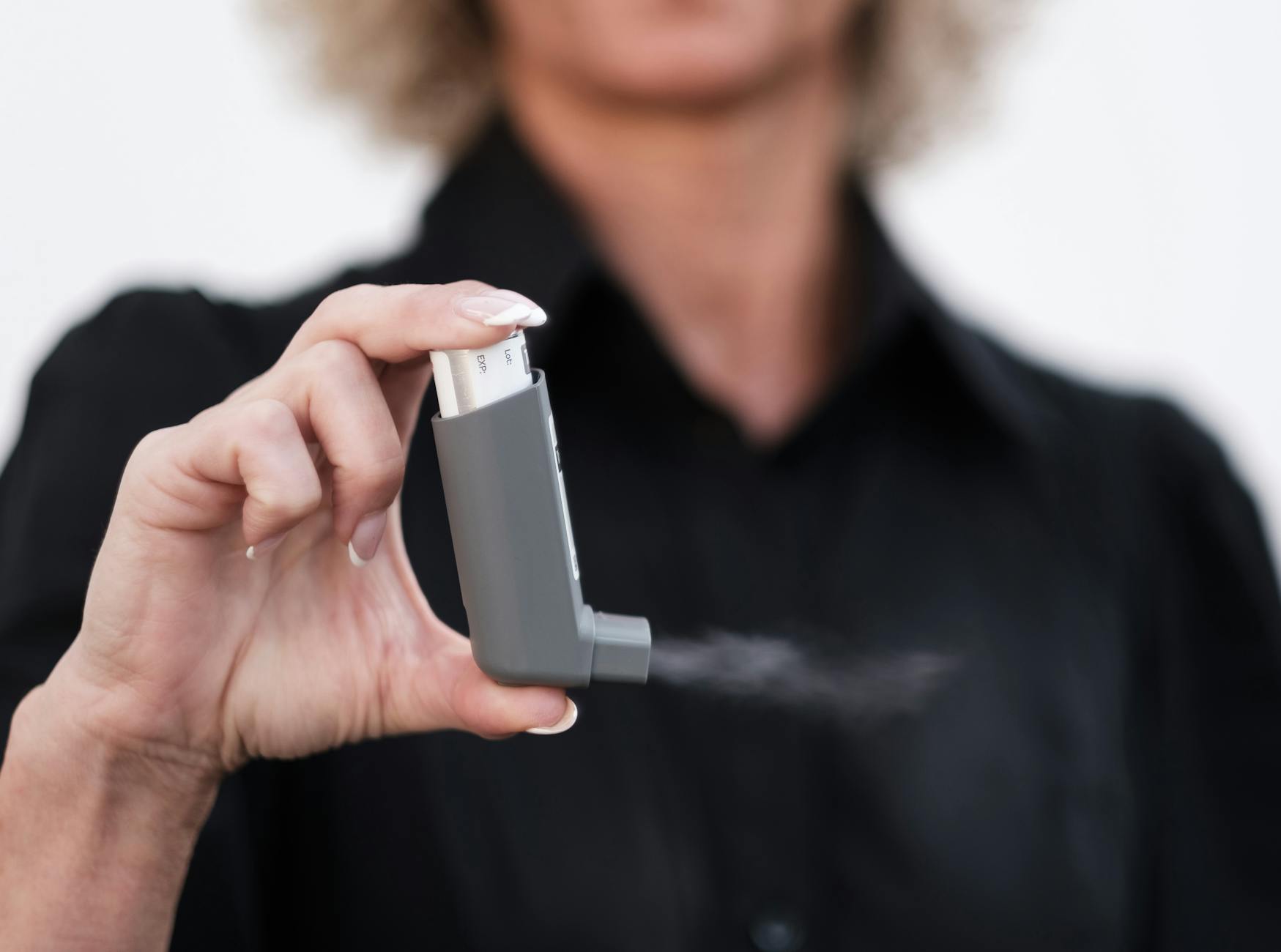
How Spacers Can Recover Most of Your Wasted Medication
The single most effective intervention for improving inhaler drug delivery is also one of the simplest. A spacer, sometimes called a valved holding chamber, is a tube or chamber that attaches to the mouthpiece of a metered-dose inhaler. When the canister is pressed, the medication sprays into the spacer rather than directly into the mouth. The chamber slows the high-velocity plume into a fine, suspended mist, allowing the large particles to settle on the spacer walls instead of on the throat. The patient then breathes in the remaining fine particles at their own pace, without needing to coordinate the press-and-breathe sequence. Research demonstrates that a spacer-equipped MDI can be as effective as a nebulizer when paired with proper technique. This finding is significant for dementia care because nebulizers, while effective, require 10 to 15 minutes per treatment, can be noisy and disorienting for a confused patient, and need regular cleaning and maintenance. A spacer achieves comparable lung deposition in a fraction of the time.
For caregivers, the tradeoff is straightforward: a spacer eliminates the single most difficult aspect of MDI use, the split-second coordination, and replaces it with a more forgiving two-step process of pressing the canister and then breathing in. However, spacers are not a cure-all. They add bulk to the inhaler, making it less portable. Some patients with dementia resist having an unfamiliar device placed near their face. The spacer itself must be cleaned regularly to prevent static charge from attracting medication to the chamber walls, reducing the dose. And if the person waits too long after actuating the canister, the suspended medication settles in the chamber instead of being inhaled. A good rule is to begin inhaling within five seconds of pressing the canister into the spacer. For advanced dementia, where even this sequence is too complex, a nebulizer with a mask may ultimately be the more reliable option despite its drawbacks.
When Inhaler Technique Education Works and When It Does Not
A 2025 systematic review published in npj Primary Care Respiratory Medicine found that proper inhaler education reduced critical errors by 72 percent, reflected in a risk ratio of 0.28. That is an enormous effect for any educational intervention in medicine. The catch is that these results come from studies of cognitively intact patients who can learn, practice, and retain new motor sequences. For someone in the early stages of mild cognitive impairment, education and repeated practice can still be highly effective, especially when paired with demonstration, return demonstration, and a written or pictorial checklist posted where the inhaler is stored. For moderate to advanced dementia, education of the patient is rarely sufficient. The caregiver becomes the technique. This means the caregiver must learn proper technique themselves, including how to administer the inhaler to someone who may not follow verbal instructions, may not open their mouth on command, or may become agitated by the process.
Respiratory therapists can train caregivers on assisted administration, but this training is not routinely offered at diagnosis. Caregivers often have to request it specifically or seek out a pulmonary rehabilitation program that includes caregiver instruction. One critical limitation to be aware of: education effects decay over time even in cognitively healthy patients. Studies show that technique degrades back toward baseline within three to six months without reinforcement. For families managing dementia, this means inhaler technique should be reassessed at every medical visit, not just the initial prescription. Ask the prescribing physician or pharmacist to watch the patient use the device at each appointment. If the physician’s office does not routinely do this, bring the inhaler and spacer to the visit and request a technique check.

The Real Cost of Wasted Inhaler Medication
The financial dimension of this problem is substantial. If 80 to 90 percent of each dose is wasted, families are effectively paying full price for 10 to 20 percent of a medication’s benefit. While several major manufacturers including Boehringer Ingelheim, AstraZeneca, and GSK have capped inhaler prices at no more than 35 dollars per month for eligible individuals as of 2025, many patients use multiple inhalers or do not qualify for cap programs.
Research consistently links critical inhaler technique errors to poor disease control, increased emergency hospitalizations, and higher overall treatment costs, which means the cost of poor technique extends far beyond the pharmacy counter. More than half of children using MDIs without spacers gain little to no clinical benefit from their medication, and the same principle applies to older adults with compromised technique. A family spending 35 to 100 dollars per month on an inhaler that delivers almost nothing to the lungs is not just wasting money. They are also absorbing the downstream costs of uncontrolled disease: urgent care visits, oral steroid courses, antibiotics for respiratory infections that gain a foothold in poorly managed airways, and the caregiver time lost to managing crises that better drug delivery might have prevented.
Better Devices and What the Future Looks Like for Inhaler Technology
The pharmaceutical industry has begun acknowledging that inhaler design itself contributes to the technique problem. Newer devices incorporate dose counters, built-in feedback mechanisms that indicate whether the inhalation was forceful enough, and designs that reduce the coordination burden. Smart inhalers with Bluetooth sensors can track usage patterns and flag missed doses or poor technique through a connected app, which could be a valuable tool for caregivers monitoring a loved one’s medication adherence remotely.
For dementia care specifically, the most promising near-term developments are not high-tech. They are better protocols for matching device type to patient capability, routine technique assessments built into standard dementia care pathways, and wider adoption of spacers as default rather than optional accessories. The 40-year failure to improve inhaler technique population-wide suggests that the solution lies less in teaching people to adapt to difficult devices and more in adapting devices and delivery systems to the people who need them most.
Conclusion
The core message is simple and backed by decades of research. Standard metered-dose inhalers deliver only 10 to 20 percent of their medication to the lungs, and the vast majority of patients use them incorrectly. For people with dementia, the multi-step coordination required for proper technique represents a task that cognitive decline specifically undermines. Caregivers who assume the medication is working because the inhaler was used may be missing the fact that nearly all of the dose is being wasted in the mouth and throat. The most impactful steps are also the most accessible.
Attach a spacer to every metered-dose inhaler. Have a respiratory therapist or pharmacist demonstrate proper technique to the caregiver, not just the patient. Reassess technique at every medical visit. And if the person with dementia can no longer manage even a spacer-assisted inhaler, talk to the prescribing physician about switching to a nebulizer. These are not dramatic interventions. They are the difference between a medication that works and one that merely makes a hissing sound.
Frequently Asked Questions
How do I know if my family member is using their inhaler incorrectly?
Watch them take a dose without coaching them through it. Common signs of poor technique include hearing the spray hit the back of the throat (a clicking or splashing sound), seeing a puff of medication escape from the mouth after inhalation, coughing immediately after use, or the person pressing the canister and breathing at clearly different times. If symptoms remain uncontrolled despite consistent medication use, poor technique should be the first suspect.
Can a spacer really make that big of a difference?
Yes. Research shows a spacer-equipped MDI can be as effective as a nebulizer when used with proper technique. The spacer eliminates the most common critical error, the coordination between pressing and breathing, and significantly increases the amount of medication that reaches the lungs by slowing the spray and filtering out particles that are too large to penetrate deep airways.
Should someone with dementia switch from an inhaler to a nebulizer?
It depends on the stage of cognitive decline. In early to moderate dementia, a spacer-assisted MDI with caregiver administration is often sufficient and faster than nebulizer treatments. In advanced dementia, when the person cannot reliably inhale on command or becomes agitated by the spacer, a nebulizer with a face mask may deliver medication more consistently. Discuss the transition point with a pulmonologist familiar with the patient’s cognitive status.
How often should inhaler technique be checked?
At every medical visit, and any time respiratory symptoms worsen without an obvious trigger. Studies show that technique degrades over three to six months even in cognitively healthy patients who were initially trained correctly. For dementia patients, reassessment should be more frequent, roughly every one to two months or whenever the caregiver notices changes in the person’s ability to follow multi-step instructions.
Are the new $35 inhaler price caps available to everyone?
Not universally. The caps from Boehringer Ingelheim, AstraZeneca, and GSK apply to eligible individuals as of 2025, but eligibility criteria vary by manufacturer and insurance status. Patients with commercial insurance generally qualify, but those on certain government programs or without insurance may need to explore separate patient assistance programs. Check each manufacturer’s website or ask a pharmacist for current eligibility details.
You Might Also Like
- The Cough Medication That Actually Works According to Clinical Trials
- Doxycycline PEP After Sex: The New STI Prevention Approach
- The Eating Disorder Medication Showing Real Promise in Clinical Trials
For more, see Alzheimer’s Association — medical tests.