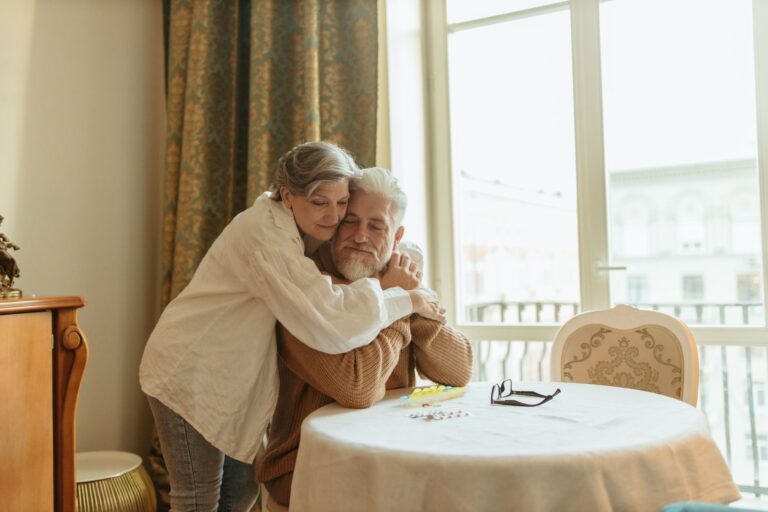
There is no established "hidden meaning" in a handwritten family tree during dementia, and it is not a diagnostic tool. Its real meaning is relational: a hand-drawn chart of names, photos, and relationships can support memories, stories, identity, and connection. The finished tree may matter less than making it together. It gives a loved one a familiar subject to explore without demanding correct answers.
Medical information disclaimer: This article is for general educational purposes only and does not provide medical advice, diagnosis, or treatment. Always consult a physician or other qualified health professional about symptoms, medications, tests, or treatment decisions.
Table of Contents
- What a family tree can reveal
- How to make the activity supportive
- How the tree can support identity and care
- When the activity needs a different direction
What a family tree can reveal
A family tree may show which people, stories, and relationships feel meaningful in the moment. It can also give relatives new openings for conversation, especially when familiar faces prompt older memories. Do not interpret missing names, misplaced branches, or repeated stories as coded messages.
Dementia affects people differently, and the tree is an activity rather than a standardized assessment. The Alzheimer's Society Activities Handbook presents pictorial family trees as optional shared activities for conversation and later enjoyment. The tree can still hold emotional truth when details are incomplete. A relative placed prominently may represent comfort or familiarity, but families should treat that as a possible conversation opening—not a firm conclusion.
How to make the activity supportive
Start with a large sheet of paper and a few familiar photographs. Add names or short notes only when they help, and let the person decide how much to participate.
Older memories may remain accessible longer than recent ones. The Alzheimer's Association's reminiscence guidance recommends following the person's lead and seeking connection rather than testing memory.
- Begin with one familiar person instead of the entire family.
- Try open prompts such as, "What comes to mind when you see this photo?"
- Offer names gently when needed.
- Accept uncertain dates, repeated memories, and unfinished branches.
- Leave the tree available for relaxed viewing later.
How the tree can support identity and care
A family tree can become part of a broader life-history record. Photos, written memories, nicknames, important places, and family roles can help relatives and care professionals see the person beyond their diagnosis. Keep the information practical and personal.
A note such as "Maya—granddaughter who brings gardening photos" may support a warmer interaction better than a bare name and birth date. Reminiscence therapy is the structured discussion of past experiences, sometimes supported by a life-history book. Dementia-care recommendations published by the Alzheimer's Association report moderate support for short-term benefits involving mood and distress, while noting limitations such as small studies, varied methods, weak blinding, and inconsistent adherence reporting. A family tree may aid reminiscence, but it is not a proven treatment by itself.
When the activity needs a different direction
Family memories can include bereavement, estrangement, conflict, or trauma. Watch facial expression, tone, withdrawal, agitation, and changes in engagement. If a photograph or name causes pain, acknowledge the feeling and move to another subject instead of pressing for an explanation.
Do not analyze handwriting size, spelling, crossed-out names, or branch placement as evidence of Alzheimer's disease. The National Institute on Aging's discussion of written-language research concerns a standardized picture-description task as a possible future marker; it does not validate family-tree handwriting as a test. Concerns about new cognitive or communication changes need a clinical evaluation, which may include health history, cognitive testing, laboratory work, and sometimes imaging or biomarkers. Bring the family tree only as an example of what you noticed, with the date and context in which it was made.