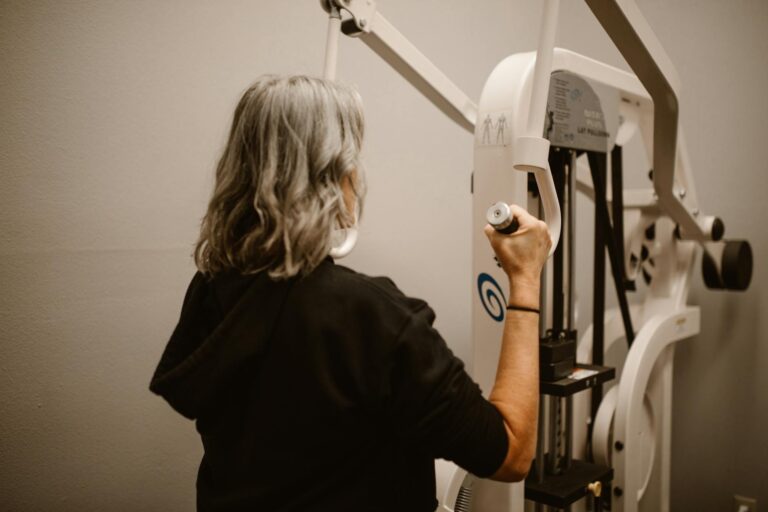
Exercise progression for disc rehabilitation follows a staged approach that starts with pain reduction and mobility restoration, then gradually advances to strengthening and functional activities. The progression typically begins with gentle movements and neutral spine positioning to protect the injured disc, advances through increasing ranges of motion and resistance, and culminates in sport-specific or activity-specific training. For example, someone recovering from a disc herniation might start with basic pelvic tilts in week one, progress to quadruped exercises by week three, add light resistance by week six, and return to full functional activities by week eight to twelve—though this timeline varies significantly based on injury severity and individual response. This article covers the fundamental principles of disc rehabilitation progression, the exercises used at each stage, how to recognize when it’s safe to advance, common pitfalls that delay recovery, and how mental engagement during rehabilitation supports overall recovery outcomes.
Table of Contents
- What Progressive Exercise Does for Disc Recovery
- The Early Stage—Protection and Gentle Movement
- Intermediate Progression—Adding Range and Stability
- Load and Resistance Introduction—Building Strength Capacity
- Neuromuscular Retraining and Movement Complexity
- Sport-Specific and Activity-Specific Progression
- Return to Activity and Long-Term Management
- Conclusion
- Frequently Asked Questions
What Progressive Exercise Does for Disc Recovery
Progressive exercise in disc rehabilitation serves multiple purposes beyond simple pain relief. Initially, movement reduces disc pressure and improves local circulation, which helps the healing disc receive necessary nutrients and remove inflammatory byproducts. As progression continues, exercises rebuild stabilizing muscles that have become weak or inhibited due to pain avoidance.
For instance, a person with a disc bulge typically loses neuromuscular control of their core stabilizers within days of injury—muscles don’t “remember” to engage properly. Gradual loading through exercise retrains these muscles to provide dynamic support. The progression also restores confidence in movement, which is crucial because fear-avoidance behavior often limits recovery more than the injury itself. Someone who believes their spine is fragile may move cautiously for months even after tissues have healed, whereas proper exercise progression demonstrates that their spine is capable of handling progressive demands.
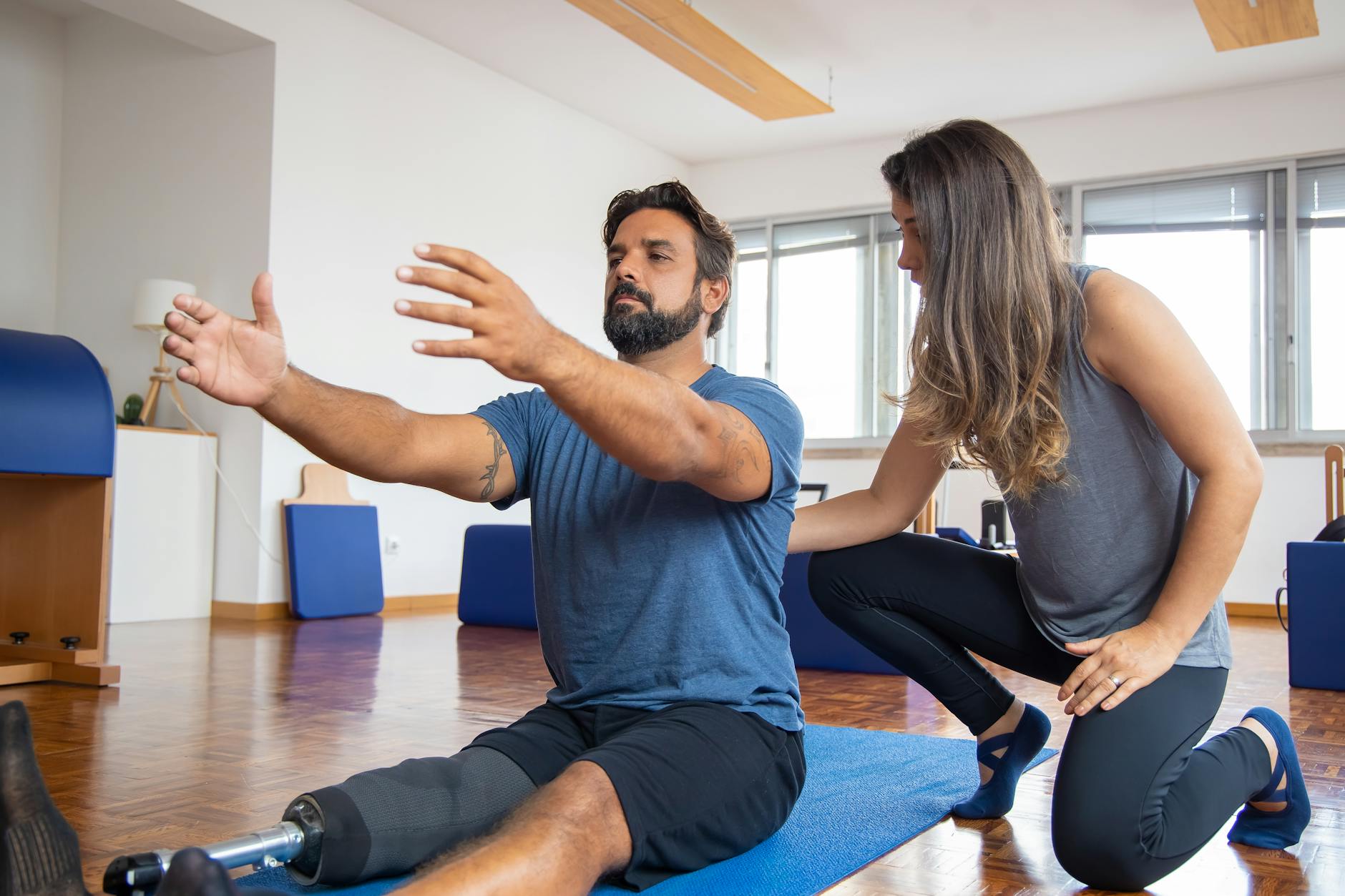
The Early Stage—Protection and Gentle Movement
The first phase of disc rehabilitation (typically weeks 1-2) emphasizes protection and restoring basic movement patterns without excessive loading. Exercises focus on pain-free ranges of motion, often starting in positions that decompress the spine—lying down in some cases or using positions that shift symptoms away from nerve involvement. Prone press-ups (for certain disc bulge directions), quadruped rocking, and gentle pelvic tilts represent typical first-week activities.
However, this phase requires careful direction because the “right” exercise depends entirely on which direction the disc herniation protrudes. A herniation that protrudes posteriorly often improves with extension movements, while posterolateral herniations may respond better to flexion and rotation—doing the wrong movement can worsen symptoms and delay recovery by weeks. This is why disc rehabilitation under professional guidance typically produces faster results than generic programs: a physical therapist identifies the directional preference specific to that person’s injury and structures progression accordingly.
Intermediate Progression—Adding Range and Stability
Once pain begins decreasing and basic movements feel tolerable, the second phase (weeks 2-4) introduces greater ranges of motion and begins loading stabilizing muscles. This stage includes exercises like quadruped shoulder taps, bird dogs, dead bugs, and bridging. These movements challenge core stability without the spinal compression of standing or loaded exercises.
The critical principle here is that progress isn’t measured by how much weight can be lifted—it’s measured by the ability to maintain neutral spine positioning while the limbs move. For example, a bird dog exercise might look simple, but it requires the core stabilizers to activate in a coordinated pattern to prevent the spine from rotating or extending excessively as one leg extends. A person might initially only be able to perform five quality repetitions before fatigue causes form breakdown; progression happens when that same person completes two sets of fifteen with perfect form. The mistake many people make is progressing to heavier exercises too quickly, which overloads tissues that aren’t yet stable enough, causing setback and frustration.

Load and Resistance Introduction—Building Strength Capacity
Around weeks 4-6, when pain has significantly decreased and stability exercises are performed with good control, resistance can be introduced. This phase adds standing exercises, light dumbbells, resistance bands, or body weight challenges like lunges and squats. The progression from sitting/prone exercises to upright positions is significant because standing increases spinal compression and demands greater core control.
A person might transition from quadruped hip extensions (relatively safe) to standing cable pull-throughs or kettlebell swings, which provide similar movement patterns but demand more stability and strength. The tradeoff here is between advancing quickly toward functional goals and respecting tissue healing timelines—pushing too hard bridges the timeline and often results in flare-ups that set recovery back weeks. A conservative approach that takes eight weeks to full function is more effective than an aggressive approach that results in two flare-ups within twelve weeks, even though the conservative timeline feels slower.
Neuromuscular Retraining and Movement Complexity
As strength returns, the later phase (weeks 6-10) focuses on complex, multi-directional movements and dynamic stability. Exercises progress to rotational movements, unilateral loading (single-leg or single-arm), and integrated patterns that resemble actual functional demands. This stage recognizes that simply having strong muscles isn’t enough—the nervous system must learn to coordinate those muscles in complex patterns.
Someone who has fully regained strength but not dynamic control still feels unstable and may limit their activities unnecessarily. A significant limitation here is that this phase cannot be rushed or standardized. Someone returning to desk work has different requirements than someone returning to manual labor or athletics, so progression must be individualized. Additionally, some people experience what appears to be a plateau around week 6-8 where pain has resolved but function hasn’t yet improved proportionally—continuing appropriate progression through this plateau is crucial, as regression or stopping exercises often results in slower return to full function.

Sport-Specific and Activity-Specific Progression
The final pre-return-to-activity phase tailors exercise to the specific demands the person will face. A nurse might need overhead loading tolerance and rotational stability to reposition patients, a golfer needs rotational power and asymmetrical loading, and a desk worker needs endurance in sitting postures with frequent position changes.
Exercise at this stage closely mimics actual activity patterns, scaling intensity gradually. For example, a golfer might progress from basic rotational exercises to rotational exercises with load, then add speed and power generation in rotational patterns, then finally perform actual golf swings against resistance, and only then return to unrestricted golfing. This specificity matters because tissue can be strong in lab conditions but not yet adapted to the explosive or sustained demands of real activity.
Return to Activity and Long-Term Management
Successful return to full activity requires more than clearing clinical tests—it requires a guided progression back into the actual activities. Someone cleared to “return to running” still shouldn’t run five miles on day one; typical progressions follow interval formats where people alternate low and high intensity or gradually extend duration.
For many, the most important aspect of long-term success is recognizing that disc health requires ongoing maintenance. The progression doesn’t truly end at return to activity—it transitions into a maintenance phase with regular exercise and movement variability. Research increasingly shows that people who maintain appropriate movement patterns and reasonable activity levels experience far fewer recurrences than those who resume full activity then abandon the supportive habits that enabled recovery.
Conclusion
Exercise progression in disc rehabilitation isn’t arbitrary—it follows biomechanical principles of pain reduction, tissue protection, neuromuscular restoration, and gradual loading. The key to successful progression is recognizing that each phase has specific objectives and that advancing before objectives are met typically extends overall recovery time. Someone who progresses cautiously through controlled phases, even if the timeline feels frustratingly slow, typically returns to full function faster and with greater confidence than someone who rushes progression and experiences flare-ups.
If you’re currently managing a disc-related issue or recovering from one, working with a physical therapist or qualified rehabilitation specialist is valuable because the specific progression varies based on your injury type, direction of bulge, and functional goals. You can also begin with pain-free range-of-motion exercises immediately while waiting for professional evaluation—gentle movement almost always assists early recovery. The progression framework described here can guide your expectations and help you recognize whether your current program is addressing the right phase of recovery.
Frequently Asked Questions
How do I know if I’m ready to progress to the next phase?
The primary marker is that current-phase exercises should be nearly pain-free and performed with good form for the prescribed repetitions. You should also have maintained progress for at least 3-5 days without regression. Your healthcare provider can guide this decision, but generally, progressing when pain is still significant or form is breaking down indicates you’re advancing too quickly.
Can I do all phases of exercises simultaneously?
Some overlap is reasonable—once you’re comfortable with stabilization exercises, you needn’t permanently abandon them—but the emphasis shifts. Doing advanced strength exercises before foundation stability is solid typically leads to compensation patterns and slower progress. Think of it as building a house: you can add furniture before the house is complete, but you shouldn’t add a second floor before the foundation is solid.
What if I have a flare-up during progression?
A minor increase in symptoms after challenging exercise is sometimes normal, but significant pain is a signal to retreat to the previous phase for a few days. Flare-ups that last more than a few hours typically indicate you’ve progressed too quickly. Rather than abandoning the protocol, return to earlier exercises until symptoms settle, then progress more gradually.
How long does the entire progression typically take?
Eight to twelve weeks is common for moderate disc injuries with appropriate rehabilitation, but this varies widely. Severe herniations might require 12-16 weeks, while mild bulges might resolve in 4-6 weeks. Age, overall fitness, activity demands, and adherence to progression all influence timeline.