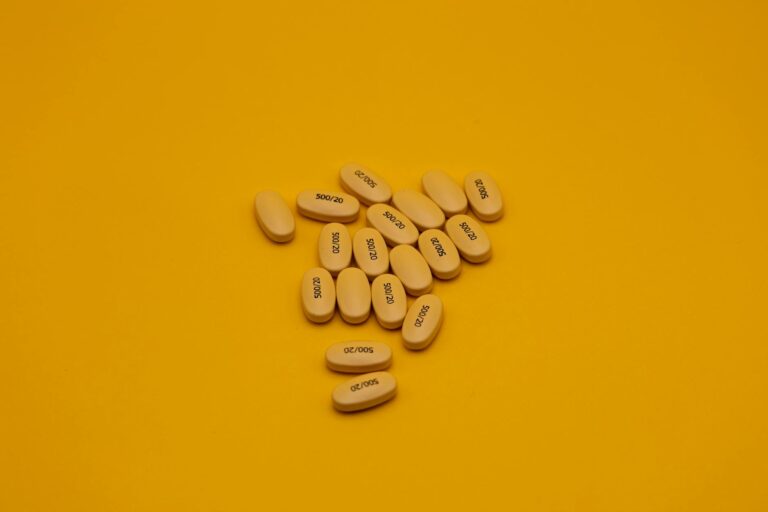
The drug being bought and sold illegally on college campuses is Adderall — along with its pharmaceutical cousins Ritalin and Vyvanse — and the scale of this underground market is staggering. One in six college students, roughly 17% of the student population, misuse these ADHD stimulant medications, according to a meta-analysis reported by ScienceDaily. These pills, classified as Schedule II controlled substances by the DEA (the same category as cocaine and methamphetamine), change hands in dorm rooms and dining halls for as little as $5 apiece, with prices spiking to $25 during finals week. At a large state university, that math translates to thousands of felonies being casually committed every semester.
What makes this story relevant to brain health — and particularly to readers concerned about long-term neurological wellbeing — is the growing body of evidence linking stimulant misuse to subsequent mental health decline and other drug use. Binghamton University research has found that so-called “study drugs” set the stage for broader substance problems down the road, raising real questions about the lasting impact on developing brains. Meanwhile, an ongoing national Adderall shortage that began in 2022 is pushing even patients with legitimate prescriptions toward informal channels, blurring the line between medical need and recreational misuse. This article covers the scope of stimulant diversion on campuses, how the black market actually works, who is most at risk, the health and legal consequences students face, and what the current drug shortage means for the problem going forward.
Table of Contents
- Why Are ADHD Drugs Like Adderall Being Bought and Sold Illegally on College Campuses?
- The Campus Black Market — What ADHD Stimulants Actually Cost and Who’s Selling
- Who Is Most at Risk for ADHD Stimulant Misuse — and Why It Matters for Brain Health
- Health Consequences of Unprescribed Stimulant Use — What the Emergency Room Data Shows
- Legal Consequences That Students Consistently Underestimate
- How the National Adderall Shortage Is Making Everything Worse
- What Comes Next — Campus Policy, Brain Health, and the Long View
- Conclusion
Why Are ADHD Drugs Like Adderall Being Bought and Sold Illegally on College Campuses?
The short answer is supply, demand, and almost zero friction between the two. ADHD medication prescriptions grew 60% between 2012 and 2023, flooding campuses with pills that are easy to share and hard to track once they leave the pharmacy bottle. About 50% of college students who hold ADHD prescriptions have been persuaded by peers to sell, give, or trade their medication, and over a third have actually done so. The transaction rarely feels like a drug deal. It feels like helping a friend cram for organic chemistry. Demand is driven by academic pressure and a widespread belief — not entirely supported by research — that stimulants dramatically boost cognitive performance in people without ADHD.
College students are twice as likely to misuse these drugs compared to non-students in the same age group. Between 5% and 35% of college students have tried Adderall without a prescription, depending on the campus and the study methodology. A November 2024 PubMed study found that 2.4% of college students reported stimulant misuse in the past three months alone, while 5.1% reported past-year medication treatment, suggesting that the pool of available pills is substantial relative to the number of people seeking them out. What makes campus diversion different from street-level drug dealing is the social context. Seventy-nine percent of students who misuse stimulants obtained them from a friend — not a stranger, not an online marketplace. SAMHSA data from 2017 showed that 60% of youth who abused stimulants bought or received them from a friend or relative. This peer-to-peer pipeline makes enforcement nearly impossible and makes the behavior feel low-risk to everyone involved.

The Campus Black Market — What ADHD Stimulants Actually Cost and Who’s Selling
Under normal conditions, a single adderall pill costs about $5 on a college campus. that price is deceptively cheap — cheap enough that students who would never consider buying cocaine or methamphetamine (chemically related substances, for what it’s worth) think nothing of tossing a friend a few dollars for a pill before a study session. But the market responds to demand just like any other. During exam week, that same pill can cost $20 to $25, a markup of 400% or more. Street price averages for Adderall run roughly $0.50 to $1.00 per milligram. A standard 20 mg pill costs $10 to $20 on the open market, with East Coast prices sometimes exceeding a dollar per milligram.
Ritalin, which contains methylphenidate rather than amphetamine, commands roughly $1 per milligram — a 36 mg extended-release pill has been reported at $30 to $50 in states like Michigan and New York. However, if you are a student with a legitimate prescription who has been approached to sell or share pills, it is critical to understand that these seemingly small transactions carry the same legal weight as dealing any other Schedule II substance. The fact that the buyer is your roommate does not reduce the charge. The sellers, in most cases, are not career drug dealers. They are students with prescriptions who may be short on cash, eager to help a friend, or simply unaware that handing over a pill constitutes distribution of a controlled substance. This informal structure makes the campus stimulant market uniquely resistant to traditional enforcement. There is no corner to stake out, no wire to tap. The entire supply chain fits inside a group chat.
Who Is Most at Risk for ADHD Stimulant Misuse — and Why It Matters for Brain Health
The demographics of stimulant misuse on campus are not evenly distributed. Annual prevalence of Adderall use runs at 14.6% among male full-time college students compared to 8.8% among female students. Fraternity and sorority members show elevated rates, as do students who use alcohol and other recreational substances. Nearly 5% of white college students report misusing prescription stimulants, the highest rate among demographic groups studied. These numbers matter for brain health because the college-age brain is still developing. The prefrontal cortex, responsible for decision-making and impulse control, does not fully mature until the mid-twenties.
Introducing unprescribed amphetamines during this window of development is not the same as an adult taking a prescribed dose under medical supervision. Binghamton University researchers have specifically linked study drug use to subsequent other drug use and mental health decline — meaning the pills students take to get through midterms may be shaping their neurological trajectory in ways they do not anticipate. There is a particular irony for students interested in cognitive performance. The evidence that Adderall meaningfully improves academic outcomes in people without ADHD is weaker than the marketing — both pharmaceutical and peer-to-peer — would suggest. What these drugs reliably produce is a subjective feeling of focus and energy, which is not the same as measurably better learning or retention. For someone genuinely concerned about long-term brain health, the risk-to-benefit calculation of unprescribed stimulant use is far worse than most students realize.
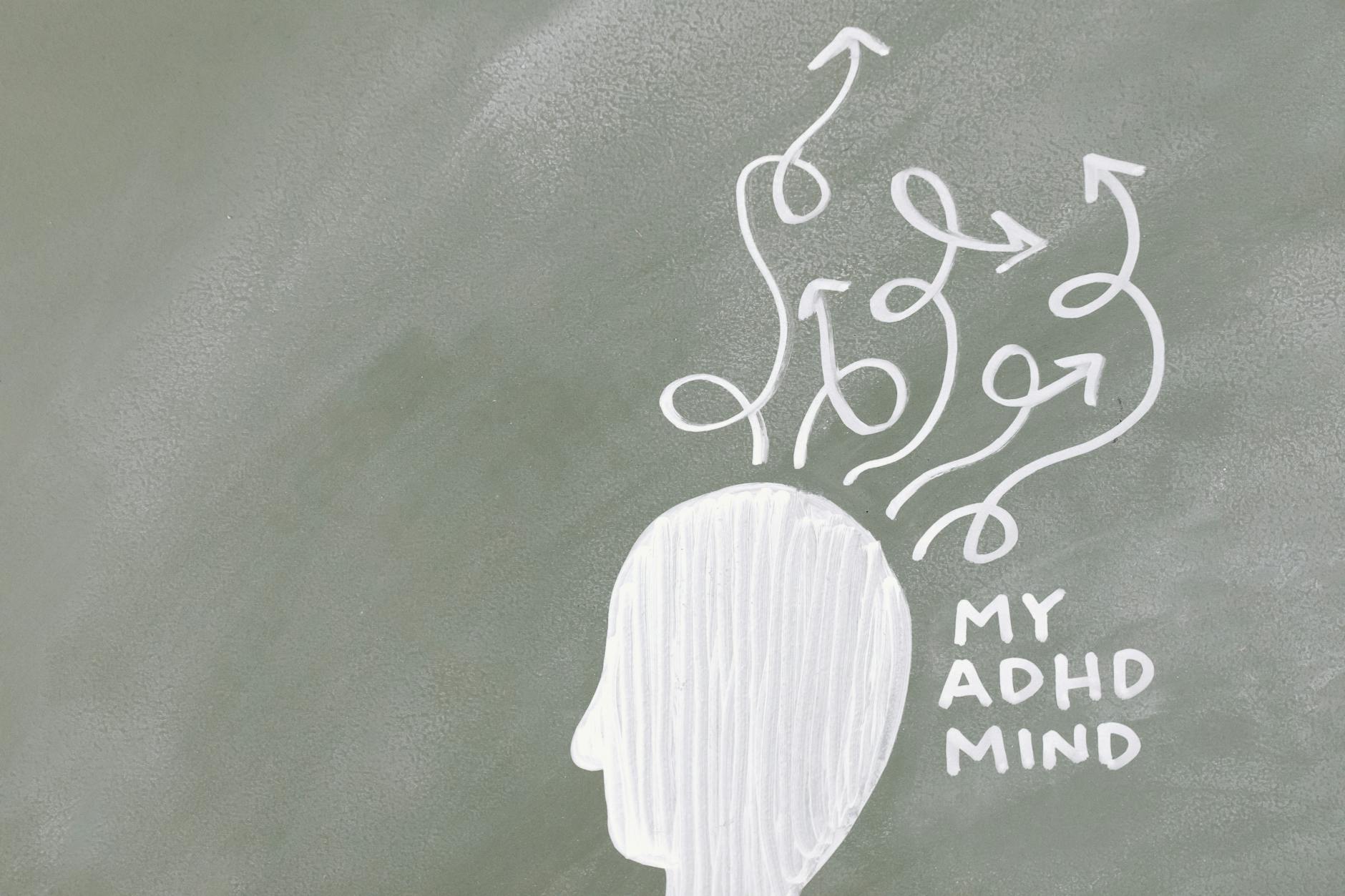
Health Consequences of Unprescribed Stimulant Use — What the Emergency Room Data Shows
Between 2006 and 2011, emergency room visits related to non-prescription amphetamine use rose 156%. During that same period, Poison Control Center calls increased 76%. These are not abstract statistics. They represent students showing up in ERs with racing hearts, dangerously elevated blood pressure, panic attacks, and in some cases psychotic episodes. Illegal use of ADHD drugs increased 67% during that timeframe even as prescriptions slightly declined, suggesting that the problem was growing independently of the medical supply. The tradeoff students rarely consider is this: stimulants work by flooding the brain with dopamine and norepinephrine.
In a person with ADHD, whose baseline levels of these neurotransmitters are lower than typical, this produces a normalizing effect. In a person without ADHD, it produces a surge that the brain was not designed to handle at that intensity. Repeated surges can dysregulate the brain’s reward system, making it harder to feel motivated or focused without chemical assistance — the exact opposite of the cognitive enhancement students were seeking. For readers of this site who are concerned about dementia and long-term brain health, this matters. While the direct link between college-age stimulant misuse and later-life cognitive decline is still being studied, we know that substance misuse in young adulthood is a modifiable risk factor for a range of neurological and psychiatric conditions. The mental health decline documented in study drug users is not a temporary side effect. It is a trajectory shift.
Legal Consequences That Students Consistently Underestimate
Possessing a Schedule II controlled substance without a prescription is a criminal offense in every U.S. state. Selling one — even handing a single pill to a classmate for $5 — can result in felony charges. In California, selling a Schedule II controlled substance can carry up to 10 years in prison and a $10,000 fine. Students routinely underestimate these consequences because the social context feels so benign. Nobody thinks of themselves as a drug dealer when they are splitting a prescription with a study partner in the library.
The warning here is specific: a felony drug conviction can disqualify students from federal financial aid, professional licensing in fields like medicine, law, nursing, and education, and many forms of employment. The academic boost a student hoped to gain from a $5 pill can end up costing them their entire career trajectory. Universities have also begun treating stimulant diversion as an academic integrity violation, separate from any criminal proceedings, meaning students can face expulsion even if charges are dropped or reduced. For students with legitimate ADHD prescriptions, there is an additional legal nuance worth understanding. Sharing your medication is not a gray area. It is distribution of a controlled substance, regardless of whether money changes hands. If you are prescribed Adderall and your roommate asks for one, saying yes exposes you to the same legal framework that applies to any other drug transaction.

How the National Adderall Shortage Is Making Everything Worse
The United States has experienced an ongoing Adderall shortage since 2022, making it one of the longest-running medication shortages in recent history. The DEA raised aggregate production quotas for d-amphetamine by 25% in October 2025, increasing the cap from 21.2 million to 26.5 million grams. Despite this, experts estimate shortages may persist until late 2026 or 2027. For patients with legitimate prescriptions who spend weeks calling pharmacies trying to fill their medication, the temptation to seek pills through informal channels becomes very real — and that desperation flows in both directions, increasing both supply to and demand within the campus black market.
The shortage has created a perverse dynamic where the line between medical patient and recreational user has blurred. A student with a valid prescription who cannot find a pharmacy with stock may buy pills from a friend who has extras. That transaction is still illegal. It is also, from a public health standpoint, completely predictable when the legitimate supply chain fails the people who depend on it.
What Comes Next — Campus Policy, Brain Health, and the Long View
Looking ahead, several trends are converging. ADHD diagnosis rates continue to climb, meaning more prescriptions and more pills in circulation. The national shortage is pushing patients toward informal markets. And university health systems are only beginning to grapple with stimulant diversion as a campus safety issue rather than a simple disciplinary matter.
Some schools have started requiring more frequent follow-ups for students with stimulant prescriptions, while others are investing in non-pharmacological academic support — tutoring, time management coaching, cognitive behavioral approaches — as alternatives to the chemical shortcut. For anyone reading this through the lens of brain health and dementia prevention, the takeaway is that what happens to the college-age brain does not stay in college. Patterns of substance use, reward-system dysregulation, and mental health decline established in the early twenties can echo for decades. The conversation about ADHD stimulant misuse on campus is not just about academic cheating or drug policy. It is about the long-term neurological cost of treating a Schedule II controlled substance like a cup of coffee.
Conclusion
The illegal buying and selling of Adderall and related stimulants on college campuses is not a fringe phenomenon. With one in six students misusing these drugs, nearly 80% obtaining them from friends, and a national shortage pushing even legitimate patients toward informal channels, this is a systemic issue embedded in the culture and economics of higher education. The health consequences — from a 156% increase in related ER visits to documented links between study drug use and long-term mental health decline — are real and well-documented. The legal consequences, including potential felony charges for transactions students consider trivial, are severe and career-altering.
For families navigating brain health concerns across the lifespan, this issue deserves attention not because it is sensational but because it is consequential. The developing brain is not a machine you can overclock without cost. Students, parents, and educators who understand the actual risks — medical, legal, and neurological — are better positioned to make informed decisions. If you or someone you know is struggling with ADHD symptoms, the path forward is a legitimate medical evaluation and an honest conversation with a prescriber, not a $5 pill from a classmate during finals week.