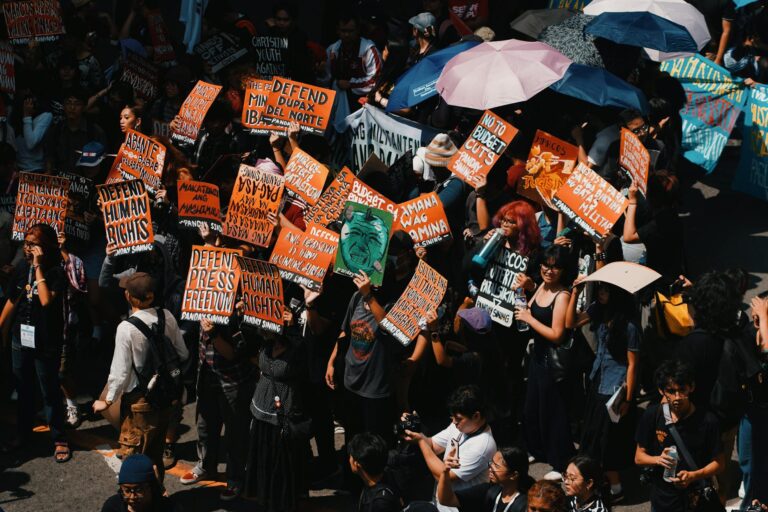
The tax protest movement has generated sharply divided reactions across the political spectrum, with support and criticism varying significantly by demographic, political affiliation, and personal economic situation. Some view tax resistance as legitimate civil disobedience against what they see as excessive government spending and unfair taxation policies, while others argue that coordinated tax non-compliance undermines public services and disproportionately harms vulnerable populations who depend on government-funded programs. For instance, when anti-tax protests gained traction in 2024-2025, supporters pointed to rising property tax rates and inflation-adjusted income tax burdens as catalysts, while fiscal watchdogs warned that widespread non-compliance could destabilize funding for schools, infrastructure, and healthcare. This article examines the origins of the modern tax protest movement, explores why responses have been so divided, analyzes the practical consequences for individuals and communities, and considers the trajectory of tax policy resistance.
Table of Contents
- What Is Driving the Current Tax Protest Movement?
- Why Reactions to Tax Protests Remain So Divided
- Economic Impact and Who Bears the Cost
- What Individuals Should Know Before Participating in Tax Resistance
- Legal and Enforcement Realities of Large-Scale Tax Non-Compliance
- How Tax Protest Movements Affect Public Services
- The Future of Tax Policy and Protest Movements
- Conclusion
What Is Driving the Current Tax Protest Movement?
The current wave of tax protests stems from multiple pressures converging simultaneously. Rising inflation has pushed property assessments upward in many states, resulting in higher tax bills even when actual property values haven’t meaningfully increased in real terms. Federal income tax brackets have not kept pace with wage growth in many sectors, pushing middle-income earners into higher effective tax rates.
Additionally, some taxpayers perceive a disconnect between tax payments and visible public benefits, citing deteriorating road conditions, overcrowded schools, and concerns about government spending efficiency. Specific examples include California counties where property reassessments triggered 15-20% annual increases in tax bills, and states like Illinois where property tax burdens exceeded 2% of home values. However, it’s important to note that actual tax rates vary dramatically by state and locality—some regions have lower effective tax burdens than others, meaning tax pressure isn’t uniform, and this variation partly explains why the protest movement is stronger in certain geographic areas.

Why Reactions to Tax Protests Remain So Divided
The mixed reactions reflect fundamentally different views about the role of government and who bears the costs of public services. Supporters of tax reduction argue that government has grown inefficient and that lower taxes stimulate economic growth and reduce the compliance burden on citizens. Critics counter that tax resistance disproportionately affects low-income individuals who rely on public schools, Medicaid, housing assistance, and other programs funded through tax revenue.
One limitation of the “efficiency” argument is that even well-run governments require substantial funding—infrastructure, emergency services, and education are capital-intensive. If widespread tax non-compliance occurred, the immediate impact would likely be cuts to services before any efficiency gains materialized. Additionally, some protest movements have included rhetoric dismissing certain taxes as illegitimate, but this overlooks that in a representative democracy, taxes were generally approved through elected officials, even if individual citizens disagree with the outcome.
Economic Impact and Who Bears the Cost
Tax protest movements inevitably raise questions about who benefits and who loses. When some individuals or groups reduce tax payments, the burden shifts to those who continue complying, creating fairness concerns.
In jurisdictions where voluntary non-compliance becomes significant, governments typically respond by increasing enforcement spending and auditing lower-income earners more heavily—creating a paradox where enforcement costs rise while revenue falls. For example, when large-scale tax resistance occurred in certain Massachusetts municipalities in the 2010s, audits of working-class filers increased even as millionaire tax returns went underaudited due to resource constraints. Small business owners express mixed reactions: some support tax reduction movements as a way to keep more revenue, while others worry that reduced public spending on infrastructure, education, and security creates long-term economic headwinds that ultimately cost more in private expenses than they save in taxes.

What Individuals Should Know Before Participating in Tax Resistance
Anyone considering tax non-compliance needs to understand the legal, financial, and practical risks involved. The IRS and state tax authorities have substantial enforcement powers, including wage garnishment, property liens, and criminal prosecution for willful evasion (distinct from simple non-payment).
The comparison between legal tax avoidance and illegal tax evasion is critical: tax planning strategies that reduce liability through legal deductions are fundamentally different from simply not paying taxes owed. Documentation becomes crucial—if you reduce tax payments, you need a clearly articulated legal basis (for instance, adjustments you genuinely qualify for) rather than a political statement. Additionally, informal tax resistance movements often attract participants without warning them about personal consequences; someone might reduce their tax payment believing it’s a collective action, only to face individual penalties when the movement doesn’t reach critical mass.
Legal and Enforcement Realities of Large-Scale Tax Non-Compliance
Historical precedent shows that mass tax resistance faces substantial practical obstacles. Even when supported by 20-30% of a population in surveys, actual non-compliance rates remain low because individual enforcement mechanisms are powerful. The IRS doesn’t require taxpayer cooperation to collect—they can intercept refunds, garnish wages, and place liens on assets.
Organized movements in the 1990s and 2000s that tried to coordinate tax resistance found that participants faced individual penalties while the movement itself had no enforcement mechanism to support members. A critical warning: some tax protest organizations have made claims about taxes being unconstitutional or that certain filing requirements can be ignored. These arguments have been consistently rejected in federal courts, and individuals who adopt these positions face not only penalties but also fraud penalties (adding 75% to base taxes owed) and potential criminal charges.

How Tax Protest Movements Affect Public Services
One concrete consequence often overlooked in tax protest discussions is the real-world impact on specific programs. School districts in areas with significant tax resistance have delayed facility improvements, reduced teaching staff, and cut enrichment programs.
Mental health services, elder care programs, and disability support services are particularly vulnerable because they lack the political constituency of popular programs and are often first on the cut list. A specific example: a mid-sized city that experienced a five-year property tax resistance movement saw library hours cut by 30%, a health department unable to hire nurses, and delayed infrastructure repairs that later cost three times as much to fix. The demographic most likely to suffer from these cuts—lower-income residents and elderly individuals—are often not those driving the tax protest movement, creating a disconnect between stated goals and actual outcomes.
The Future of Tax Policy and Protest Movements
Looking forward, tax protest movements will likely continue as inflation and property reassessments keep pressure on household budgets. However, the trajectory suggests that rather than large-scale organized tax non-compliance, we’re more likely to see continued political demands for tax relief, property tax caps, and adjustments to tax brackets.
Some states have already responded by implementing circuit breaker programs (tax credits for high property tax burdens) and property tax caps, effectively absorbing some of the demands from protest movements through policy change. The political sustainability of tax protest movements remains uncertain—they tend to have high energy during periods of rising tax bills but diminish once immediate pressures ease. The longer-term question is whether governments will preemptively adjust tax structures or whether cyclical protests will continue.
Conclusion
The tax protest movement’s mixed reactions reflect genuine economic pressures and equally genuine concerns about service provision and fairness. While some individuals face real hardship from rising tax burdens, especially on fixed incomes, large-scale tax non-compliance carries substantial personal risks and produces indirect costs that often harm the most vulnerable.
Understanding both the legitimate grievances driving tax protests and the practical consequences of non-compliance is essential for making informed decisions about personal tax obligations and political engagement. If you’re concerned about rising tax burdens, the most effective approach is to understand exactly which tax categories affect you most (property tax, income tax, sales tax, or some combination), research whether your jurisdiction offers legitimate relief mechanisms like homestead exemptions or credits, and engage with the political process to advocate for changes you believe in. Individually reducing your tax burden through political opposition carries risks that typically outweigh benefits, while collective political action through voting and advocacy creates lasting change without personal legal exposure.