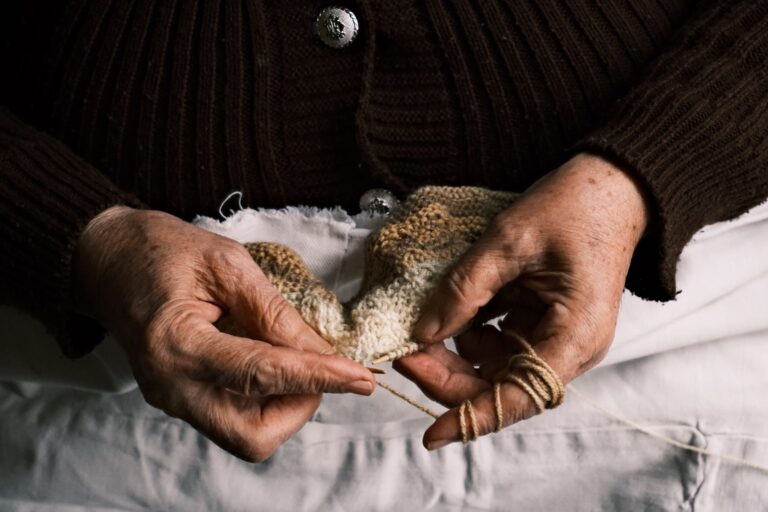
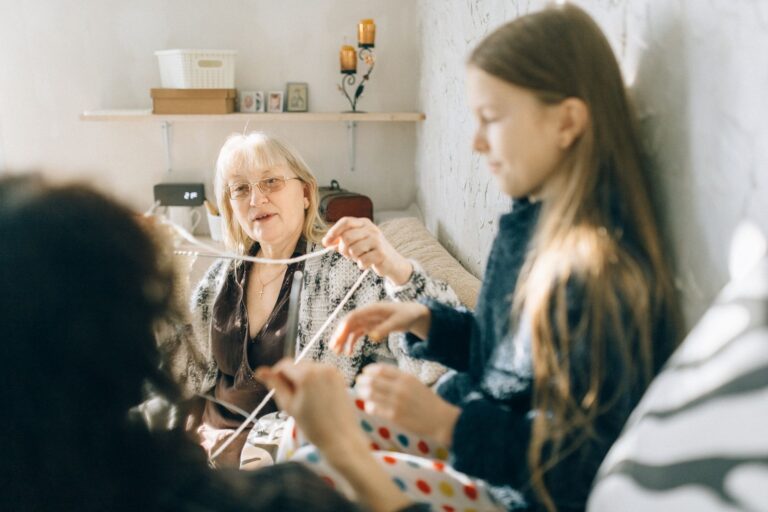
On a low-energy dementia day, simple knitting means one short seated project worked one slow step at a time. Use a few large stitches in garter stitch, allow extra time, and stop at fatigue. Garter stitch is fabric made by working every row in the knit stitch. HelpDementia.com describes this low-energy pattern as a short seated familiar repetitive task with few large easy-to-handle pieces, in its low-energy day guidance.
Medical information disclaimer: This article is for general educational purposes only and does not provide medical advice, diagnosis, or treatment. Always consult a physician or other qualified health professional about symptoms, medications, tests, or treatment decisions.
Table of Contents
- Why this activity fits tired days
- How do you set up for comfort?
- What are the three knit steps?
- When should you stop or switch?
Why this activity fits tired days
Knitting can stay familiar even when thinking and energy fade. Procedural memory often persists, and one dementia group leader notes knitting can feel automatic while other abilities fade.
That fit depends on matching the task to the person. The National Institute on Aging advises matching activities to what the person can still do and helping the person get started, in its adapting-activities guidance. The Alzheimer's Association also advises building the plan around likes, abilities, and best times of day with flexibility for rest.
How do you set up for comfort?
Choose materials that are easy to see and grip. For tired hands and eyes, use bulky or chunky yarn with large needles, about US 9-11 or 5.5-8 mm for category 5 bulky, because thicker yarn makes bigger stitches that are quicker to finish.
Seat the person at a table in good light. Preload 10-15 chunky stitches, demonstrate each micro-step, keep small buttons or beads away from active knitting, supervise closely, and end early if eye rubbing, agitation, or pacing appears.
What are the three knit steps?
A beginner low-energy knit needs only three operations, described by the Craft Yarn Council in its knit diagrams. Cast on a few stitches to start the first row, work every row in knit stitch for garter fabric, then bind off to secure stitches so they do not unravel.
Demonstrate, then do the step together, then let the person try alone. Keep language short and handle the yarn tails and turning yourself when hands tire.
- Cast on a few stitches and place the needle in the person's hands.
- Work one slow row in knit stitch, then pause and rest.
- Repeat one row at a time until the piece feels done.
- Bind off to lock the stitches so the work does not unravel.
When should you stop or switch?
Stop at the first sign of fatigue rather than finishing a row. Tired signs include eye rubbing, restlessness, agitation, pacing, dropped stitches, or pushing the work away. Offer a simpler hand activity instead of urging more effort.
Winding wool can substitute when full knitting is too hard, and finished sensory pieces such as knitted twiddle muffs or cuffs give visual and tactile stimulation while keeping restless hands busy and warm. Research links crafts including knitting to lower mild-cognitive-impairment risk, but the studies are observational and show association rather than proof that knitting prevents dementia. Keep today's goal small: one calm seated try, rest when needed, and save the warm piece for comfort.