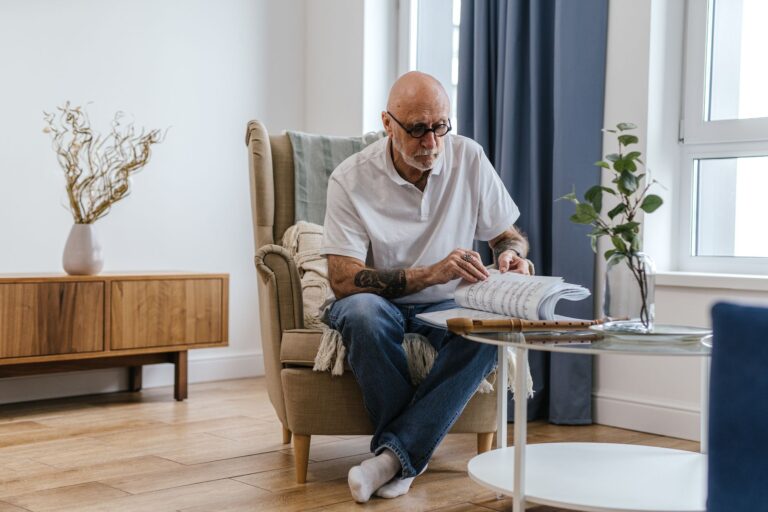
A familiar music session is a short, structured time set aside to play songs the person already knows and loves, with a caregiver sitting alongside them. The Alzheimer's Association notes that music can ease agitation and behavioral problems in middle-stage Alzheimer's, and that even in late-stage dementia a person may still tap a beat or sing lyrics from a childhood song, which is why these sessions work at almost any point in the disease. Running one well means picking the right songs, cutting out distractions, and joining in physically rather than just playing a track in the background. The steps below come from dementia care organizations and two clinical studies that tested personalized music with people living at home and in care settings.
Medical information disclaimer: This article is for general educational purposes only and does not provide medical advice, diagnosis, or treatment. Always consult a physician or other qualified health professional about symptoms, medications, tests, or treatment decisions.
Table of Contents
- Choose Songs the Person Already Knows
- Set Up the Room Before You Start
- Run the Session Step by Step
- What the Evidence Says About Results
- Barriers Caregivers Actually Report
- Frequently Asked Questions
Choose Songs the Person Already Knows
Start with music that was already familiar and enjoyable to the person before dementia, and let them choose it when they're able to, according to the Alzheimer's Association. A song tied to a specific memory, a wedding, a church choir, a favorite artist from their twenties, works better than something generic for the era. Build a personalized playlist led by the person's own preferences, such as a specific decade, show tunes, or folk music, rather than guessing based on their age, says Nordoff Robbins, a UK music therapy charity.
The charity points caregivers to the nonprofit Playlist for Life as a tool for building that list. Cultural and language background matters too. Dementia UK recommends accounting for the person's cultural or first-language music when selecting songs, since a lifetime of listening in one language or tradition shapes what still feels familiar, according to Dementia UK's guidance.
Set Up the Room Before You Start
Eliminate competing noise before playing anything. Close windows and doors, turn off the television, and keep the volume moderate, since a loud or cluttered sound environment can cause sensory overload, per the Alzheimer's Association. Avoid sources interrupted by commercials, such as broadcast radio, because the sudden shift to an ad voice can cause confusion partway through a song, the Alzheimer's Association also notes.
A pre-built playlist on a phone, tablet, or simple music player sidesteps that problem entirely. Unstructured background music left playing all day works against you. Dementia UK warns that background music can become distracting and distressing when a person struggles to process competing sounds, so a session should be a deliberate, bounded block of time, not constant ambient noise, according to Dementia UK.
Run the Session Step by Step
Keep each session to a manageable length rather than a long, unbroken block, and plan for it at a consistent time of day, such as before a meal or in the late afternoon, when agitation often rises.
- Pick two to four familiar songs and queue them in advance so there's no fumbling with devices once you've started.
- Close doors, mute the TV, and set the volume to a comfortable, conversational level.
- Sit facing the person, play the first song, and watch their reaction before moving to the next.
- Join in with simple movement, clapping, tapping feet, or waving arms, rather than just watching, since caregivers of less-mobile people doing this alongside them encourages participation, according to Dementia UK.
- Let the person sing, hum, or speak over the music without correcting them; following their lead matters more than finishing the song list.
What the Evidence Says About Results
A 2024 randomized controlled trial in the American Journal of Geriatric Psychiatry tested a personalized music intervention across 54 nursing homes with 976 residents with dementia and found it reduced observed agitated behaviors and increased expressions of pleasure compared with usual care, according to the published trial. That scale of study gives the approach more weight than anecdote alone. A 2020 trial in the Journal of Alzheimer's Disease tested a caregiver guide for selecting personalized music with 45 people with dementia across home and residential care settings and found quality-of-life improvements in the intervention group over six weeks, reported in the study.
The same researchers cautioned caregivers to monitor for negative reactions to specific songs, since a piece tied to a painful memory can upset rather than soothe. Music therapy more broadly, covering singing, listening, playing instruments, and improvising together, can prompt reminiscence, reduce anxiety, depression and agitation, and encourage social interaction in people with dementia, according to Dementia UK. A home session with a playlist is a simpler version of the same mechanism.
Barriers Caregivers Actually Report
A 2021 qualitative follow-up interviewed 16 home and aged-care caregivers who had used the personalized music guide with 29 people with dementia. The caregivers found the instructions easy to understand but named technology difficulties and lack of time as the main barriers to running regular sessions at home, according to the study.
That points to a practical fix: build the playlist once, save it somewhere simple to replay, like one labeled device or a single app screen, so each session afterward takes minutes rather than requiring you to search for songs again. If a tablet or phone is the obstacle, a basic CD player or dedicated music player with physical buttons removes the technology barrier entirely.
Frequently Asked Questions
How long should a familiar music session last?
The research packet doesn't specify an exact length; caregivers generally keep sessions short and watch the person's reaction, stopping early if they show distress and ending on a calming song.
What if the person can't move or sing along anymore?
Dementia UK recommends that caregivers do the simple movement, clapping, tapping, or waving, themselves alongside the person, since doing it together can still encourage participation even when mobility is limited.
Should I use a streaming radio station instead of building a playlist?
No. The Alzheimer's Association specifically advises avoiding sources interrupted by commercials, which can confuse the person mid-song; a pre-built playlist avoids that interruption.