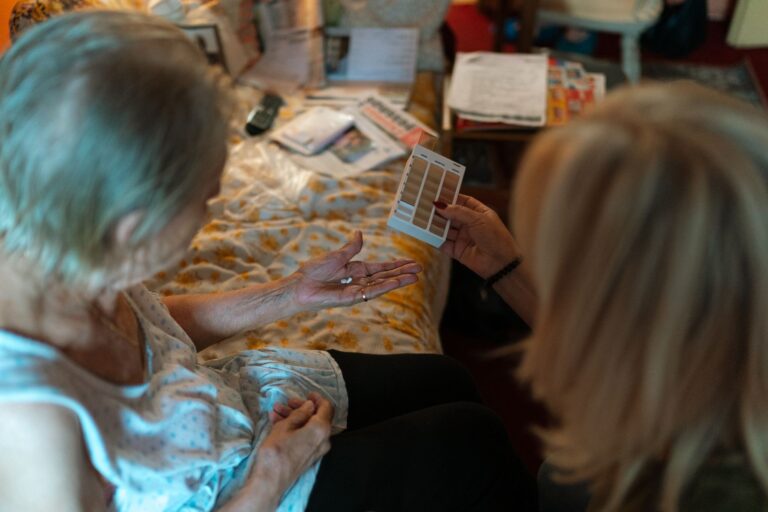
Stage 6 dementia represents severe cognitive decline where individuals lose most of their verbal communication abilities, require full-time assistance with daily activities, and experience significant physical deterioration. At this stage, the person may recognize only one or two close family members, cannot communicate beyond occasional words or sounds, and is typically bedbound or require a walker for any movement. A family member caring for someone in stage 6 might spend hours each day helping with toileting, dressing, feeding, and bathing—tasks that the person can no longer attempt or comprehend independently.
The transition into stage 6 is often marked less by a single moment and more by a gradual erosion of abilities over several months or years. A person may have seemed stable at stage 5, managing limited self-care or understanding simple conversations, then slowly lose those capabilities over time. Unlike earlier stages where cognitive changes dominate, stage 6 brings together the physical decline that families often find most challenging: swallowing difficulties, incontinence, increased sleeping, and vulnerability to infections like pneumonia or urinary tract infections.
Table of Contents
- What Are the Primary Physical Symptoms in Stage 6 Dementia?
- How Does Communication Break Down in Stage 6 Dementia?
- What Behavioral and Emotional Changes Occur?
- What Are the Daily Care Needs and Dependency Levels?
- What Health Complications Are Common in Stage 6?
- How Is Pain and Discomfort Managed?
- What Role Do Advance Directives and End-of-Life Planning Play?
What Are the Primary Physical Symptoms in Stage 6 Dementia?
Physical decline becomes the dominant feature in stage 6. Individuals lose control of bodily functions and require assistance with every aspect of personal care. The person may experience rigidity in their limbs, where muscles become stiff and contracted, making movement painful or limiting their range of motion. Their reflexes may become exaggerated or disappear entirely. Many people develop a shuffled gait or lose the ability to walk altogether, transitioning from a walker to a wheelchair to bedbound status. Incontinence of both bladder and bowel is nearly universal by stage 6.
This is a medical reality, not a behavioral problem—the brain’s connection to these functions has deteriorated. Families often struggle with this transition emotionally, even though it’s a predictable symptom. Some people also develop contractures, where joints become permanently bent or fixed in position due to muscle tightness and lack of movement, similar to what happens with prolonged immobility in other conditions. Appetite and swallowing changes are significant concerns. The person may forget how to chew or swallow properly, increasing the risk of aspiration (food entering the lungs instead of the stomach). They may eat slowly or refuse food entirely, losing weight despite nutritional support. This is one area where families often feel helpless—they want to nourish their loved one, but offering food sometimes creates more problems than it solves.
How Does Communication Break Down in Stage 6 Dementia?
By stage 6, most people can no longer use words to express themselves meaningfully. They may repeat single words, speak in sentences that don’t make grammatical sense, or be largely non-verbal, communicating only through gestures, facial expressions, or sounds. Some individuals make repetitive utterances—the same phrase or sound over and over—which can become distressing for family members who cannot understand what their loved one needs or wants. Understanding what a stage 6 person is communicating requires learning a new language. A certain cry might indicate pain, while a different sound might mean discomfort from a full bladder or bowel. Family members become attuned to subtle changes in facial expression, body tension, or vocalization patterns.
A limitation of this non-verbal communication is that it’s often impossible to know with certainty whether the person is in pain, has an unmet need, or is simply vocalizing without distress. This uncertainty can lead to medical over-treatment (treating every sound as a sign of pain) or under-treatment (assuming the person is fine when they’re actually uncomfortable). The person may no longer recognize their own name or understand simple questions. They cannot hold a conversation or follow multi-step instructions. What appears to be a response—a smile or nod—may be reflexive rather than intentional, making it difficult for families to know if their loved one still recognizes them. Many families describe this as “grieving the loss of connection,” because the person they knew is no longer accessible through typical communication.
What Behavioral and Emotional Changes Occur?
Stage 6 often brings a paradoxical shift in behavior. Some people become calm and withdrawn, sleeping much of the day and showing little emotional expression. Others become more agitated, restless, or prone to sudden outbursts of emotion that seem unconnected to any apparent trigger. A person might laugh and then suddenly cry intensely, with no clear reason apparent to observers. Aggression or combative behavior can emerge, particularly during personal care.
When a caregiver attempts to bathe, dress, or toilet the person, they may strike out, resist, or become verbally abusive—not from malice, but because they don’t understand what’s happening and experience the care routine as a threat. A family member might approach to help their mother with toileting and receive a harsh word or even a physical blow, which is especially painful because the person would have never acted this way before the dementia. This behavior is not intentional or personal; it’s a symptom of the disease. Some individuals develop what’s called “sundowning” patterns, where agitation or confusion worsens in the late afternoon and evening. Others may exhibit wandering behavior that has shifted from stage 5—at stage 6, the person rarely has the mobility to wander far, but may attempt to get out of bed repeatedly or pace in a limited area, sometimes leading to falls.
What Are the Daily Care Needs and Dependency Levels?
By stage 6, the person is entirely dependent for all activities of daily living. They cannot dress themselves, cannot use the toilet independently, cannot prepare or feed themselves, and typically require assistance bathing. Many families face a critical decision at this stage: can they provide this level of care at home, or does the person need to move to a nursing facility? Home care for stage 6 can be physically and emotionally exhausting. A primary caregiver—often an adult child—may need to provide 24-hour supervision to prevent falls, manage toileting needs, administer medications, and monitor for new symptoms or infections.
The alternative, nursing home care, addresses the medical and physical needs but introduces the challenge of finding quality facilities and the emotional weight of feeling like the person has been “placed away,” even though this is often the most practical option. Families should know that nursing home placement is not a failure; it’s a medical decision when home care becomes unsafe or unsustainable. Some families hire in-home care workers or aides to help manage the physical tasks, which can reduce the burden on primary caregivers but is expensive and not always accessible. The cost of full-time caregiving—whether paid or unpaid—is a significant stressor that most families do not anticipate before stage 6 arrives.
What Health Complications Are Common in Stage 6?
Infections become a serious and frequent threat in stage 6. Aspiration pneumonia can develop from food or liquid entering the lungs, and it’s one of the leading causes of death in advanced dementia. Urinary tract infections are also common, particularly in people who are bedridden or incontinent, and can cause acute confusion or medical crisis. Pressure ulcers (bedsores) can develop quickly in bedbound individuals and are painful and difficult to treat. They form where bone presses against skin for prolonged periods, typically on the hips, tailbone, heels, and back.
Prevention requires frequent repositioning—turning the person every two hours—which is labor-intensive and adds to caregiver burden. Nutrition and skin care can help prevent them, but once a pressure ulcer develops, healing is slow and infection risk is high. Aspiration is a limitation that family members must confront honestly. Even with careful feeding and swallowing precautions, some people in stage 6 will eventually aspirate. At some point, the risk may outweigh the benefit of oral feeding, and families face the difficult choice of transitioning to a feeding tube (gastric tube) or focusing on comfort care without aggressive nutritional support. This is a medical and ethical decision that should involve the care team and the person’s advance directives.
How Is Pain and Discomfort Managed?
Pain management becomes complex because the person cannot report pain verbally. Caregivers must watch for behavioral signs: grimacing, muscle tension, agitation, or withdrawal. Certain conditions—contractures, pressure ulcers, arthritis—are likely to cause pain but may not be visible. Some pain may go unrecognized and untreated because it has no external sign.
Comfort-focused care at stage 6 often prioritizes dignity and relief over aggressive medical treatment. This might include gentle massage, positioning changes for comfort, pain medications, and discontinuing medical interventions that cause distress without clear benefit. A person with severe dementia doesn’t need blood pressure medication or cholesterol management; they need comfort, presence, and symptom control. Many families benefit from a palliative care consultation at stage 6, which helps clarify what kinds of medical interventions align with the person’s values and comfort.
What Role Do Advance Directives and End-of-Life Planning Play?
If the person has an advance directive or living will in place before entering stage 6, this document becomes a critical guide for family and medical decision-makers. It should specify preferences about resuscitation, feeding tubes, antibiotics for infections, and hospitalization. Without this guidance, families and clinicians must make these decisions based on guesswork, which is both ethically difficult and sometimes leads to care that extends suffering rather than prolonging meaningful life.
Many people in stage 6 experience a gradual decline rather than a sudden crisis, and death often comes from an infection, aspiration, or simply the body’s inability to continue functioning. Hospice care becomes appropriate when the focus shifts entirely to comfort and the person is no longer pursuing curative or life-extending treatments. Hospice can be provided at home, in a nursing facility, or in a dedicated hospice center, and it offers support for symptom management, emotional support for family, and bereavement services after death. Some families delay hospice enrollment, hoping for improvement, but entering hospice earlier generally means more support and better symptom control for the dying person.
- —